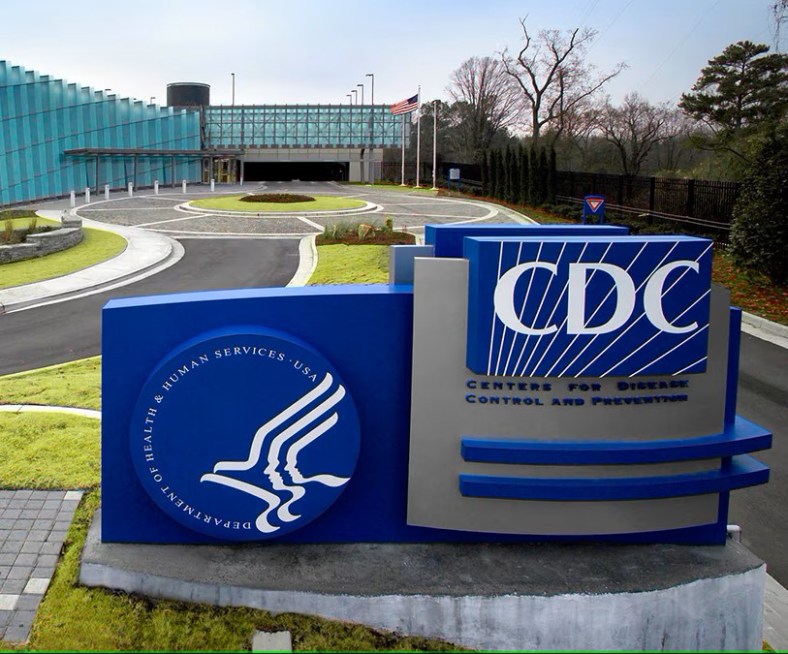
CDC Forgot About Planning

In late February, CDC released the highly anticipated notice of funding opportunity (NOFO) for the 2024-2028 Public Health Emergency Preparedness (PHEP) grant. The general concept of the grant wasn’t a big surprise, as they had been promoting a move to their Response Readiness Framework (RRF). The timing of the new five-year grant cycle seems ideal to implement lessons learned from COVID-19, yet they are falling short.

I’ve reflected in the past on the preparedness capability elements of Planning, Organizing, Equipment/Systems, Training, and Exercises (POETE). I also often add Assessing to the front of that (APOETE). These preparedness elements are essentially the buckets of activity through which we categorize our preparedness activities.

In reviewing the ten program priorities of the RRF, I’m initially encouraged by the first priority: Prioritize a risk-based approach to all-hazards planning. Activity-wise, what this translates to in the NOFO is conducting a risk assessment. Solid start. Yet nowhere else is planning overtly mentioned. Within the NOFO some of the other priorities reflect on ensuring certain things are addressed in plans, such as health equity, but there is otherwise no direct push for planning. Buried within the NOFO (page 62) is a list of plans that must be shared with project officers upon request (under the larger heading of Administrative and Federal Requirements) but the development of any of these plans does not correlate to any priorities, strategies, or activities within the document.

As for the rest of APOETE, there is good direction on Organizing, Equipment and Systems, Training, and Exercises. While that’s all great, planning is the true foundation of preparedness and it is so obviously left out of this NOFO. Along with my general opinion that most emergency plans (across all sectors) are garbage, that vast majority of findings from numerous COVID-19 after-action reports I’ve written (which included two states and several county and local governments) noted the significant need for improved emergency plans. Further, the other preparedness elements (OETE) should all relate back to our plans. If we aren’t developing, improving, and updating plans, then the other activities will generally lack focus, direction, and relevance.

Understanding that this is the first year of a five-year grant cycle, some changes and clarification will occur as the cycle progresses, but as planning is a foundational activity, it should be immediately and directly tied to the results of the assessment this year’s grant calls for. Otherwise, the findings of the assessments are generally meaningless if we aren’t taking action and developing plans to address them. This is leaving us with a significant gap in preparedness. Someone at CDC didn’t think this through and it leaves me with a great deal of concern, especially in the aftermath of the COVID-19 response.

What are your thoughts on this?

© 2024 Tim Riecker, CEDP

Emergency Preparedness Solutions, LLC®

Properly Applying ICS in Function-Specific Plans

As with many of my posts, I begin with an observation of something that frustrates me. Through much of my career, as I review function-specific plans (e.g., shelter plans, point of distribution plans, debris management plans, mass fatality incident management plans) I see a lot of organization charts that are inserted into those plans. Almost always, the org chart is an application of a ‘full’ incident command system (ICS) org chart (Command, Command Staff, General Staff, and many subordinate positions). This is obviously suitable for a foundational emergency operations plan (EOP), an emergency operations center (EOC) plan, or something else that is very comprehensive in nature where this size and scope of an organization would be used, but function-specific plans are not that. This, to me, is yet another example of a misinterpretation, misunderstanding, and/or misuse of the principles of National Incident Management System (NIMS) and ICS.

Yes, we fundamentally have a mandate to use ICS, which is also an effective practice, but not every function and facility we activate within our response and recovery operations requires a full organization or an incident management team to run. The majority of applications of a function-specific plan are within a greater response (such as activating a commodity POD during a storm response). As such, the EOP should have already been activated and there should already be an ‘umbrella’ incident management organization (e.g., ICS) in place – which means you are (hopefully) using ICS. Duplicating the organization within every function isn’t necessary. If we truly built out organizations according to every well intentioned (but misguided) plan, we would need several incident management teams just to run a Type 3 incident. This isn’t realistic, practical, or appropriate.

Most function-specific plans, when activated, would be organized within the Operations Section of an ICS organization. There is a person in charge of that function – depending on the level of the organization in which they are placed and what the function is, there is plenty of room for discussion on what their title would be, but I do know that it absolutely is NOT Incident Commander. There is already one of those and the person running a POD doesn’t get to be it. As for ‘command staff’ positions, if there is really a need for safety or public information activity (I’m not even going to talk about liaison) at these levels, these would be assistants, as there is (should be) already a Safety Officer or PIO as a member of the actual Command Staff. Those working within these capacities at the functional level should be coordinating with the principal Command Staff personnel. As for the ‘general staff’ positions within these functions, there is no need for an Operations Section as what’s being done (again, most of the time that’s where these functions are organized) IS operations. Planning and Logistics are centralized within the ICS structure for several reasons, the most significant being an avoidance of duplication of effort. Yes, for all you ICS nerds (like me) there is an application of branch level planning (done that) and/or branch level logistics that can certainly be necessary for VERY complex functional operations, but this is really an exception and not the rule – and these MUST interface with the principal General Staff personnel. As for Finance, there are similarly many reasons for this to be centralized within the primary ICS organization, which is where it should be.

We need to have flexibility balanced with practicality in our organizations. We also need to understand that personnel (especially those trained to serve in certain positions) are finite, so it is not feasible to duplicate an ICS structure for every operational function, nor is it appropriate. The focus should be on what the actual function does and how it should organize to best facilitate that. My suggestion is that if you are writing a plan, unless you REALLY understand ICS (and I don’t mean that you’ve just taken some courses), find someone who (hopefully) does and have a conversation with them. Talk through what you are trying to accomplish with your plan and your organization; everything must have a purpose so ask ‘why?’ and question duplication of effort. This is another reason why planning is a team sport and it’s important to bring the right people onto the team.

© 2024 Tim Riecker, CEDP

Emergency Preparedness Solutions, LLC®