Improving your writing

A couple nights ago I was reading through a selection of articles and blogs by way of Zite, which is one of my favorite ways to get topical articles.  One of the posts that was selected for me was Improving Your Academic Writing: My top 10 tips, a blog post by Raul Pacheco-Vega, PhD.  Dr. Pacheco-Vega’s post is filled with common sense but very important tips on writing.  While the title of his post specified academic writing, his principles really apply across the board to any writer and any type of writing – be it technical, fiction, blogging, etc.

Good writing skills are something I think are lacking more and more in the professional world.  Through my professional career I’ve found myself coaching college graduates on foundational professional writing technique.  Clearly I enjoy writing, otherwise I wouldn’t be blogging, writing emergency plans, and designing training courses and preparedness exercises.  I’ve found that blogging, even in the midst of those other writing projects, helps hone and improve my writing skills.

While I’ve listed his tips below, please be sure to visit Dr. Pacheco-Vega’s post for his full narrative.

1) Be disciplined and write every day.

2) Give yourself the best tools to write.

3) Write as you would speak.

4) Have other people read your pieces to provide you with feedback.

5) Read a lot, and across different disciplines.

6) Write for your audience.

7) Write without interruptions.

8) Take care of yourself.

9) Practice your writing – write a lot.

10) When stuck, write by hand.

The Emergency Manager as a Consultant

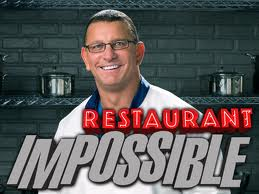
Lately I’ve gotten into watching these reality consulting shows like Bar Rescue and Restaurant: Impossible.  Both of these shows use a similar model, providing a prolific expert (Bar Rescue’s Jon Taffer and Restaurant: Impossible’s Robert Irvine) in their respective fields to aid a failing business.  These consultants are supported by a team of specialists and often a construction crew to remodel the business.  Sometimes it’s a just a few tweaks of the menu that’s needed, other times it’s a whole new way of thinking on the part of owners, management, and employees.  These are some of the best shows out there displaying conceptually some of the things consultants can do, albeit in a compressed and slightly dramatic mode.

Robert Irvine, the Consultant with Restaurant: Impossible

Robert Irvine, the Consultant with Restaurant: Impossible

That said, as many of my readers know, I work as an emergency management and homeland security consultant.  I’ve worked in the ranks of emergency management and public safety now for nearly 19 years.  Through this time, I’ve had the pleasure of working with a multitude of emergency management professionals at many levels; including counties and local jurisdictions and corporations.  These emergency managers, I’ve found, often play the part of a consultant.

While other department heads in county and local governments or corporations often make recommendations to CEOs (in this case Chief Elected Officials or Chief Executive Officers) these usually only impact their own department or have minimal impact on other parts of the organization.  Emergency managers make recommendations that often times impact the entire jurisdiction or organization – be they recommendations on mitigation, preparedness, recovery – and especially response.  Sometimes, unfortunately, the emergency manager doesn’t report to the CEO on a daily basis – which I think is a major mistake.  While others may be primarily concerned with saving their own operations in the event of disaster, the emergency manager’s goal is to preserve as much of the jurisdiction or organization as possible – with the priorities being life safety, incident stabilization, and property conservation.  These three tenants, preached mostly in Incident Command System courses, are applicable to both government and the private sector.  In both sectors, these priorities lead us logically to business continuity, ensuring that we minimize our losses and are able to continue operations.

As the profession of the emergency manager continues to evolve, including myriad training opportunities, education up to and including Ph.Ds., and professional certifications, the emergency manager is viewed more and more as a specialist and subject matter expert.  Emergency managers are expected to provide expert advice and guidance.  The emergency manager needs to stay current and up to date with the profession; not that the ‘science’ of emergency management changes much, but there are certainly new best practices, trends, and legal and regulatory requirements that need to be kept up on.  Whether an organization calls upon the emergency manager as an employee or brings in an actual consultant, this person is providing expert recommendations that impact the jurisdiction or organization as an enterprise system, not just a name or a spot on a map.  Just like in Bar Rescue or Restaurant: Impossible, the emergency manager may make recommendations that some people don’t like; but they called upon the emergency manager for their expertise.  The emergency manager is the consultant that can save your organization!

Safeguarding our Electrical Grid – Reblog

More thoughts on the vulnerabilities of our electrical grid.  Great post.

Andy (אברהם נפתלי) Blumenthal's avatarandyblumenthal

Image

Popular Science (28 January 2013) has an interesting article on “How To Save The Electrical Grid.”

Power use has skyrocketed with home appliances, TVs, and computers, causing a significant increase in demand and “pushing electricity through lines that were never intended to handle such high loads.”

Our electrical infrastructure is aging with transformers “now more than 40 years old on average and 70% of transmission lines are at least 25 years old” while at the same time over the last three decades average U.S. household power consumption has tripled!

The result is that the U.S. experiences over 100 mass outages a year to our electrical systems from storms, tornados, wildfires and other disasters.

According to the Congressional Research Service, “cost estimates from storm-related outages to the U.S. economy at between $20 billion and $55 billion annually.”

For example, in Hurricane Sandy 8 millions homes in 21 states lost power, and…

View original post 350 more words

It’s about the customer, stupid!

Yesterday I received my very first issue of Training Magazine in the mail.  After over 16 years as a training professional, I’m really not sure why I never read Training before – but I’m glad I started.  Right off the bat I was quite pleased with what I was reading.  Like many trade magazines, the edition opens with a letter from the editor.  Lorri Freifeld, the editor in chief of Training, does just that.  Her editorial is titled ‘Ask and You Shall Receive’, and includes an example from training professional Michael Marr, who mentions that training folks have a tendency to agree to developing and delivering training without out determining the true need.  Lorri expands on this by illustrating the simple process of going to a coffee shop.  They don’t just hand you a cup of coffee when you go in (well they do maybe if you are a regular there), instead they ask you what you would like.  As trainers we must always keep our finger on the pulse of the needs of the customers.

I’ve blogged previously about the necessity of conducting training needs assessments and how critical they are to learner outcomes.  Yes, sometimes the need seems very apparent, and you may be right, but peel back the layers of this anyway just to make sure.  Not only does this give you the opportunity to verify the purported need, but it will also give you insight into the driving forces behind that need – which may lend itself well as fodder for training content.  You may be surprised to find that the issue is not training related at all, but rather a fault in the process or equipment.   Remember, training is the greatest example of the ‘garbage in – garbage out’ theory.  If you don’t invest your time, energy, and resources into making a quality product that meets needs, then you are simply wasting the time, energy, and resources – and in this economy, more than ever, we can’t afford to waste those things.

Business Civic Leadership Center and Emergency Management

This morning I received my semi-regular e-mail update from the Lessons Learned Information Sharing (LLIS) folks at the US Department of Homeland Security.  If you are in the EM/HS field and are not on LLIS, I strongly encourage you to do so.  It’s a great community of practice, facilitating the sharing of lessons learned and best practices in the field.  One document that was listed in the e-mail was The Role of Business in Disaster Response.  This document outlines case studies and best practices of businesses supporting all aspects of emergency management nationally and locally.  It was published by the Business Civic Leadership Center of the US Chamber of Commerce.  Admittedly, I was not aware of this office within the US Chamber, nor was I aware of their Disaster Program, which offers some great resources to businesses. 

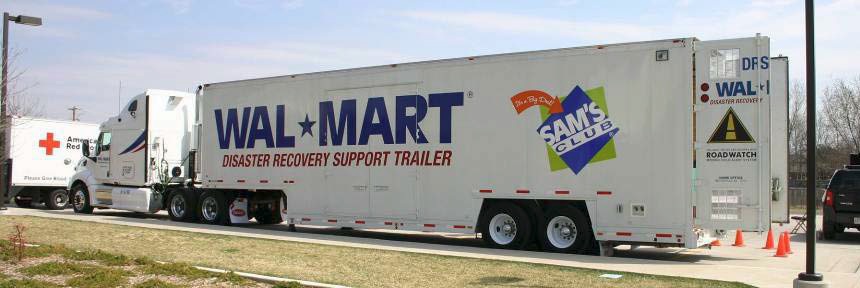
I’ve blogged in the past about the importance of public-private partnerships in emergency management and the incredible positive impacts it can have.  Wal-mart, in particular, has gotten a lot of good press about their emergency business operations, and more recently since Hurricane Sandy I’ve seen some media attention given to other companies such as Home Depot, highlighting their emergency operations centers and their relief efforts.  In a presentation I saw from Wal-Mart a while back, the company highlighted three priorities in regards to emergency management: 1) take care of its people, 2) take care of its operations, 3) take care of its communities.  Just these three priorities say a lot about the company.  They realize their people are their most important assets.  Next, they strive to ensure business continuity.  Lastly, with their business operations now being able to support it, they take care of the communities they have a presence in.  What a great business model!

The integration of the private sector into emergency management needs to be at all levels.  The National Operations Center (NOC), run by the US Department of Homeland Security, includes private sector representatives.  How can this be improved?  At the state level, many states either include private sector representatives in the State Emergency Operations Center or have a separate but connected Business Operations Center, solely focused on the coordination of private sector efforts.  Both of these options help expedite private sector resources to emergency management efforts – especially when used as an extension of the EOC’s supply unit.  There is also a recognized expertise between private sector and public sector emergency managers.

County and local emergency management programs can also benefit.  Where national and international companies are usually found at the NOC and state EOCs, the local management of these chains can work with county and local EOCs.  Also, don’t discount the value of small businesses in the area.  They, too, have a wealth of knowledge and access to resources.  Every community should form a disaster business alliance of some sort, or welcome private sector involvement with local VOADs.  You can work with local chambers of commerce to make this happen.  I’ve established a great relationship between my company, Emergency Preparedness Solutions, with my local chamber of commerce and have been providing information to members on emergency preparedness and business continuity through meetings and articles, as well as a presentation that I’ll be doing in a few months.

Never think that emergency management is too big of a concept for your local community.  It’s not just something done by FEMA or by the state.  In a disaster we need to help our neighbors and our communities.  The biggest impact is always locally.  Establish those relationships now and make a difference!

Find Out What You Need

As mentioned in previous posts, I am, by trade, a trainer.  Many of those years have been in the realm of public safety and emergency management, but I’ve had the opportunity to apply my trade to a few other areas as well.  Quite possibly the most important things I’ve learned, both by training as well as  experience, is the necessity of a needs assessment.  A needs assessment, as defined by The 30-Second Encyclopedia of Learning & Performance is “a systematic study or survey of an organization for the purpose of making recommendations, and is often employed … to get to the cause of a performance problem.”  This definition is on page three of the book, by the way.  It’s that important.

In training and other professions we do needs assessments all the time; some formal, many informal.  So informal, in fact, that oftentimes we don’t realize we’re doing them.  I’m big on common sense and in trusting professionals, but I think this oft lackadaisical approach leads to incomplete and sometimes shoddy results – not where we want to be as professionals.

In the instance of doing a training needs assessment of an organization, one needs to be certain to assess both internally and externally.  One internal focus, obviously is the employees themselves.  First, we look at the tasks – what do they do, how do they do it, and how well do they actually do it (aka actual outcome).  We compare this to expectations the performance expectations (which, ideally, are documented).  The gap between actual outcome and expected outcome is, usually, a training need.  These would translate to what I call Tier I training needs – those necessary to do business.

To digress a bit, here’s where a trainer often times becomes an organizational development consultant.  Likely, the processes a company performs haven’t been looked at in years, with layers of policy and procedure added every time a problem was identified.  The trainer, upon examination, may find that the process itself is faulty or outdated, which wouldn’t be a performance deficiency of the employees.  These types of findings should be noted to management immediately.

Still looking internally, the trainer also needs to look at the wants and desires, in terms of training, of both management and the employees.  Management may have training they want applied to all employees (by the way, this is worth analyzing, as often times something like this is ‘a good idea’ vs something identified by way of a needs assessment’) and the employees themselves (or their union) may want to incorporate training to allow for development, career paths, etc.  These are all certainly viable candidates for Tier II training needs – those that aid the organization.

A good needs assessment must also look externally as well.  The Tier I external factor would be safety and regulatory requirements – i.e. the legal things that must be done, such as OSHA training.  External Tier II factors would be non-required industry standards.  These are things usually obtained by way of certifications, conferences, etc.  While they aren’t necessary, they can help the company’s resume and aid in keeping the company near the head of their industry.  So often do we see these as some of the only trainings that employees receive, which is very frustrating.  These are typically rather expensive (especially when you factor in lost productivity and travel), are not focused (at least on the needs of the employer), and the ‘training’ received is usually not shared at all with the employer.

Needs assessments are certainly applied in other areas.  In emergency planning we do things like a hazard analysis, a vulnerability assessement and a capabilities assessment to determine preparedness needs.  In emergency response we do a situational assessment to determine what is needed to resolve the incident – often times over and over again, as these needs change as the scope of the incident changes.  In disaster recovery we analyze the needs of victims and survivors so we can provide the best services to them.  Needs assessments are vital to many professions and fields of practice.  It seems we’ve lost the quality of services that managers and customers expect.  I feel that much of this is related to people being lazy, not taking pride in what they do, and taking short cuts in their work.  If you short cut a needs assessment, you cut short your potential.  Do it right and start off your whole process with the right information to do the job right.
My top business books

After finishing the latest Nancy Duarte book, Persuasive Presentations (read my blog post on it), I did a bit of rearranging of the book shelf in my office.  I have lots of books… LOTS of books.  Sadly, there is only room for one book shelf in my office.  This keeps my top reference books handy – mostly on the topics of business management, training, and emergency management.  I actually get asked, on occasion, to provide a book recommendation in one of these subject areas.  So, in the event that you might be interested, here are my top business-oriented books, with some commentary.

The Baldrige Guide to Executive Manners – I can’t tell you how many times I’ve referenced this book.  It’s a wealth of information for anyone in business or government.  It contains everything from common cultural issues, dress codes, communication nuances, and seating at events.  When I first got it, I actually read through it (not word for word!) cover to cover – which is really the best way to familiarize yourself with what’s in it.  It is a touch dated, but largely etiquette and protocol don’t change much.

Oh to have a library this beautiful!!!!

Getting Started in Consulting by Alan Weiss – Dr. Weiss is a consulting genius, pure and simple.  The man has been doing it successfully for a very long time.  So successfully, that the skills he developed and knowledge he gained in doing it, he shares with others through a multitude of books, speaking engagements, his website, and other venues.  If you are looking to get into consulting work, no matter what it might be, this is the foundational book you need to help you lay out how you will structure your business and interact with clients.  I’ve read some of this more focused books as well.

Flawless Execution by James Murphy – Jim Murphy is a consultant who has brought what he learned in a successful career as a fighter pilot to the

corporate world.  He has built a company around these principles, incorporating the sexy environment of flight suites and pilot lingo, to engage businesses and help them become more successful.  It’s a pretty straight forward read, actually using concepts similar to the Incident Command System (ICS) that we use in Emergency Management, to identify goals, objectives, strategies, and tactics to stay focused and accomplish tasks.

The 360 Degree Leader by John Maxwell – In my mind, no business reference list is complete without John Maxwell.  This is just one of several of his books that I own, but I feel it is by far the best.  Maxwell illustrates from every angle how anyone within an organization is a leader and can exercise influence.  You don’t have to be ‘in charge’ to lead.  Maxwell always provides external references through his website which have great tools to help you assess your capabilities.

Guide to Managerial Communication by Mary Munter – Another book which I have referenced time and again.  It’s in its 9th edition now… mine is the fourth edition and the info on Amazon indicates that it’s been updated to include more contemporary info.  It’s one of the few college texts that I ever kept.  It covers a variety of communication issues, writing design and style, a bit of info on presentations, and even some formats for memos and letters.  Very handy.

That’s my short list on business reads.  I’ll likely post lists on training books as well as emergency management books sometime in the future.

“Outside of a dog, a book is man’s best friend. Inside of a dog it’s too dark to read.”  ― Groucho Marx

Speed Networking

Last week our local chamber of commerce, of which my company – Emergency Preparedness Solutions – is a member held an event called speed networking.  Admittedly, prior to the announcements for said event, I had never heard of it.  Of course we’ve all heard of speed dating – and have even seen it on TV and in movies (i.e. Hitch) – where men typically circulate through an orderly room of women, having only a few minutes to ask questions about each other and perhaps make a love connection.  Speed networking is quite similar.

Representatives of various businesses and organizations were arranged opposite each other within a room (sadly, not the swanky, stylish room you witnessed the speed dating occurring in Hitch), having only two minutes to give their elevator speech and another two to listen to the pitch of the person across from them.  You both exchange business cards and any other materials you might have (I had a flyer highlighting our business continuity services).  At the ring of the bell everyone on one side of the table moved down a seat.

It was a pretty neat opportunity.  Two minutes isn’t long, and depending on the level of interaction, sometimes wasn’t long enough.  It was a very fast paced, near exhausting, activity.  In the end, I met with about twenty businesses and organizations.  With some there was clearly interest, with others – not so much.  But that’s how things go in the business world.  I was a bit disappointed that I didn’t get to meet with the other business representatives who were the ‘movers’, as I was.  I’m not sure how they would make that work… likely some complex algorithm of some sort which is well beyond my understanding.  Still, it was an engaging opportunity to meet with these businesses and pitch my services.

I’ve been to quite a few business networking events, all of which seem to be a bit awkward as people tend to gravitate to those they know.  You hate to break into a conversation at the risk of being rude or appearing overly pushy.  Once in a while you’ll get introduced to someone, which is the best opening, but that’s a fairly rare occurence.  The structure of the speed networking forces you to engage with someone new, and you are both there for the same purpose – what a great idea!  There was even someone attending who I have met with several times before to discuss partnering up and making mutual referrals.  Since we already knew what the other did, we took the opportunity to discuss what our next steps would be, which included a meet and greet with their top clients – score!

If you ever have an opportunity to take part in one of these events, I strongly encourage you to do so.  It’s a great deal for small businesses, especially new ones.  They are fun, engaging, and the best bang for your buck in terms of meeting people.  FYI – the chamber charged $10 for the event, which included lunch.  How can you go wrong?

Presentations… Inspired

For those of you who may not know, I am, by trade, a trainer.  The emergency management stuff came after my early forays into training, and throughout my emergency management career I remained a trainer.  Obviously a big part of training is what we call ‘platform skills’ (aka being able to present).  I’ve been a trainer for over 17 years now and I’ve been sought after across the country for training and presentations – so I guess people like what I do.  I know, though, that I have a lot of room for improvement.  Through the years I’ve learned from many people – assimilating parts of their presentation style into mine, honing my skills.  I’ve learned to not be so stiff and to relax; I enjoy doing presentations and I learned that I’m a better presenter by simply showing the audience that I’m having a good time.  I try to always learn something from a speaker or presenter – and sometimes it’s not their content, but how they deliver it.

I’ve recently had the pleasure of reading material by Nancy Duarte.  Nancy is a communication expert who owns one of the most successful non-tech businesses in Silicon Valley.  Nancy has authored the books Slideology and Resonate, and just released a book for Harvard Business Review called Persuasive Presentations.  While I’ve not read Slideology, I can personally attest that Resonate was a great book – a great book made totally astounding in the ibook format.  Yes, ibook, not ebook.  If you are not familiar with ibooks, they are interactive books.  Resonate incorporated a great deal more content than could possibly be in the print version by including both internal and external links, video segments, and more.  Presentations, after all, are a multi-media experience – and she proves that point by the medium of the ibook.  Never fear – it’s not at all distracting, as the ibook format is a self guided experience.  Don’t want to watch a video?  Then you can skip it and continue reading.  Very user-friendly.  I believe the only means of getting it, however, is at the Apple Store.  Anyhow, Nancy’s approach to presentations is refreshing.  She has studied a history of great speeches, analyzed the patterns and flow of those speeches, and formulated methodologies to help bring you success by following those patterns.

As I mentioned, Nancy just put out a new book for Harvard Business Review called Persuasive Presentations.  I ordered it yesterday and I’m quite looking forward to receiving it.  It’s a paperback and Nancy explains that she has incorporated the best parts of her previous two books as well as some new content.  I find her material to be great for an experienced presenter as we continually seek to hone our skills.  While a new presenter or trainer might get a little overwhelmed, I still think they can learn a lot from her.

In case you’re wondering, I’m not being paid to advertise for Ms. Duarte – I’m just passing along some great resources.  I encourage you to check out her website.  She has some good info on there.  If you have 20 minutes to kill, sit through her TEDx presentation – it’ll give you a good overview of her philosophies.

Excelsior!

The Human Factor

While most of my blog is focused on emergency management, it is after all my blog.  So I’m taking some liberties to write a bit off topic on something that I feel rather strongly about – and fortunately, I’ve found that my opinion is shared by others.  This is the matter of ‘self checkout’ at stores.

You’ve seen them at your local mega-mart, grocery store, or even big box hardware store.  The machines don’t seem to scan bar codes as well as the machines used by the cashiers (granted, I also don’t have the honed and practiced intuition of where to find those silly things that the cashiers have, either), and they yell at your for not putting the item in the bag when either you have or it’s too large to fit into a bag.  And, of course, there is the frequent occurence of the machine refusing to serve you any longer until a cashier inputs their secret code.  Frustrating.

There is certainly a business case for them.  The general idea is efficiency – usually one cashier overseeing four of these machines; and cost savings – one cashier instead of four.  I get that.  That said, most stores I frequent tend not to have lines at these machines.  Many people avoid them.  I hear comments from fellow patrons about how frustrating they are.  Some people, myself included, do appreciate this lack of lines when you only have a handful of items and it can (hopefully) get you out of the store sooner.  I’ve even experienced the one individual who is overseeing several self checkouts call a customer over from a staffed line and scan the items themselves for the customer, knowing that people resist these machines.  How many of you have spoken back to the self checkout machines?  I know I have… “I DID place the item in the bag!”

I heard the best comment yesterday from a fellow shopper who was standing in line next to me (both for registers with cashiers).  He remarked to his friend about how he never uses the self checkout because he wants to ensure justification for jobs for cashiers.  I certainly can’t argue with that, and, in fact, I support it.  Another issue I have is that if I am saving the business money by using their self checkout, that savings should be passed on to me.  I am, after all, checking myself out.  And bagging my own items.  What’s that worth on average?  Perhaps a 5% savings on your final bill?

I rarely use the self checkout, much for the same reason I hardly ever use a drive through.  I like the face to face service.  I can ask questions, ensure that both my order and bill are correct, and if something goes wrong I don’t have to seek someone out to remedy the situation.  I think self checkout, while a great idea from a cost savings perspective, is a bad idea when it comes to customer service – which is a concept that seems to be eroding within society.  Much of our economy is service based, yet service keeps getting worse.  Business owners – if you don’t focus on the customer and their needs, you won’t reach your profit potential.