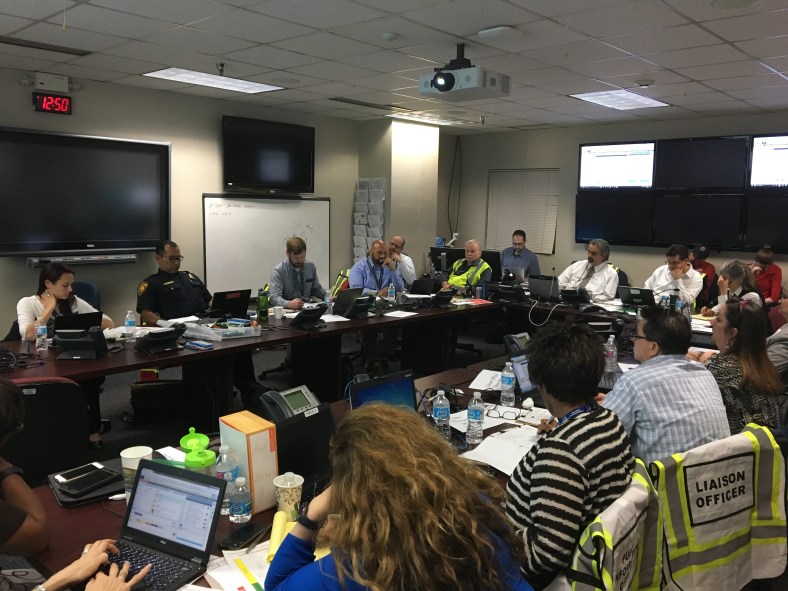
Build a Smart Exercise and Respond to the Unexpected

A few days ago I caught a documentary on NatGeo called Inside: 21st Century Warship. The documentary was produced in 2013 and told of the cutting-edge design of the USS Freedom and USS Independence. One segment of the documentary captured an exercise the USS Freedom engaged in, with the objective of testing the ship’s firepower to destroy several remote-controlled fast attack boats in open seas. The Captain, well experienced in my opinion, was able to neutralize the boats through the massive wake created by the ship’s sizeable turbines. EndEx.

The lead controller was clearly upset with this. The objective of the exercise, after all, was to test the ship’s guns, which were not fired in this exercise. The controller vented his frustration with the Captain, needing to reemphasize the parameters of the exercise.

Who was at fault in this? Was the objective of the exercise communicated to the Captain? That wasn’t made clear in the documentary. If it was, perhaps it wasn’t made clear that use of the ship’s guns was the only means by which the Captain could engage the attacking boats. I do applaud the Captain’s initial defensive methods, which is perhaps what he was trained to do, though that obviously circumvented the intent of the exercise. Either way, there was a miscommunication or misunderstanding as to the intent and parameters of the exercise.

While this is a military example, the portability to emergency management and homeland security is pretty direct. How do we mitigate against this type of miscommunication or misunderstanding? It starts with a well-defined concept and objectives for our exercise. Those build the foundation from which the rest of the exercise is constructed. Part of exercise design is anticipating how players may respond to the information they are provided and the situations which they will face. This constant analysis helps us to ensure a well-designed exercise, especially in regard to reducing any and all ambiguity, particularly as information relates to the objectives of the exercise and the ‘rules of the game’. It helps us to craft clear injects and even contingency injects in the event players don’t respond the way in which we expect them. Finally, when it comes to deployment of the exercise, an effective player briefing is very important.

Can things still go wrong? Sure they can. That’s why it helps to have a well experienced Exercise Director and/or Lead Controller, and a proficient SimCell Manager (if you are using a SimCell). They can help get the exercise out of a rut. I’ve seen and performed all manner of intervention… most often it’s some ad-hoc development of contingency injects to help steer them down the right path. I’ve also engaged chief executives, who sometimes weren’t expected to participate in the exercise, to make a call, functioning in their own capacity but working for me as an actor, with clear direction to poke, prod, inquire, or otherwise re-direct to get players back into my sandbox. If necessary, it’s a conversation directly with the ‘leader’ of the players, pulling them out of the exercise for a moment and letting them know what they can or can’t be doing. If you have to call a time out and reset something, do it, but do it quickly.

It may be cliché but expect the unexpected. Sometimes players will do something you don’t anticipate. While this may be the circumstance, however, it could very well be on you. Either you didn’t communicate the rules or communicate them well enough. Ensure understanding in this communication. Certainly, ensure that during the exercise, there is good communication between controllers and the SimCell to identify when, if, and how players might be straying a bit. If it’s caught early enough, it will usually just take a gentle nudge to get them back on track. It’s important to recognize and address it as soon as possible – otherwise you will quickly lose your exercise, wasting time and money, and certainly frustrating the players.

Have you had an exercise go off the rails? How did you correct it?

©2020 Timothy Riecker, CEDP

Emergency Preparedness Solutions, LLC®

Keeping the C in CERT

I’m a big fan of Community Emergency Response Teams (CERT). For several years I was, in addition to other duties, New York State’s CERT program coordinator. I had interactions with most CERT programs in the state, conducted many CERT train-the-trainer courses, and managed federal CERT and Citizen Corps grant programs. CERT programs, when properly organized, managed, and maintained hold incredible value to their communities.

For those not fully aware of what CERT is, it is a construct that arose from high earthquake hazard communities in California a few decades ago. It is founded on the recognition that the true first responders to a disaster are in fact community members who will tend to themselves, their families, and their neighbors. The core CERT training provides information and skills practice on team organization, first aid, light search and rescue, hazard recognition, and more. Fundamentally, CERT organizations will self-activate in the event of a sudden disaster to care for those immediately around them. CERT programs have evolved in a positive fashion through the years, spreading around the nation and the world. Ideally, they should be formed with a linkage to local emergency responders, and can be leveraged to support community preparedness and mitigation efforts as well. CERT programs are organized around the needs of their communities, with their operational protocols and training rooted in that local need. The C in CERT is for COMMUNITY.

For many years, FEMA has been developing the National Qualification System (NQS), which supports resource typing as a key component of the National Incident Management System (NIMS). The primary purpose of the NQS is to establish standards for positions and functions utilized in emergency management, with the greatest benefit being the requesting, processing, deployment, and utilization of resources to disaster areas. These efforts strongly support effective resource management by providing consistent definitions of capability for various kinds and types of resources, backed up by a means for resources to track and even certify progress toward meeting those qualifications.

Yesterday, FEMA released a NIMS Alert for NQS information for several CERT positions. To be honest, this frustrates the hell out of me. CERT is a community-level resource. Not one that is intended to be deployed. Yes, FEMA has called for and deployed CERT personnel in the past, but this is not a consistent practice, has not happened often, and as far as I know was deemed a less than effective utilization. The draft position task books provided by the NQS for comment for CERT indicate roles in support of the CERTs in the jurisdictions in which they are being deployed. While some jurisdictions have prepared CERT members for roles beyond the core tasks associated with CERT, such as EOC support or field data collection, CERT is not fundamentally expected to be a long-term function in the aftermath of a disaster, so to be deploying personnel to support sustained ‘normal’ CERT operations is largely a misutilization and clearly a misunderstanding of what CERT is fundamentally about, especially when most external resources requests occur days or even weeks after a disaster.

CERT members and CERT programs are and should be focused on their own neighborhoods and communities. As individuals and as organizations they are generally not trained, equipped, or otherwise prepared to be deployable resources. They are also not being deployed to a disaster in a professional capacity, many of which have their own NQS documents. While it may sound like a great opportunity for people who want to make a difference, there are a lot of pitfalls – many of which I saw when FEMA requested CERT volunteers from around the nation to deploy for Gulf coast hurricanes about 15 years ago.

The NQS documents identify several trainings in addition to the Basic CERT course, most of which are FEMA Independent Study courses which only provide a general baseline of knowledge; and none of which specifically address issues associated with actually deploying to a disaster area. If CERT personnel wish to be deployable resources, they should do so through organizations such as the Red Cross, Team Rubicon, World Central Kitchen, or the myriad faith-based groups who are established and reputed providers of various disaster-essential services. These are entities that are also organizationally capable of managing personnel and the logistical and procedural requirements of a deployment, of which there are many. These organizations train and prepare personnel for deployments, have experienced personnel that manage and coordinate deployments, they ensure they are managed and cared for on site, they support supply chains, and are experienced in addressing liability matters.

The bottom line here is that we are expecting too much from people signed up to support a disaster response in or even near their own communities, but not to be deployed around the country. I’m sure I’ll get some responses from people espousing some specific successes in deploying CERT personnel outside their jurisdiction, of which I’m sure there are; however that is the exception and not the rule. It’s not what CERT is or ever was intended to be. I’m a big fan and supporter of CERT, and believe in the extraordinary abilities of trained, organized volunteers, but I strongly feel that CERT is not a deployable asset. Personnel who are interested in such endeavors should be steered towards organizations that have the expertise in doing so.

Your thoughts, of course, are welcome.

© 2020 Timothy Riecker, CEDP

Emergency Preparedness Solutions, LLC®

A National Disaster Safety Board

You’ve heard of the National Transportation Safety Board (NTSB), right? If not, the nitty gritty of it is that they are an independent federal accident investigation agency. They determine probable cause of the full range of major transportation incidents, typically putting forward safety recommendations. They are granted some specific authorities related to these investigations, such as being the lead federal agency to investigate them (absent criminal aspects) and they maintain a schedule of deployment-ready teams for this purpose.  They can conduct investigative hearings (ever see the film Sully?) and publish public reports on these matters. Overall, I’ve had positive interactions with NTSB representatives and have found their work to be highly effective.

While certainly related to emergency management, the main purpose for my quick review of the NTSB in this post is to provide a starting point of understanding for Congressional legislation urging the formation of a National Disaster Safety Board (NDSB). The draft bill for discussion can be found here. This bill has been put forth with bi-partisan sponsors in both the US Senate and the House of Representatives.

The purpose of the NDSB, per this bill, is:

  1. To reduce future losses by learning from incidents, including underlying factors.
  2. Provide lessons learned on a national scale.
  3. Review, analyze, and recommend without placing blame.
  4. Identify and make recommendations to address systemic causes of incidents and loss from incidents.
  5. Prioritize efforts that focus on life safety and injury prevention, especially in regard to disproportionately impacted communities.

To execute this mission, the bill provides that the NDSB will have the authority to review incidents with 10 or more fatalities; may self-determine the need for board review of an incident; and shall have the full ability to investigate, review, and report on incidents.

The bill directs the NDSB to coordinate with all levels of government to identify and adopt standard methods of measuring impacts of disasters to provide for consistent trend analysis and comparisons, and to ensure that these standards are uniformly applied. The bill requires the NDSB to coordinate with all levels of government in their investigations during incident responses, and to participate in the incident command system for coordination of efforts as well as investigative purposes. Affected authorities shall have an opportunity to review the NDSB report 30 days prior to publication.

The NDSB will be comprised of seven board members, selected by the President from a slate of candidates provided by both houses of Congress, with no more than four board members having affiliation with the same political party, and with all members having technical and/or professional qualifications in emergency management, fire management, EMS, public health, engineering, or social and behavioral sciences.

There is a lot of other legalese and detail in the bill, but I’m happy to find that the language supports coordination among and with federal agencies, including FEMA, NIST, NTSB, and others; and also has an emphasis on investigating impacts to disproportionately impacted communities. The bill also charges the NDSB with conducting special studies as they see fit and providing technical support for the implementation of recommendations.

I’m thrilled with this effort and I’m hopeful the bill progresses to law. We have had a history of outstanding research from academic institutions and after action reports from government entities, which should all still continue, but it’s incredibly substantial that the NDSB will establish standards and consistency in how we examine disasters over time. We’ve seen how impactful the NTSB has been since its inception in 1967, and I feel the NDSB could have an even greater impact examining a broader spectrum of disasters. This is an effort which has been long encouraged by various emergency management related groups. The NDSB, I suspect, will also support a stronger and more defined FEMA, as well as strengthening all aspects of emergency management at all levels.

What thoughts do you have on the NDSB? What do you hope will come of it?

© 2020 Timothy Riecker, CEDP

Emergency Preparedness Solutions, LLC

COVID-19 Vaccine Administration Preparedness

On September 16, the CDC released the COVID-19 Vaccination Program Interim Playbook for Jurisdiction Operations. This document lays out some fairly realistic expectations of jurisdictions (mostly states) in their distribution, administration, and tracking of COVID-19 vaccinations. That said, even though there continue to be many unknowns about the vaccines to be utilized, dosages, timetable of availability, and how and where vaccines will be delivered to states, there are reasonable assumptions that could be made and high probability strategies identified, which the CDC failed to do. Instead, as is a hallmark of many poor managers, they provided a punch list of considerably detailed demands but not the very essential information and parameters needed to support good planning. Information is everything.

Garbage in/garbage out is a pretty simple concept of utilizing poor or lacking information to inform a process, which will result in similar outputs. After reviewing New York State’s COVID-19 Vaccination Plan, that concept is fully demonstrated. Most sections of New York State’s plan are vague at best, saying what they will do but not how they will do it. They do identify some roles and responsibilities, but without delineating the boundaries between functionaries. For example: they will utilize pharmacies, local health departments, and state-run facilities, among others, to accomplish public vaccination. This is a solid and expected strategy, but the responsibilities for each are poorly defined for their own operations, much less how they will or won’t work together. Many concepts in the plan are vague at best, and even lacking more defined federal guidance, should have better detail. A big component of vaccination will be community delivery through local health departments, yet this is barely acknowledged. I would have expected this plan to provide guidance and outline preparedness requirements for local health departments, even if they were communicated separately. I acknowledge this is intended to be a strategic level plan, but it doesn’t seem to even consistently provide that measure of detail. I’m left with a lot of questions. And while it may be petty, the document itself is poorly written and published – I expect better from state government.

I’ve not looked at the plans of other states, but if this is indicative of the general state of things, the term ‘shit show’ is the phrase that comes to mind. While we will no doubt improve, there is a long way to go and I think jurisdictions will find themselves in a bind, being poorly prepared when they receive notice of an imminent delivery of vaccines with no detailed plan or assigned resources to get the job done. If anything, we have had plenty of time to prepare for vaccination efforts. There are clearly failures at all levels. While communication between and among federal, state, and local jurisdictions has certainly taken place beyond these documents, the standards and measures need to be more apparent.

We need to do better and be better. Reflecting a bit on the piece I wrote yesterday, we need to be thorough and imaginative in our preparedness efforts without excluding possibilities. Local jurisdictions must be prepared to support vaccinations in their communities. As I’ve written before, most health departments simply don’t have the capacity to do this. Jurisdictions need to engage with their health departments for the best guidance possible and work from that. An 80% solution now is better than a 20% solution later. As with any disaster, local communities are the first stakeholder and the last.

What are you seeing from your states? What do you think is missing in our overall efforts?

© 2020 Timothy Riecker, CEDP

Emergency Preparedness Solutions, LLC®

Don’t Plan Yourself into a Corner

I’ve long been an advocate for detailed planning. Plans should identify who (by position or title) are decision-makers, who are action agents, and how things are to be done. Without identifying these responsible parties and the processes necessary to execute planned actions, plans will generally lack the ability to be successfully implemented. Context is also important. To address this, plans have a preamble that identifies the scope and objectives of the plan. All of this tells us what circumstances the plan is intended to apply to and what it expects to accomplish. Details matter. That said, making plans too specific can also spell trouble.

(I figured putting up the cover Michael McCaul’s Failures of Imagination was suitable for this post, as it’s all about emergency management suffering from a lack of imagination.)

In terms of context, only some plans need to be very precise about when and how they are used. Give yourself some wiggle room. If you don’t provide a proper and wide enough scope and objectives to the plan, you are already poisoning the well. Case in point – a lot of entities have realized that their pandemic plans have failed them, and as such are re-writing their plans. I’m hearing of many totally scrapping their old pandemic plans and writing the new ones as if all future infectious disease outbreaks will behave exactly as Coronavirus has. The old plans largely failed not necessarily because our assumptions were wrong, but because they were too narrow. Don’t make the same mistake. A proper scope and objectives will help properly define what you want to address. If these are too focused or narrow, you leave out a lot of possibilities.

When it comes to strategies and procedures, plans often fail because they don’t have enough detail. But plans can also fail if they are too restrictive or if the strategies and procedures don’t align with the scope and objectives. Restrictive plans define rigid circumstances under which approaches are taken, and/or those approaches are so rigidly defined that they will only work under certain circumstances or with all the right personnel and resources. You’ve been through disasters, right? You realize that disasters impose extreme circumstances upon us; impacting health, safety, and infrastructure; and we rarely ever have all the resources we would like to have in resolving that disaster. In fact, I’d argue that if disasters only impacted us the way we want them to, it would be more of an inconvenience rather than a disaster.

So unless you expect your title to change to Inconvenience Manager, remember that all preparedness starts with planning. Do your research and know your hazards, threats, and vulnerabilities, but don’t be totally encumbered by them either. Broaden your planning assumptions where you can, which will open your scope. Ensure that your planning objectives truly define what you intend for the plan to accomplish. Plan with greater detail and fewer restrictions. Ensure that succession and chain of command are addressed, so it’s not just a certain title or position that has authority over certain actions. Ensure that people are cross trained and that both people and plans are exercised with a certain extent of random factors in scenarios. Our plans and our resources must be agile to be successful.

Sure, we can improvise and get out of a corner that our plans back us into or don’t address, but we are better prepared if we can acknowledge the possibility of other scenarios. This is why planning teams contribute to successful plans. It’s the different perspectives they bring, with a lot of ‘what ifs’ and different viewpoints. Open your eyes and look around. One of the biggest enemies of emergency management is tradition. Is it any wonder why the same corrective actions keep rising to the surface?  Do better. Be better.

Thoughts?

© 2020 Timothy Riecker, CEDP

Emergency Preparedness Solutions, LLC®

Incident Management Advisors

It’s frustrating to see poor incident management practices. For years I’ve reviewed plans that have wild org charts supposedly based on the Incident Command System (ICS); have conducted advanced-level training with seasoned professionals that still don’t grasp the basic concepts; have conducted and evaluated exercises and participated in incident responses in which people clearly don’t understand how to implement the most foundational aspects of ICS. On a regular basis, especially since people know my focus on the subject, I’m told of incident management practices that range from sad to ridiculous.

Certainly not everyone gets it wrong. I’ve seen plans, met people, and witnessed exercises and incidents in which people clearly understand the concepts of ICS and know how to put it into action. ICS is a machine, but it takes deliberate and constant action to make it work. It has no cruise control or auto pilot, either. Sometimes just getting the incident management organization to stay the course is a job unto itself.

If you are new here, I’ve written plenty on the topic. Here’s a few things to get you pointed in the right direction if you want to read more.

ICS Training Sucks. There are a series of related posts that serve as a key stone to so much that I write about.

The Human Factor of Incident Management. This bunch of related articles is about how ICS isn’t the problem, it’s how people try to implement it.  

As I’ve mentioned in other posts, it’s unrealistic for us to expect most local jurisdictions to assemble and maintain anything close to a formal incident management team. We need, instead, to focus on improving implementation of foundational ICS concepts at the local level, which means we need to have better training and related preparedness activities to promote this. Further, we also know that from good management practices as well as long-standing practices of incident management teams, that mentoring is a highly effective means of guiding people down the right path. In many ways, I see that as an underlying responsibility of mine as a consultant. Sometimes clients don’t have the time to get a job done, but often they don’t have the in-house talent. While some consultants may baulk at the mere thought of building capability for a client (they are near sighted enough to think it will put them out of work), the better ones truly have the interests of their clients and the practice of emergency management as a whole in mind.

So what and how do we mentor in this capacity? First of all, relative to incident management, I’d encourage FEMA to develop a position in the National Qualification System for Incident Management Advisors. Not only should these people be knowledgeable in implementations of ICS and EOC management, but also practiced in broader incident management issues. Perhaps an incident doesn’t need a full incident management team, but instead just one or two people to help the local team get a system and battle rhythm established and maintained. One responsibility I had when recently supporting a jurisdiction for the pandemic was mentoring staff in their roles and advising the organization on incident management in a broader sense. They had some people who handled things quite well, but there was a lot of agreement in having someone focus on implementation. I also did this remotely, demonstrating that it doesn’t have to be in person.

In preparedness, I think there is similar room for an incident management advisor. Aside from training issues, which I’ve written at length about over the years (of course there will be more!), I think a lot of support is needed in the realm of planning. Perhaps a consultant isn’t needed to write an entire plan, but rather an advisor to ensure that the incident management practices identified in planning documents are sound and consistent with best practices, meet expectations, and can be actually implemented. So much of what I see in planning in regard to incident management has one or more of these errors:

  1. Little mention of incident management beyond the obligatory statement of using NIMS/ICS.
  2. No identification of how the system is activated and/or maintained.
  3. As an extension of #2, no inclusion of guidance or job aids on establishing a battle rhythm, incident management priorities, etc.
  4. An obvious mis-understanding or mis-application of incident management concepts/ICS, such as creating unnecessary or redundant organizational elements or titles, or trying to force concepts that simply don’t apply or make sense.
  5. No thought toward implementation and how the plan will actually be operationalized, not only in practice, but also the training and guidance needed to support it.

In addition to planning, we need to do better at identifying incident management issues during exercises, formulating remedies to address areas for improvement, and actually implementing and following up on those actions. I see far too many After Action Reports (AARs) that softball incident management shortfalls or don’t go into enough detail to actually identify the problem and root cause. The same can be said for many incident AARs.

When it comes to emergency management, and specifically incident management, we can’t expect to improve without being more direct about what needs to be addressed and committing to corrective actions. We can do better. We MUST do better.

New polling function in WordPress… Let’s give it a try.

©2020 Timothy Riecker, CEDP

Emergency Preparedness Solutions, LLC®

A NEW NYS Public Employer Emergency Planning Requirement

On Labor Day, NYS Governor Cuomo signed a bill requiring public employers to develop a very specific emergency plan for future public health emergencies. This may include a continuation of the Coronavirus pandemic, or another emergency. Some details and guidance below…

WHO

The requirement applies to public employers, including:

  • State, county, and local governments
  • Public authorities (bridge, water, airport, etc.)
  • Commissions
  • Public corporations
  • Agencies
  • School districts
    • It’s important to note that the requirement for school districts has also been codified into state education law through this bill, to be included in school safety plans.

WHAT

The new law requires these plans to include the following:

  • A list and description of positions and titles considered essential
    • Note that the definition of ‘essential’ in the bill means employees who must work on site.
  • Protocols which will enable non-essential employees to work remotely
  • A description of how work shifts can be staggered to reduce overcrowding on public transportation and in the workplace
  • Protocols for procuring, storing, and distributing PPE
  • Protocols to prevent the spread of disease if an employee is exposed, symptomatic, or tests positive for the disease in question
  • Protocols for documenting hours and work locations of all employees for contract tracing
  • Protocols for coordinating with applicable government entities for emergency housing for employees, if needed

WHEN

Though there were no timeframes included in the bill itself, the Governor’s website provided two benchmarks of time. It states that plans are to be submitted to unions and labor management committees within 150 days, and all plans must be finalized by April 1, 2021.

The 150-day timeframe is obviously a bit confusing, as it doesn’t give a start date (i.e. 150 days from when?). I’ve sent inquiries to the Governor’s office, as well as my State Assemblyman and State Senator for clarification. Once I have an answer, I’ll provide it as a comment to this post. I will note that if the 150 day clock started on Labor Day, that alarm will go off on Friday February 4, 2021.

Once finalized, the plan must be included in any existing employee handbook and made otherwise available to employees. In terms of any kind of oversight or audit, there is no provision for such identified in the legislation. Aside from the requirement for school districts to meet this requirement being appended to state education law, this bill appends state labor law. As such, the NYS Department of Labor would have enforcement oversight, if they chose to or are directed to do so. That said, the bill does direct the NYS Department of Labor to establish procedures to allow for public employees to contact and inform the Department of any alleged or believed violations of the provisions of the law. Further, they are directed to establish a webpage and hotline to facilitate such.

HOW

Unfortunately, no existing planning requirement or standard will meet this requirement. While there are elements of continuity of operations planning in this, the focus is shifted and hits some very specific elements which are likely not included in many continuity of operations plans. That said, a new plan needs to be developed to meet this requirement. These elements certainly can be appended into a continuity of operations plan, but it’s important to note that these provisions are intended for future public health emergencies (not that some couldn’t be used for other hazards), and that, should any kind of audit occur, for those purposes it’s usually better to meet requirements through stand-alone documents.

As most public employees are members of labor organizations (unions), and the bill itself was endorsed by the AFL-CIO, there is a requirement for employers to submit the plans to unions and labor management committees for review. These entities have an option to provide comment, to which the employer is required to provide written responses prior to finalizing the plan.

There is some thought and coordination required to make this an effective and meaningful plan which also meets the legal requirements. Detail will need to be developed, specific to each public employer and their circumstances, for the protocols required in the plan. When developing procedure and protocol, be sure to:

  1. identify specifically what needs to be done,
  2. who the action agents are,
  3. what the ideal end state is,
  4. the timeframe in which it should be accomplished, and
  5. who has decision-making authority over those actions

Of course, in developing the plan, the best guidance I can give is to follow the planning process identified in FEMA’s CPG 101. Lastly, be sure to consider that the specific actions we have taken in response to the Coronavirus pandemic may not be the actions we take for another disease. Plans must maintain this flexibility.

NEED HELP?

Recognizing the challenges associated with developing this plan for small and large entities alike, my company – Emergency Preparedness Solutions (EPS) – has developed a template to support these planning requirements. We are making this template free for use by NYS public employers. I continue to have concerns with templates, cautioning against people simply ‘pencil whipping’ the document, but the developed template includes a lot of guidance and identifies content areas which need to be specifically developed by the public employer, so if the planning process is properly followed, I don’t expect that will be a problem with this template.

A BIT OF AN AD

Further, if jurisdictions want assistance in developing these plans, EPS is available to assist (contractually, of course). We’ve spent a lot of time reviewing these new requirements since they were signed and we’re already slated to discuss these in some webinars for specific public employer groups in New York State. Knowing that some small jurisdictions may be in a bit of a bind to meet this requirement, we are offering our services relative to this plan at not cost for the first 10 NYS public employers which employ between 1 and 10 full time employees if we have an executed contract by November 30th of this year – so be sure to contact us soon!

© 2020 Timothy Riecker, CEDP

Emergency Preparedness Solutions, LLC®
Learning from the 2009 H1N1 Pandemic Response (Guest Post)

Another great article from Alison Poste. Please be sure to check out her blog – The Afterburn – at www.afterburnblog.com.

I’m looking forward to reading about the adaptations to ICS she references in this article.

-TR

~~

Learning from the 2009 H1N1 Pandemic Response

The ICS model remains a universal command and control standard for crisis response. In contrast to traditional operations-based responses, the COVID-19 pandemic has required a ‘knowledge-based’ framework. 

A fundamental element of ICS is the rapid establishment of a single chain of command. Once established, a basic organization is put in place including the core functions of operations, planning, logistics and finance/administration. In the face of a major incident, there is potential for people and institutions to work at cross purposes. The ICS model avoids this by rapidly integrating people and institutions into a single, integrated response organization preserving the unity of command and span of control. Support to the Incident Commander (the Command Staff) includes a Public Information Officer (PIO), a Liaison Officer and a Safety Officer.

In a study done by Chris Ansell and Ann Keller for the IBM Center for the Business of Government in 2014, the response of the U.S. Center for Disease Control and Prevention (CDCP) to the 2009 H1N1 Pandemic was examined in depth. In examining the response, a number of prior outbreak responses were reviewed. Prior to the widespread adoption of ICS, “the CDCP viewed its emergency operations staff as filling an advisory role rather than a leadership role during the crisis” (Ansell and Keller, 2014). This advisory function was the operating principle of the 2003 SARS outbreak response.

ICS was created to coordinate responses that often extend beyond the boundaries of any individual organizations’ capacity to respond. Considering the 2009 H1N1 pandemic response, the authors outline three features complicated the use of the traditional ICS paradigm:

  • The overall mission in a pandemic response is to create authoritative knowledge rather than the delivery of an operational response;
  • The use of specialized knowledge from a wide and dispersed range of sources; and 
  • The use of resources to manage external perceptions of the CDCP’s response.

In response to these unique features, the authors of the study have advocated seven adaptations to the ‘traditional’ ICS structure. These adaptations will be examined in depth in a future post.

Notwithstanding the unique challenges of a ‘knowledge-based’ response, the ‘traditional’ ICS structure is well-equipped to adapt and scale to the needs of any incident. While it is true that a ‘knowledge-based’ response differs from an operational one, this is not inconsistent with the two top priorities of the ICS model: #1: Life Safety and #2: Incident (Pandemic) Stabilization. The objectives of the incident will determine the size of the organization. Secondly, the modular ICS organization is able to rapidly incorporate specialized knowledge and expand/contract as the demands of the incident evolve. Finally, assigning resources to monitor external communications will remain the purview of the PIO as a member of Command Staff.

When the studies are written on the use of ICS in the COVID-19 pandemic, what do you think will be the key take-aways? As always, I’m interested to hear your thoughts and ideas for future topics.

Reference

Ansell, Chris and Ann Keller. 2014. Adapting the Incident Command Model for Knowledge-Based Crises: The Case of the Centers for Disease Control and Prevention. IBM Center for the Business of Government. Retrieved August 16, 2020 from http://www.businessofgovernment.org/sites/default/files/Adapting%20the%20Incident%20Command%20Model%20for%20Knowledge-Based%20Crises.pdf 

How BC is Acing the Pandemic Test (Guest Post)

I’m excited and honored to promote a new blog being written by Alison Poste. Alison has led major disaster response and recovery efforts in Alberta, Canada, including the 2013 floods and the Fort McMurray wildfires, and currently works as a consultant specializing in business continuity, emergency management, and crisis communications. Her new blog, The Afterburn – Emergency Management Lessons from Off the Shelf, takes a critical look at lessons learned and how they are applied.

I’ve pasted her first post below, but also be sure to click the link above to follow her blog. I’m really excited about the insight Alison will be providing!

– TR

~~

The pandemic has upended how those in the emergency management field have seen traditional response frameworks. Lessons learned from the pandemic response will be useful to governments and the private sector alike in the coming years.

The ICS framework for emergency response is well equipped to address the unique needs of any disaster, including a global pandemic. The rapid scalability of the structure allows the response to move faster than the speed of government. It provides the framework for standardized emergency response in British Columbia (B.C.).

The B.C. provincial government response to the coronavirus pandemic, led by Dr. Bonnie Henry, the Provincial Health Officer (PHO) has received international acclaim. It is useful therefore to learn from the best practises instituted early on in the pandemic to inform future events. 

In February 2020, the Province of B.C. published a comprehensive update to the British Columbia Pandemic Provincial Coordination Plan outlining the provincial strategy for cross-ministry coordination, communications and business continuity measures in place to address the pandemic. Based on ICS, the B.C. emergency response framework facilitates effective coordination by ensuring the information shared is consistent and effective. The Province of B.C. has provided a daily briefing by Dr. Henry and Adrian Dix, the B.C. Minister of Health as a way to ensure B.C. residents receive up to date information from an authoritative source.

While we may consider the COVID-19 pandemic to be a unique event, a number of studies have provided guidance to emergency response practitioners of today. The decisive action taken by the B.C. PHO on COVID-19, has focused on the twin pillars of containment and contact tracing. Early studies regarding the effect of contract tracing on transmission rates have seen promising results, however the tracing remains a logistical burden. As studies indicate, these logistical challenges have the potential to overwhelm the healthcare system should travel restrictions be relaxed, leading to the possible ‘importation’ of new infections. 

B.C. has instituted robust contract tracing mechanisms to reduce the spread of COVID-19 in alignment with best practises in other jurisdictions. When instituted methodically, contact tracing, consistent communication, and Dr. Henry’s mantra to “Be calm. Be kind. Be safe.” remain critical tools to ensure limited spread, a well-informed and socially cohesive population.

How has your organization helped to slow the spread of COVID-19?  As always, I welcome your feedback and suggestions for how to improve the blog.

Preparedness in the Pandemic Age

Planning, training, and exercises, as the foundational activities of preparedness, shouldn’t be stopping because of the pandemic. Preparedness is an ongoing activity which needs to forge ahead with little disruption – and there is always plenty to do! What must we do, though, to accommodate necessary precautions in the age of the Pandemic?

Let’s talk about planning first. The biggest relevant issue for planning is the conduct of stakeholder meetings. These may be larger group meetings to discuss and get buy-in on broader topics, or detailed small-group meetings to discuss very specific topics. Information, sometimes sensitive, is exchanged, presentations are given, and documents are reviewed. I’ve mentioned in various posts through the years the importance of properly preparing for meetings. Even for traditional in-person meetings, there are important things to consider, such as:

  1. Do you really need a meeting?
  2. Developing an agenda
  3. Having the right people in attendance
  4. Ensuring that all speakers and presenters are prepared
  5. Ensuring that all attendees are prepared to discuss the subject matter
  6. An adequate meeting space and support (technology, dry erase boards, etc)

All of these rules still apply in a virtual world, perhaps with even more emphasis. While we’ve obviously had video meeting technology for a long time, we’ve discovered this year that many people haven’t used it much or at all until earlier this year. The surge in use has also brought attention to the plethora of tools which can be facilitated through video conference platforms. While the simple sharing of video supports most of our meeting needs, we can share screens, conduct presentations, and use collaborative tools such as whiteboards and shared documents. Pretty much everything we do in an in-person meeting can be accomplished through video conference platforms – but those who arrange the calls need to take the time to become familiar with the tools and functionality; and if there is anything that needs to be done by participants (some of which are likely to be less tech-savvy) you need to be able to coach them through it. Some of these tools require integrations of other technology, such as cloud document storage or various apps. Remember that meetings should be interactive, so encourage people to use chatrooms to help queue up questions for presenters. If any documents or information are sensitive, be sure you are taking the appropriate precautions with how the meeting is set up, how participants are invited, and how documents are shared.

My tip… read reviews to determine which platform will best suit your needs and watch some tutorials on YouTube.

When it comes to remote training, so much of what I mentioned for stakeholder meetings will apply here. Being interactive is still incredibly important, as is the ability to integrate other technologies, such as videos, PowerPoint, and shared documents. When designing training that will be delivered remotely, if it helps, don’t think about the platform first – think about how you would do the training in person. Would you have breakout sessions for group work? That can be easily accomplished on video conference platforms, but it takes some preparation. Would you put things on a white board or chart paper? That can also be accomplished. Giving an exam? Having participants complete a survey or feedback form? Yes and yes. It can all be done, but preparation is key. Some instructors, especially in public safety, have gotten too used to simply showing up and delivering their material – not because they are lazy, but because they have done it dozens or hundreds of times. They have a routine. If you want participants to get a similar, or perhaps even better learning experience, some deliberate thought and preparation is required. Also, make sure you simply don’t become a talking head. Break things up and be dynamic. It’s easy for our own demeanor to elevate disinterest. I often stand (using a variable height standing desk) when giving presentations and conducting training. Being on my feet helps me push more energy into what I’m doing.

Tip… remember to give people breaks, just as you would in face-to-face training.

Lastly, exercises. A lot of this is a combination of the information I gave for planning and training. Exercise planning meetings need to be conducted, and every exercise has some extent of presentations, with discussion-based exercises having more emphasis on this obviously. To answer the big question – yes, most exercise can be conducted remotely! Obviously, discussion-based exercises are generally the lower-hanging fruit, so they can and should be happening remotely. Remember that exercises are supposed to be interactive experiences, so your exercise design absolutely must account for identifying the means and methods of engagement in the virtual environment. All the things I’ve mentioned already are prime options for this, such as breakout groups, shared documents, live polling, etc. Facilitators and evaluators can be assigned to specific breakout rooms or have access to all of them, allowing them to float from room to room.

What about operations-based exercises? Yes, there are options for conducting operations-based exercises remotely. First, we do need to acknowledge the obvious challenges associated with conducting drills and full-scale exercises via remote environments. Is it impossible? No, but it depends on what the focus of the exercise is. Something like a cyber-security or intelligence exercise may be more naturally brought into a virtual environment, depending on the exercise objectives or tasks. Games may be fully integrated into digital platforms already, which helps, but if they aren’t, these may need to be re-imagined and developed in a virtual environment. This can get expensive, so it really needs to be a properly thought through. Functional exercises, such as the typical command post exercise or emergency operations center (EOC) exercise, can absolutely be performed virtually. Many jurisdictions successfully ran their EOCs virtually during the height of the pandemic (many still are). If the actual activity can be performed virtually, it can (and should!) be exercised virtually. Again, preparation is key to ensuring that participants can do what they would normally do, while controllers and evaluators still have full access and visibility. Simulation Cells can be virtually integrated and most EOC management platforms are web-based. With some thought, we can bring most exercises into a virtual environment and still make them effective experiences while also meeting all HSEEP requirements.

Tip… For a virtual functional exercise, unless the time period of your exercise is set after the initial response, consider including an objective for the participants (and the tech support of their agencies, as needed) to set up everything that is needed in real time during the exercise – just like they would in real life. This would include all their video, file share, data tracking, etc. That set up is a considerable challenge of running a virtual EOC. If you didn’t want that activity to distract from your exercise, it’s also a great drill. Don’t let it just be tech support personnel, though, as EOC personnel should be expressing their needs.

Remote work environments have helped many organizations overcome challenges associated with the pandemic. Some organizations were better prepared than others to make it happen, but most seem to have achieved effective operational continuity. Hopefully your preparedness programs haven’t stalled out because people feel these activities can’t be done in a virtual environment. We also can’t use the excuse that we’re too busy because of the pandemic to not be preparing. While some niche organizations might still be quite busy, the pandemic response, for most, has become an integrated job duty for the medium term. We can’t let things fall to the wayside or we will never get back on track. The time is now!

I’d love to hear how you are using tech platforms to support preparedness efforts.

©2020 Timothy Riecker, CEDP

Emergency Preparedness Solutions, LLC