Seek First to Understand

‘Seek first to understand.’  It’s one of Stephen Covey’s 7 Habits of Highly Effective People.

This past weekend I came across a blog in a prominent industry magazine’s online edition which was highly critical of a recent response and the state of preparedness of a major metropolitan area.  I was quite set back by how outwardly critical this post was, particularly since the author is rather experienced in emergency management.

No matter what field we are in, we have a tendency to examine, critique, analyze, and criticize.  This is generally healthy and important, especially when there is something that can be learned and applied from the experience.  Things can easily go ugly, though.

The nitty gritty of this is that if you weren’t involved and aren’t providing a critique through something more or less official and reasonably objective, such as an after action report, you generally shouldn’t be commenting (at least publicly).  Why?  Primarily, you very likely don’t have all the information.  Second, what is the criticism gaining you aside from looking like an ass?

Seek first to understand.  That’s the main reason why we, particularly in emergency management, should be looking at other people’s incidents.  Yes, we can examine media reports and other sources of information, but be holistic and comprehensive.  If the people involved in managing the incident made mistakes, then learn from their mistakes.  Don’t criticize them for it – they very likely are already receiving that criticism internally.  They certainly don’t need you to Monday morning quarterback.  It does no one any good.

Pointing fingers at other people only makes them point fingers back and creates a culture of negativity.  In emergency management, we are fortunate enough to have a culture of collaboration, where we are generally willing to share our success and failures with others so that they may learn from them as well.  When we become critical, people become bitter, defensive, and isolationist.

It’s not to say that it’s inappropriate to use an incident as an example.  In December I wrote a post about how People Should Not Die in Exercises, in response to an article about an active shooter exercise in Kenya gone wrong. Was I harsh?  You bet your ass I was – and rightfully so.  The occurrence I wrote about was a great example of what not to do in exercises and an important lesson learned that a lot of people should know about to prevent further loss of life.

While I have as much a history of putting my foot in my mouth as the next person, all I’m saying is be careful how you spend your criticism credits.  When you start to criticize you are no longer seeking to understand.  If you aren’t seeking to understand, then no one learns.

-TR
Emergency Management – Who Knows About Your Plans?

In emergency management and homeland security we put a lot of emphasis on planning.  Plans are important, afterall.  We need to take the time to identify what our likely hazards are and how we will address them.  But what happens when the plan is complete?  We congratulate members of the planning team and send them final copies.  Those copies get filed electronically or end up on a shelf, a trophy of our accomplishment and hard work.  Congratulations!

So… that’s it?  Is that all?

NO!  Of course not!  People need to be trained to the plan.  “Trained?” you ask.  Yes – trained.  Not just sent a copy and told to review it.  Let’s be honest, here.  Even assuming the highest degree of dedication and professionalism, many people simply won’t give it the time and attention it needs.  Very quickly the plan will get buried on their desks or the email will become one of dozens or hundreds in the inbox.  Even if they do give it a look through, most will only give a quick pass through the pages between meetings (or during a meeting!), not giving much attention to the details in the plan.

How effective do you expect people to be?

Sports analogy – when a coach creates new plays, do they simply give them to the players to become familiar with and expect proficiency?  No.  Of course not.  We’re all familiar with the classic, if not cliché, setting of the coach reviewing plays on a chalk board with the players in a locker room.  That’s training.  Then after that training, they go out in the field and practice the plays.

Back to our reality… The first real step of making people familiar with the plan is to review it with them.  This usually doesn’t need to be a sleep inducing line-for-line review of the plan (unless it is a detailed procedure), but a review of the concepts and key roles and responsibilities.  In fact, that’s who you invite to the training – those who are identified in the plan.  This is likely to include people in your own agency as well as people in other agencies (emergency management, after all, is a collaborative effort).  In states with strong county governments, we often see county-level emergency management offices creating plans that dictate or describe the activities of local governments and departments.  Most often, the local departments have no awareness of these plans, much less receive any training on them.  I’m guessing that plan won’t work.

Once you’ve trained these key stakeholders, be sure to conduct exercises on various aspects of the plan.  Exercises serve not only to validate plans, but to also help further familiarize stakeholders with the plan, their roles, and expectations of others.  When we plan, we tend to make many assumptions which exercises help to work through.  Through exercising we also identify other needs we may have.

Need help with planning? Training? Exercises?  EPS can do it!  Link below.

© 2016 – Timothy Riecker

Emergency Preparedness Solutions, LLC 


NIMS Alert. National Engagement Period for National Planning Frameworks

FEMA (Federal Emergency Management Agency)
NIMS Alert 02-15: National Planning Frameworks: National Engagement Period

NIMS Alert 02-15: National Planning Frameworks: National Engagement Period

Today, FEMA’s National Integration Center (NIC) is soliciting public feedback for the update of the National Planning Frameworks.

This National Engagement Period begins May 11, 2015 and will conclude at 5:00 pm EDT June 3, 2015. National Engagement provides an opportunity for interested parties to comment and provide feedback on the National Planning Frameworks.

The National Planning Frameworks, which are part of the National Preparedness System, set the strategy and doctrine for building, sustaining, and delivering the core capabilities identified in the National Preparedness Goal. They describe the coordinating structures and alignment of key roles and responsibilities for the whole community and are integrated to ensure interoperability across all mission areas. Over the next few weeks, the whole community will have the opportunity to support the update effort and submit their comments and ideas for consideration.

This update of the National Planning Frameworks focuses on discrete, critical content revisions, and confirming edits as a result of comments received on the National Preparedness Goal. Additional changes in the current draft of the Frameworks are the result of the lessons from implementing the Frameworks and recent events, as well as the findings of the National Preparedness Report.

To review the draft National Planning Frameworks, please visit http://www.fema.gov/learn-about-presidential-policy-directive-8. To provide comments, please complete the feedback form and submit to PPD8-Engagement@fema.dhs.gov.

Questions can be directed to FEMA’s NIC at: PPD8-Engagement@fema.dhs.gov.

For more information on national preparedness efforts, visit: http://www.fema.gov/national-preparedness.


EM, HS, and Politics

As the mechanizations of election season warm up their engines, let’s be sure to identify the standing of candidates in regard to emergency management and homeland security policies.  While we will never get a fully accurate picture of their intentions in these programs this early on (I’m sure few candidates are even thinking about EM/HS policy aside from immigration), we can get some indication of what their thoughts are and, once primary season is over, who the final candidates might be considering to head important agencies such as DHS and FEMA.

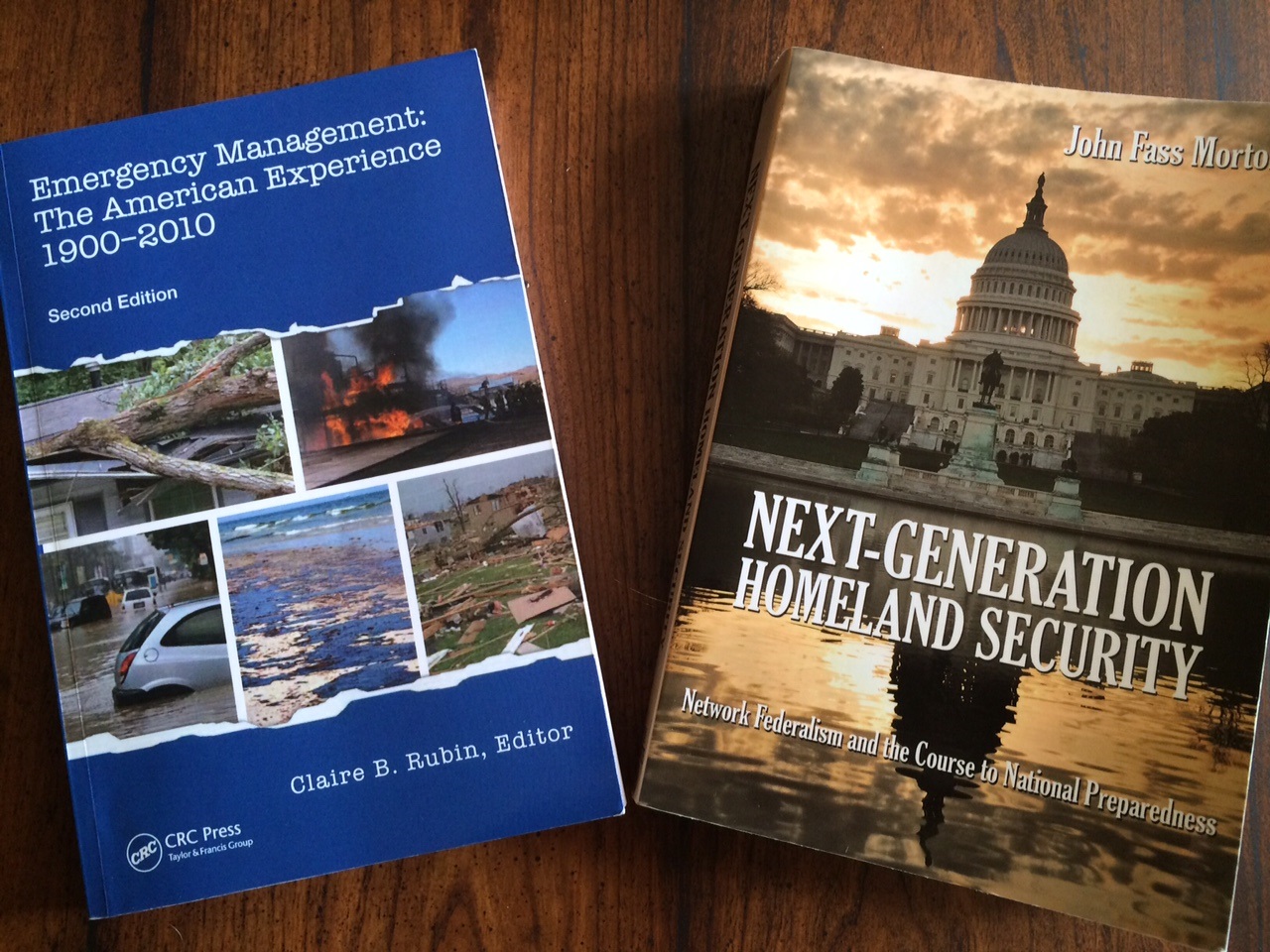
Any examination of this history of emergency management shows that politics seem to shape the direction of what we do as much as significant disasters do.  If you are interested in reading up on this, there are two great sources I’d recommend – Emergency Management: The American Experience 1900-2010 (Rubin. 2012.) provides good summaries of benchmark disasters and legislation through the years; and Next-Generation Homeland Security: Network Federalism and the Course to National Preparedness (Morton. 2012.) provides an in-depth look at this history with detailed references to the administrations, agencies, and people involved.

Rubin and Morton References

Rubin and Morton References

While we have certainly seen an overall positive trend of progress in emergency management (which is heavily influenced and sometimes dictated by federal policy), this has come despite some political actions which have either slowed progress or sometimes fully did away with positive and effective programs.  Having major changes in policy and programs every few years has become unsustainable for our practice, especially at the local level where EM/HS programs are often coordinated by one person.  Change isn’t always bad, but changes should be put in place only after being thought-through and reviewed by professionals to ensure they are effective and sustainable – not just politically motivated.  FEMA has been doing a great job in the last several years by providing public comment periods on new and major changes to guidance.  I hope this continues.

© 2015 – Timothy Riecker

Emergency Preparedness Solutions, LLC

WWW.EPSLLC.BIZ 

UW Emergency Management: Importance of Coordinating Volunteers In A Disaster: By Scott Preston

Volunteers in disaster – some food for thought.

UW Emergency Management's avatarUniversity of Washington Emergency Management Blog

VolunteerDisasters and significant incidents are defined by the instantaneous excess of community need to available resources (i.e. we momentarily have more problems than we have solutions). This can be particularly true of the University Community, where we have a city within a city. Universities have all of the same problems as a city as well as some challenges a city doesn’t have, often without all of the resources a city enjoys in terms of personnel and capabilities.

Well-trained and coordinated emergency volunteers can be a significant benefit to a University as a resource multiplier, assisting the career first responders by performing simple, common duties that do not require specialized training or authority.  This allows the University emergency officials to evaluate the incident needs and allocate the specialized career first responders to those areas where only their unique skills and authorities will do.

volunteers2 Some examples of the use of well-trained volunteers…

View original post 144 more words

Change your batteries and clocks + rotate preparedness stocks this weekend

itsadisaster's avatarFedhealth blog

Most people will gain an hour this weekend when they “fall back” early Sunday morning. While you are changing your clocks, it’s also a great time to change the batteries in detectors … and check and rotate items in disaster supplies kits since cooler weather is coming.

Use the following tips to make this a family project and include the kids so they can help choose items for kits and learn where things are, and it’s a good opportunity to discuss your Family Plan.

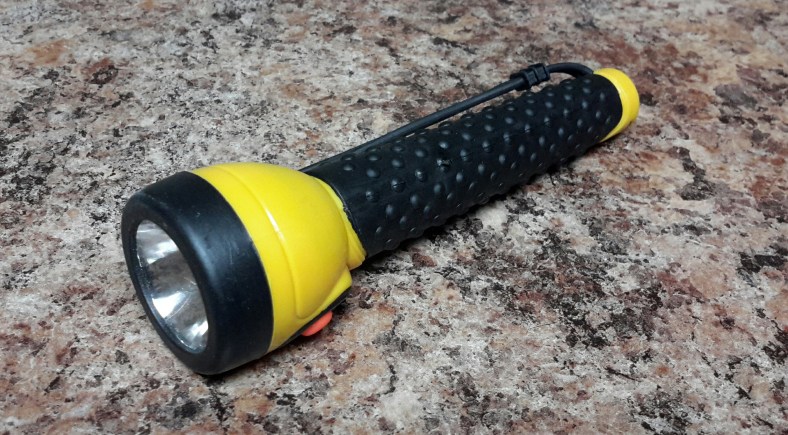
  • Change the batteries in smoke alarms and carbon monoxide (CO) detectors around your home. Officials suggest you test them at least once a month and completely replace detectors every 10 years.
  • Pull out your home and vehicle kits and rotate stored water, food, medications and other items, and test and/or replace batteries if you stashed some in kits. Remember to pack items for all your pets…

View original post 323 more words

Thanks to my followers and regular readers!

I just wanted to take a moment to thank my followers.  I’ve had some with me for quite a while and others who have recently joined.  I know there are a ton of blogs and other information sources out there and I’m quite honored that each of you take the time to look my posts over when you have the chance.

My goal is to share ideas through informative and (usually) well thought blog posts.  Some ideas are inspired by others (which I make a serious effort to cite), others are inspired by my own experiences or just ideas that happen to strike me.  This will be my 177th post and at the time of publishing this I’ve had over 15,000 views.

If you enjoy my blog please share it with others.  I’d also love to hear your thoughts and perspectives on posts, so feel free to comment.

Thanks again!

– Tim Riecker