FEMA National Preparedness System Updates

This afternoon EMForum.org hosted Donald ‘Doc’ Lumpkins, the Director of the National Integration Center from the National Preparedness Directorate. Doc had some great information on their current and near future activities regarding updates to the National Incident Management System (NIMS) and new Comprehensive Preparedness Guides (CPGs) expected to be released this year.  This is great news as we are always seeking additional national guidance and revisions which help us to maintain standards of practice.

Regarding NIMS, the guiding document has not been revised since 2008.  Doc specifically mentioned updates to NIMS to include:

  • the National Preparedness Goal and the National Preparedness System
  • Expanding NIMS across all five mission areas (Prevention, Protection, Mitigation, Response, and Recovery)
  • Encouraging whole community engagement and understanding
  • Continued emphasis that NIMS is more than just the Incident Command System (ICS)
  • Integrating incident support structures (such as EOCs – more on EOCs later)
  • Integrating situational awareness content
  • Incorporating lessons learned from exercises and real world events (Doc mentioned his office’s activity of culling through LLIS.gov to gain much of this information)
  • Including stakeholder feedback in the revision efforts
  • NIMS update activities will be conducted through the summer with an expected release of a new document this fall

As a significant component of the NIMS update, there will also be continued efforts to update the resource typing list.  Priority will be given to resources which are often requested.

The next topic of discussion was the Comprehensive Preparedness Guides (CPGs).  I was very excited to see a list of likely and potential CPGs either currently under development or expected to be developed soon.  These included:

  • Updating CPG 101
  • A CPG for Strategic Planning (This should shape out to be excellent guidance and essentially serves as a ‘catch all’ for many of the strategic planning tasks we do in emergency management)
  • Incident Action Planning (Doc said this will not be anything new or a replacement of best practices such as the Planning P.  Rather this document will serve to capture these best practices and ensure currency and critical linkages)
  • Planning for mass casualty incidents
  • Social media (a critical aspect of emergency management that is still changing regularly, and I don’t yet feel that we have a firm grasp on it and how to best use it.)
  • Access/Re-Entry to disaster sites
  • Improvised Explosive Devices (crafting hazard-specific annexes)
  • EOC guidelines (I’m hoping this document, while outlining best practices, provides flexibility for different management models of EOCs)
  • Search and rescue management

I’ve come to greatly appreciate that the National Preparedness System is a blanket thrown over the five mission areas, recognizing that each mission area (again – Prevention, Protection, Mitigation, Response, and Recovery) must be prepared for at every level of government to achieve the greatest measure of effectiveness.  There are many critical linkages within preparedness that are found within each or at least most mission areas and the continued efforts of the National Preparedness Directorate seem to be going in a good direction and incorporating the right people and information in their efforts.  Within this frame of thought, Doc mentioned that all of these efforts will utilize subject matter experts from across the country, with many drafts having public comment periods.  Be on the look out for these (I’ll post them as I see them) and be sure to review and comment on them.

As a final note, this was the last broadcast for EMForum.  After 17 years they are shutting down their program.  There has been no mention as to why they are shutting down.  While I’ve not attended every webinar, I do catch a few each year when the topic and/or speaker interest me.  The loss of EMForum is a loss to emergency management and the spirit of sharing information we have.  Through EMForum, there have been many great webinars, such as this one, where new programs and best practices are shared.  I’m hopeful the function that EMForum has served in facilitating this soon replaced so we can continue to stay up to date on what is transpiring.

©2014 Timothy Riecker

Talking Turkey – Point of Distribution (POD) Exercise

I recently read an article (although I can’t find it) about a health department who conducted a point of distribution (POD) exercise during the holidays.  Instead of handing out Tic Tacs or some other silliness, they did something great for their community – they distributed turkey dinners to those in need.  As I don’t have the article to reference and I had only skimmed over it the first time through, I don’t have the details of how they pulled this off, but having participated in the planning of POD exercises (particularly those that have a direct impact on the community, such as one that distributed preparedness kits and information) I can surmise how they did it.

As most of my readers know, emergency management is a collaborative process.  While local health departments are responsible for medical points of distribution, they can’t do it alone.  These are massive efforts to inoculate or prophylax hundreds if not thousands of persons within a narrow time frame.  These efforts require cooperation and support from emergency management, law enforcement, fire service, EMS, hospitals, volunteer organizations, and the private sector.  Commodity PODs can also be established, not necessarily run by the health department, with the intent of distributing needed commodities – such as tarps, food, or water – to the populace.  Health departments, however, are required to exercise their POD plans, which requires registration, intake, education, and inoculation of citizens.

In the example I linked to in the first paragraph regarding the preparedness kits, the health department was able to purchase most items and utilized a mix of staff and volunteers to run the POD, with support from other agencies to address traffic, parking, and other needs.  In the turkey dinner exercise, I imagine they were able to pay for some items and had others donated for this worthwhile effort.  It’s a great way of supporting the community with an immediate need while preparing for a future need.  Kudos to that community!

Now if I can only find that article…

~~~~~

6/17/14 Edit… I found a reference!

LLIS posted an ‘Innovative Practice’ bulletin about this exercise.  It can be found here.  To clarify/correct, it was actually an SNS exercise.


© 2014 Timothy Riecker

Verizon Ready for Storm Season

Great article from the Wall Street Journal on Verizon’s preparedness efforts for hurricane season.  The article seems to indicate all the right preparations, from planning and exercises to equipment and staging, response teams, and their own corporate EOC.  Much of our critical infrastructure is owned and operated by the private sector – it’s good to see the measures of preparedness Verizon takes responsibility for.  It’s certainly a model for other companies and industries – and even local governments.

-TR

Was the Sewol Korea’s Katrina?

By now everyone is familiar with the South Korean disaster this past April – the sinking of the MV Sewol and the loss of almost 300 passengers, most of which were high school students, and to date, two divers involved in the recovery of the bodies.  The vessel was carrying almost 4000 tons of cargo – over 4 times its rated limit.  The morning of its fateful trip, the top-heavy Sewol took on water and capsized.  A lack of leadership on the vessel resulting in confusion, trapping hundreds in a watery grave.  This would be a horrific disaster for any nation to face.

Through the years we’ve seen numerous ferry boat disasters around the world, most of which are off the shores of developing nations – those with few if any safety standards and a lack of regulatory and enforcement agencies.  Rarely, however, do we see ferry boat disasters occurring in developed nations.  In many regards we consider South Korea our peer and sometimes even an innovator, especially in the areas of technology and engineering.  It seems, however, that regulation has not kept up with innovation.  South Korea’s response efforts have also been criticized.

In 2005, the United States suffered the impacts of Hurricane Katrina on the Gulf Coast.  Over 1800 people lost their lives.  The disaster within the disaster was how poorly our emergency management system worked.  Their were failures at higher levels of Federal and State government, resulting in response delays and poor coordination and delivery of resources.  FEMA was blamed for most of these failures.  People were fired or asked to resign and new plans were created and implemented – most of which at the behest of legislators.

Now in South Korea in the wake of the ferry tragedy, their federal government is on the verge of launching a new national safety agency, meant to usurp responsibilities from various other federal agencies including the Ministry of Security and Public Administration, the National Emergency Management Agency, the Ministry of Oceans and Fisheries, and the Coast Guard.  Change is clearly needed, but will a new organization bring about the changes needed to protect the citizens of South Korea?

We tend to see a great deal of change when tragedies such as this occur.  Obviously changes need to be made, but few accept responsibility.  Changes also seem to be made to give the illusion of progress, with no real plans set in place to address the underlying issues that exist.  It seems people feel that change itself will provide the fixes which are needed.  We’ve seen reorganizations put in place at FEMA on several occasions, intended to streamline or address dysfunctionality.  We’ve seen the same happen with the American Red Cross – who seems to alternate between two different organizational models with each decade.  Just recently the Secretary of the Veterans Affairs Administration resided amidst their scandal – activities which have taken place quite a distance from his post, activities which you hear little responsibility taken by the individual hospital administrators where it truly lies.

It’s not to say that all organizational change is unnecessary.  Organizations are organic, living, breathing entities – not static creations.  They must evolve and adapt to continue being successful.  That doesn’t mean, however, that every occurrence of negative press necessitates an organizational change.  Organizational changes are expensive in time, money, and the anxiety of employees.  They stall out progress of the organization until rebuilding is complete, then progress resumes slowly as the kinks are worked out.  Many think a plan for reorganization is simply drawing a new organization chart and that its implementation, after the firing of a few people and handing out new titles to others can be implemented overnight.  This, clearly, is fundamentally wrong.  Consider that even small businesses put a great deal of time into creating business plans which outline the resources, organization, and strategy of a new company.

I would challenge that it’s the people and the culture of these agencies that need to change.  Certainly they need new or different approaches to problems, some adjustments in their chain of command, and the tools to do their jobs better.  A radical reorganization should only take place if it’s completely necessary.  Consider what the creation of DHS has done for us – yes, their have been some improvements in prevention, preparedness and response; but at what cost?  A massive umbrella agency with coordination and leadership problems of its own.  DHS didn’t escape Katrina unscathed either due to its position between the FEMA Administrator and the President.

It seems that reorganization is the easy knee-jerk answer to problems.  Let’s slow down a bit, assess the failures and their causes, and address the internal problems first.  Without doing so, new agencies and new titles will carry the same problems.

© Timothy Riecker 2014

Loss of a Mentor and Friend

powahn4fsw1azzo


A few days ago the EMS and first responder community lost a great man, Michael Hickey from Schuyler, New York.  He lost his life to the impacts of cancer which he was diagnosed with in 2000.  Fighting disease was no stranger to Mike as he fought multiple sclerosis for many years prior.  Despite facing all this adversity, Mike was not defined by these diseases.  He spent his life in service to others.  He served our nation as a radio operator in the front lines of the Vietnam War.  Upon his return home he used the GI Bill to put him through nursing school and soon after became a paramedic in the early years of the EMS program not only in New York State, but across the country.  Mike was a formative member and long-time captain of the Schuyler Volunteer Fire Company’s ambulance service and helped shape and influence EMS in central New York for decades.  Through his years of service he saved many lives and helped teach many EMTs and paramedics who would go on to save even more lives.

I first met Mike when I was three or four years old, having fallen onto our living room coffee table and cutting my head.  Mike was on the ambulance that responded.  Of course I don’t remember that meeting.  About 15 years later I would meet Mike again when I had joined the fire department and expressed interest in becoming an EMT.  While I took my EMT course in the classroom, Mike taught me in the field, encouraging me to ride as many EMS calls as possible.  He taught me first by showing me what to do then eventually by guiding me as I did the activities myself and giving me feedback.  Mike was my first professional mentor, always encouraging me to learn more, get involved, and do my best for the patients we served.  While I was still learning, he treated me like a peer.  I saw in Mike the professionalism, motivation, and knowledge that I wanted to reach in my career along with his passion for teaching and helping others.  Mike believed in me enough that he asked me to join him in a new medevac venture, which was another opportunity to learn a great deal and continue working with Mike for some time.

Through the years Mike became a good friend, as did his family.  He leaves behind his wife Pat and his grown children Wendy and Mike, Jr., two grandchildren, and countless people who he trained, mentored, befriended, and aided.  Mike Hickey is an  example of someone who left an amazingly positive impact on the world through his selflessness and professionalism.  Rest in peace, Mike.  You will be missed by many.

A Guide for Analysts

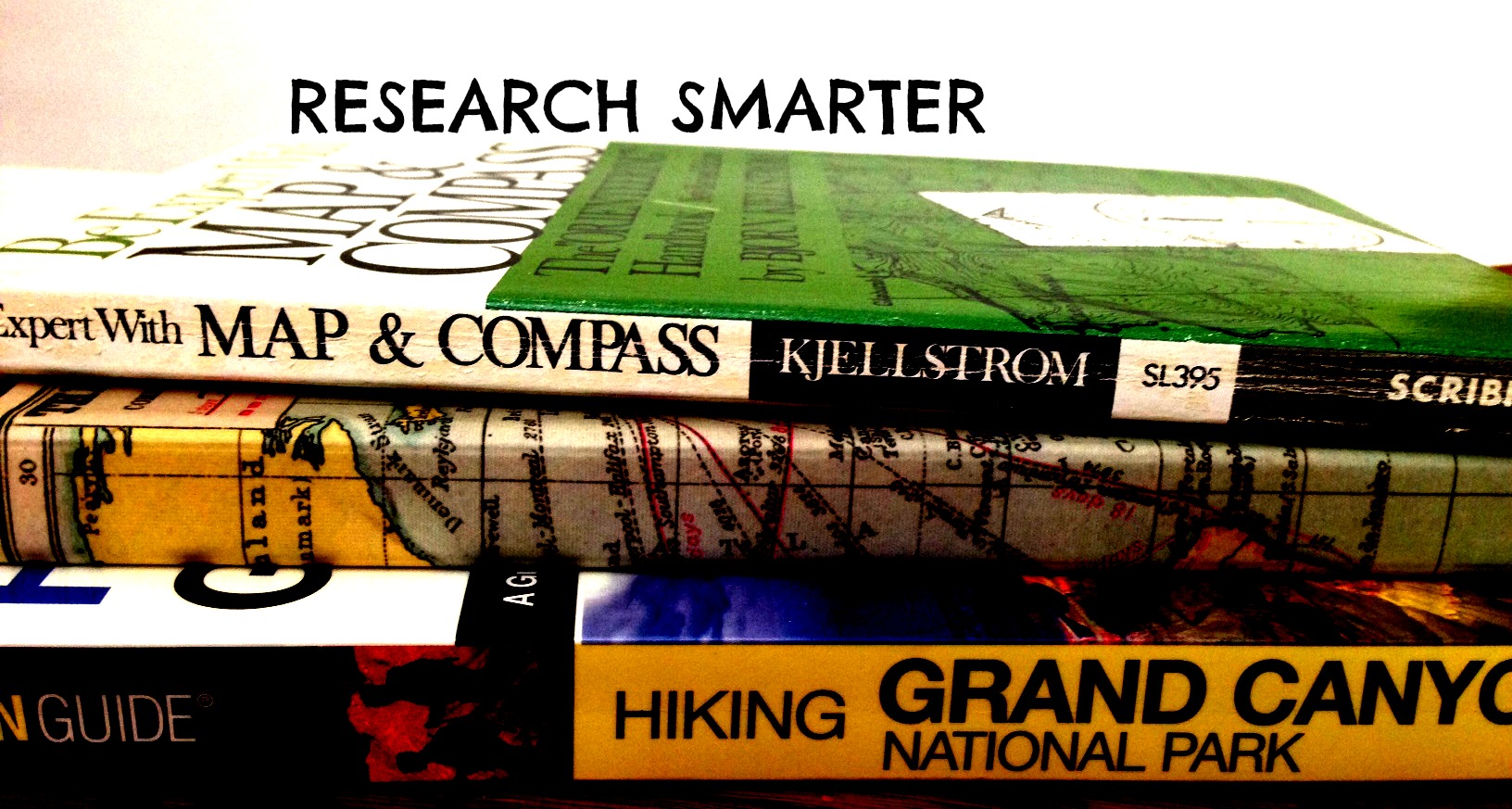
Research is an essential activity to instructional design and emergency preparedness activities such as plan writing and exercise design. These are great tips to help your research be more effective!

anne202's avataranalysts compass

GuidebookPhotoforPost

Below is a guide to help you research smarter and gain a better understanding of your sources and source selection process.

  1. The first step in the research process is identification of the problem you are trying to solve.  This requires written acknowledgment of what you are looking for and why.   Spend some time thinking about this and write down at least three detailed reasons.  The more work you do on the front end will save you time in the long run.

 Here are some questions to help guide this process:

  • Do you need an answer to a question?
  • Are you trying to prove or disprove a fact or hypothesis?
  • Are you collecting information to compare and contrast?
  1. After you have determined the problem statement or research question, consider what you might already know about the subject of inquiry.  I often complete this step by brainstorming in two categories: material information…

View original post 173 more words

International Cooperation in Emergency Management

I just read an article discussing some high-level meetings between the nations of Turkey and Azerbaijan in regard to emergency management.  While the article was short, it seemed to indicate hope in further discussions and cooperation between the two nations.  Admittedly, I didn’t know precisely where Azerbaijan is relative to Turkey so I looked up the region on Google Earth.  Interestingly enough, the two nations don’t border each other, being separated by the nations of Georgia to the north and Armenia to the south.  Kudos to them for meeting and learning from each other.  These types of relationships have to start somewhere, and it usually starts with understanding.

I continue to be interested in topics on international emergency management.  Even here in the US, despite the amount of cooperation that exists along our northern border with Canada, we aren’t as familiar as we should be with many of their practices in emergency management (for info on EM in Canada, visit this blogger’s website).  I’ve written in the past about some emergency preparedness practices in Cuba and programs and projects elsewhere around the globe, have visited emergency managers in Australia (who in recent news announced the Australian Emergency Management Institute will be shutting down physical operations due to budget issues – very unfortunate), worked a fair amount with our Canadian neighbors, met with a delegations from Israel and South Africa, and hope to visit emergency managers in other nations as I travel.  But that’s really not a lot… I want to learn more.

Unfortunately, many emergency management texts I’ve come across, either in professional or academic research, discuss ‘international emergency management’ in globalized terms.  They discuss USAID, the United Nations, the International Red Cross, and other large-scale efforts.  These are certainly important facilitators of global response and relief, but I’d like to know more about the programs of individual nations.  Where in government do their emergency management agencies reside?  Is it within the Ministry of the Interior, such as in Turkey, or does it fall within their military like many other nations?

What can we learn from other nations?  My previously mentioned post on Cuba cites quite a bit we can learn from them (isn’t it time to move past this diplomatic silliness we have with Cuba?).  It’s rather self-centered of us here in the United States to think that we do it best or that we can’t learn from others.  Many international conferences on emergency management are held in other nations (especially within the EU).  I wonder how well represented the US is at these conferences.The International Association of Emergency Managers is headquartered here in the US, but the IAEM conferences don’t see much of an international representation.  Certainly we have identified many best practices here in the US – things we should share with others – but we should also be open and willing to learn from others as well.

So much of our lives is global in nature.  We have a global economy.  My Toyota pick up truck, sold in the US, was made in Mexico.  Our cultures, foods, and customs have blended.  We track health epidemics globally because we know how quickly they can spread.  Many people are bi- and tri- lingual – often by necessity of business or family.  And certainly we recognize the global impact of disasters where no one is immune to their impacts.  While I’m not involved in international emergency management efforts, it seems, from an outsider’s perspective, that few people are.  Let’s learn more from each other.  We’ll all be better for it.

Tim Riecker


Are you Ready for Hurricane Season 2014?

Today begins National Hurricane Preparedness Week, ushering in hurricane season which starts a week from today on June 1st.  In the last 10 years we have seen some absolutely devastating hurricanes, including Hurricane Katrina in 2005 and Hurricane Sandy in 2012.  These storms are powerful, taking lives, destroying homes and infrastructure, and changing the landscape.  We were reminded that these storms can bring strong winds and flooding rainfall not only to coastal areas but well inland where governments and residents may not be as prepared as they should.

The graphic below is the National Hurricane Center’s prediction for the year.  While there is plenty of science behind this, it’s an imperfect science.  It’s one thing to predict tomorrow’s weather, it’s something else entirely to predict Atlantic storms two months from now.  Like most things in emergency management, it’s a guide – so don’t let it lull you into false confidence.  Be sure to prepare!

2014 Atlantic Hurricane Forecast

2014 Atlantic Hurricane Forecast

What do you need to know to prepare?  The graphic below has a list of seminars conducted by the National Hurricane Center which are accessible via YouTube.  The first one starts today!  Go to this website for more information and the links to the YouTube videos.

Hurricane Preparedness Courses

Hurricane Preparedness Courses

Be smart this year and make sure you and your family are prepared and safe.  Government and business emergency managers – be sure to give your hurricane plans and associated annexes one more look this week to make sure they are current and ready to activate.  Also, there is no time like the present to make improvements.  Just because we’re entering hurricane season doesn’t mean you can’t update plans now.  Don’t wait until hurricane season is over!  Be sure to distribute copies of the plans to key stakeholders and to run a seminar to remind people of the general content of the plan and what is expected of them in the implementation of the plan.  Pay special attention to trigger points, decision points, and succession.  Be sure to verify the availability of key resources; test generators and IT fail overs.

If you are looking for some assistance in reviewing your plans, training staff, or exercising plans please contact Emergency Preparedness Solutions, LLC at consultants@epsllc.biz.  We’re happy to assist you!

Are you ready???

Creating Operational Emergency Plans

I was inspired for this article from an email I received earlier today from Lu Canton, a rather prolific emergency management consultant who has branched a bit into consulting consultants.  His email today (a forward from his blog) was about making emergency plans ‘real’.  His point was that many planners focus on checking the boxes of the list of planning requirements (those prescribed by law, regulation, etc.) rather than focusing on ensuring that you have a plan that can actually be implemented.  He conducted a webinar over a year ago which I had blogged about.

Planning requirements are important, as they largely stem from lessons learned from earlier incidents.  Granted, some of these requirements come about being translated through the eyes and ears of politicians whose staffers write the legislation and don’t understand emergency management at all – resulting in convoluted, contradictory, and poorly focused requirements.  Requirements lead to standards, helping to ensure that emergency managers are addressing the needs of their jurisdiction and best practices in the industry.  To help guide us through this, many higher level agencies provide templates.  I’ve pontificated in the past about the danger of templates, which have a place in reminding us of these requirements and help us with format and flow, but are often misused by individuals who simply seek to fill in the blank with the name of the jurisdiction and claim they have a finalized plan.

How do we avoid falling into this trap?  Follow the planning process!  FEMA’s Comprehensive Preparedness Guide (CPG) 101 provides an overview of this process for creating emergency operations plans.  The two initial steps – forming a planning team and conducting a hazard analysis – are absolutely critical to the integrity of the process and ensuring a quality plan that meets the needs of your jurisdiction by addressing your threats and hazards.  Planning teams then need to consider these threats and hazards, make reasonable assumptions about their impacts (using a credible worst case scenario), then identify resources and strategies the jurisdiction will undertake to solve the problems they will face.

Does all this mean that a plan needs to be written from scratch?  Of course not!  In fact I strongly encourage people against it.  It’s practically guaranteed that you will forget a critical element.  One of the greatest things in the emergency management community is how we learn from each other.  You can reference templates you find, examine plans of your neighboring jurisdictions or jurisdictions similar to you, check out what is on LLIS.  There is plenty of great content you can examine and apply for your own use.  Just ensure that you carefully review and consider how it applies to you.

As you write the plan, think the details through.  This will help ensure that your plan is operational, not just meeting requirements.  Discuss with your planning team what is expected of each assisting and cooperating agency for each incident type.  Who will be in charge?  What resources will be necessary and where will you get them from?  What would the objectives be and what processes and decision points must be conducted to accomplish those objectives.  As you create the plan, map out these processes and ensure that you’ve considered the who, what, where, when, and how of each step in each process.  Recall that you are planning at a strategic level, not a tactical level.  Planning at a tactical level is nearly impossible with a pre-incident (aka ‘deliberate’) plan.  Tactics will be addressed during the actual response, hopefully referencing the EOP/CEMP you are writing now, and implemented through an incident action plan (IAP).

Remember, though, the proof is in the pudding, as they say.  Your plan needs to be tested to ensure viability.  Use a table top exercise to test policy and decisions, then a functional exercise to test the implementation of the plan and higher level tactics.  Full scale exercises and drills can test the tactical implementation of plans.  Good evaluation of the exercises will lead to planning improvements.  For insight on the exercise process, you can check out my exercise management series of posts referenced here.

Remember: when it comes to planning – keep it real!

Tim Riecker