Business Civic Leadership Center and Emergency Management

This morning I received my semi-regular e-mail update from the Lessons Learned Information Sharing (LLIS) folks at the US Department of Homeland Security.  If you are in the EM/HS field and are not on LLIS, I strongly encourage you to do so.  It’s a great community of practice, facilitating the sharing of lessons learned and best practices in the field.  One document that was listed in the e-mail was The Role of Business in Disaster Response.  This document outlines case studies and best practices of businesses supporting all aspects of emergency management nationally and locally.  It was published by the Business Civic Leadership Center of the US Chamber of Commerce.  Admittedly, I was not aware of this office within the US Chamber, nor was I aware of their Disaster Program, which offers some great resources to businesses. 
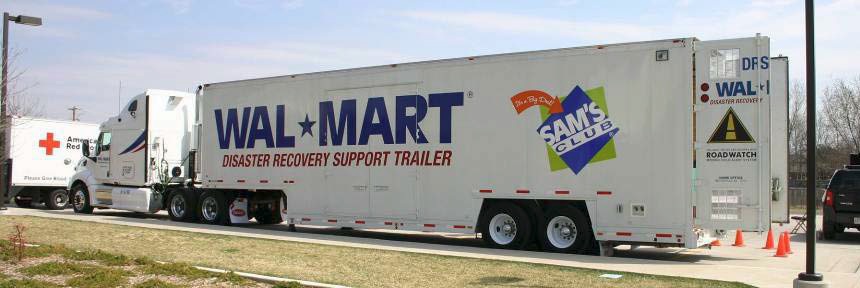
I’ve blogged in the past about the importance of public-private partnerships in emergency management and the incredible positive impacts it can have.  Wal-mart, in particular, has gotten a lot of good press about their emergency business operations, and more recently since Hurricane Sandy I’ve seen some media attention given to other companies such as Home Depot, highlighting their emergency operations centers and their relief efforts.  In a presentation I saw from Wal-Mart a while back, the company highlighted three priorities in regards to emergency management: 1) take care of its people, 2) take care of its operations, 3) take care of its communities.  Just these three priorities say a lot about the company.  They realize their people are their most important assets.  Next, they strive to ensure business continuity.  Lastly, with their business operations now being able to support it, they take care of the communities they have a presence in.  What a great business model!

The integration of the private sector into emergency management needs to be at all levels.  The National Operations Center (NOC), run by the US Department of Homeland Security, includes private sector representatives.  How can this be improved?  At the state level, many states either include private sector representatives in the State Emergency Operations Center or have a separate but connected Business Operations Center, solely focused on the coordination of private sector efforts.  Both of these options help expedite private sector resources to emergency management efforts – especially when used as an extension of the EOC’s supply unit.  There is also a recognized expertise between private sector and public sector emergency managers.

County and local emergency management programs can also benefit.  Where national and international companies are usually found at the NOC and state EOCs, the local management of these chains can work with county and local EOCs.  Also, don’t discount the value of small businesses in the area.  They, too, have a wealth of knowledge and access to resources.  Every community should form a disaster business alliance of some sort, or welcome private sector involvement with local VOADs.  You can work with local chambers of commerce to make this happen.  I’ve established a great relationship between my company, Emergency Preparedness Solutions, with my local chamber of commerce and have been providing information to members on emergency preparedness and business continuity through meetings and articles, as well as a presentation that I’ll be doing in a few months.

Never think that emergency management is too big of a concept for your local community.  It’s not just something done by FEMA or by the state.  In a disaster we need to help our neighbors and our communities.  The biggest impact is always locally.  Establish those relationships now and make a difference!

Red Cross ReadyRating Program

I recently sat through a webinar on the Red Cross ReadyRating Program.  Admittedly, I’ve perused their site before, and even recommended their services – which I certainly understood – but I never realized how in-depth their program goes.  The webinar was hosted by Agility Recovery, who regularly puts on brief and informative programs of good quality. 

The ReadyRating program is a web-based service, absolutely free of charge, that provides businesses, organizations, and schools with a free disaster readiness assessment tool.  The tool seems to be useful to entities large and small, even allowing larger businesses or organizations with multiple locations to conduct an assessment for each location folded in under the same account.  The user answers questions and the tool quantifies the entity’s measure of preparedness and provides customized reports showing various data in a variety of formats (charts, report card, etc).  ReadyRating apparently even grades the amount of community participation the entity has relative to preparedness efforts (see my previous post re: Public-Private Partnerships).  The tool also enables creation of a customized emergency response plan – something I’m a little cautious of (generally speaking, I’m not in favor of ‘fill in the blank’ planning) – but I’ve not actually used the tool, so I can’t speak from direct experience on it.

ReadyRating refers to their users as ‘members’ – and they have a fairly impressive membership, both in numbers (2,689 businesses and organizations, 570 schools) as well as in names (they list the likes of Anheuser Busch, Grainger, Monsanto, and others).  Feedback from members is very favorable, and the tool provides for the ability to do re-assessments and showing progress to the user – that’s great encouragement to them!  They even show comparisons with other members (anonymously) (comparisons are provided nationally, state-wide, number of employees, and by industry).

ReadyRating is quite an impressive tool – and it’s free!  I have it listed on the links page of my company’s website – Emergency Preparedness Solutions, LLC along with other resources.  Check it out!

Public-Private Partnerships: A Necessity in Emergency Management

Over the last several years there have been volumes of articles written on the value of public-private partnerships in Emergency Management.  So why is it still like pulling teeth?  Yes, we have great private sector partners in EM – the likes of WalMart, UPS, Grainger, and others.  The value of having these partnerships has certainly been demonstrated through the years, in both local disasters and national-level disasters.  Even in preparedness, these partnerships help carry our message to the masses.  FEMA promotes a program called PS-Prep, designed to engage private sector preparedness while encouraging their involvement locally in emergency management efforts.

Government simply can’t do it without the private sector.  It’s not because the public sector is lacking, it’s because of the position and resources available to the private sector.  They have more resources and greater flexibility.  Why wouldn’t they want to help?  Their customers and employees live in the area.  It’s a solid decision to invest in the community (or communities) in which your company is located.  It doesn’t always involve a financial commitment – it encourages preparedness for the business itself; it provides an opportunity to engage employees in community efforts (all with the company name being recognized – it’s free marketing!); and perhaps an opportunity to provide products – discounted or free – to relief efforts in the aftermath of a disaster.  Commodities such as building materials, water, and food are in great need in the aftermath of a disaster.  Even trucks and people.  Yes, these things all cost money, but there is a lot of free press and good will that goes along with it.

There are plenty of businesses that contribute after a disaster occurs – certainly they want to help.  They can all have more impact, however, by joining up with local emergency preparedness efforts before a disaster ever occurs.  Joining a community organization, such as a VOAD, or entering into memorandums of understanding with local emergency management agencies prior to a disaster makes a huge impact.  The partnerships made with other businesses, government agencies, and community organizations will also be to their benefit.

Businesses large and small – consider both the preparedness of your company and your community.  There are opportunities to be had with both!

Every Business Should Have a Plan to Stay in Business

Over the last few weeks I’ve had the pleasure of making a number of presentations to and connections with businesses and organizations over the topic of Business Continuity.  I’m thrilled that people are thinking about this and that my interactions brought about some great discussions.

Businesses can and do fail in the aftermath of a disaster!

Let’s look at some numbers:

  • Over 25% of businesses do not reopen following a major disaster (Institute for Business and Home Safety)
  • 70% of small firms that experience a major data loss go out of business within a year (Price Waterhouse Coopers)
  • 80% of companies that do not recover from a disaster within one month are likely to go out of business (Bernstein Crisis Management)
  • Of those businesses that experience a disaster and have no emergency plan, 43 percent never re-open; of those that do reopen, only 29 percent are still operating two years later (The Hartford Financial Services Group)

The Institute for Business and Home Safety says that each year disasters such as floods, hurricanes, tornadoes, and wildfires force thousands of businesses to close.  But even more common events, such as building fires, cause the same result.  So what can you do?

  • Ensure that your building meets local code and safety standards, including electric, plumbing, chemical storage, and fire safety (don’t forget the smoke and carbon monoxide detectors and fire extinguishers!).
  • Check your insurance plan to ensure that you are getting the best coverage possible.
  • Back up computer data and files regularly to an offsite location.
  • Create a disaster plan for your business to address life safety issues.
    • Create a business continuity plan to address how you will stay in business after a disaster.

There are a number of resources for business preparedness available at the following:

TR