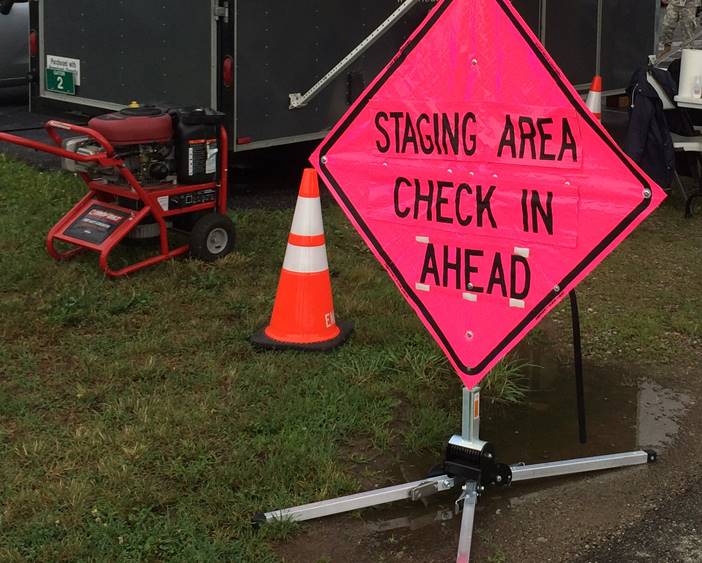
Incident Check In
I recently took part in the management of an exercise in which a Type 3 incident management team (IMT) was among the players. As part of their initial set up they immediately recognized the importance of checking in and tracking resources. This is an activity which is often overlooked at the onset of an incident and is a royal pain to catch up on once the need is realized. There were a few things which they could have improved upon, though, which seriously impacted their effectiveness and efficiency.
- They spent time checking in each vehicle as equipment. Not every vehicle needs to be tracked in an incident. Generally, the sedan, pick up, or SUV you come in on isn’t special enough that it requires tracking. Huge waste of time, people, and effort. Consider the nature and capability of the equipment that is coming through your access point. Is it a specialized resource? Will it be applied tactically? Will it be supporting logistical needs? Is it rented or leased? These are the conditions that should be considered when deciding what equipment to track.
- They marked equipment using bottled shoe polish. Not a bad idea, except it rained all week, and within hours of application most of the markings couldn’t be read. Windshield markers, similar to what car dealerships use, are cost effective, waterproof, and clean off easily with mild window cleaners.
- Equipment that was checked in was never logged in detail. What’s the difference between E-01234 and E-01235? We will never know as no descriptions were entered into their tracking system.
- As vehicles flowed in to the staging area, people will directed to check in at the command post. This is obviously excellent, except to get to the command post people had to pass by the main access to the incident site. This meant that many people did not check in as directed. They got distracted by the incident and associated response activity and never made it to the command post to check in. This severely impacted the effectiveness of accountability.
Sometimes people would try to explain these things away by saying “It’s just an exercise”, but exercises are an opportunity to do things the right way, not skimp and cut corners. While their intent was good, their process and results were quite poor. If we are supposed to train the way we fight, as they say, this team has a ways to go to be more effective with resource accountability. On the surface resource tracking looks easy… but it’s not. There is a lot of complexity, variables, and attention to detail that must all work together well in order to be successful. The Resource Unit Leader has one of the hardest jobs in the Incident Command System.
Being who I am, I’m left wondering why this all happened. I have little choice but to blame poor planning and training. Planning is to blame for a lack of clear procedures, guidance, and decision models. The training which people receive tends to be just as vague. By now, most, if not all of you are familiar with my opinions on the current ICS training. While the referenced article does not go into the IMT/position training curricula, from what I recall of the courses I’ve taken, there are certain things taken for granted. It’s easy to put an item on a checklist that says ‘Establish check in’. OK… how? Where? When? What? Why? The answer to those questions, or guidance to help answer those questions, should be provided through training. Let’s tell people not only why check in is important, but what people and resources should be checked in, where to establish check in (what to look for and what to avoid), etc. Once we’ve trained people on it, let’s provide job aids… not just the ICS forms, but job aids that will actually help people do their jobs. While it may seem like minutia and unnecessary detail, keep in mind that we are training people to operate in austere and chaotic environments which they are trying to establish order over and only do these activities on rare occasion. Those conditions signal the need for detailed training and job aids to support sustained performance and limit the degradation of the training they received.
Bottom line – let’s take a step back, fix what we have to based upon what we’ve learned, and proceed forward so we can operate more effectively and efficiently.
Thoughts and comments are always appreciated. What have you learned or observed from incidents or exercises that needs to be addressed foundationally?
© 2015 – Timothy Riecker
Emergency Preparedness Solutions, LLC
 The Contrarian Emergency Manager