Stop Exercising Bad Plans

We know that the purpose of most exercises in emergency management (ref HSEEP) and related fields is to validate plans. That concept, though, is built on a fragile premise: that the plans are good.

Over the years, the more plans I see from various jurisdictions, the more disappointed I am practically to the extent of losing near-total faith in our profession’s ability to develop quality plans. Most emergency plans out there are crap. Garbage. Not worth the effort that has been put into them. Typically, they don’t have enough detail. Not that they need to have procedure-level detail (but those procedures should be found somewhere), but they are often written so high level that they are merely conceptual or policy-esque.

The premise that exercises are intended to validate plans would indicate a belief that the plans themselves serve as quality standards of practice for the organization(s) they are built for. The sad truth is that they are not. So, what are our exercises proving?

Gaps in exercise evaluation are a significant hurdle which are often based upon poor evaluation practices, poor AAR writing, and/or the assumption of quality plans. I find many AARs to be very superficial. They provide observations and recommendations, but no analysis. Without analysis we have no context for the observation and no examination of root cause or other contributing factors. Absent this analysis, the AARs aren’t able to truly identify what needs to be addressed. So, with the superficial, come the obvious statements and recommendations that communication needs to be improved, more ICS training is needed, etc.

What I don’t see enough of are observations, ANALYSIS, and recommendations that indicate:

  1. Plans need to be drastically improved (updated and/or developed)
  2. Responders need to actually be trained in their roles to support implementation of the plans (ICS does NOT teach us how to implement plans… in fact ICS training largely ignores the importance of existing plans)

What of the AARs that are better and actually do recommend improved plans? This leads us to the next potential point of failure: implementation of corrective actions. I see so many organizations are simply bad at this. They seem content to exercise over and over again (typically at the expense of taxpayer dollars) and come up with the same results. They largely aren’t fixing anything, or perhaps just the proverbial low-hanging fruit (i.e. more ICS training), but they aren’t tackling the harder-to-do, yet more impactful development of quality plans.

We need to stop assuming our plans are good. Exercising bad plans has little value to us and is typically more wasteful than beneficial.

Just like the potential causes identified above, there are numerous issues to be addressed. First of all, we need to recognize that not every emergency manager has the acumen for writing plans. The development of emergency plans is a hybrid of art and science. It includes hard and soft skillsets such as technical writing, systems thinking, organization, research, collaboration, and creativity. We have standards for developing plans, such as CPG101, which overall is a good standard (though it could be improved to help people use it). We have some training available in how to develop emergency plans, but there are some issues.

  • The G-235 Emergency Planning course (now IS-235) was a great course, but the big push 15-20 years ago to put so many classroom courses online to make them more accessible and to save costs largely resulted in decreased learning outcomes.
  • The classroom training in emergency planning has largely been replaced by the E103 Planning: Emergency Operations course, which is part of the Emergency Management Basic Academy. This is a pretty good course but being part of the Basic Academy (which is a great concept) also limits access to some people as the general practice is (understandably) to give registration preference to those who are taking the entire academy. Sure, the entire academy makes for more well-rounded EMs, but if someone wants to focus on emergency planning, some of the other courses, while complimentary, constitute a larger investment of time and possibly money.
  • Finally, FEMA has the Planning Practitioner Program, which is a more intensive experience and certainly provides some improved learning outcomes, but with the expectation of a huge percentage of emergency managers (and those in related professions) to be proficient in emergency planning, this program simply isn’t available enough. (Note re training: yes, there are an abundance of other planning-related courses out there… I just highlighted these as examples).

I’ll also say that simply taking some classes does not make you a proficient emergency planner. Because there is art and science to it, it can’t simply be taught. It needs to be learned and experienced. Practice and mentorship are key – which is something else most EMs don’t have access to or even seek out. Training is not the only solution.

So, while this article started out with identifying the fallacy often seen in our exercise practices, I end up, once again, pointing out what I think is the biggest gap in the entirety of emergency management – bad plans. Plans are the foundation of our practice, yet we can’t seem to get it right. We are too dismissive of the necessity and process of plan development and upkeep. We are too accepting of inadequate plans that are not implementation ready. We don’t do enough to build personnel capability in plan development. So many of those who are writing plans, be they civil servants, consultants, or others, are simply bad at it. And while some have potential that is underdeveloped, others simply don’t have the acumen for it.

And the worst part about it all… we, as a practice and professional culture, are accepting it!

Many of my posts through the years have ended with a similar statement… we are treating emergency management like a game of beer league hockey. We aren’t taking it seriously enough. We need to do better and demand better. So what are you doing to support improved emergency planning practices?

© 2024 Timothy Riecker, CEDP

Emergency Preparedness Solutions, LLC®

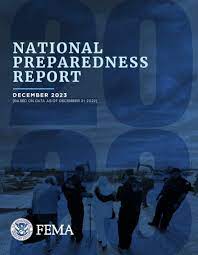
2023 National Preparedness Report

Every year at this time of year, FEMA delivers the National Preparedness Report. Much like that one relative that is always a horrible gifter around the holidays, the infamous legacy of a long line of NPRs persists, reinforcing the waste of time, effort, and money through lack of value. It truly pains me to be so negative about these documents, but the disappointment of these documents pains me more. The development of the NPR is a great opportunity to provide analysis of meaningful information, yet it is consistently inconsistent in the style and format presented every year, and falls severely short of any potential this document could have. That said, there are always a couple of shining moments that each report has, if only they could embrace those and use them every year! If you would like a summary of the abysmal history of NPRs through the years, you can find my previous posts here.

The 2023 NPR (which is developed from 2022 data) kicks off in a laughable fashion in the Introduction and Executive Summary, which identifies four key findings:

  1. Increasing Frequency, Severity, and Cost of Disasters
  2. High Community-Level Risk
  3. Ongoing Individual and Household Preparedness Gaps
  4. Lack of Standardized Building Code Adoption

This is followed immediately by three recommendations:

  1. Target Investments Towards Particular Core Capabilities and Mission Areas
  2. Reduce All-Hazards Challenges Through Targeted Actions and Increased Coordination
  3. Address National Gaps to Prepare for Catastrophic Disasters

Following the Introduction and Executive Summary, the report is structured with information on Risks, followed by what they claim are ‘trends’ in Capabilities, Focus Areas of certain Core Capabilities, and a conclusion. Let’s take a quick look at each.

A formatting issue that immediately struck me as I explored the sections was that they carried through numbering of sub sections which began in the Introduction. Seems minor, but it’s awkward and made me think in the first (Risk) section that I had missed something when the first numbered subsection (three pages into the section) started with 4. Overall, the section on Risks provides some good summaries and graphics that emphasize the increasing frequency, severity, and cost of disasters, providing both annual trend information (I like this!) as well as information specific to 2022. Page 10 of the document provides an interest graph derived from national 2022 THIRA/SPR data that lists hazards of concern. The top 5 hazards of concern listed are:

  1. Cyber Attack
  2. Pandemic
  3. Flood
  4. Active Shooter (can we PLEASE universally adopt the term Active Shooter/Hostile Event??)
  5. Earthquake

Wanting to see if/how dots were connected, I read ahead a bit on these to see if there were any connections. In the Focus Areas section, Cybersecurity is prominently identified within the discussion on the Public Health, Healthcare, and EMS Capability as a threat to the healthcare sector. While this is true, the Cybersecurity threat permeates every other sector, which is only vaguely alluded to in the discussion on the Long-Term Vulnerability Reduction Capability. The Public Health, Healthcare, and EMS Capability did reinforce Pandemic preparedness needs, though the Active Shooter and Earthquake concerns had virtually no mention in the document beyond the Threat/Hazard discussion.

While I do appreciate the mention of the National Risk Index in this section (it’s a great tool), they miss the opportunity to really contextualize and cross reference threats and hazards of concern.

The section on Capabilities highlighted something I found both interesting and confusing…

In the Response mission area, communities report low levels of grant investment and lower target achievement in Mass Care Services and Logistics and Supply Chain Management. Communities also consider Mass Care Services a high priority capability. These capabilities and three of the four Recovery Core Capabilities fall within these ranges and may warrant increased grant investments.

My commentary: If communities are identifying Mass Care Services to be a high priority, why are they investing lower levels of grant funds into that capability?

The first subsection of the Capabilities section is Individual and Household Preparedness. While clearly an important area of discussion, it’s not a Core Capability, nor does the report associate any Core Capabilities with this topic. The next subsection on Community Preparedness does make some connections to Core Capabilities. It’s in this subsection that the updated chart of Grant Funding by Core Capability is provided. Yet again, the Housing Core Capability is among the loss leaders, with no sign of that ship being steered on the proper course. I find it interesting to note that Supply Chain Integrity and Security, and Economic Recovery are also among the lowest investments, despite some severe lessons learned from COVID-19 in those areas.

Among the leaders in Grant Funding by Core Capability are Planning, Operational Coordination, and Operational Communications. All that money spent, yet those areas continue to be consistently among the highest areas for improvement in after-action reports. I’d love to see an audit detailing more precisely what activities that money is being spent on within these Core Capabilities and what the outcomes of those activities are, as I suspect we are spending a whole lot of money with little resulting value. I’ll also note that this is only 2022 data. Every year I’ve written about the NPR I’ve suggested the need for multi-year analysis so we can actually identify trends, progress, and gaps over time. Single year snapshot-in-time data has such limited value.

The last subsection in the Capabilities Section is National Preparedness. Much of the information in this section is provided in a table on National-Level Capability Gaps and Recommendations. The table is organized by POETE but also includes areas on Capacity and Coordination (I’d suggest that the items contained in these two areas could have been placed within POETE). The introduction to this table states that the table summarizes high-level gaps and recommendations at the national level across all Core Capabilities. While in essence this something I’ve suggested in my commentary on previous year’s reports, this is TOO high level. It’s so high level that it is completely absent of any context or detail to really be meaningful. I’m also left wondering (doubting, really) if future grant funding will target any of these recommendations.

The next section is Focus Areas. This section highlights four specific Core Capabilities:

  1. Fire Management and Suppression
  2. Logistics and Supply Chain Management
  3. Public Health, Healthcare, and EMS
  4. Long-Term Vulnerability Reduction

While the reason for these four, specifically, to be covered is pretty evident based upon associated risk, threats, hazards, and needed improvements; I’m still left wondering why only these four, especially when significant gaps were identified in so many other Core Capabilities, as well as the lack of progress I noted earlier on other Core Capabilities despite extraordinary investment.

Each of these Core Capabilities is organized by a discussion of associated risk – which included some quality identification of trends, costs, and impacts; capability gaps; and management opportunities. Overall, the content in these areas is fine, but nothing really earthshattering. The Management Opportunities, which are mostly corrective actions, have focus ranging from federal, to SLTT, NGO and Private Sector, and Individuals and Households. Some good ideas are listed, similar to last year’s approach, but as with the previous section, I’m still left wondering if any of these actions will become funded priorities.

I noted in the Conclusion that the report does include an email address for feedback. I don’t think I ever saw this before, but I’ll be sending my collected commentary from this year and previous years to hopefully spur some changes to make the report more valuable than a superficial summary.

© 2023 Timothy Riecker, CEDP

Emergency Preparedness Solutions, LLC®

Gaps in ICS Doctrine and Documents

Last month I got to spend several days with some great international colleagues discussing problems and identifying solutions that will hopefully have a meaningful and lasting impact across incident management and emergency response. No, this wasn’t at an emergency management conference; this was with an incredible group of ICS subject matter experts convened by ICS Canada, with a goal of addressing some noted gaps in ICS doctrine, training, and other related documents. While the focus was specific to the documents under the purview of ICS Canada, most of these matters directly apply to ICS in the United States as well.

Overall, our doctrine, curriculum, etc. (collectively, documents) across ICS is a mess. Broadly, the issues include:

  • Poor definitions of key concepts and features of ICS.
  • Lack of proper emphasis or perspective.
  • Lack of inclusion of contemporary practices. (management concepts, social expectations, moral obligations, even legal requirements, etc.)
  • Lack of continuity from doctrine into supporting documents and curriculum. – Everything needs to point back to doctrine. Not that every tool needs to be explicitly included in the doctrine, but they should be based upon consistent standards.
  • A need to support updated training to improve understanding and thus implementation.

As we discussed among the group and I continued thought on this, I’ve realized that ICS, as it relates to the US (NIMS) has so little doctrine spread across a few NIMS documents (the core NIMS doctrine, National Qualification System documents, and a few guidance/reference documents – which aren’t necessarily doctrine). In the US, via the National Wildfire Coordinating Group (NWCG), we used to have a whole array of documents which could be considered ICS doctrine (in the days of NIIMS <yes, that’s two ‘eyes’>). When the responsibility for the administration of ICS (for lack of better phrasing) shifted to DHS, these documents were ‘archived’ by the NWCG and not carried over or adopted by the NIMS Integration Center (NIC) in DHS who now has responsibility for NIMS oversight and coordination. The NIC has developed some good documents, but in the 20 years since the signing of HSPD-5 (which created and required the use of NIMS) it seems the greatest progress has been on resource typing and little else.

Looking at current NIMS resources, I note that some are available from the core NIMS site https://www.fema.gov/emergency-managers/nims while others are available from EMI at https://training.fema.gov/emiweb/is/icsresource/. All these documents really need to be consolidated into one well organized site with doctrine identified separate from other resources and documents (i.e. job aids, guidance, etc.).

I thought it might be fun to find some examples so I decided to open up the ICS 300 instructor guide, flip through some pages, and look at a few concepts identified therein that might not have much doctrinal foundation. Here’s a few I came up with:

  • Formal and Informal Communication
    • These concepts aren’t cited anywhere in NIMS documents. While superficially they seem to be pretty straight forward, we know that communication is something we constantly need improvement in (see practically any after-action report). As such, I’d suggest that we need inclusion and reinforcement of foundational communications concepts, such as these, in doctrine to ensure that we have a foundation from which to instruct and act.
  • Establishing Command
    • This is mentioned once in the core NIMS doctrine with the simple statement that it should be done at the beginning of an incident. While often discussed in ICS courses, there are no foundational standards or guidance for what it actually means to establish command or how to do it. Seems a significant oversight for such an important concept.
  • Agency Administrator
    • While this term comes up several times in the core NIMS doctrine, they are simple references with the general context being that the Agency Administrator will seek out and give direction to the Incident Commander. It seems taken for granted that most often the Incident Commander needs to seek out the Agency Administrator and lead up, ask specific questions, and seek specific permissions and authorities.
  • Control Objectives
    • Referenced in the course but not defined anywhere in any ICS document.
  • Complexity Analysis
    • The course cites factors but doesn’t reference the NIMS Incident Complexity Guide. Granted, the NIMS Complexity Guide was published in June 2021 (after the most recent ICS 300 course material), but the information in the Complexity Guide has existed for some time and is not included in the course materials.
  • Demobilization
    • Another big example of the tail wagging the dog in NIMS. Demobilization is included across many ICS trainings, but there is so little doctrinal foundation for the concept. The core NIMS doctrine has several mentions of demobilization, even with a general statement of importance, but there is no standard or guidance on the process of demobilization beyond what is in curriculum – and training should never be the standard.

For ICS being our standard, we haven’t established it well as a standard. A lot of work needs to be done to pull this together, fill the gaps, and ensure that all documents are adequately and accurately cross-referenced. This will require a significant budget investment in the National Integration Center and the formation of stakeholder committees to provide guidance to the process. We need to do better.

What doctrine and document gaps do you see as priorities in NIMS?

© 2023 Tim Riecker, CEDP

Emergency Preparedness Solutions, LLC®

Ready for Anything: The Small Business Owner’s Guide to Crisis-Proofing Your Enterprise

Hi everyone!

As I’ve been swamped with work and life, I’m happy to welcome another guest post from Carla Lopez. Carla has posted on preparedness topics in the past. Please be sure to check out Boomerbig.org, a site she created for retirees who still desire to work and achieve, offering business resources for people in their golden years.

~~

The importance of emergency planning for small business owners can hardly be overstated. Many businesses focus on growth and profit, neglecting to prepare for unexpected crises that could severely disrupt operations or even force closure. Being prepared for the unexpected is not just a precaution; it is a necessity for business continuity. In this article shared below by Emergency Preparedness Solutions, we outline the crucial steps that can help small business owners prepare for a multitude of emergencies.

Recognize the Hazards

It’s essential to identify the unique risks that could potentially impact your business. These could range from natural disasters like floods and hurricanes to human-induced emergencies such as cyber-attacks or fire. Understanding these vulnerabilities helps you formulate targeted measures for each type of crisis. It also helps in resource allocation, ensuring you invest in the most critical protective measures for your specific business model.

Construct a Comprehensive Response Plan

Once you identify potential risks, the next step is to create a detailed emergency response plan. This should outline procedures for evacuations, lockdowns, or other responses tailored to different types of emergencies. Assign specific roles and responsibilities to employees so that everyone knows what to do in a crisis. A well-designed emergency plan can make the difference between controlled management and chaos when an emergency strikes.

Forge Efficient Communication Channels

Effective communication is paramount during any crisis. Establish a reliable emergency communication system that reaches all employees, customers, and other relevant stakeholders. This could be a messaging app, an email alert system, or a dedicated emergency phone line. Quick, transparent communication can help mitigate damage and ensure that everyone stays as safe as possible during an emergency.

Safeguard Your Data

In our digital age, data is often the lifeblood of a business. Ensure you regularly back up crucial information like customer records, financial documents, and employee data. To maximize security and availability, consider storing these backups off-site or in encrypted cloud storage. Data loss during an emergency can compound problems, hindering recovery and potentially leading to the loss of customer trust.

Digitize Important Documents

For businesses heavily reliant on paper records, here’s an option: digitize essential documents to ensure their safety and accessibility. Scanning and saving them as PDFs allows for secure, uniform storage that can be easily backed up and accessed remotely. This not only protects your records but also facilitates business continuity should physical access be restricted.

Educate Your Team

Employee training is a cornerstone of effective emergency management. Conduct regular training sessions to ensure that staff are familiar with emergency procedures and know how to use safety equipment like fire extinguishers or first-aid kits. Knowledgeable employees can act quickly in a crisis, helping to minimize damage and even save lives.

Stock Up on Essential Supplies

It’s easy to overlook, but keeping a well-stocked emergency supply kit can be a lifesaver. This should include first aid supplies, flashlights, extra batteries, and a supply of food and water. Ensure these supplies are easily accessible and that all employees know where to find them. Such provisions can provide invaluable support during extended emergencies like power outages or severe weather events.

Keep Your Plan Current

The world changes, and so do the types of risks your business might face. Regularly review and update your emergency plan to adapt to new circumstances. For instance, if your business expands to include more physical locations, your plan will need adjustments to account for this growth. Keeping your emergency plan up-to-date ensures its effectiveness and relevance.

Emergency planning is not a one-off task but an ongoing commitment. This article has detailed the importance of recognizing risks, constructing comprehensive plans, establishing communication systems, and ensuring both data safety and employee preparedness. In the face of a crisis, a well-prepared business stands a much greater chance of weathering the storm and emerging more resilient on the other side.

Why Being Prepared for Natural Disasters Is More Important Than Ever

Guest post!

I’m happy to have Carla Lopez return as a guest blogger, reminding us of the info we should be communicating to everyone about preparedness.

About Carla – Carla Lopez kept her entrepreneurial spirit even after retiring a couple years ago. She created Boomerbig.org for retirees who still desire to work and achieve – a site that offers business resources for people in their golden years.

~~

Natural disasters can strike at any time, leaving communities devastated and struggling to recover. While it’s impossible to prevent these events from happening, there are steps you can take to minimize their impact on your life. Being prepared for a natural disaster can help you stay safe, protect your property, and recover more quickly. Emergency Preparedness Solutions shares some of the benefits of being prepared.

Investing in Flood Insurance

One of the most important steps you can take to prepare for a natural disaster is to purchase insurance. This is especially true if you live in an area that is prone to flooding. Floods can cause significant damage to homes, businesses, and infrastructure, and without insurance, it can be difficult to recover. If you live in a flood-prone area, make sure you have flood insurance to protect your property.

Having a Plan in Place

When a natural disaster strikes, safety should be your top priority. When you’re prepared, you’ll be better equipped to protect yourself and your loved ones. This might mean having an emergency kit with food, water, and other supplies, or having a plan in place for where you’ll go if you need to evacuate. Being prepared can help you stay calm and focused during a crisis, which can make all the difference in staying safe.

Less Stress

There’s nothing more stressful than feeling unprepared for a natural disaster. When you take steps to prepare, you’ll enjoy greater peace of mind knowing that you’re ready for whatever comes your way. This can help you feel more in control during an emergency, which can reduce feelings of panic and anxiety.

Easier to Get Back on Your Feet

In the aftermath of a natural disaster, recovery can take weeks, months, or even years. Being prepared can help you recover more quickly by giving you the resources and tools you need to start rebuilding. With a plan in place, you’ll be able to make decisions more quickly and efficiently, which can help you get back on your feet faster.

Setting Aside an Emergency Fund

Natural disasters can have a significant impact on your finances. When you’re prepared, you’ll be better equipped to handle the financial fallout of a disaster. This might mean having an emergency fund set aside for unexpected expenses or making sure you have insurance coverage for different types of disasters.

Decreased Property Damage

When you’re prepared for a natural disaster, you’ll be better able to protect your property. This might mean taking steps to reinforce your home against high winds or flooding, or securing valuables so they don’t get damaged during a storm. By being proactive, you can reduce the amount of property damage that occurs during a disaster.

Improved Health

In the aftermath of a natural disaster, it’s not uncommon for people to experience physical and mental health issues. Being prepared can help you stay healthy by ensuring that you have access to clean water, food, and medical supplies. Additionally, having a plan in place can reduce feelings of stress and anxiety, which can take a toll on your mental health.

Natural disasters can be unpredictable and devastating, but being prepared can help you weather the storm. By taking steps to increase your safety, protect your property, and prepare for the financial fallout of a disaster, you can minimize its impact on your life. Whether you live in a flood-prone area or a region with frequent hurricanes, taking the time to prepare for a natural disaster is an investment in your future.

The Texas Emergency Management Academy

Continuing the recent theme of discussing standards and training in emergency management, a timely article was released with the latest Domestic Preparedness Journal Weekly Brief. The article (written by Dr. Michael Valiente, Senior Training Officer for TDEM) tells of the first Texas Emergency Management Academy, developed by the Texas Division of Emergency Management, which is an eight-month program providing training in a variety of topics. As an eight-month program (though I don’t know their class schedule) it’s certainly longer than the FEMA Basic Academy and seems quite intensive. There is even some indication of FEMA Basic Academy courses being included in the program. The article mentions starting with 20 cadets and graduating 17, which is an excellent graduation rate.

The program covers the expected topics of preparedness, mitigation, response, and recovery with some specific content identified from FEMA, TDEM, and seemingly some guest instructors from other agencies, which I think really enriches the learning experience (emergency management isn’t only performed by emergency management agencies, after all). I’m hopeful there was quality training in how to write various types of emergency plans. I’m just more and more discouraged nearly every day by the plans I’m seeing out there… but that’s a different topic.

Beyond the four fundamental areas, there are some notable additions. One of which is a basic EMT course. I’m kind of scratching my head on this one. As I’ve espoused before, I certainly have no issues with people getting additional training or professional certifications – especially in life saving skills, but EMS is not EM. I can certainly hear in my head a lot of the justifications people would use for this, and while I understand them, I just don’t know that I can agree with the inclusion of an EMT course into an EM program.

Having a program of extended duration such as this offers some great opportunity to build in some external activities, such as conferences, training, and exercises sponsored or conducted by other partners, which they absolutely did. Of course, they included training from the Texas A&M Engineering Extension Service (TEEX) which I’ve always found to be fantastic. They also had a capstone exercise which was held at the TEEX facility in College Station (highly recommend, by the way, for those who have never been). Certainly, a great opportunity to utilize a terrific resource in your back yard.

Another noteworthy addition was an emergency management job fair which was preceded by classes on resume building, interview techniques, and other skills. I think this is brilliant and incredibly valuable for participants.

Overall, this seems a good and valuable program, though from what I read, given the inclusion of the EMS training, the response courses, the field training (which included a lot of response activity), and the (response) capstone exercise, it very heavily leans toward response. Sure the ‘pointy end of the stick’ for many emergency managers comes down to the high-consequence crisis that must be managed – and as such these training and experiences hold great value – but so much of what emergency managers do is in the time before and after disasters, much of which is administrative and collaborative. I’m just hoping there was a lot of great content, activities, and opportunities that supported these things as well that simply weren’t highlighted as much in the article.

In the discussions that have been had as of late on standards in emergency management, an academy-style program like this could certainly be a standard. There are pros and cons, but certainly things to be considered. I’m curious about what TDEM learned from this first academy that they expect to change for the next. Would love to hear from TDEM folks (and others) involved in the program, as well as graduates!

© 2023 Tim Riecker, CEDP

Emergency Preparedness Solutions, LLC®

The Emergency Management Support Act – Update 1

My original post on this bill generated some great discussion on Twitter and LinkedIn.

The actual bill text was finally posted on Congress’ bill tracking website.

My observations and comments:

  1. The short title of the bill suggests that the bill can be cited as the ‘EMS Act’.

Ugh. Really? Thanks Rep. Thompson for continuing to perpetuate confusion related to emergency management.

2. The bill provides, as an amendment to PKEMRA, a definition of local emergency management director: ‘An official designated at the local level to coordinate local disaster response, emergency planning, emergency preparedness, disaster recovery, disaster mitigation, and related activities on a full-time or part-time basis.’

While this is a necessary definition to include in the bill, I think that since the bill is focused on EMPG-funded local emergency management programs, it should specify those are the only local EM directors this applies to. Depending on how states administer and distribute EMPG funds locally, there are some states with many local emergency management programs that are not EMPG funded.

3. The bill provides, as an amendment to PKEMRA, a condition for eligibility of EMPG grant funds, that states ‘require local emergency management directors to successfully complete Federal Emergency Management Agency provided baseline emergency management training developed in accordance with the National Incident Management System not later than 1 year after the date of enactment of this subsection and recurrently at an interval determined by the Administrator to strengthen local emergency management capacity.’

So as mentioned in my original post, there is still no actual identification of what topics are to be addressed in the training. While it states ‘in accordance with NIMS’, that’s still not at all specific. I suppose to one extent, it’s good that politicians aren’t assuming they know what ‘baseline emergency management training’ looks like, and it also allows this would-be provision of an amended PKEMRA some longevity and flexibility to address changing needs. On the other hand, we still don’t know what the actual intent of this training is. Of course, we want emergency managers to be trained to a baseline. That’s certainly a good thing. Though as mentioned in my original post, many states have developed their own local emergency manager training programs. I assume that most of these state-developed training programs meet identified needs within the state, including specific state emergency management processes and operations which would not be included in any FEMA-developed training. Will states be allowed to substitute this training for the ‘FEMA-provided’ training indicated in this provision? If not, this will be an additional training requirement, which superficially isn’t a bad thing, but it is one more thing that emergency managers need to do – and not just once, but annually.

The provision doesn’t state the delivery modality of the training, so I suppose FEMA has the option of this training being independent study, in-person, live remote, or any hybridization of the above. While independent study is certainly the most convenient for everyone, we all know that it has limitations on learning taxonomies. That said, the language states ‘FEMA-provided’, not FEMA-conducted. Since other language in the bill indicates that States are to report to FEMA on compliance, it seems the intent is to have FEMA develop said training for state delivery (i.e. G courses). I suppose this can provide an opportunity for state training officers to amend the FEMA-developed course to include state-specific information without taking away from the material FEMA developed.

But with all that, what of other training initiatives out there, such as the FEMA Basic Academy? While there is no federally-driven grant requirement for the Basic Academy, the materials could be included within this. But with that, while I continue being a big advocate for training and see the value of the Basic Academy, the number of courses and duration of training could be a barrier – especially for part-time directors. And with the refresher requirement, there obviously can’t be an expectation for people to re-take the academy, so a separate refresher training would have to be developed and delivered.

As a former state training officer, there are a lot of possibilities, but also a lot of logistical issues to be addressed.

4. The bill does provide language to address gaps in compliance, with states being required to identify barriers of all local emergency management directors completing training and an approach to overcome those barriers with a timeline for compliance.

I really do appreciate accountability in laws and grants, and while this provision is a good start, there is no provision for a penalty, so it really has no teeth to it. To me, this seems very much like the NIMS training requirements that came about following HSPD-5, which initially had a lot of complication in tracking but devolved into a simple statement of compliance in EMPG reporting.

As mentioned, there was a lot of great discussion prompted by my last post. Most people agreed there were a lot of concerns absent seeing the bill itself. Now that we have, it still doesn’t really address most of those questions and concerns. There were some comments on the original post that at least this works to establish some kind of standard. I can only partially agree with that sentiment. The bill itself doesn’t define a standard at all. Let us be honest that this is not a standard for all emergency managers – it’s only for local emergency management directors funded by EMPG. Yes, that’s an important group, but it should not be confused with being a standard for the profession. Also, training should be based on an established standard; and generally speaking, training is not itself a standard.

Continued Thoughts on Training (for those who are interested)

Philosophically, there is a great opportunity here to develop a comprehensive baseline training course or program that includes elements of a lot of existing training as well as some new content, but that training, at least as developed by FEMA, can only address federal processes and fundamentals of emergency management from that perspective – it can’t speak to the unique approaches and nuances of each state, which means there is a critical component that would be missing from this training if the intent is for it to be truly ‘baseline’. I’d hope that whatever is developed provides room for states to incorporate locally specific information to make this training more worthwhile and valuable.

Will this be valuable, or will this become ‘one more thing’ for emergency managers to do? Will this be some pencil-whipped compliance item? While it leaves FEMA (and hopefully the emergency management community at large) to identifying what that standard will be (i.e. the content of the training), I expect that much of the EM community will want less instead of more. Again, as a former state training officer, I heard people complain every day about the duration of training and wanting to cut corners. I expect many current EMs will express this to be a waste of time for themselves, likely being shortsighted about the potential value to new personnel. That said, I’ll also suggest that if this is truly for local emergency management directors, these individuals should have the ‘baseline’ knowledge BEFORE being hired to the position of director – though we know that many, especially those who are current or retired fire and police who are often given these jobs actually know very little about emergency management beyond response.

The most comprehensive standard we have in emergency management is NFPA 1660, though I don’t feel that this, alone, is enough to provide the ‘baseline’ of training that local emergency management directors need as there are several other essential content areas, many covered by existing training. Also, while NFPA 1660 is a solid standard for emergency management and continuity programs, it doesn’t prescribe means and methods for the activities identified therein. That’s not a gap… that’s actually how standards should be developed which allows for innovation. So in figuring out what this ‘baseline’ training is to be, we also need to determine what the desired taxonomy is – what do we want them to know, to what extent, and what do we expect them to be able to do with that knowledge? (see my series of ICS Training Sucks articles for more discussion on Bloom’s Taxonomy and learning outcomes). If we want them to know how to do things, we need to provide implementation guidance for each area of NFPA 1660. Some of that we have, such as CPG 101 for emergency planning.

This is a rabbit I can chase for a long time down a lot of holes. If this bill passes, I’d love to be at the table with folks at EMI to help develop this.

© 2023 Timothy Riecker, CEDP

Emergency Preparedness Solutions, LLC®

Big City Emergency Management Audits

In October of 2022, audit reports were released for the emergency management offices for the two largest cities in the US – interestingly enough conducted by controller’s offices. New York State Comptroller Thomas DiNapoli’s office conducted an audit of NYC Emergency Management, while City of Los Angeles Controller Ron Galperin’s office conducted an audit of LA’s Emergency Management Department. While these audits were conducted by controller’s offices, they were not only financial. In fact, both audits contained considerable programmatic assessment.

Before I get into the findings of the audits, there are a few things I want to express. First off, I think third party audits are great. Organizations are supposed to be taking certain actions – either dictated by mandate, devised by their own commitment, or encouraged by demonstrated need – and so often fall short in execution. We can all make excuses, many of them justifiable and valid, as to why actions weren’t taken or completed, and while an external evaluation may lack important context, they can help keep us on track. All that said, I wonder who the people were conducting the audits. Do they have any backgrounds in emergency management? Is that even necessary? Certainly, emergency management is a complex system of systems, that non-emergency managers could understand, but did the auditors have that understanding? It seems to be a failure right off that only emergency management offices were audited and not emergency management programs of those jurisdictions. I think we have great precedent and understanding of that demonstrated by the Emergency Management Accreditation Program (EMAP), as their accreditation reviews are of programs, not just agencies. Those items expressed, let’s get to the meat of the audits. Feel free to dive into the audits for additional information.

The New York City audit zeroed in on three key areas:

  1. Hazard mitigation planning deficiencies
  2. Lack of updating evacuation plans
  3. Gaps in continuity of operations (COOP) planning and exercises

The LA audit listed these key findings:

  1. Gaps in planning for specific hazards, such as cyberattacks, climate change, and drought
  2. Lack of assistance provided to other city agencies for emergency planning and COOP planning
  3. Deficiencies in tracking qualifications and credentials of designed emergency operations center (EOC) staff
  4. An observation that training and exercises decreased during the pandemic, but noting that the department is reorganizing its training and exercise program
  5. Failure to adequately track all corrective actions from exercises, incidents, and events
  6. Lack of supply and equipment assessments to support city preparedness

Both audits identified needs to create or update plans, and also called on the emergency management offices to better support other city agencies in the development and maintenance of emergency plans and COOP plans. Given that planning is the foundation of emergency management, this should certainly be a priority for every emergency management agency and program. While these audits were not centered on emergency management programs for the jurisdictions, I did appreciate that they identified city-wide gaps in planning. While I feel that each agency should be responsible for its own plans – and certainly city agencies of that size should have their own emergency management specialists – they should still be able to count on some support from the city emergency management office.

I find it interesting that the NYC audit honed in considerably on deficiencies in hazard mitigation planning, while the LA audit cited the hazard mitigation plan but didn’t have any criticisms. Overall, the two audits provided some very different perspectives in their concerns, with the NYC audit focused on known issues (i.e. identified hazard mitigation measures, evacuation plans); while the LA audit had considerable focus on emerging matters. Neither audit was big on identifying what agencies did well, which I think is a deficiency of the audits.

The NYC audit included a rebuttal from OEM, though the LA audit did not include any rebuttal from EMD.

Overall, the audits identify deficiencies which I think are common across many local and state emergency management agencies, not just those of big cities. While there are excuses and justifications, the items listed seem fair. As mentioned, though, emergency management is a complex system of systems, opening a lot of opportunity for things to be missed or mishandled. Emergency management is also not just a responsibility of emergency management agencies. Further, when we get into response mode, we tend to forsake many other activities. This was exacerbated considerably by COVID-19 and other disasters that occurred during the pandemic. We all have room for improvement.

What have you learned from this that you can apply to your own agency or program? Are there any external entities that audit or review your emergency management agency or programs?

© 2023 Tim Riecker, CEDP

Emergency Preparedness Solutions, LLC®

The 2022 National Preparedness Report – Another Failure in Reporting

As with past years, FEMA gifts us the annual National Preparedness Report for the prior year around the holidays. Some reminders: 1) You can find my reviews of the reports of prior years here. 2) To get copies of the reports of prior years, FEMA archives these in the unrestricted side of the Homeland Security Digital Library. 3) Each report is derived from data from the year prior, so this December 2022 report actually covers the calendar year of 2021.

Compared to last year’s report, this year’s follows much of the same format, with sections on risk, capabilities, and management opportunities. They appropriately moved some of the content in this year’s report to appendices, which helps each of the sections get more to the point.

Last year’s report was on a kick of catastrophic risk, committing what I think was an excessive amount of content to data on large-scale disasters. While we should certainly plan for the worst, most areas do a mediocre job at best with preparing for, mitigating against, responding to, and recovering from mid-sized disasters. If they can’t manage all aspects of these, it’s not even realistic for them to be able to manage the largest that nature, terrorists, or accidents can throw at us. This year’s report has a much better focus on risk, threat, and hazards; with some reflection on THIRA/SPR data from 2021, grounded realities of climate change, and some time given to cybersecurity and infrastructure. In line with the FEMA strategic plan (and continuing from last year’s report), this year’s report also discusses equity, social vulnerability, and risk exposure; with reference to social vulnerability measures (of which I’m a big fan).

Last year’s report covered risk associated with healthcare systems and the economy, which didn’t get much of a mention in this year’s report, which I think is unfortunate. The reality of surge and the shortage of hospital beds has been brought to the forefront over the past few years, with little to nothing being done to address it. Similarly, we’ve also had the fragility of organizations revealed over the past few years, yet have not seen as much of a push for continuity of operations as we should have seen. While thankfully this year’s report doesn’t have the focus on COVID that last year’s did, it seems people want to move on without addressing the glaring lessons learned.

In all, this year’s report spends about half the page volume on risk compared to last year’s report. While this year’s report provides better information, I still think there were some missed opportunities.

Looking into the assessment of capabilities, the first noted issue is that the capability targets for 2021 were the same as those for 2020. While consistency is important for long-term measurement, the lack of any alteration indicates to me that those who establish the capability targets are lacking some critical awareness of the emergency management landscape. While I don’t necessarily dispute the targets included, I think many of them could use some better refinement and specificity. The lack of inclusion of the cross-cutting Planning Core Capability (which is the foundation of all preparedness) is mind-blowing, as is the lack of the Recovery Mission Area’s Housing Core Capability (considered by many to be our greatest area of fragility). I’d really like to see the data substantiating the THIRA/SPR submissions that indicate such a high achievement of Unified Operations. Reflecting back on the necessity for long-term measurement, this year’s report offers none at all. This limits our ability to perceive preparedness gains or losses over time. As with last year’s report, which similarly did not provide this information, I feel this report has failed to meet its primary goal. It’s nothing more than a snapshot in time of very limited metrics – certainly not a comprehensive review of the state of the nation’s preparedness.

One particular graphic, identified as Figure 11 on page 24 of the report, is extremely telling. The chart identifies the non-disaster grant investments for FY21 across various grant programs. The grant distribution seems to not at all align with the established capability targets, which is good in some cases (we still need to invest in plans) but bad in other cases (fatality management is an established capability target that had minimal investment). By far, the greatest expenses are related to planning, as I feel they should be, yet the ground truth is that there are still a lot of horrible plans being generated. We have significant gaps in certain capabilities such as the aforementioned Fatality Management, along with Public Health/Healthcare/EMS, Housing, and Economic Recovery yet we see minimal investment in these. Lastly, for this section I’ll note that last year’s report highlighted some specific capabilities and provided some narrative and data on each, which, while it needed refinement, was a good direction for this report to go into. This year’s report dropped that depth of information completely.

The final section is Management Opportunities. The three opportunities identified in this section are:

  1. Building Community-Wide Resilience to Climate Change Impacts
  2. Reduce Physical and Technological Risks to Critical Infrastructure
  3. Increase Equity in Individual and Community Preparedness

I don’t argue at all with these three items, but the content, as usual, is lacking. What we should see here is a strategic approach to addressing these priority issues. Of course, to best do so, it would need to align with grant funding priorities and other efforts… which is something we’re just not seeing. They do provide some references and data within their analysis, but they do more for making a case for why these are priority issues and thumping their chest for what they have accomplished rather than laying a national roadmap for accomplishing these priorities. Reviewing last year’s management opportunities, I don’t recall many external products that really worked towards addressing these, nor does this year’s report reflect on any progress of these. Without doing so, this section is nothing but well-intentioned yet intangible statements.

My last statement pretty much sums up the entirety of the report… nothing but well intentioned yet intangible statements. This continues on a trend of previous National Preparedness Reports providing a few good data points but certainly NOT reporting on our nation’s preparedness in any meaningful, much less comprehensive, manner. I stand by my statements from last year that we, the emergency management community, should not be accepting this type of reporting. FEMA receives THIRA and SPR data from states, UASIs, and territories; all of which have years of legacy data. Similarly, FEMA receives regular reports on the grants they provide to jurisdictions, all with metrics that should tie back to a common foundation – the National Preparedness Goal’s Core Capabilities. Yet they fail every year to connect these dots and provide tangible, grounded reports with actionable recommendations. This effort, investment, and the FEMA Administrator’s endorsement is both disappointing and concerning. I continue to feel these reports do not meet the intent of the PPD8 requirements.

Happy New Year one and all!

© 2023 Tim Riecker, CEDP

Emergency Preparedness Solutions, LLC®