Marketing the Preparedness Message

There are some great ideas in Jim McKay’s article – The Preparedness Message Isn’t Reaching the Public, featured in Emergency Management Magazine.  Just like any good marketing campaign, we have to push with multiple strategies.  Billboards and television campaigns are great but they aren’t going to hit home with everyone.  We need to be more creative in our approach.  Our methods will resonate differently with various people.  The CDC’s zombie campaign got a lot of attention (see my blog post on it!).  Why?  Because they not only used something trendy, they considered their audiences.  Not all audiences respond to the zombie campaign; some think it’s ridiculous – but they were able to engage a lot of people.  Different people require different methods.  Once you reach an audience, then you can convey a message.  Preparedness is boring, let’s face it.  We need creative and diverse solutions to reach and engage audiences.

The CDC’s Zombie Banner


There are four major challenges we’re facing when it comes to preparedness that I speak about in presentations.  These are many of the thoughts of many folks when it comes to disasters:

1) It’s not going to happen here.

2) It’s not going to be that bad.

3) There is nothing I can do about it.

4) Government will take care of me.

These aren’t rocket science, but they can be tough nuts to crack – especially when we don’t want to be the ‘doom and gloom’ people.

Let’s look at what has worked.  McKay’s article mentions coupons to Target for preparedness kits.  This is an effective methodology that has worked well for years in California and other places around the country.  In Central New York, where I’m from, a county health department capitalized creatively on a point of distribution exercise to get the beginnings of preparedness kits in the hands of residents.  The 300 slots they had available filled very quickly.  The event got great press and all positive comments from those who participated.  Good or bad economy, people like free or discounted things.  The lesson learned here is to get preparedness underwritten.  Be it by grant funds or corporate sponsors.  If Pepsi wants to put out a preparedness kit, so be it.
Protecting NYC

This NBC News article brings about some great discussion and ideas on what can be done to protect areas like New York City from storm surge.  If you link to the article, be sure to watch the video.

Gates of a fictional seawall protecting NYC

First, I’ll put out there that I don’t completely agree with all the statements made in the article or the video.  I’m not completely sold on global climate change, but the fact of the matter is that near or below sea level areas on the coast, especially those with high populations, need better protection.  I also don’t agree with the scientist in the video that states there would have been no damage in NYC had these sea walls been in place… hurricane force winds and torrential rains cause plenty of damage all on their own.

The concept of these sea walls amazes me.  I’m certainly familiar with the smaller cousins of these structures, breakwaters, such as the one in my college town of Oswego, NY.  These sea walls, however, particularly the more high-tech versions such as the one illustrated for use around New York City in the video, appear to be extremely versatile and suitable for long-term use.  Just like we protect our infrastructure from acts of terrorism, we need to protect our infrastructure, and our people, from natural disasters.  If this project sees the light of day, it may very well be one of the largest hazard mitigation projects ever created.

Business Civic Leadership Center and Emergency Management

This morning I received my semi-regular e-mail update from the Lessons Learned Information Sharing (LLIS) folks at the US Department of Homeland Security.  If you are in the EM/HS field and are not on LLIS, I strongly encourage you to do so.  It’s a great community of practice, facilitating the sharing of lessons learned and best practices in the field.  One document that was listed in the e-mail was The Role of Business in Disaster Response.  This document outlines case studies and best practices of businesses supporting all aspects of emergency management nationally and locally.  It was published by the Business Civic Leadership Center of the US Chamber of Commerce.  Admittedly, I was not aware of this office within the US Chamber, nor was I aware of their Disaster Program, which offers some great resources to businesses. 

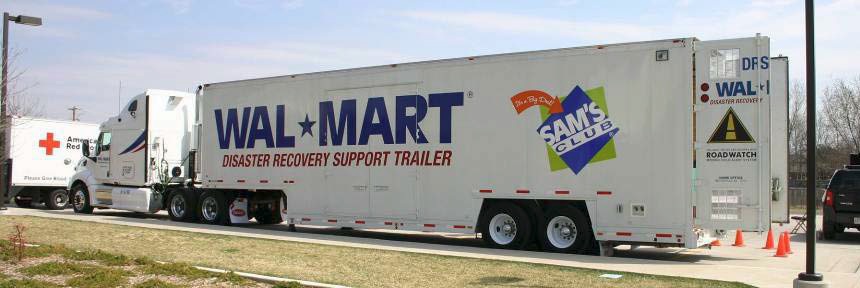
I’ve blogged in the past about the importance of public-private partnerships in emergency management and the incredible positive impacts it can have.  Wal-mart, in particular, has gotten a lot of good press about their emergency business operations, and more recently since Hurricane Sandy I’ve seen some media attention given to other companies such as Home Depot, highlighting their emergency operations centers and their relief efforts.  In a presentation I saw from Wal-Mart a while back, the company highlighted three priorities in regards to emergency management: 1) take care of its people, 2) take care of its operations, 3) take care of its communities.  Just these three priorities say a lot about the company.  They realize their people are their most important assets.  Next, they strive to ensure business continuity.  Lastly, with their business operations now being able to support it, they take care of the communities they have a presence in.  What a great business model!

The integration of the private sector into emergency management needs to be at all levels.  The National Operations Center (NOC), run by the US Department of Homeland Security, includes private sector representatives.  How can this be improved?  At the state level, many states either include private sector representatives in the State Emergency Operations Center or have a separate but connected Business Operations Center, solely focused on the coordination of private sector efforts.  Both of these options help expedite private sector resources to emergency management efforts – especially when used as an extension of the EOC’s supply unit.  There is also a recognized expertise between private sector and public sector emergency managers.

County and local emergency management programs can also benefit.  Where national and international companies are usually found at the NOC and state EOCs, the local management of these chains can work with county and local EOCs.  Also, don’t discount the value of small businesses in the area.  They, too, have a wealth of knowledge and access to resources.  Every community should form a disaster business alliance of some sort, or welcome private sector involvement with local VOADs.  You can work with local chambers of commerce to make this happen.  I’ve established a great relationship between my company, Emergency Preparedness Solutions, with my local chamber of commerce and have been providing information to members on emergency preparedness and business continuity through meetings and articles, as well as a presentation that I’ll be doing in a few months.

Never think that emergency management is too big of a concept for your local community.  It’s not just something done by FEMA or by the state.  In a disaster we need to help our neighbors and our communities.  The biggest impact is always locally.  Establish those relationships now and make a difference!

Grassroots Recovery with a National Impact

This morning I took some time to browse through the variety of TED talks to see if anything struck some interest with me.  First of all, if you aren’t familiar with TED, they host a variety of free talks and presentations on various topics.  They get some great speakers and the presentations are short… usually 10-20 minutes.  Most of the topics are about something new and innovative – their tag line is ‘Ideas Worth Spreading’, and they certainly abide by that.  Sometimes I watch their presentations because the subject area interests me, and other times I watch it to see some innovative or refreshing presentation skills.

The TED presentation I watched this morning is titled: Caitria and Morgan O’Neill: How to step up in the face of disaster.  It’s a short, 10 minute presentation which I highly recommend.  Their background is on the TED page, but in short these two sisters, both in grad school, experienced an F 3 tornado in their hometown in Massachusetts.  From their explanation, it seems that there wasn’t much organization or leadership in their town relative to supporting volunteers.  If you’ve been in emergency management for a while, you’ve probably experienced this.  There are a wealth of volunteers who want to help in the event of a disaster, but they must be organized and supported.  Often times local governments either don’t have the resources to deal with spontaneous volunteers or simply don’t want to – they may not want the trouble, the liability, or would prefer that another organization, often times someone like the American Red Cross, to deal with them.

The main trouble is that most jurisdictions don’t plan for volunteer management.  A volunteer management plan is a plan that should absolutely be part of the Comprehensive Emergency Management Plan (CEMP) of any jurisdiction.  Yes, not for profits often times do take on this role, especially with a localized disaster and if they have the capability to do so, but in the event of a regional disaster they simply don’t have the people to dedicate to this task – and it’s not something that’s easily done or simply managed.  The bottom line is that local jurisdictions are responsible for taking care of their people, and this is one more way to make it happen.

The O’Neill sisters, learning from their home town experiences and leveraging their educations and other experiences, eventually put together a company called recovers.org.  They have applied simple but effective methodologies to manage resources, including volunteers, in the event of a disaster.  They have traveled across the country applying their system and seem to be quite successful in doing so.  One of the things that encourages me the most about them is that they advocate community preparedness.  They know that for any system to reach its potential of effectiveness, it must be integrated into preparedness efforts, not just show up after the disaster.  It seems they have a product and service that can be applied to any jurisdiction and would work well with existing structures, like a VOAD, and with volunteer management and recovery planning efforts.  The information on their website indicates that they are busy helping communities impacted by Hurricane Sandy.  It’s great to see local efforts and innovation in emergency management!  Best of luck to Caitria and Morgan O’Neill.

Good article.

Brandon Greenberg's avatarDisasterNet

The is a great article from a leading disaster researcher about the privatization of emergency management.  via The U.S. Emergency Management System Is Not Perfect, but It Works – Room for Debate – NYTimes.com.

Here is the full text:

Questions regarding the privatization of the Federal Emergency Management Agency or the assignment of its functions to states must be addressed within the context of the agency’s responsibilities and how it functions in relation to state and local government capabilities.

Most people think of FEMA as a disaster response agency, but that is only partly true. FEMA has many responsibilities both during disasters and at other times. These responsibilities include assisting states, local governments, tribal governments and U.S. territories in the preparation of disaster mitigation plans aimed at taking long-term steps to reduce losses from future disasters, pursuant to the Disaster Mitigation Act of 2000; providing funding and guidance so…

View original post 603 more words

Hurricane Sandy – Be Prepared and Stay Safe!

I’m finishing my preparations for a quick trip to California to help evaluate an earthquake exercise.  All the while, I’m watching Hurricane Sandy come up the coast after creating some havoc in the Caribbean.  According to the latest National Hurricane Center advisory, Sandy will make landfall in southern New Jersey, and progress inland to central Pennsylvania before turning north and heading through New York State, the track taking it through the Finger Lakes area.  From there, the current advisory predicts that the storm will turn to the northeast, saturating New England.  It’s going to be a very wet, rainy week as Sandy slows soon after making landfall.  Of particular concern here in New York is the western portion of the state which has received a fair amount of rainfall over the last couple of days from the cold front that has progressed here from the mid west.


Thus far, there seems to be an appropriate amount of concern over this storm.  While I’ve heard some folks say that people are overly concerned, I don’t think officials are crying wolf with this.  First, as I’m sure you’ve read in the media, many factors of this storm are unprecedented or rarely seen, particularly the collision with the cold front – resulting in many of the hurricane advisories including snow in their forecast – SNOW for a HURRICANE!  Who would have ever thought that would happen?  Second, the storm is maintaining hurricane strength right up to landfall, bringing significant winds and storm surge with it.  New York City is taking actions which to my recollection are fully in compliance with their hurricane plans, such as low elevation evacuations, closing of mass transit and tunnels ahead of the storm, and other protective actions.  States of emergency have been declared all along the northeast states, with the President declaring an emergency in Maryland, which will be the first to feel the full effects of the category 1 storm with sustained winds of 75 miles per hour.  I expect the President will make similar declarations ahead of the storm reaching subsequent states.  States along the projected impact path all have activated their emergency operations centers (EOCs), pulling together local, state, and federal agencies, as well as some not for profits such as the American Red Cross and The Salvation Army, to coordinate efforts and situational information.

I’ve received storm preparedness information from several sources already, including Ready.gov, the Small Business Administration, Time Warner Cable, and National Grid.  I’m certain utility companies in other area are doing the same outreach to their customers.  Locally, the Erie Canal is being closed and water levels dropped to help mitigate against flooding, which has devastated communities along the waterway in the past.  Local governments are putting out preparedness public service announcements to citizens to help ensure they are prepared.  You’ve heard me comment before about the complacency of much of our population when it comes to emergency preparedness.  Please pay heed to what is being suggested and spread the word that preparedness for this storm is serious.  Be sure to have a few days of water, food, medications, and batteries for flashlights.  Keep your cell phone charged and pay attention to weather information and emergency alerts.  If you are a New Yorker, now is a great time to subscribe to NY-ALERT to be certain to receive emergency information.  If you are outside of New York, many states now have similar alerting systems.  Even clearing away leaves and debris, which is plentiful this time of year, from storm sewers and culverts will be a big help.  If you manage or own a business, be sure to pull out your emergency and continuity plans (you have these, right?) and be sure to keep your employees and other stakeholders informed of what’s going on.

I’m sure that when I return I’ll be helping with some disaster response and recovery activities in the area.  The better you prepare and the smarter you are, the less responders have to risk their lives and valuable resources, so be smart, be prepared, and stay safe!

Public Warning and The Science Behind EM

Rescuers at the L’AQUILA, Italy earthquake.

I was completely shocked to read this article at NBC News about six scientists and a government official in Italy being convicted of manslaughter and causing criminally negligent injury for their failure to predict an earthquake in 2009.  The article doesn’t give a lot of background, including what their statements or warnings may or may not have been.  It does mention that there were several smaller quakes in the months preceding a devastating 6.3 magnitude earthquake that killed over 300 people.  It goes on to elude that the scientists (seismologists, presumably) perhaps didn’t give these smaller quakes much consideration as possible precursors to a larger earthquake.

I’m not a geologist, nor do I play one on TV, but we all know that we can’t predict earthquakes with any measure of reliability.  Here in the northeast there are plenty of small quakes, which are generally no cause for alarm.  Italy, however, is earthquake prone.  One would think that people would have in their minds that the possibility of a sizeable earthquake is always present, especially after a series of smaller earthquakes.  Unless these scientists really downplayed that possibility (which would be ludicrous in that region of the world), I just don’t see how they can be held responsible.  Some disasters we can predict, others – such as earthquakes, we just can’t.  This is a dangerous precedent that I truly hope doesn’t catch on.  There are scientists in a variety of fields that are strong partners with emergency management.  While we know that the sciences (or the human interpretation of them) are often times imperfect, we go with the best information available to drive the planning and decisions we make.  Admittedly, it’s a gamble to a degree – a darn dangerous gamble – but I challenge anyone to find a better way.  If we cry wolf every time the possibility of something occurs, the population will become complacent and ignore our warnings.  We must strive for better science, achieve better balance, and maintain common sense.

Red Cross ReadyRating Program

I recently sat through a webinar on the Red Cross ReadyRating Program.  Admittedly, I’ve perused their site before, and even recommended their services – which I certainly understood – but I never realized how in-depth their program goes.  The webinar was hosted by Agility Recovery, who regularly puts on brief and informative programs of good quality. 

The ReadyRating program is a web-based service, absolutely free of charge, that provides businesses, organizations, and schools with a free disaster readiness assessment tool.  The tool seems to be useful to entities large and small, even allowing larger businesses or organizations with multiple locations to conduct an assessment for each location folded in under the same account.  The user answers questions and the tool quantifies the entity’s measure of preparedness and provides customized reports showing various data in a variety of formats (charts, report card, etc).  ReadyRating apparently even grades the amount of community participation the entity has relative to preparedness efforts (see my previous post re: Public-Private Partnerships).  The tool also enables creation of a customized emergency response plan – something I’m a little cautious of (generally speaking, I’m not in favor of ‘fill in the blank’ planning) – but I’ve not actually used the tool, so I can’t speak from direct experience on it.

ReadyRating refers to their users as ‘members’ – and they have a fairly impressive membership, both in numbers (2,689 businesses and organizations, 570 schools) as well as in names (they list the likes of Anheuser Busch, Grainger, Monsanto, and others).  Feedback from members is very favorable, and the tool provides for the ability to do re-assessments and showing progress to the user – that’s great encouragement to them!  They even show comparisons with other members (anonymously) (comparisons are provided nationally, state-wide, number of employees, and by industry).

ReadyRating is quite an impressive tool – and it’s free!  I have it listed on the links page of my company’s website – Emergency Preparedness Solutions, LLC along with other resources.  Check it out!

Public-Private Partnerships: A Necessity in Emergency Management

Over the last several years there have been volumes of articles written on the value of public-private partnerships in Emergency Management.  So why is it still like pulling teeth?  Yes, we have great private sector partners in EM – the likes of WalMart, UPS, Grainger, and others.  The value of having these partnerships has certainly been demonstrated through the years, in both local disasters and national-level disasters.  Even in preparedness, these partnerships help carry our message to the masses.  FEMA promotes a program called PS-Prep, designed to engage private sector preparedness while encouraging their involvement locally in emergency management efforts.

Government simply can’t do it without the private sector.  It’s not because the public sector is lacking, it’s because of the position and resources available to the private sector.  They have more resources and greater flexibility.  Why wouldn’t they want to help?  Their customers and employees live in the area.  It’s a solid decision to invest in the community (or communities) in which your company is located.  It doesn’t always involve a financial commitment – it encourages preparedness for the business itself; it provides an opportunity to engage employees in community efforts (all with the company name being recognized – it’s free marketing!); and perhaps an opportunity to provide products – discounted or free – to relief efforts in the aftermath of a disaster.  Commodities such as building materials, water, and food are in great need in the aftermath of a disaster.  Even trucks and people.  Yes, these things all cost money, but there is a lot of free press and good will that goes along with it.

There are plenty of businesses that contribute after a disaster occurs – certainly they want to help.  They can all have more impact, however, by joining up with local emergency preparedness efforts before a disaster ever occurs.  Joining a community organization, such as a VOAD, or entering into memorandums of understanding with local emergency management agencies prior to a disaster makes a huge impact.  The partnerships made with other businesses, government agencies, and community organizations will also be to their benefit.

Businesses large and small – consider both the preparedness of your company and your community.  There are opportunities to be had with both!

Emergency Preparedness for Persons with Disabilities

My post is in reference to an article in Emergency Management Magazine (found here:http://www.emergencymgmt.com/disaster/Emergency-Planning-Disabled-Uphill-Battle.html).  The author’s article brings up several pertinent points around preparedness planning for persons with disabilities.  This, like darn near everything in emergency management, requires a multi-agency, multi-disciplinary approach.  We also need to be very certain to not lump all persons with disabilities into one category.  There are various levels of function that people may have.  Many people live with disabilities every day and are highly functioning, requiring little or no help.  Others may require daily or constant assistance from family, friends, or other care takers, including medical professionals.  Some folks are dependent upon medications or medical equipment (insulin dependant diabetics, those requiring dialysis, or home oxygen), while some have mobility impairments.  Some may have cognitive disabilities such as autism, Down’s Syndrome, or a traumatic brain injury.  Some persons may have several disabilities which need to be considered.  A community’s planning efforts must incorporate the full spectrum of needs.

Following our emergency planning steps, we can easily pull together the people and information we need.  First, form a planning group.  Emergency management, local health department, and local organizations that advocate for persons with disabilities, such as the Arc, associations for the blind and hearing impaired, diabetes association, MDA, UCP, etc.  These are all important stakeholders as they serve and advocate for our disabled populations on a daily basis.  You should probably know your community’s hazards, but we should analyze how they can impact persons with disabilities.  We have to define what needs exist that we need to address.  We can even consider mitigation measures, such as obtaining strobe light alerting for those with hearing impairments.

Help your community keep its finger on the pulse of the needs of persons with disabilities by forming a special needs registry.  Those utilized now are web-based and help first responders and emergency management identify, plan for, and address the changing needs in the community.  Having current information such as names, addresses, and type and severity of disability are extremely important.  Planning for notification, evacuation, transportation, and sheltering are often times the most challenging.  Expand your planning group when these challenges come up.  Include utility companies (who will prioritize power restoration to those who are dependent for medical reasons), local and regional transportation authorities, and those agencies and resources who will staff special needs shelters.

Remember, most persons with disabilities are not an idol portion of our population.  They are highly functioning and can help, needing only the right accommodations to do so.  Also, be sure to promote special needs preparedness.  FEMA, the American Red Cross, and others have excellent resources for this.  Your local association for the blind and visually impaired can help you obtain materials in large print or braille.  The National Organization on Disability is also a great resource (nod.org).  Don’t leave anyone behind!