FEMA’s 2018-2022 Strategic Plan: The Good, the Bad, and the Ignored

FEMA recently released their 2018-2022 Strategic Plan.  While organizational strategic plans are generally internal documents, the strategic plans of certain organizations, such as FEMA, have a significant link to a broader array of stakeholders.  The community of emergency management in the United States is so closely linked, that FEMA, through policy, funding, or practice, has a heavy influence on emergency management at the state and local levels.  Here are my impressions of the 38-page document.

Picture1

Right from the beginning, this document continues to reinforce the system of emergency management and the involvement of the whole community. I’m glad these concepts have been carried forward from earlier administrations.  Far too often have we seen new administrations trash the concepts of the previous for reasons none other than politics.  Things often take time in emergency management, and it sometimes seems that just as we are getting a grasp on a good concept or program, it’s stripped away in favor of something new which has yet to be proven.

The foreword of the document, as expected, lays out the overall focus of the strategic plan.  What I’m really turned off by here is the mention, not once but twice, of ‘professionalizing’ emergency management.  Use of this phrase is an unfortunate trend and a continued disappointment.  We are our own worst enemy when statements like this are made.  It seems that some in emergency management lack the confidence in our profession.  While I’m certainly critical of certain aspects of it, there is no doubt in my mind that emergency management is a profession.  I wish people, like Administrator Long, would stop doubting that.  Unfortunately, I’ve heard him recently interviewed on an emergency management podcast where he stressed the same point.  It’s getting old and is honestly insulting to those of us who have been engaged in it as a career.

The strategic goals put forward in this plan make sense.

  1. Build a culture of preparedness
  2. Ready the nation for catastrophic disasters
  3. Reduce the complexity of FEMA

These are all attainable goals that belong in this strategic plan.  They stand to benefit FEMA as an organization, emergency management as a whole, and the nation.  The objectives within these goals make sense and address gaps we continue to deal with across the profession.

A quote on page 8 really stands out… The most effective strategies for emergency management are those that are Federally supported, state managed, and locally executed.  With the system of emergency management in the US and the structure of federalism, this statement makes a lot of sense and I like it.

Based on objective 1.2 – closing the insurance gap – FEMA is standing behind the national flood insurance program.  It’s an important program, to be sure, but it needs to be better managed, better promoted, and possibly restructured.  There is a big red flag planted in this program and it needs some serious attention before it collapses.

Here’s the big one… It’s no secret that morale at FEMA has been a big issue for years.  The third strategic goal includes an objective that relates to employee morale, but unfortunately employee morale itself is not an objective.  Here’s where I think the strategic plan misses the mark.  While several objectives directly reference improving systems and processes at FEMA, none really focus on the employees.  Most mentions of employees in the document really reference them as tools, not as people.  Dancing around this issue is not going to get it resolved.  I’m disappointed for my friends and colleagues at FEMA.  While I applaud the strategic plan for realizing the scope of external stakeholders it influences, they seem to have forgotten their most important ones – their employees.  This is pretty dissatisfying and, ultimately, is an indicator of how poorly this strategic plan will perform, since it’s the employees that are counted on to support every one of these initiatives.  You can make all the policy you want, but if you don’t have a motivated and satisfied work force, change will be elusive.

Overall, I’d give this strategic plan a C.  While it addresses some important goals and objectives and recognizes pertinent performance measures, it still seems to lack a lot of substance.  External stakeholders are pandered to when internal stakeholders don’t seem to get a lot of attention.  While, as mentioned earlier, FEMA has a lot of influence across all of emergency management, they need to be functioning well internally if they are to successful externally.  Employee morale is a big issue that’s not going to go away, and it seems to be largely ignored in this document.  I absolutely want FEMA to be successful, but it looks like leadership lacks the proper focus and perspective.

What thoughts do you have on FEMA’s new strategic plan?

© 2018 – Timothy Riecker, CEDP

Emergency Preparedness Solutions, LLC SM


HSEEP Training – Is it Required

Continuing from my previous blog post, I’ll answer a search phrase used to bring someone to my blog.  Earlier this month, someone searched ‘Is HSEEP training mandatory?’.  We speak, of course, of the Homeland Security Exercise and Evaluation Program, which is the DHS-established standard in exercise program and project management.

The short answer to the question: Maybe.

Generally speaking, if your exercise activities are funded directly or indirectly by a federal preparedness grant, then grant language usually requires that all exercises are conducted in accordance with HSEEP.  While most federal grant guidance doesn’t explicitly state that exercise personnel must be formally trained in HSEEP, it’s kind of a no-brainer that the fundamental way to learn the standards of practice for HSEEP so you can apply them to meet the funding requirement is by taking an HSEEP course.  If you are a jurisdiction awarded a sub-grant of a federal preparedness grant or a firm awarded a contract, there may exist language in your agreement, placed there by the principal grantee, that specifically requires personnel to be trained in HSEEP.

Beyond grant requirements, who you work for, who are you, and what you do generally don’t dictate any requirement for HSEEP training.  Aside from the federal grant funding or contracts mentioned, there is no common external requirement for any organization to have their personnel trained in HSEEP.  If your organization does require it, this is likely through a management-level decision for the organization or a functional part of it.

So, while HSEEP is a standard of practice, training in HSEEP, in general terms, is not a universal requirement.  That said, I would certainly recommend it if you are at all involved in the management, design, conduct, or evaluation of exercises.  FEMA’s Emergency Management Institute (EMI) offers HSEEP courses in both a blended learning and classroom format.  The emergency management/homeland security offices of many states and some larger cities offer them as well.

© 2018 Timothy Riecker, CEDP

Emergency Preparedness Solutions, LLC SM

Disaster Aid Approved for Houses of Worship

Earlier this year, FEMA expanded their Public Assistance program to include houses of worship.  As the FEMA news release linked here states, the Stafford Act allows FEMA to provide Public Assistance (PA) to certain private not for profit organizations to repair or replace facilities damaged or destroyed by a major disaster.  In a move that seems to underscore FEMA’s change in policy, the President signed a bill into law a few days ago making this policy decision permanent.  Both the policy and the bill back-dated impacts to include Hurricane Harvey.

This is a decision that I’m honestly torn on.  On one hand, houses of worship serve as community centers, shelters, and points of distribution in many communities.  Some (but not all) provide critical services for their communities during disasters.  Aside from the spiritual aspect, these are organizations that communities turn to in time of need.  In fact, there exist a number of faith-based organizations that support disaster response and recovery that do incredible work.  Faith-based organizations are a critical partner in communities, and across the nation and the world.  On the other hand, I’m not certain about the government’s responsibility to fund the rebuilding of houses of worship – most especially if they do not serve the purpose of an approved shelter, point of distribution, or other sanctioned disaster-related activity in a community’s disaster plan.

FEMA’s PA guidelines can be very stringent.  The reason for this is to ensure responsible expenditure of taxpayer dollars in helping communities to recover from disaster.  In work as a state employee and as a consultant I’ve sat in meetings with FEMA in the aftermath of disasters working to ensure that eligible applicants were submitting the appropriate paperwork for eligible projects and receiving everything afforded to them under FEMA policy and the Stafford Act.  This process is bureaucratic and, at times, contentious.   The burden of proof is on the applicant to prove that they are, in fact, eligible to receive recovery assistance, and each category of projects has very specific guidelines.

Given this, to ensure fair application of tax payer dollars, I expect to see guidelines in FEMA’s PA guidebook update that require certain conditions to be met for houses of worship to be eligible to receive PA assistance after a disaster.  These would include:

  • Being part of the community’s emergency operations plan for key activities such as sheltering, points of distribution, etc.
    • As with any facility identified for these key activities, I believe they should embrace practices of resilience. That includes having their own emergency operations and business continuity plans as well as a documented history of proactive disaster mitigation projects for their properties (these don’t have to be complex or expensive.  Generators, sump pumps, and preventative landscaping are reasonably simple and high impact)
  • Practices of non-discrimination, especially during times of disaster, to include providing for people of all faiths
  • The PA policy itself should not discriminate against any particular religion

I’m interested in hearing your thoughts on this topic.

© 2018 Timothy Riecker, CEDP

Emergency Preparedness Solutions, LLC SM

NIMS Implementation Objectives and A Shot of Reality

Happy 2018 to all my readers!  Thanks for your patience while I took an extended holiday break.  A minor surgery and the flu had sidelined me for a bit, but I’m happy to be back.

This morning, FEMA issued NIMS Alert 01-18: National Engagement for Draft NIMS Implementation Objectives.  NIMS Implementation Objectives were last released in 2009, covering a period of FY 2009-FY2017.  With the release of the updated NIMS last year, FEMA is updating the implementation objectives and has established a national engagement period for their review.

So first, a bit of commentary on this document…

The new objectives are broken out by major content area of the updated NIMS document, including: Resource Management, Command and Coordination, and Communication and Information Management; as well as a General category to cover issues more related to management and administration of the NIMS program.  What we also see with these updated objectives are implementation indicators, which are intended to help ground each objective.  Overall, the number of objectives in this update has been cut in half from the 2009 version (28 objectives vs 14 objectives).

All in all, these objectives appear to be consistent with the current state of NIMS implementation across the nation.  They are certainly suitable for most matters in regard to the oversight of implementing NIMS and it’s various components.  The biggest sticking point for me is that this document is intended for use by states, tribal governments, and territories.  If the goal is to have a cohesive national approach to implementation, I’d like to know what the implementation objectives are for FEMA/DHS and how they compliment those included in this document.

Objectives 8 through 11 are really the crux of this document.  They are intended to examine the application of NIMS in an incident.  These objectives and their corresponding indicators (which are largely shared among these objectives) are the measure by which success will ultimately be determined.  While it’s a good start for these to exist, jurisdictions must be more open to criticism in their implementations of NIMS and ICS.  In addition, there should be an improved mechanism for assessing the application of NIMS and ICS.  While formal evaluations occur for exercises under the HSEEP model, we tend to see inconsistent application of the feedback and improvement activities to correct deficiencies.  Proper evaluations of incidents, especially at the local level, are often not performed or performed well. For those that are, the same issue of feedback and improvement often stands.

Extending this discussion into reality…

The reality is that many responders are still getting it wrong.  Last year my company conducted and evaluated dozens of exercises.  Rarely did we see consistently good performance as far as NIMS and ICS are concerned.  There are several links in this chain that have to hold firm.  Here’s how I view it:

First, the right people need to be identified for key roles.  Not everyone is suited for a job in public safety or emergency management in the broadest sense.  Organizations need to not set up individuals and their own organization for failure by putting the wrong person in a job.  If a certain job is expected to have an emergency response role, there must be certain additional qualifications and expectations that are met.  Further, if someone is expected to take on a leadership role in an ICS modeled organization during an incident, there are additional expectations.

Next, quality training is needed.  I wrote a couple years ago about how ICS Training Sucks.  It still does.  Nothing has changed.  We can’t expect people to perform if they have been poorly trained.  That training extends from the classroom into implementation, so we can’t expect someone to perform to standards immediately following a training course.  There is simply too much going on during a disaster for a newbie to process.  People need to be mentored.  Yes, there is a formal system for Qualification and Certification in ICS, but this is for proper incident management teams, something most local jurisdictions aren’t able to put together.

Related to this last point, I think we need a new brand of exercise.  One that more instructional where trainees are mentored and provided immediate and relevant feedback instead of having to wait for an AAR which likely won’t provide them with feedback at the individual level anyway.  The exercise methodology we usually see applied calls for players to do their thing: right, wrong, or otherwise; then read about it weeks later in an AAR.  There isn’t much learning that takes place.  In fact, when players are allowed to do something incorrectly and aren’t corrected on the spot, this is a form of negative reinforcement – not just for that individual, but also for others; especially with how interrelated the roles and responsibilities within an ICS organization are.

While I’m all for allowing performers to discover their own mistakes and I certainly recognize that there exist multiple ways to skin the proverbial cat (no animals were harmed in the writing of this blog), this is really done best at a higher taxonomy level.  Many people I see implementing portions of ICS simply aren’t there yet.  They don’t have the experience to help them recognize when something is wrong.

As I’ve said before, this isn’t a school yard game of kickball.  Lives are at stake.  We can do better.  We MUST do better.

As always, thoughts are certainly appreciated.

© 2018 – Timothy Riecker, CEDP

Emergency Preparedness Solutions, LLC SM


2017 National Preparedness Report – A Review

With my travel schedule, I missed the (late) release of the 2017 National Preparedness Report (NPR) in mid-October.  Foundationally, the findings of the 2017 report show little change from the 2016 report.  If you are interested in comparing, you can find my review of the 2016 NPR here.

The 2017 NPR, on the positive side, provided more data and more meaningful data than its predecessor.  It appeared to me there was more time and effort spent in analysis of this data.  If you aren’t familiar with the premise of the NPR, the report is a compilation of data obtained from State Preparedness Reports (SPRs) submitted by states, territories, and UASI-funded regions; so the NPR, fundamentally, should be a reflection of what was submitted by these jurisdictions and regions – for the better or worse of it.  The SPR asks jurisdictions to provide an honest analysis of each of the core capabilities through the POETE capability elements (Planning, Organizing, Equipping, Training, and Exercising).

From the perspective of the jurisdictions, no one wants to look bad.  Not to say that any jurisdiction has lied, but certainly agendas can sway subjective assessments.  Jurisdictions want to show that grant money is being spent effectively (with the hopes of obtaining more), but not with such terrific results that anyone would think they don’t need more.  Over the past few years the SPRs, I believe, have started to normalize and better reflect reality.  I think the authors of the NPR have also come to look at the data they receive a little more carefully and word the NPR to reflect this reality.

The 2017 NPR (which evaluates 2016 data from jurisdictions) identified five core capabilities the nation needs to sustain.  These are:

  • Environmental Response/Health and Safety
  • Intelligence and Information Sharing
  • Operational Communications
  • Operational Coordination
  • Planning

I’m reasonably comfortable with the first two, although they both deal with hazards and details that change regularly, so keeping on top of them is critical.  Its interesting that Operational Communication is rated so high, yet is so commonly seen as a top area for improvement on after-action reports of exercises, events, and incidents.  To me, the evidence doesn’t support the conclusion in regard to this core capability.  Operational Coordination and Planning both give me some significant concern.

First, in regard to Operational Coordination, I continue to have a great deal of concern in the ability of responders (in the broadest definitions) to effectively implement the Incident Command System (ICS).  While the implementation of ICS doesn’t comprise all of this core capability, it certainly is a great deal of it.  I think there is more room for improvement than the NPR would indicate.  For example, in a recent exercise I supported, the local emergency manager determined there would be a unified command with him holding ‘overall command’.  Unfortunately, these false interpretations of ICS are endemic.

I believe the Planning core capability is in a similar state inadequacy.  Preparedness lies, fundamentally, on proper planning and the assessments that support it. While I’ve pontificated at length about the inadequacy of ICS training, I’ve seen far too many plans with gaps that you could drive a truck through.  I’ve recently exercised a college emergency response plan that provided no details or guidance on critical tasks, such as evacuation of a dormitory and support of the evacuated students.  The plan did a great job of identifying who should be in the EOC, but gave no information on what they should be doing or how they should do it.  The lack of plans that can be operationalized and implemented is staggering.

The NPR identified the top core capabilities to be improved.  There are no surprises in this list:

  • Cybersecurity
  • Economic Recovery
  • Housing
  • Infrastructure Systems
  • Natural and Cultural Resources
  • Supply Chain Integrity and Security

Fortunately, I’m seeing some (but not all) of these core capabilities getting some needed attention, but clearly not enough.  These don’t have simple solutions, so they will take some time.

Page 10 of the NPR provides a graph showing the distribution of FEMA preparedness (non-disaster) grants by core capability for fiscal year 2015.  Planning (approx. $350m) and Operational Coordination (approx. $280m) lead the pack by far.  I’m curious as to what specific activities these dollars are actually being spent on, because my experience shows that it’s not working as well as is being reported.  Certainly there has been some positive direction, but I’m guessing that dollars are being spent on activities that either have negligible impact or actually have a negative impact, such as funding the development of some of the bad plans we’re seeing out there.

I’m curious as to what readers are seeing out in real life.  What capabilities concern you the most?  What capabilities do you see successes in?  Overall, I think everyone agrees that we can do better.  We can also get better and more meaningful reports.  This NPR was a step in the right direction from last year’s, but we need to continue forward progress.

© 2017 – Timothy Riecker, CEDP

Emergency Preparedness Solutions, LLC

Nationwide EAS Test Scheduled

From FEMA~

Mandatory Nationwide Test of the Emergency Alert System to be Conducted September 27

The Federal Emergency Management Agency (FEMA), in coordination with the Federal Communications Commission (FCC), will conduct a mandatory nationwide test of the Emergency Alert System (EAS) on September 27, 2017 at 2:20 pm EDT. The test will assess the readiness for distribution of the national level test message, as well as verify its delivery.

The EAS test is made available to radio, television, cable, and direct broadcast satellite systems, and is scheduled to last approximately one minute. The test’s message will be similar to the regular monthly test message of the EAS with which the public is familiar, only inserting the word “national.” “This is a national test of the Emergency Alert System. This is only a test.”

Significant coordination and regional testing has been conducted with the broadcast community and emergency managers in preparation for this EAS national test. The test is intended to ensure public safety officials have the methods and systems that will deliver urgent alerts and warnings to the public in times of an emergency or disaster. Periodic testing of public alert and warning systems is also a way to assess the operational readiness of the infrastructure required for the distribution of a national message and determine whether technological improvements are needed.

Conducting the test following Hurricanes Harvey, Irma, Jose, and Maria will provide insight into the resiliency of our national-level alerting capabilities in impacted areas. The test will also provide valuable data into how the Integrated Public Alerts and Warning System performs during and following a variety of conditions. With two major hurricanes already making landfall, and a potential for two more impacting our nation, we need to have the ability to maintain the continuity of critical infrastructure under various conditions.

Receiving preparedness tips and timely information about weather conditions or other emergency events can make all the difference in knowing when to take action to be safe. FEMA and our partners are working to ensure alerts and warnings are received quickly through several different technologies, no matter whether an individual is at home, at school, at work, or out in the community. The FEMA App, which can be downloaded on both Android and Apple devices, is one way to ensure receipt of both preparedness tips and weather alerts. The FEMA App can be downloaded at https://www.fema.gov/mobile-app.

The back-up date for the test is October 4, 2017, at 2:20 pm EDT, in case the September 27 test is cancelled. More information on the IPAWS and Wireless Emergency Alerts is available at https://www.ready.gov/alerts.

This is the third mandatory nationwide test of the EAS. The first test was conducted in November 2011, in collaboration with the FCC, broadcasters, and emergency management officials. The second mandatory test was conducted in September 2016. You can also access a video, FEMA Accessible Emergency Alert System IPAWS Test Message, in American Sign Language.

In 2007, FEMA began modernizing the nation’s public alert and warning system by integrating new technologies into the existing alert systems. The new system, known as IPAWS became operational in 2011. Today, IPAWS supports more than 900 local, state, tribal, and federal users through a standardized message format. IPAWS enables public safety alerting authorities such as emergency managers, police, and fire departments to send the same alert and warning message over multiple communication pathways at the same time to citizens in harm’s way, helping to save lives. For more information on FEMA’s IPAWS, go to: www.fema.gov/ipaws. For more preparedness information, go to www.ready.gov.

FEMA Request for Staff

From FEMA…

As you are all very much aware, our Nation has sustained severe flooding and damage as a result of Hurricane Harvey, and we are anticipating major impacts from Hurricanes Irma and possibly Jose. This is the peak of the hurricane season and it is far from over; to this end, we are reaching out to you to help in response and recovery efforts.  FEMA is looking to recruit personnel, with an expected deployment of 30 days, in the following areas:

Program Area: Skillset Required

Individual Assistance: Survivor outreach and communication, case management

Logistics: Load and unload trucks; coordinate and deliver resources; track inventory

IT: Establish connectivity for facilities; install, track, and manage equipment; configure communications equipment

Disaster Survivor Assistance: Engage directly with survivors; demonstrate understanding of available programs; case management

Hazard Mitigation: Floodplain management, mitigation strategies for the built environment, flood insurance, FEMA’s grant programs and authorities

Disaster Emergency Communications: Set up, operation, and shut down of communications vehicles; installation of voice and data cables; knowledge of radio protocols

External Affairs: Communications, Congressional and intergovernmental affairs, media analysis, media relations, tribal affairs, private sector relations

Environmental and Historic Preservation: Knowledge of environmental, historic, and floodplain management processes and regulations

Human Resources: Human resources specialists and managers

Finance: Travel arrangements and budget controls

Acquisitions: Contracting officers, purchasing specialists, and procurement specialists

If you are available to serve in one or more of these areas, please send your résumé to FEMA-CAREERS@fema.dhs.gov, and please put “Higher Ed” in the subject line.  Feel free to also share this request throughout your networks.  This is a great opportunity to serve the Nation and support our survivors in this time of need.

FEMA Seeks Input on Fiscal Year 2018-2022 Strategic Plan

From today’s FEMA Daily Digest Bulletin is an item related to FEMA’s FY 2018-2022 strategic plan.  FEMA Administrator Brock Long is inviting stakeholders to provide input to their upcoming strategic plan update.  They are doing this via IdeaScale, which is the same platform being used by DHS for an information campaign they promoted back in May of this year.  I’ve been monitoring the submissions to the DHS campaign and unfortunately find that the vast majority of ideas submitted are crap.  Many are ill informed (such as one idea of sending passenger baggage on a separate plane solely intended for that purpose) or politically motivated, with few offering any practical solutions to real problems.

Relative to the FEMA campaign, I’m seeing much of the same.  Here’s what FEMA requested input on:

Simplifying Recovery and Reducing Disaster Costs

  • How can FEMA simplify recovery programs and reduce disaster costs while ensuring accountability, customer service, and fiscal stewardship?

Buying Down Risk through Preparedness and Mitigation

  • How should risk be calculated in awarding grants?
  • What type of grants are best suited for effectively reducing risk?
  • How do we incentivize more investment in preparedness/mitigation prior to a disaster (not only federal investment)?
  • How should the nation, including but not limited to FEMA, train and credential a surge disaster workforce ahead of major disasters?
  • What are new ways to think about a true culture of preparedness?

Much of the input they are receiving thus far is less than helpful in the endeavor to drive strategic planning.  Rather, they are receiving ideas of tactical applications both in general as well as specific to disasters, such as Hurricane Harvey.  While some of these ideas aren’t bad (some are), it seems that people are missing the point.

This brings about some thoughts on the concept of whole community engagement, which is obviously what FEMA and DHS as a whole are trying to accomplish through these IdeaScale endeavors.  I’m 100% in favor of whole community engagement, but opening the doors and inviting unstructured commentary is less than productive.  I’m sure it’s frustrating to the people on the receiving end who are having to sift through a lot of largely irrelevant input to find a few gems.  At the community level, these discussions can be moderated in public forums, but through an electronic means, it’s pretty much a free-for-all.  A valiant effort, but I wonder if they are getting the input they really need or if this merely accomplishes them ‘checking a box’ to say they solicited whole community feedback.

While feedback from the public can be valuable, I posit that most of the public simply isn’t aware enough of the mission, organization, and activities of FEMA to provide meaningful ideas toward their strategic plan.  Instead, forums such as the ones they’ve opened up simply provide opportunities for people to vent frustrations, which I suppose has some value but not in this forum.

What I’m hopeful of is that professionals in emergency management and public safety take advantage of the opportunity to provide thoughtful feedback and ideas which can contribute to FEMA’s strategic plan update.  If they are making the effort to obtain feedback, let’s give them what they need.  That’s my challenge to you!

© 2017 – Timothy Riecker, CEDP

Emergency Preparedness Solutions, LLC

FEMA and NOAA are NOT Leaderless

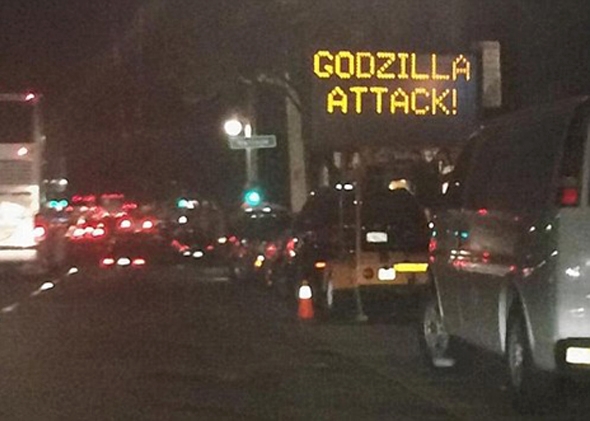
VMS Vulnerabilities Can Have Serious Consequences

Few things piss me off more than headlining incorrect information.  Right or wrong, headlines ARE the news for many members of the public who choose to not consume the content of the article.  As either a cause or symptom of our politically divisive climate, many seem to be dismissive of facts and jump to conclusions.  Within the past week, I’ve seen several news articles and Twitter posts claiming that FEMA and/or NOAA are ‘leaderless’. The one that finally did me in was this article from Emergency Management Magazine.

Without venturing into politics, I think it’s very unfortunate that permanent heads of these two agencies have yet to be appointed and confirmed.  Having these posts filled is as important to these agencies psychologically as it is practically.  That said, processes and progress are not stopping at either of these agencies because new heads have yet to be appointed.

First of all, each agency has an acting head.  At FEMA, Bob Fenton is the acting Administrator.  He has a history with FEMA going back to 1996, including a number of high-level leadership roles.  Despite rumors on social media, federal assistance will occur without an appointed FEMA Administrator – and in fact federal assistance, including disaster declarations, have been occurring since Fenton took over as acting Administrator on January 20.  Similarly, NOAA is not without an agency head.  Benjamin Friedman has been performing the duties of NOAA Administrator and Under Secretary of Commerce for Oceans and Atmosphere.  Similar to Fenton, Friendman has a significant leadership history within NOAA and has continued to lead the agency on an interim basis.

Second, both philosophically and practically, organizations have leaders within, not just at the top of the org chart.  There are a number of principals and deputies, program managers, and other functionaries – appointees and civil servants alike – within both organizations that continue to do what they do every day to turn on the lights and provide services to the public and other agencies.  They provide leadership within their areas of responsibility and get work done.

While I understand and agree with the premise of the concern that these agencies don’t have fully appointed agency heads, it’s misleading to the public and insulting to their acting administrators as well as the professionals within these agencies to say they are leaderless.  We continue to see the work we would expect from these agencies, such as new NIMS content and preparedness grants, and diligent weather information, as well as plenty of behind the scenes work that provides us with services every day.  Speak out about the lack of fully appointed agency heads if you like, but don’t say these agencies are without leadership.

© 2017 – Timothy Riecker, CEDP

Emergency Preparedness Solutions, LLC