Managing an Exercise Program – Part 7: Develop Exercise Documentation

This post is part of a 10-part series on Managing an Exercise Program. In this series I provide some of my own lessons learned in the program and project management aspects of managing, designing, conducting, and evaluating Homeland Security Exercise and Evaluation Program (HSEEP) exercises. Your feedback is appreciated!

Managing an Exercise Program – Part 1

Managing an Exercise Program – Part 2: Develop a Preparedness Strategy

Managing an Exercise Program – Part 3: Identify Program Resources and Funding

Managing an Exercise Program – Part 4: Conduct an Annual Training & Exercise Planning Workshop.

Managing an Exercise Program – Part 5: Securing Project Funding

Managing an Exercise Program – Part 6: Conducting Exercise Planning Conferences

Managing an Exercise Program – Part 7: Develop Exercise Documentation

Managing an Exercise Program – Part 8: Preparing Support, Personnel, & Logistical Requirements

Managing an Exercise Program – Part 9: Conducting an Exercise

Managing an Exercise Program – Part 10: Evaluation and Improvement Planning


First I’d like to say that this series of exercise articles has gotten a fair amount of traffic, which I’m quite grateful for.  I’m hopeful that my thoughts and ideas have been able to help those who are looking for experienced insight into emergency management and homeland security exercises.  Certainly if you have anything that you’d like to contribute or have any questions, please post a comment.

We can’t avoid paperwork – ever.  Documentation in exercises, just like in the incident command system (ICS), is a necessity.  Don’t see it as a burden, though, instead view these documents as outcomes of the planning and decision-making process of exercise design.  Just like an incident action plan (IAP) is the result of the planning process in ICS, the primary documents used in exercises (Exercise Plans, Control and Evaluation Plans, Exercise Evaluation Guides, Situation Manual, and Master Scenario Events List) are outcomes of the processes of exercise design.  The graphic below is from HSEEP Volume 2 and provides a quick reference of each document I just listed.  As you will see, each document meets a specific need and is intended for a specific audience.  I will outline some of my tips on each document (except the presentation) below.

Primary HSEEP Documents

Primary HSEEP Documents

Exercise Evaluation Guides (EEGs)  The National Exercise Program provides a variety of EEG templates on their website.  These are an excellent start for your exercise.  Remember that these can and should be customized for your exercise!  While we use capabilities-based exercise planning concepts, and the capabilities are standardized, both the capacity available to anyone in each capability and the means by which a capability is implemented is going to very broadly across the country.  Bottom line: we don’t all do things the same way and we may not be evaluating an entire capability as it’s commonly defined.  EEGs need to be focused on evaluating objectives within given capabilities.  This means that exercise objectives need to be very well-developed to ensure that we are 1) designing an exercise effectively, and 2) evaluating that exercise appropriately.  If we fail in any of these steps (objective development, exercise design, exercise evaluation) we are simply wasting our time.  If need be, draw in your subject matter experts (likely the folks who will be evaluating these areas of the exercise) and get their input on the development of the EEG.  Also consider what the purpose of the EEG is: it helps guide the evaluator in providing constructive commentary on each exercise objective, which will ultimately contribute toward the After Action Report (AAR).

Situation Manual (SitMan)  A SitMan, as stated in the chart above, is used only in discussion-based exercises and is available to all participants.  It should include all information participants need to know to effectively play their role in the exercise.   The most important aspect of this is context and background of the scenario.  Without a well-developed scenario, players have a difficult time getting their ‘head in the game’.  The SitMan will also outline the exercise structure and rules of play, which can vary widely between exercise types (i.e. seminar, workshop, or table top).  Having a good understanding of this information will help players to know what is expected of them.  Be sure to have this (and all) documents reviewed for readability – your focus should be on the audience!  Under most circumstances, the SitMan can be distributed to participants ahead of time.

Controller/Evaluator Plan/Handbook  This document is very audience-focused and as such should very clearly outline the expectations you have of the controllers and evaluators.  It should fully describe their positions, schedules, locations, and scope, as well as expectations.

Exercise Plan (ExPlan)  The ExPlan is often times the core document that everyone wants a copy of – and largely everyone should have access to.  Consider the ExPlan just like the IAP of an incident.  It fully describes what is taking place, where, when, how, and who is involved.  This document will be as complex as your exercise.  For exercises involving multiple venues, each venue should have its own sub-section in the ExPlan describing all the details of what is happening there.

Master Scenario Events List (MSEL)  The MSEL is the script of the exercise.  It should capture everything that is scheduled to occur – from StartEx to EndEx and everything in between.  The bulk of the document is injects, which should be written in detail and carefully reviewed and edited for content and accuracy.  Contingency or back-up injects should also be included but specially indicated as such.  Simulators should keep track of the actual time an inject was performed and what the response was, if any.  This data can be important for both in-exercise follow-up as well as post-exercise evaluation.

Other Documents  Don’t get stuck within the confines of what’s defined by HSEEP.  If you find that you need something else, create it and use it.  I’ve found on several exercises that a very detailed scenario, perhaps even including simulated situation reports and incident action plans is needed.  We’ve come to regard this document as a Ground Truth.  The information in a ground truth doesn’t necessarily need to go to everyone (thus not including it in the ExPlan), especially if the exercise will cover multiple operational periods/shift changes, as the ground truth information is largely only relevant to the starting players.

What tips or experiences do you have with exercise documents?  What other documents have you formulated to meet needs?

Thanks for reading, and be on the look out for Managing an Exercise Program – Part 8: Prepare Support Personnel and Logistical Requirements


Today is the Day Before

I subscribe to disaster recovery e-mails from a company called Agility Recovery, whose primary focus is IT disaster recovery but they recognize the value of a comprehensive approach.  They have great marketing and outreach, including regular webinars on various emergency management topics.

This week’s ‘Disaster Recovery Tip’ from Agility made me aware of a new campaign by FEMA (and I must say, FEMA’s campaigns have gotten MUCH better over the last few years – Kudos to FEMA!!!).  This one is entitled ‘The Day Before’, and reminds us that we never know what will happen tomorrow, so we should always be prepared.  Link to the video below.

FEMA: The Day Before

Managing an Exercise Program – Part 4: Conduct an Annual Training & Exercise Planning Workshop

This post is part of a 10-part series on Managing an Exercise Program. In this series I provide some of my own lessons learned in the program and project management aspects of managing, designing, conducting, and evaluating Homeland Security Exercise and Evaluation Program (HSEEP) exercises. Your feedback is appreciated!

Managing an Exercise Program – Part 1

Managing an Exercise Program – Part 2: Develop a Preparedness Strategy

Managing an Exercise Program – Part 3: Identify Program Resources and Funding

Managing an Exercise Program – Part 4: Conduct an Annual Training & Exercise Planning Workshop.

Managing an Exercise Program – Part 5: Securing Project Funding

Managing an Exercise Program – Part 6: Conducting Exercise Planning Conferences

Managing an Exercise Program – Part 7: Develop Exercise Documentation

Managing an Exercise Program – Part 8: Preparing Support, Personnel, & Logistical Requirements

Managing an Exercise Program – Part 9: Conducting an Exercise

Managing an Exercise Program – Part 10: Evaluation and Improvement Planning

Timothy Riecker

HSEEP Cycle

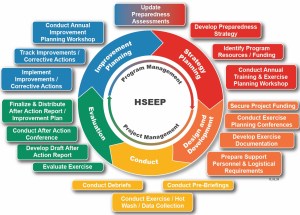
As HSEEP Volume 1 states, “The basis of effective exercise program management is a Multi-Year Training and Exercise Plan.”  The MYTEP is the product of a Training and Exercise Planning Workshop (TEPW), a collaborative which should be conducted annually to update the plan (and the collaborating partners!) with any changes in preparedness priorities, funding, or other influential factors.  I really can’t underscore the importance of the TEPW and MYTEP enough – they truly are the backbone of an effective exercise program.

First the TEPW needs to be scheduled and attendees invited.  This workshop should include not only your core planning team (discussed a bit in part 3), but should also expand to others within the sphere if influence and coordination.  States should invite relevant state agencies, a representation of counties (as it would be unwieldy to invite all of them), key cities and/or Urban Area Security Initiative groups, key Federal partners (like FEMA, EPA, DOE, USCG), as well as major not for profits or VOADS, and critical infrastructure private sector folks or authorities like utility or rail companies or regional transit authorities.  Counties should invite key county and state agencies, a representation of local governments, representatives of key groups like the county fire chief’s association, not for profits or VOADs, and those critical infrastructure folks within the county – including school districts and colleges.  Cities, towns, and villages should all follow suite similarly.  Not for profits and private sector folks need to ensure that they are invited to the table of the meetings of others (are you part of a local emergency planning committee – LEPC???) – and for conducting their own TEPWs (not required, but a good idea) need to consider where their primary operations take place and who they have significant relationships with relative to preparedness.  In the end it can be quite a crowd.  You want to be certain that the invites go to the right people (i.e. the exercise program managers, if they have them, or the emergency managers for these entities).  Stress that this is a workshop – where work gets done – so they can’t just send someone to ‘hold a seat’.  It needs to be someone who can represent the organization and its interests in the area of preparedness.  The invite should also state what key information they should be prepared with and prepared to discuss, like major preparedness training and exercise initiatives.

The HSEEP website provides some detailed guidance on TEPWs, a sample agenda, and even a draft invite letter and presentation on its resources website.  You’ll notice that the agenda is a VERY full day.  Don’t try to cut any corners – and I would even encourage a working lunch.  It’s frustrating to hold people longer than planned and even more frustrating to spend a full day in a workshop and not accomplish what you set out to do.  During the workshop, participants should review priority preparedness capabilities and coordinate exercise and training activities that can improve and validate those capabilities. As a result of the workshop, the Multi-Year Training and Exercise Plan outlines a multi-year schedule and milestones for execution of specific training and exercise activities.  Just as importantly, the TEPW helps to deconflict any exercise issues that may exist between these partners, like avoiding scheduling major exercises too closely to each other.  As part of this process, be sure to discuss major areas for improvement discovered from After Action Reports of earlier exercises – the implemented improvements should be tested.

During the TEPW, you will start to populate an exercise calendar.  Some partners will have dates set, others may only be able to narrow it down to a month or calendar quarter.  Around these exercise activities and their known major objectives, training programs can be identified and roughly scheduled as well.  This is the beginning of your MYTEP.

Conducting a TEPW and formulating a MYTEP is not only the first step toward HSEEP compliance, it is also the foundation of your program.  Through the TEPW, your organization and its partners will identify training and exercise requirements, goals, and benchmarks; ideally forecasted out three to five years.  You start with regulatory and other legal requirements, include grant and funding deliverables, and initiatives driven by the organizational mission and emergency management functions.  If the organization has a goal of revising a certain emergency plan by the end of the calendar year, then it would be a good idea to include an exercise testing that plan.  Through the process of the TEPW, you will identify what level of exercise is appropriate: ranging from a seminar to a full-scale exercise; and opportunities to capitalize on different exercise initiatives, merging exercises and leveraging combined efforts and funding – especially between different agencies and organizations.  Finally, you should identify training opportunities to ensure that personnel have the tools they need to function properly.

A TEPW can be complex and fast-paced.  There can be a lot of attendees all needing to get their information out.  The preparedness of the facilitator and attendees is absolutely critical to the success of the TEPW and the quality of the MYTEP.  If you’ve never done one, reach out to someone who has to help you along – including me.

Happy New Year to all and be on the look out for Managing an Exercise Program – Part 5: Securing Project Funding.

DANGER: Templates in use

Timothy Riecker

Sorry… I thought this image was really funny!

Last night I spent some time reviewing the Comprehensive Emergency Management and Continuity of Operations Plan (which should not be combined into one document) for a small town.  Having reviewed more plans from within the State of New York than I can count, it was readily obvious that a state-provided template was (mis)used in the making of this plan.  The end result: a poorly written plan that can’t be operationalized.

First off, I must say that there is nothing wrong with the template that was used.  This template has been provided and is regularly updated by the Planning staff of the State’s Office of Emergency Management.  Good templates help to ensure consistent formats are applied and all baseline legal and necessary content is included.  There are many planning templates out there across the nation and globally for emergency plans.  Some are good, many are not so good.  The closest I tend to get to a template is using it as a reference.  I generally see the use of templates akin to a Jean-Claude van Damme movie: you think it’s a good idea at first, you soon discover that you don’t really like it but for some reason can’t leave it, and in the end you are left wondering what really happened.

One must keep in mind when using a planning template that one size does not fit all… actually one size doesn’t fit anyone.  While a template, as stated earlier, will provide you with a format and essential content, they don’t provide YOUR detailed information.  If you simply use the template the way most people (wrongly) do, you are essentially doing the Mad Libs version of emergency planning by plugging in titles and locations where it tells you to.  But where does this get you?  Is the plan ‘customized’ simply because you filled in the blanks with your information?  Of course not.  The plan needs to make sense.  The easiest way to determine if it makes sense or not is to read it.  A good plan should provide a strategic-level narrative of how your company, jurisdiction, or organization will respond to and manage the impacts of a disaster.  Who is in charge, and of what?  What does the organization look like?  What priorities must be addressed?

Templates really should be viewed as guidance documents – this will help prevent most user errors.  Plans address needs – so a good needs assessment (threats and hazards) up front will help identify the content of the plan.  Don’t forget to read the plan while you are writing it to make sure that it makes sense.  Consider how it will be used and by whom.  Do we write emergency plans just to fulfill a legal requirement or do we write them so we can use them???

Managing An Exercise Program – Part 2: Developing the Preparedness Strategy

This post is part of a 10-part series on Managing an Exercise Program. In this series I provide some of my own lessons learned in the program and project management aspects of managing, designing, conducting, and evaluating Homeland Security Exercise and Evaluation Program (HSEEP) exercises. Your feedback is appreciated!

Managing an Exercise Program – Part 1

Managing an Exercise Program – Part 2: Develop a Preparedness Strategy

Managing an Exercise Program – Part 3: Identify Program Resources and Funding

Managing an Exercise Program – Part 4: Conduct an Annual Training & Exercise Planning Workshop.

Managing an Exercise Program – Part 5: Securing Project Funding

Managing an Exercise Program – Part 6: Conducting Exercise Planning Conferences

Managing an Exercise Program – Part 7: Develop Exercise Documentation

Managing an Exercise Program – Part 8: Preparing Support, Personnel, & Logistical Requirements

Managing an Exercise Program – Part 9: Conducting an Exercise

Managing an Exercise Program – Part 10: Evaluation and Improvement Planning


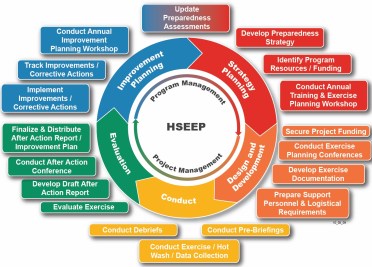
In my last post, I outlined the initial needs of managing a preparedness exercise program, including sources of information for a preparedness assessment.  Recognized as a best practice, I’m following the model of the Homeland Security Exercise and Evaluation Program (HSEEP).  The next step of program management is developing a preparedness strategy.

HSEEP Cycle

HSEEP Cycle

The development of a preparedness strategy is an activity that will involve the highest levels of your organization.  Drawing upon the data collected in the last step (the preparedness assessment), the preparedness strategy will address overcoming the identified gaps in your preparedness.  The mnemonic to remember here is POETE or Planning, Organization, Equipment, Training, and Exercises.  The gaps you identified in your assessment should fall into one of these categories.

Once you have catalogued your gaps, you must develop strategies to overcome each gap.  Here are some helpful hints in strategic planning:

1) Define the gap and identify the underlying cause(s).

2) Create objectives to overcome each gap.  Remember that objectives must be SMART (Specific, Measurable, Attainable, Realistic, and Time-oriented).

3) Establish priorities.  Some gaps may have a higher priority to accomplish based on the vulnerability they pose, legal or regulatory requirements, or other matters.  Additionally, some objectives may need to be accomplished prior to others for many of the same reasons, as well as practical flow of processes.

4) Assign required actions – identify specific actions required to accomplish each objective (there may be several).  Identify who will be responsible for each action and who will be responsible for supporting their work.  Establish a realistic deadline.  NOTE: some gaps may take a long time (years) to overcome.  As such, do the best you can to outline objectives and keep in mind that strategic plans are ‘living documents’.  Early on, you may not be assigning tasks to overcoming certain gaps, but someone will be responsible for monitoring related issues.

5) Marry needed resources to each action item established above.  This may be personnel, funding, facilities, etc.

6) As work is being done to accomplish these tasks, continual monitoring and assessment is necessary to ensure that everyone is staying on track and that the strategic plan continues to reflect the direction and priorities of today.

There are many references out there for strategic planning.  With a bit of insight you can translate this guidance into something useful for these purposes.  The end goal of this step is to have a document in hand that identifies what your organization needs to accomplish to be better prepared.  From this, you will soon develop exercise goals which will be the cornerstone of your exercise program.

What successes have you found from your strategic planning experience?

Coming soon – Managing an Exercise Program Part 3: Identifying Program Resources and Funding.

Business Civic Leadership Center and Emergency Management

This morning I received my semi-regular e-mail update from the Lessons Learned Information Sharing (LLIS) folks at the US Department of Homeland Security.  If you are in the EM/HS field and are not on LLIS, I strongly encourage you to do so.  It’s a great community of practice, facilitating the sharing of lessons learned and best practices in the field.  One document that was listed in the e-mail was The Role of Business in Disaster Response.  This document outlines case studies and best practices of businesses supporting all aspects of emergency management nationally and locally.  It was published by the Business Civic Leadership Center of the US Chamber of Commerce.  Admittedly, I was not aware of this office within the US Chamber, nor was I aware of their Disaster Program, which offers some great resources to businesses. 

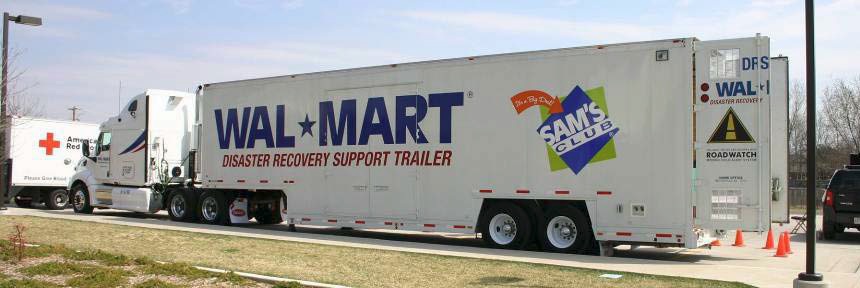
I’ve blogged in the past about the importance of public-private partnerships in emergency management and the incredible positive impacts it can have.  Wal-mart, in particular, has gotten a lot of good press about their emergency business operations, and more recently since Hurricane Sandy I’ve seen some media attention given to other companies such as Home Depot, highlighting their emergency operations centers and their relief efforts.  In a presentation I saw from Wal-Mart a while back, the company highlighted three priorities in regards to emergency management: 1) take care of its people, 2) take care of its operations, 3) take care of its communities.  Just these three priorities say a lot about the company.  They realize their people are their most important assets.  Next, they strive to ensure business continuity.  Lastly, with their business operations now being able to support it, they take care of the communities they have a presence in.  What a great business model!

The integration of the private sector into emergency management needs to be at all levels.  The National Operations Center (NOC), run by the US Department of Homeland Security, includes private sector representatives.  How can this be improved?  At the state level, many states either include private sector representatives in the State Emergency Operations Center or have a separate but connected Business Operations Center, solely focused on the coordination of private sector efforts.  Both of these options help expedite private sector resources to emergency management efforts – especially when used as an extension of the EOC’s supply unit.  There is also a recognized expertise between private sector and public sector emergency managers.

County and local emergency management programs can also benefit.  Where national and international companies are usually found at the NOC and state EOCs, the local management of these chains can work with county and local EOCs.  Also, don’t discount the value of small businesses in the area.  They, too, have a wealth of knowledge and access to resources.  Every community should form a disaster business alliance of some sort, or welcome private sector involvement with local VOADs.  You can work with local chambers of commerce to make this happen.  I’ve established a great relationship between my company, Emergency Preparedness Solutions, with my local chamber of commerce and have been providing information to members on emergency preparedness and business continuity through meetings and articles, as well as a presentation that I’ll be doing in a few months.

Never think that emergency management is too big of a concept for your local community.  It’s not just something done by FEMA or by the state.  In a disaster we need to help our neighbors and our communities.  The biggest impact is always locally.  Establish those relationships now and make a difference!

Good article.

Brandon Greenberg's avatarDisasterNet

The is a great article from a leading disaster researcher about the privatization of emergency management.  via The U.S. Emergency Management System Is Not Perfect, but It Works – Room for Debate – NYTimes.com.

Here is the full text:

Questions regarding the privatization of the Federal Emergency Management Agency or the assignment of its functions to states must be addressed within the context of the agency’s responsibilities and how it functions in relation to state and local government capabilities.

Most people think of FEMA as a disaster response agency, but that is only partly true. FEMA has many responsibilities both during disasters and at other times. These responsibilities include assisting states, local governments, tribal governments and U.S. territories in the preparation of disaster mitigation plans aimed at taking long-term steps to reduce losses from future disasters, pursuant to the Disaster Mitigation Act of 2000; providing funding and guidance so…

View original post 603 more words

Emergency Preparedness for Persons with Disabilities

My post is in reference to an article in Emergency Management Magazine (found here:http://www.emergencymgmt.com/disaster/Emergency-Planning-Disabled-Uphill-Battle.html).  The author’s article brings up several pertinent points around preparedness planning for persons with disabilities.  This, like darn near everything in emergency management, requires a multi-agency, multi-disciplinary approach.  We also need to be very certain to not lump all persons with disabilities into one category.  There are various levels of function that people may have.  Many people live with disabilities every day and are highly functioning, requiring little or no help.  Others may require daily or constant assistance from family, friends, or other care takers, including medical professionals.  Some folks are dependent upon medications or medical equipment (insulin dependant diabetics, those requiring dialysis, or home oxygen), while some have mobility impairments.  Some may have cognitive disabilities such as autism, Down’s Syndrome, or a traumatic brain injury.  Some persons may have several disabilities which need to be considered.  A community’s planning efforts must incorporate the full spectrum of needs.

Following our emergency planning steps, we can easily pull together the people and information we need.  First, form a planning group.  Emergency management, local health department, and local organizations that advocate for persons with disabilities, such as the Arc, associations for the blind and hearing impaired, diabetes association, MDA, UCP, etc.  These are all important stakeholders as they serve and advocate for our disabled populations on a daily basis.  You should probably know your community’s hazards, but we should analyze how they can impact persons with disabilities.  We have to define what needs exist that we need to address.  We can even consider mitigation measures, such as obtaining strobe light alerting for those with hearing impairments.

Help your community keep its finger on the pulse of the needs of persons with disabilities by forming a special needs registry.  Those utilized now are web-based and help first responders and emergency management identify, plan for, and address the changing needs in the community.  Having current information such as names, addresses, and type and severity of disability are extremely important.  Planning for notification, evacuation, transportation, and sheltering are often times the most challenging.  Expand your planning group when these challenges come up.  Include utility companies (who will prioritize power restoration to those who are dependent for medical reasons), local and regional transportation authorities, and those agencies and resources who will staff special needs shelters.

Remember, most persons with disabilities are not an idol portion of our population.  They are highly functioning and can help, needing only the right accommodations to do so.  Also, be sure to promote special needs preparedness.  FEMA, the American Red Cross, and others have excellent resources for this.  Your local association for the blind and visually impaired can help you obtain materials in large print or braille.  The National Organization on Disability is also a great resource (nod.org).  Don’t leave anyone behind!