Facilities Management and ICS

Earlier in the year I posted a video (something I need to get back into doing) on the positioning of care facilities within the ICS structure (Operations, not Logistics).  I’m currently reviewing some standard operating guidelines created by a county government on the management of such a facility and have made some critical observations….

The biggest observation is that the management of the facility does not have to mirror the ICS organization.  What I mean here is that it really shouldn’t have its own Operations Section, Logistics Section, Planning Section, Finance/Admin Section, PIO, Safety Office, and Liaison Officer.  While I commend the folks who developed this SOG for trying to stick with ICS, I think they are trying too hard.  While the application of this type of organization CAN assist with management of a facility, it’s typically too much.  Yes, ICS is flexible and allows us to activate only the elements needed, but often people feel compelled to utilize the organization to its fullest extent – which in this case can mean the creation of positions which are not needed.  The application of ICS elements to the management of a facility can also be redundant and confusing.  Besides, most jurisdictions don’t have access to multiple Planning Section Chiefs (or persons qualified in other positions) to staff all these areas.

Let’s start at the top… Facilities, per ICS definition, are overseen by Managers.  Not directors or other such titles.  Most facilities have very specific functional activities which should drive their organization.  Yes, most of these would be considered ‘Operations’, and the support of these can be considered ‘Logistics’.  But we really need to look at the responsibilities of the facility and the relationship to the rest of the incident organization to help guide us in the development of how we organize our facility management.  Managers, in ICS, can have assistants, which may be all that’s needed to help address management-level issues that people may be associating with ICS positions.

Does a facility need a Public Information Office (PIO)?  Probably not.  ICS guidelines prescribe one PIO per incident to help ensure coordination and integrity of public information.  If the facility has a need to communicate information to the pubic, they should be working through THE incident PIO.  If the scope of the facilities operations are complicated enough, perhaps that function may have a designated assistant PIO to ensure proper handling of the information, but they are not the incident PIO.

Certainly facilities can have safety issues.  Does they mean they should have a Safety Officer?  Again, ICS prescribes that we have one incident Safety Officer.  Typically the facility manager (or perhaps an assistant facility manager) will have safety included as an additional duty, in coordination with the incident Safety Officer to ensure adherence to all applicable safety standards.  As with the PIO matter, if the facility for some reason has some serious safety concerns, it may warrant the placement of an assistant safety officer by the incident Safety Officer.

The function of a Liaison Officer is fairly high level, with the primary intent of supporting the Incident Commander with the coordination of various organizations involved in the response.  Of course many facilities are likely to be supported by several organizations, but the participation of these organizations has already been addressed by Command, likely with the assistance of the Liaison Officer.  An added Liaison Officer is simply redundant and confusing.

Logistics – while there are certainly support matters that need to be tended to in facilities – such as security, parking, sanitation, etc., this doesn’t warrant a position in the capacity of a Logistics Section Chief.  Yes, they do require some oversight which may be beyond the span of control of the Facility Manager to provide.  This is a good opportunity to assign a Support Services Leader or some other similarly titled position who reports to the Facility Manager.  Additionally, most facilities should not be the ordering point for resources.  If they need resources, the request should be sent up to the incident Logistics Section.  Similarly, there is no need for a facility to have its own Finance/Admin section.

Having an incident action plan is always a critical element of organization.  A care facility should certainly be included in the Incident Action Plan; reflected in objectives and organization, and tasked in a form ICS 204.  That said, I certainly acknowledge that some facilities can be rather complex, with a multitude of personnel and activities and thus can benefit from having more than just an ICS 204 to run by.  Select elements of an IAP can be very helpful, but a full blown IAP is generally not needed.  The development of such a document for a facility generally won’t require a full time position, much less an actual Planning Section Chief.  This is another opportunity to use an assistant facility manager.  The check in function should be coordinated with the incident Planning Section who will either assign someone or the task will be addressed internally by the Facility Manager.

As with most things, there are always exceptions to the rule.  Very large facilities with extensive operations can certainly benefit from having an overhead team.  I’ve seen ‘short teams’ (these are compact versions of Incident Management Teams) assigned to manage everything from staging areas to family assistance centers in very large (Type 1) incidents.  As such this is not something I would generally plan for since it would be an exception to the rule.  Organizationally, a short team/overhead team would become a layer between the facility manager and the task leads/unit leaders to better allow them to focus on their functional jobs while the overhead team addressed the broader management and coordination matters.  If introduced to the organization of the facility, the overhead team must have a carefully defined scope of operations to ensure they were not redundant to functions of the incident’s actual management team.  Also, an overhead team such as this would likely not have a PIO or Liaison Officer.

While we try to introduce ‘hard and fast’ rules to incident management, the reality is that these things are quite fluid and determined by need.  While our general preparedness should support a credible worst-case scenario, we also need to be careful with our planning assumptions.  Otherwise a full-blown plan for a small community could call for a need for a dozen Liaison Officers, which we aren’t likely to get under most any circumstance.  Yes, ICS is flexible, but we need to have a realistic approach.  Similarly, we can use that flexibility of ICS to introduce elements into our organization that might not have been addressed in the plan with a fair amount of ease.  We’re looking at the difference between a shelter in an average high school vs a shelter in a large sports stadium.  All that said, if your catastrophic plan identifies the use of the large sports stadium as a shelter, you should certainly include the provision in that plan for an overhead team to assist in the management of that shelter.

Of course I’m interested in your thoughts on this.

© 2015 – Timothy Riecker

Emergency Preparedness Solutions, LLC
WWW.EPSLLC.BIZ

ICS Training Sucks… So Let’s Fix It

A great many of you are familiar with the piece I wrote in June called Incident Command System Training Sucks.  In it, I identify that the foundational ICS courses (ICS-100 through ICS-400 – but especially ICS-300 and ICS-400) simply do not provide the skills training that emergency managers across all disciplines require to utilize the system efficiently, effectively, and comfortably.  ICS Training Sucks turned out to be a popular piece which had a great deal of support from the first responder and emergency management community – which I am very grateful for.  The amount of comments and feedback was indicative to me that I was on the right track and that I need to revisit the topic and explore more.

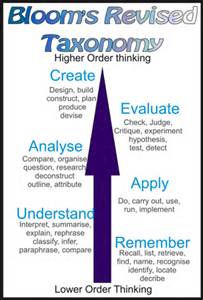
At the center of my argument stands Bloom’s Taxonomy.  Bloom’s is a learning hierarchy which helps to identify the depth of instruction and learning.  Here is Bloom’s Revised Taxonomy.  We’ll be referencing it a bit in the examples I provide.

Bloom's Revised Taxonomy

Bloom’s Revised Taxonomy

Take a moment to read through the descriptions of each of the ‘orders of thinking’ in Bloom’s.  Go ahead, I’ll wait…

Done?  Good.  Most would agree that courses such as ICS-300 and ICS-400 should attempt to convey learning at the Apply level, correct?  Unfortunately, that perception, while wildly popular, is wrong.  Most of the learning objectives of the two courses (objectives are our reference points for this) are at the Understand and Remember levels.  Yeah, I was a bit surprised, too.

In ICS Training Sucks, I provided a greater detail of the background analysis (it summarized the narrative of a Master’s research paper I wrote), so if you want more, simply go back and check it out.  While I make a few broad recommendations in that piece, there has been a need to examine our path to fixing this more closely.

In the development of curriculum, there exist several models.  The most commonly used model is the ADDIE model, which stands for Analysis, Design, Development, Implementation, and Evaluation.  The first step, Analysis, is really the most important, although often the most ignored or cut short.  People think they know what the need is, but often don’t really understand it.  If you are interested, I’ve written a piece on the topic of Analysis for Training Magazine last year.

Even though we are suggesting a re-write of the ICS curriculum, or parts thereof, Analysis is extremely important.  The roots of the current curriculum we use goes back to circa 1970s wildfire ICS courses.  These are good courses, and while I’m not sure if they fully met the need then (although they did advance us quite a bit), their evolved versions certainly DO NOT now.  There is no sense in repackaging the same product, so let’s first figure out what people need to know to do their jobs effectively.  Essentially, this leads us to identifying a list of key core competencies in ICS.  Core competencies will define the level of competence needed in a particular job or activity.  We can easily use the levels of Bloom’s as our reference point to establish common definitions for the levels of competence.  What am I talking about?

Let’s pick one key activity in ICS to examine.  Resource Management is a great example as it shows the disparity between what exists and where we need to be.  Resource Management is discussed in Unit 6 of the ICS-300 course.  I think most would agree that we expect most every jurisdiction to be able to implement sound resource management practices.  Implement is the key word.  Implementation is indicative of the Apply level of Bloom’s Taxonomy.  When looking at unit objectives in the ICS-300 course for unit 6, the key words are identify and describe.  Identify is indicative of the Remember level of Bloom’s Taxonomy, while describe is indicative of the Understand level.  Both fall short of application.  While we aren’t looking for this curriculum to create incident management teams, we still expect most jurisdictions to be able to manage resources, which is certainly a core competency of incident management.

I think the NIMS doctrine provides a good starting point for identifying core competencies.  In an effective study, there may be other competencies identified – perhaps topics such as leadership, that may not necessarily be found in a revised ICS curricula, but can be obtained through other training courses.  This could lead to an important differentiation between core competencies (those that MUST be included in ICS training) and associated competencies which can be sourced elsewhere.

Further, we can capitalize on what we have learned through implementation of the current ICS curriculum and previous iterations.  We know that multidisciplinary training is most effective since larger incidents are multidisciplinary.  We also know that training must be interactive and maximize hands-on time.  The past few updates to the ICS courses have done a great job of encouraging this, but we need more.

Making more detailed recommendations on fixing ICS training will take time and effort, as a solid Analysis must first be done.  Once core competencies can be identified and defined, then a strategy for revamping ICS training can be developed.  As mentioned in ICS Training Sucks, this approach should be multi-faceted, using both new and (good) existing courses to support it. Let’s not be bound by what currently exists.  We don’t necessarily have to create a ‘new’ ICS-300 or ICS-400 course.  Let’s create courses within a broader program that meets the needs of the emergency management community.  They may no longer be called ICS-300 and ICS-400.  Perhaps these two will be replaced by four smaller courses?  Who knows where this path will take us? The bottom line is that we need to be responsive to the needs of the learners, not bound by “the way we’ve always done it.”

As always, feedback is appreciated.  Perhaps there exists an institution that has the desire and funding to pursue this further?  I’m fully onboard!

© 2015 – Timothy Riecker

Emergency Preparedness Solutions, LLC
WWW.EPSLLC.BIZ

The Need for More Scenario-Based Learning

Think back through all the courses you’ve taken.  It’s a lot – I know.  What ones stand out the most?  I’m willing to be they are the ones that were the most engaging.  Not only did you enjoy them, but you learned a lot from them and still remember quite a bit of it.

It’s no secret that training adults can be challenging.  Training professionals in emergency services is certainly no different.  The challenges are even greater as the number of required training courses continually increase, requiring more and more ass-in-chair time every year for responders and other professions.  A great deal of training programs we see out there still seem to be holding out for the sake of traditional delivery styles, much to the detriment of our learners.  Why?  Designing traditional lecture-based learning is easy to do!  Figure out what people need to learn, develop content, slap together some PowerPoint, and voila!  Hell, even I’m guilty.

The fact of the matter is that we all know this is wrong.  Yes, it’s easy to do on our end, but the value and impact of the learning is pretty low.  People don’t want to be lectured to for hours on end.  We know that learning is most effective when we mix things up and when we increase interaction.  One of the best ways of engaging learners effectively is through scenario-based learning.

Now I’m not just talking about using a scenario at the end of the course to see if people can apply what they’ve learned over the past two days.  Yes, scenarios can be used as a test of sorts, but they are most effective for actual learning.  So when should you use scenarios?  Why not start the course with one?  It immediately gets people thinking, which is a good thing especially with an 8 am start time to the course.   If you use a lot of scenarios in a course, can they all be related?  Sure.  Maybe.  Maybe not.  It all depends on what the purpose of the scenario is.  In training responders, threading a common scenario through a course is usually helpful.  Scenarios can get complicated when we need to establish a common understanding of what is going on, where it is, what resources are available, etc.  As such, it helps to use the same foundational scenario throughout the course (or at least regularly revisit it), and continue to introduce new problems or a different focus based upon the path of the training.  Using a common foundational scenario saves time so you don’t have to start anew introducing all new information each time and it keeps learners comfortable.  That said, it may occasionally be valuable to change things up a bit.

Do you need to use HSEEP to develop course scenarios?  No.  While these aren’t exercises in the strictest sense, we can benefit considerably from many of the principles and concepts of HSEEP.  Develop what you need to give learners the information they need to participate and the information you and/or other instructors need to properly facilitate and evaluate.

Adult learners like to be challenged.  Lecturing them for hours on end will only challenge their ability to not fall asleep – which may only be accomplished by their challenge for a new high score on the new app they just put on their phone.  The best way to challenge adult learners is to give them problems to solve.  A well written scenario will help introduce these problems in a framework which is both familiar and challenging to them.  Depending on how the scenario is provided, such as a compelling background story or use of video, learners will establish an emotional connection to the scenario which prompts a visceral desire to solve these problems.  Even one scenario is powerful and can prompt a lot of interaction.  It can prompt individual responses to questions, group discussions, and group collaborations.

Finally, don’t forget to evaluate both your learners and the scenario itself.  At the conclusion of each scenario conduct a hotwash and feedback session with learners to discuss what they accomplished and possible areas for improvement.  Also be sure to gain feedback from them and other instructors on how well the scenario worked and what can be improved upon.

Just like any other aspect of instructional design, the integration of scenarios can be time consuming but it’s an investment that will pay off.  To capitalize on the value of your scenarios, make sure the activities and expected outcomes of each scenario are associated with the learning objectives of the course and engage learners to the proper degree (i.e. the proper level of Bloom’s Taxonomy).  Yes, scenarios also take a fair amount of class time to execute.  That time needs to be well accounted for in your instructional design and course planning.  However, if properly designed, learners can learn just as much content if not more through interactive scenarios as compared to lecture-based training.

What types of scenarios have you integrated into courses?  How did learners respond to them?  How can we do a better job of integrating more scenario-based learning into our courses?

Need help designing scenario-based learning?  Let EPS help!

© 2015 – Timothy Riecker

Emergency Preparedness Solutions, LLC

WWW.EPSLLC.BIZ

Effectiveness and Efficiency in Incident Management – Resource Tracking

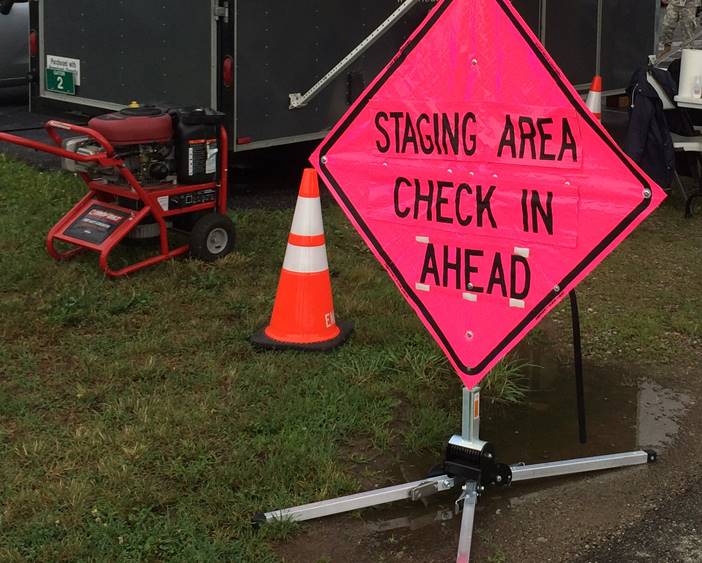
Incident Check In

Incident Check In

I recently took part in the management of an exercise in which a Type 3 incident management team (IMT) was among the players.  As part of their initial set up they immediately recognized the importance of checking in and tracking resources.  This is an activity which is often overlooked at the onset of an incident and is a royal pain to catch up on once the need is realized.  There were a few things which they could have improved upon, though, which seriously impacted their effectiveness and efficiency.

  1. They spent time checking in each vehicle as equipment. Not every vehicle needs to be tracked in an incident.  Generally, the sedan, pick up, or SUV you come in on isn’t special enough that it requires tracking.  Huge waste of time, people, and effort.  Consider the nature and capability of the equipment that is coming through your access point.  Is it a specialized resource?  Will it be applied tactically?  Will it be supporting logistical needs?  Is it rented or leased?  These are the conditions that should be considered when deciding what equipment to track.
  2. They marked equipment using bottled shoe polish. Not a bad idea, except it rained all week, and within hours of application most of the markings couldn’t be read.  Windshield markers, similar to what car dealerships use, are cost effective, waterproof, and clean off easily with mild window cleaners.
  3. Equipment that was checked in was never logged in detail. What’s the difference between E-01234 and E-01235?  We will never know as no descriptions were entered into their tracking system.
  4. As vehicles flowed in to the staging area, people will directed to check in at the command post. This is obviously excellent, except to get to the command post people had to pass by the main access to the incident site.  This meant that many people did not check in as directed.  They got distracted by the incident and associated response activity and never made it to the command post to check in.  This severely impacted the effectiveness of accountability.

Sometimes people would try to explain these things away by saying “It’s just an exercise”, but exercises are an opportunity to do things the right way, not skimp and cut corners.  While their intent was good, their process and results were quite poor.  If we are supposed to train the way we fight, as they say, this team has a ways to go to be more effective with resource accountability.  On the surface resource tracking looks easy… but it’s not.  There is a lot of complexity, variables, and attention to detail that must all work together well in order to be successful.  The Resource Unit Leader has one of the hardest jobs in the Incident Command System.

Being who I am, I’m left wondering why this all happened.  I have little choice but to blame poor planning and training.  Planning is to blame for a lack of clear procedures, guidance, and decision models.  The training which people receive tends to be just as vague.  By now, most, if not all of you are familiar with my opinions on the current ICS training.  While the referenced article does not go into the IMT/position training curricula, from what I recall of the courses I’ve taken, there are certain things taken for granted.  It’s easy to put an item on a checklist that says ‘Establish check in’.  OK… how?  Where?  When?  What?  Why?  The answer to those questions, or guidance to help answer those questions, should be provided through training.  Let’s tell people not only why check in is important, but what people and resources should be checked in, where to establish check in (what to look for and what to avoid), etc.  Once we’ve trained people on it, let’s provide job aids… not just the ICS forms, but job aids that will actually help people do their jobs.  While it may seem like minutia and unnecessary detail, keep in mind that we are training people to operate in austere and chaotic environments which they are trying to establish order over and only do these activities on rare occasion.  Those conditions signal the need for detailed training and job aids to support sustained performance and limit the degradation of the training they received.

Bottom line – let’s take a step back, fix what we have to based upon what we’ve learned, and proceed forward so we can operate more effectively and efficiently.

Thoughts and comments are always appreciated.  What have you learned or observed from incidents or exercises that needs to be addressed foundationally?

© 2015 – Timothy Riecker

Emergency Preparedness Solutions, LLC

WWW.EPSLLC.BIZ

Incident Command System Training Sucks

There it is.  I said it.  Before you unleash the hounds, hear me out.

A bit of background:

As another grad course at American Military University was coming to a close last month I was racking my brain over the theme of my term paper.  In one of our final assignments I was dissecting NIMS – and that’s where it struck me.  ICS training is all wrong.  Now that my paper is all wrapped up and submitted, I wanted to get some discussion on my blog.  So, since I don’t want to bore everyone with the paper itself, what follows is a much less academic and more conversational version of my term paper.

For those of you who read my blog, you will be familiar with a few fairly recent posts that involve ICS:  The Human Aspect of ICS and Overcoming Transitional Incidents, Preparedness – ICS is Not EnoughTraining EOC Personnel – ICS is not Enough, and finally The Need for Practical Incident Command Training.  In that last one I feel I was headed in the right direction but not yet on the right road.

Before we go any further, here is my disclaimer.  I am a big believer in ICS.  If you take a look at the aforementioned posts, you’ll see that.  It’s a system that has been in use for a long time and has a proven track record of working well when properly applied.  Along with that, I’ve been an ICS practitioner, instructor, and instructor trainer – since before NIMS, in fact.  I’ve also been in positions influencing NIMS-related policy at both the state and national level.  So I have a fair amount of familiarity with the system, how it is used, and how it is taught.

Defining the need:

A great many after action reports (AARs) reflect on Operational Coordination (the current core capability which most heavily features ICS), On-Scene Incident Management (the previous iteration under the target capabilities), and just ICS in general.  These AARs often go on to recommend that responders need more ICS training.  How can they say that, though?  Following NIMS compliance requirements, darn near everyone who has been required to take ICS training has done so over the past 10 years.  So how could we be so off base?

The reality is summed up in this simple statement from John Morton: “With respect to using ICS from NIMS… training incorporated in the NIMS doctrine largely does not provide any actual skills training or development.”  If you aren’t yet familiar with John Morton’s work, I suggest you take a look here: Book Review – Next-Generation Homeland Security.  Brilliant guy.

Looking at the substance of Mr. Morton’s quote, it’s true that the foundational ICS courses (ICS-100 through ICS-400) don’t provide any skills training.  However, there is a significant expectation that taking these courses is somehow a magic bullet.

Much of my paper focuses on the ICS-300 and ICS-400 courses.  The ICS-100 and ICS-200 courses are probably not far off from where they actually need to be.  There exists, however, a higher expectation from people to have learned something from the ICS-300 and ICS-400 courses which can be readily applied in the field.  One of the foundations for my paper was an analysis of the course objectives from the current ICS-300 and ICS-400 courses through the lens of Bloom’s Taxonomy.  Bloom’s is a learning hierarchy which helps identify the depth of instruction and thus learning.  The revised version of Bloom’s is a scale of six levels, ranging from ‘Remembering’ to ‘Creating’, with remembering being pretty basic and creating being quite advanced.  The expectation of ICS training, obtained from a few sources as well as our perception, is that it falls somewhere in the middle under the taxonomy level of ‘Applying’.   The reality is that most of the objectives from these two courses fall short of that expectation.

How is it possible that we have been expecting more from people when we haven’t been giving them the proper training to do so?  In essence, all we have been training people in is theory.  Sorry, but theory doesn’t save lives, application does.  Why does the fire chief of even the small city (population ~62k) closest to me care what an incident complex or branch-level planning is?  It’s not something he can use.  He and his officers require proficiency in the system for not only the day to day type 4 and 5 incidents they deal with (which they generally have), but also enough for the type 3 incidents which occasionally occur from storms, hazmat incidents, and the like.

Yes, we do have position-specific courses for those who are members of incident management teams (IMTs).  Those courses presumably identify at a higher taxonomy level (I haven’t had a chance to do an analysis on them).  IMTs are great assets, but let’s have another brief shot of reality … not every jurisdiction is suited for an IMT.  Identifying potential members, getting them trained and experienced, and maintaining their skills is an investment that most jurisdictions simply aren’t willing or able to make.  The result is a huge gap between those who have only the core ICS training, which we have already identified does not meet the real need, and an IMT from a larger jurisdiction or region.  Jurisdictions need to be able to function for at least two days, if not longer, on their own.  Most incidents will be resolved at that point or ready for transition to an IMT.  If appropriate, the IMT can then apply things like branch-level planning.  That is the level of application expected from IMTs.

What can we do about it:

So what is needed?  Here are my rough ideas.  First off, at a micro level, we need a full rewrite of the ICS-300 and 400 courses.  Let’s make them more meaningful and focus on application.  Pull out all the theory and structure them around practical learning practices.  Second, we need refresher training.  Let’s stop the argument about that.  Knowledge and skills deteriorate over time, we all know that.  So let’s go with annual refresher training.  Not a day of being lectured, to, either.  Something more involved which reflects the identified need for applicable learning.  Third, continued reinforcement through exercises.  If you don’t use it you lose it.  The last ten years or so have seen a strong emphasis on exercises which we should certainly continue.  Lastly, all of this culminates at the macro level as a restructuring of the whole training program.  Why is that needed?  Well, aside from the current one being ineffective, we need to logically identify what training is needed for certain audiences based upon their roles and responsibilities and support it through accessible training programs.

In regard to restructuring the whole training program, I would suggest adoption of the Awareness, Management and Planning, and Performance course structure (AWR, MGT, PER).  ICS-100 is certainly awareness.  Awareness level training is appropriate for most responders and staff of assisting and supporting agencies who don’t have any leadership or decision-making roles and don’t need to have a high degree of interaction with larger system.  ICS-200 has some operational application for first line supervisors, so it’s probably a suitable introductory MGT course.  The ICS-300 should continue with a focus on the planning process but obviously needs to be bolstered with more application-level content and instruction.  With that, the target here is probably higher level management and planning.  The ICS-400, still needing a rewrite, is best left for those functioning at higher levels of incident management, such as EOC management and IMTs.  It will probably serve as a good foundational performance level course.  Now, just don’t leave it at that.  Let’s pull other courses in line to support this.  Many of those courses already exist, particularly those that have a strong ICS relationship, like the FEMA EOC and ICS/EOC courses (which are also in desperate need of rewrites to focus on application), the TEEX Enhanced Incident Management course (which is excellent), and others.  Let’s build a real, viable program for incident management as we have for other technical areas.  Without incident management we remain in chaos and the impacts of other activities are greatly minimized.  Let’s give it the respect it deserves.

Now that I’ve put all that out there, I’m absolutely prepared for your thoughts, ideas, and feedback.  I’m also hoping that someone forwards this on to Doc Lumpkins at the NIC.  Doc – let’s talk!  I might have an idea or two…

Unleash the hounds!

© 2015 – Timothy Riecker

Emergency Preparedness Solutions, LLC

WWW.EPSLLC.BIZ

Dispatch Transition to EOC Operations

Within the LinkedIn discussion thread of one of my recent posts on applications of ICS, I was prompted to consider that one more awkward element for an EOC operation can be the transition or integration of dispatch with the EOC.  Consider that during ‘routine’ operations, it is dispatch who is supporting field operations and tracking critical actions.  Many jurisdictions encounter a difficulty when activating an EOC locally to support a growing response – what to do with dispatch?

The EOC’s traditional role as ‘expanded dispatch’ aids a field response by providing a greater level of coordination far beyond the tools normally available to most dispatchers by facilitating direct access to agency representatives who are dedicated to supporting the needs of the incident.  Under routine operations, Command (or Logistics) is contacting dispatch directly (usually via radio) to request resources.  Upon activation of an EOC, these requests must be routed to the EOC.  In some jurisdictions, EOCs are co-located with dispatch (at least in the same building), making this transition a bit easier in regard to technology and people, but some jurisdictions have these buildings separated.

How do you solve this awkward dilemma of ICS/EOC interface?  First of all, it needs to be thought through and planned PRIOR to an incident!  This is when we can do our best work, ideally bringing all relevant stakeholders to the table, mapping out processes and procedures, and identifying equipment and technology issues needed to support it.  With everyone together, talk through what you want to do given the circumstances you have.  Each idea likely has pros and cons that have to be weighed.

Some possibilities… Keep all resource orders going through dispatch. In doing so, you are not interrupting the ‘normal’ communications link with field operations.  In this circumstance, though, you need to consider how the dispatcher will transfer the resource request to EOC Logistics.  Since you likely do not want Logistics to be accessing the PSAP system, the dispatcher will likely have to enter the request into another system, such as EOC management software (something they likely don’t use often).  This can be time consuming so it will likely require the dispatcher to be solely dedicated to this incident.  The scope of resources (or ideally missions) is also beyond what a dispatcher usually deals with (thus the reason for activating the EOC), so it would likely require some additional training and use of dispatchers with greater experience.

Another option is to bring the dispatcher into the EOC.  Sometimes physical separation, despite technology, can make things awkward.  If the jurisdiction has the technological ability to bring a dispatcher into the EOC as part of the Communications Unit, they can interact with field operations and facilitate communication better.  The need to enter the resource/mission request into a formal system which is assignable and trackable still exists.

Another option is to pull dispatch out of the incident.  This can cause significant disruption to the incident but is manageable if pre-planned, trained, and exercised.  At this point in an expanded incident the need to use radio communications beyond field operations may be exceeded.  Field Logistics can interface directly with EOC Logistics via phone or other technology to communicate resource requests.  This methodology gets the request directly to EOC Logistics for them to handle.

There are certainly other models and possibilities that exist.  What experiences do you have?  What have you seen work?  What have you seen fail?

© 2015 – Timothy Riecker

Emergency Preparedness Solutions, LLC

WWW.EPSLLC.BIZ 

The Human Aspect of ICS and Overcoming Transitional Incidents

Most often when we consider the Incident Command System (ICS), we think of boxes in an organization chart, forms to be completed, and specific processes to be followed.  True, these are, in essence, aspects of ICS, but they alone will not pave the way to success.  What we must remember is that ICS is conducted by people.

Typically the most difficult aspect of a complex incident is the transition from what we normally do and how we normally respond to elevating our response to a more appropriate level given the scope of the incident.  The groundwork for this transition lies in our initial response, which many experienced responders know can set the tone for the entire operation.  This initial response is based largely on the decisions we make with the information we have.  While there are policies, plans, procedures, play books, checklists, and myriad training that help to inform us, it all comes down to the human factor.  People make decisions based upon the stimuli they are presented with and their own experiences.

Chief Cynthia Renaud in her paper The Missing Piece of NIMS: Teaching Incident Commanders How to Function in the Edge of Chaos discusses approaches to initial response as an oft forgotten aspect of how we teach ICS.  While we know that responders conduct initial responses all the time, there is a significant difference in scope between a routine incident and a complex incident.  This difference in scope requires a different and more open mindset.  While our size up actions may generally be the same, we need to think bigger and this kind of thinking is difficult to train.

The implementation of the ‘bigger’ (i.e. beyond what is routinely used) aspects of ICS is also a challenging mindset for responders.  These aspects of ICS, such as the initial delegation of other organizational aspects and the need for a written Incident Action Plan, do not come easily when they are not practiced.  The fact of the matter is that the implementation of ICS requires a conscious, deliberate decision accompanied by people with knowledge and skilled intent to guide its expansion suitable to the incident at hand.  It also requires a bigger picture mindset recognizing the need to expand the management of the response proportionate to the complexity of the incident and the resources required to address it.  When is it needed?  How do we do it?

One problem is that most of the people we count on to manage these initial responses are trained to manage tactics, not large incidents.  They excel at managing a handful of resources in a rapid deployment and resolving an incident quickly.  This is exactly what they are needed for and they do it well.  Chief Renaud indicates a need to train these first level supervisors to recognize complex incidents for what they are and give them the tools (and authority) to implement broader measures, including an expanded implementation of ICS.

I’m a firm believer in ICS, but I know that people have to drive it.  It’s not something we can put on autopilot and expect it to bring us to our destination.  It has to be consciously and deliberately implemented.  When people criticize ICS, I often find that their criticism is due to false expectations and inappropriate implementation.  With that, I firmly believe we need to do a better job at training to address these issues and help responders better understand the system and demystify its use.

How do we make our training better for the average (non Incident Management Team) responder?  How do we help bridge this gap between the routine and the complex?

© 2015 – Timothy Riecker

Emergency Preparedness Solutions, LLC

www.epsllc.biz 

The Need for Practical Incident Command Training

I’ve written a couple of articles in past few months (See: Preparedness – ICS is Not Enough; and Training EOC Personnel – ICS is Not Enough) where I’ve been a little rough on the Incident Command System (ICS), or rather the trust that people put in it as a magic pill to cure all their incident management ills.  As it turns out, there is no apologia; rather I’m going to continue challenging the status quo, this time as it relates to how ICS training is conducted.

The driving force behind this is the realization of a gap that exists in ICS training and the ability of learners to apply what they have learned to a reasonable degree within an emergency response environment.  The foundational ICS courses (ICS 100 – 400) provide learners with a progressive understanding of the concepts, terms, organizational elements, and primary processes within ICS, but provide little opportunity to practically apply what they have learned.  Progressive instructional design methods through course revisions have added more hands-on activities within these courses to enhance learning, but these courses still fall short of providing the kind of practical exercising needed for learners to have any degree of confidence or proficiency.  That said, these courses accomplish exactly what they are intended to.  They are not designed to provide much practical application.

To the other side of the ICS training spectrum is training for Incident Management Teams (IMTs), which provides intensive and in depth training, mostly focused on the individual positions within an incident command organization, and the key activities and responsibilities of those positions.  IMT training also includes capstone courses in which IMTs complete a combination of didactic and hands-on instruction in a team environment.  Much of this training is coordinated by FEMA and the US Fire Administration through the NIMS ICS All-Hazards Position Specific Training Program with their focus primarily on building capability at the Type III (extended operations) level, with training at the higher (Type II and I) levels available through appropriately intensive efforts.  While some training is available for Type IV and V IMTs, this is often not taken advantage of because rural areas may not be able to assemble enough personnel for a functional team.  The training is also still fairly intensive, even at this level, and requires a number of courses, each with a team of instructors.  This comes at a high cost of time and dollars.  The need for local personnel to function within an incident command structure at the local level still exists, but goes largely unaddressed with performance level training being focused on IMTs.

Certainly exercises can provide an opportunity for individuals to work together as an ad-hoc team to resolve an incident.  While exercises provide for great practice, instructive feedback usually doesn’t occur at all, with usually only a few out of context comments coming until well after the experience by way of an After Action Report.  Structured learning environments which provide a series of simulations where individuals can practice what they have learned are ideal, particularly when immediate hotwashes are provided after each scenario, allowing learners to grow and apply what they have learned in the next scenario.

Of the learning opportunities that current exist, the Enhanced All-Hazards Incident Management/Unified Command course (MGT 314) from TEEX comes closest to this type of experience.  I have direct experience taking this course at the TEEX location several years ago and found it to be a great experience.  Because of the technology used to facilitate the course it is only offered as a resident program at TEEX and seats fill quickly.  While this is a great program, we need more like it and an ability to reach down to small local governments where there is an urgent need for this type of practical training.

Several years ago colleagues and I developed a course called the ‘IAP Workshop’, which is a daylong scenario-driven training where students practice working the ICS planning process and ultimately developing an IAP.  Through the day of training, participants go through this process several times in a crawl-walk-run progression with feedback provided by facilitators.  Participants are required to have completed the ICS 300 course as a prerequisite.  This course has proven successful, despite naysayers and traditionalists who default to the ICS curriculum fulfilling all ICS training needs.  That said, there is more to ICS and ICS application than the planning process.

Practical training in any subject, particularly the Incident Command System, builds confidence and improved application of knowledge and skills.  Since most incidents are best managed locally, we need to invest in better training to enhance local capabilities.  The foundational ICS courses are just that – foundational.  IMT training may simply not be the best solution to meet this need.  Let’s talk about the ICS training gap and find some solutions.

What ICS training gaps have you identified?  Have you discovered or designed any solutions?

© 2015 – Timothy Riecker

Emergency Preparedness Solutions, LLC

www.epsllc.biz

Preparedness – ICS is Not Enough

Back in October I wrote a post about ICS training not being enough for EOC personnel.  You can give it a read to see my reasons, which essentially boil down to the specific role of the EOC (Emergency Operations Center) in the incident management structure and the unique processes which take place in an EOC both not being addressed in ICS (Incident Command System) training.

As I continue to work in various jurisdictions to enhance their preparedness, I am expanding my thoughts on ICS training not being enough – this time for all of preparedness.  In meeting with jurisdictions and discussing their current state of preparedness, many believe they are well prepared to respond to any incident simply because their personnel have received ICS training.  Why am I concerned by this?

Folks, in the grand scheme of things, ICS training alone does not teach you to do very much except how to function within a system.  First off, I’m a huge believer in ICS and the success it can help facilitate in incidents and events.  Not only have I seen it work, but I use it and advocate for it as a chief practice of emergency management.  I’ve been teaching ICS courses since 2001 and have led hundreds of course deliveries amongst the various levels.  That said, in seeing the faith that people are putting in ICS as their savior from disaster, I think that faith has become exaggerated and misplaced.  While ICS gives us guidance on structure, processes, and standards, it still doesn’t tell us HOW to manage the incident and its impacts – and it never well.

The structure, processes, and other standards that ICS provides – when properly applied – are greatly beneficial to our ability to manage a disaster.  Let’s not forget, though, everything else that is needed to be successful.  There is an abundance of training available for personnel to address identified needs to make them better at what they do and thus enhance the capabilities of the jurisdiction or entity.  Some of this may certainly include higher level and more functional training in ICS (i.e. position-specific and incident management team training), but we can’t forget that we must focus on our needs and developing to meet those needs.  More on identifying training needs here and here.

The best way of identifying those needs, comprehensively, is through our plans.  Planning is the cornerstone of preparedness and serves as the foundation of our response.  Planning to appropriate depth is not often performed and always needs to be enhanced (more training in the activities of planning is certainly an identified need!).  Once plans are in place, we need to train all stakeholders on the contents of those plans and of course exercise them.  The process of planning and the exercises we conduct will identify other gaps in preparedness efforts that the jurisdiction or entity should address.  These gaps are most easily analyzed through through five key elements – Planning, Organizing, Equipping, Training, and Exercising (POETE).  More on POETE analysis here.

When a plan is being written or reviewed, we need to follow the bouncing ball for each of the identified activities.  Is it enough for the plan to say that certain stakeholders will be contacted when an incident occurs?  Of course not – we need to identify WHO will contact them, HOW they will be contacted, specifically WHEN they will contact and what is the trigger event, and WHAT they will be told.  Also, what happens if someone is unreachable?  What actions are they expected to take?  Do they then need to make any notifications?  If they are doing nothing with the information, WHY are we even contacting them?  This simple task requires planning (process and decision mapping as well as a specific procedure), organizing (identifying specific personnel and alternates to do this), equipping (the equipment needed for them to make contact; including access, maintenance, operation, and redundancies), training (training and job aids in the procedures and equipment), and exercising (to ensure that all the previous elements function appropriately).

The example above is simple, but shows how far-reaching and complex a seemingly simple activity can be.  ICS training won’t address this.  While ICS practices should be penetrating the deepest aspects of our incident response organization, ICS as a concept is fairly high-level and conceptual.  While it helps structure our tactical resources, ICS itself is not a tactical application – it is simply the structure we perform in.  The processes it provides are not tactical processes, they are incident management processes, but we still need to know about the incident and what to do – ICS will not provide those answers.  ICS is a great tool, but just like a carpenter we must have a variety of tools to do the job properly.

What needs have you identified?

If you need assistance with your preparedness – planning, training, exercising, or needs assessments – reach out to Emergency Preparedness Solutions!

© 2015 – Timothy Riecker

Emergency Preparedness Solutions, LLC

www.epsllc.biz  

Best Practices for the New Year – Situation Reporting

Situation reports or SitReps have a great deal of importance in conveying information on an incident or event to a variety of stakeholders.  Having worked for many years as a Planning Section Chief in a State EOC and county and local EOCs and command posts on a variety of incidents and events; well structured, well written, and relevant SitReps have become a bugaboo of mine.  SitReps are intended to provide a snapshot of a common operating picture for stakeholders involved in the incident or event.  Creation of a SitRep should be viewed as a process, similar to incident action planning.

The information contained in a SitRep provides them with the information they need to know to perform their duties in support of the incident.  Keep in mind that stakeholders may not be involved in the operations or support of an incident but still need to have awareness as they may be impacted.  A series of SitReps can also contribute greatly to the historical record of the incident or event.

Looking into the New Year and toward your next incident and event, I’ve provided some things I’ve learned along the way which can bake your situation reporting more effective and meaningful.

Defining the Audience

In the first step to building a benchmark SitRep, regular readers of my blog will recognize one of my common themes – identifying needs.  Just as we do in training, we need to be aware of who are audience is what their needs are.  The primary purpose of a SitRep is to meet the information needs of your audience.

Who are the stakeholders that see your SitReps?  Are they operators, decision makers, or executives?  Generally, based on these three categories, here is the information they need:

Operators.  These are the folks who are ‘boots on ground’ getting the work done.  While they might love to see detail of what is going on throughout the incident or event, they don’t NEED this information as it can, in fact, be simply distracting to them.  Very rarely are SitReps geared toward this audience as you want them tactically focused on the tasks they are assigned to. Usually a brief incident summary satisfies their limited need to have a bigger picture of what is occurring.  Those who are managing them should be providing them with the information they need to know.

Decision makers.  Decision makers are found at many levels throughout an incident structure.  They may be task force or strike team leaders, division or group supervisors, facility managers, branch directors, section chiefs, functional managers of agencies or departments, or others functioning in similar capacities.  Decision makers have the greatest functional information need.  The information being provided to this group strongly supports their role in the incident, the planning and management of the incident, and the safety of personnel.  The information provided to them should have some degree of operational detail and should include information on hazards and safety issues as well as potential problem areas.

Executives.  This category includes chief elected officials, high level appointed officials, and organizations with ancillary involvement.  Executives are of course decision makers in their own right, but aren’t often involved at the level of detail of the decision makers discussed above.  Generally executives don’t require a great degree of operational detail, but they do like numbers and statistics.  Like the decision makers, they also need to be aware of potential pitfalls on the horizon as they need the information to make high level decisions to address the problem or be prepared to deal with the outcomes politically.  You may have to be the most aware and response of the needs of this audience as they may have different information needs during an incident.

Where the Information Comes From

We know from communications training that information we convey must be timely, relevant, and accurate – this must be the litmus test by which you judge all SitRep content.  The Planning Section should be obtaining information from all relevant stakeholders.  They need an overview of what has, is, and will be happening operationally (and the outcomes/impacts of these operations) as well as all support activities and external influences (such as weather, crowd activities, etc.).  Information from field operations should come, ideally, from individuals functioning in the field for the sole purpose of obtaining and providing information (field observers).  Often times, however, we don’t have this luxury and have to obtain information directly from field-level managers themselves.  Caution should be exercised with the information you receive from them, or anyone really, as some will alter information based upon their own agendas or bias.  Information should also be obtained from support services, usually found through your Logistics section.

In an EOC environment we will also usually obtain information from the agencies and functions represented there.  These agencies are also audiences for the SitRep so they get to see first-hand how their situational awareness contributes to a common operating picture.  You may also be obtaining a lot of raw data.  If it’s relevant, track this data and report on it, ensuring that it is meaningful to your audience.  Leverage the talents of GIS to display this information in usable and meaningful formats.  As the years have progressed, I’ve seen SitReps with less narrative and more GIS.

In obtaining information, I’ve found that a form or script can be of the greatest help.  It ensures not only consistency in the information being gathered but it also ensures that nothing is missed.  Often those reporting information will have a particular perspective which will be the focus of their reporting.  Asking additional questions encourages them to think more broadly.  Be sure to get your information sources on a firm schedule so you are not waiting on their information.  Late information from your sources will result in a late or incomplete SitRep.  Personnel may need regular reminders to compile and submit their situational information.  Also be sure to give GIS plenty of time to do their work.  Set a publication time and work backwards to establish reporting and work schedules for everyone involved.

Remember – timely, relevant, and accurate.  While a short summary of previous actions may be important to provide context, it is not necessary to provide a long historical narrative.  Be sure to report on the outcomes or effectiveness of actions.  This detail of progress is important for a situation report.  As far as accuracy, work to verify information to the greatest practical extent, especially any information that is speculative.  Inaccurate information can be career ending.

Organizing the Information

Typically you only have time to assemble one SitRep, despite having to serve multiple audiences.  Inclusion of an executive summary is then a very appropriate means of providing an area within the SitRep for those audiences which need a shorter overview.  After the executive summary you have a great deal of flexibility on the structure and formatting of the document, but keep things organized and largely consistent from report to report.  Often times SitReps are organized the way we organize the incident – have you organized functionally or geographically?  It may be a mix of the two, so organize your SitRep based upon that.  Simply find a format that makes sense.  I like to arrange information that applies to everyone first, such as a weather forecast.  You may have information such as statistical tables or GIS products which are best provided as attachments so they don’t interrupt the flow of the narrative.

Keep in mind that this is NOT a document providing operational direction – that comes from an Incident Action Plan (IAP).  Therefore, all associated operational information such as safety matters, communication plans, etc. should be included in the IAP and generally not replicated in the SitRep.  Those who need access to that operational information should be also receiving copies of the IAP.  A short synapsis of the SitRep can be provided in the IAP to add context and to provide information for operators but should not be replicated to any great extent.

Conclusion

Creating a situation report takes a lot of time and patience and is not something to be hurried, but their publication is something counted on so they must adhere to a schedule.  It is very much a ‘garbage in – garbage out’ activity, so the quality of the information coming in is extremely important.  A large incident or event may require a largely staffed Situation Unit to collect and organize information.  SitReps should always be reviewed before being finalized.  It is a professional report so attention should be paid to things like grammar and spelling.

So what have you learned from your experiences in assembling situation reports?

Need help building SitRep templates and standard operating guidelines?  Emergency Preparedness Solutions can help!  www.epsllc.biz

© 2015 – Timothy Riecker