Updated IS-100 Course: Missing the Target

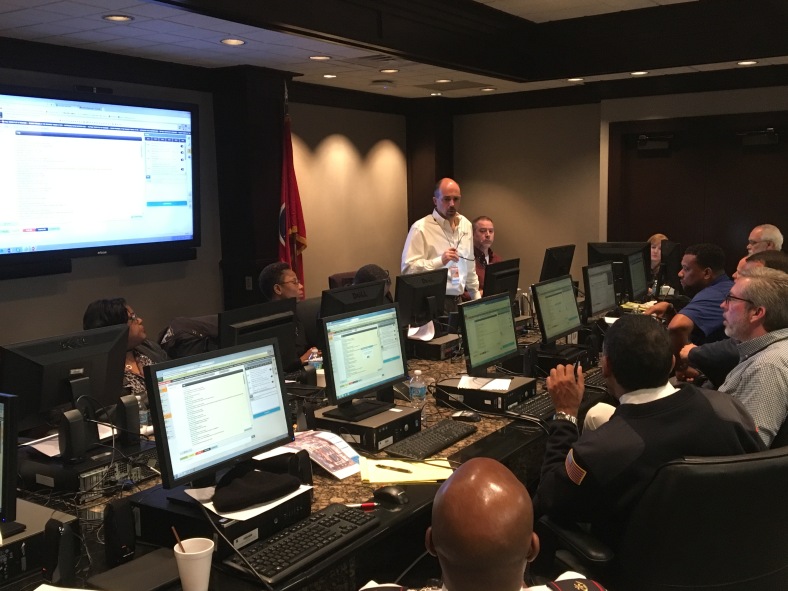
Earlier this week, FEMA’s Emergency Management Institute (EMI) released course materials, including student manual, handouts, instructor guide, and visuals, for the updated IS-100/ICS-100: An Introduction to the Incident Command System.  Note that this update (IS-100.c) has been available online since the summer.  The release of materials, however, included no errata, so absent comparing the previous version to this, I can’t speak specifically to what the changes include, though I’m aware from their release of the online course several months ago that there were adjustments to account for some of the revised content of the third edition of the NIMS doctrine, released in October of last year.

Those familiar with my running commentary for the past few years of ‘ICS Training Sucks’ are aware that much of my wrath was focused on the ICS-300 and ICS-400 courses.  That said, with the release of the third edition of NIMS (my review of the document can be found here), there were some needed additions to incident management fundamentals and my realization that the ICS-100 and ICS-200 courses are ignoring a significant population of professionals in their content.  While ICS itself was largely built for field personnel working within a command (vice coordination) structure, over the years, the prevalence of various forms and types of emergency operations centers (EOCs) has grown significantly.  One of the biggest additions in the most recent version of the NIMS document was, in fact, the inclusion of much more meaningful content on EOCs and their potential organizational models.  While still a minority compared to first responders, there is a significant audience of people taking ICS-100 because of their assignment to a local, county, state, or organizational EOC.  Yet, the ICS-100 materials have scantly more than ONE SLIDE talking about EOCs.

Yes, we do have courses such as the ICS/EOC Interface course and others that dive deeper into EOC operations and how they coordinate with each other and with command structures, but the introduction to all of this is often the ICS-100 course, which all but ignores EOCs and the audiences who primarily serve in them.  In fact, there are many jurisdictions that require EOC personnel to have ICS training (smartly), which starts with the ICS-100 course (why?  Because it’s the best/only thing generally available to them), but I’m sure many people taking the course are a bit confused, as it doesn’t speak at all to their role.  While I feel that ICS training for EOC personnel is important, an introductory course like this should include a bit more on EOCs.

As with my original writing on ICS Training Sucks, I bring this back to the fundamentals of instructional design, which is focused on the AUDIENCE and what THEY NEED TO LEARN.  It’s evident that these fundamentals are being ignored in favor of a quick update, which might change some content but does not improve quality.  Let’s actually look at who are audience groups are and either incorporate them all into the course, or develop another course and curriculum to meet their specific needs (aka EOC-100).  Otherwise, they are simply ignoring the fact that what is currently available is like fitting a square peg into a round hole.  Sure it fills a lot of space, but there are also some significant gaps.

While a number of jurisdictions have identified this need and developed their own EOC training, there are a lot of standards and fundamentals that could be addressed by FEMA in a national curriculum.  This is certainly a missed opportunity, and one that makes many of our responses less than what they should be.

© 2018 – Timothy Riecker, CEDP

Emergency Preparedness Solutions, LLC

A Discussion on Training Needs for the EOC Incident Support Model

Last week I wrote a piece on the Incident Support Model for Emergency Operations Centers (EOCs).  The article got a good amount of attention which prompted some dialogue both on and off line with a variety of practitioners.  So for those who might be integrating this model into their plans, let’s consider what training might be needed to support implementation.

First, I’ll say that I feel foundational ICS training (hopefully we’ll eventually have something better than what we have now since ICS training still sucks) is still necessary, even though the Incident Support Model deviates significantly from the traditional ICS model.  A couple of reasons… first, others are still using ICS, be it in EOCs or in the field.  Second, the principles and concepts of ICS still largely apply to the Incident Support Structure, regardless of the differences in organizational composition.  Perhaps only to the ICS 200 level is necessary since those functioning in an Incident Support Model organization only need be aware of it.

Next, I think we then need an overall Incident Support Model course.  I would envision this similar to an ICS-300 course, which has a more in-depth exploration of the entire organizational structure of the Incident Support Model and discusses the processes inherent in the system, such as the planning process, which would see some revisions to at least the positions involved under this model as compared to that for ICS.

Position-specific training is important, be it for an in-house EOC team(s) or for incident management teams which may be deployed to EOCs using this model.  While many of the position-specific courses in existence for a traditional ICS model are analogous to what we see in the Incident Support Model, there are significant enough changes, I think, to require different training specific for this model if we expect a professionally functioning organization (and we do).

One thing currently missing in the position specific courses is an EOC manager course.  While there is an Incident Commander course, which provides a lot of great information, there are significant enough differences between running an EOC and running an incident command post.  That said, I’m not so sure we need an entirely different course.  Given the propensity for incident management teams (IMTs) to work in EOCs, I think an additional module in the IC training may suffice to ensure that ICs are equipped to work in all environments.

Looking at the composition of the general staff of the Incident Support Model, we can first start with the Situational Awareness Section Chief.  From the ICS IMT model, we have great training for Situation Unit Leaders, which can largely apply to this position in the Incident Support Model with just a few changes, mostly addressing the expansion and elevation of the role.

The new Planning Support Section Chief would require very different training from what current exists for the IMTs. While in-depth training on the planning process is still relevant (with changes to make it specific to this model), as is training on demobilization planning, new training is required to address future planning, which doesn’t have as much content in the current Planning Section Chief course as needed.

Center and Staff Support Section Chief training is largely internal logistics, so really just requires a course that is narrowed in scope from the traditional Logistics Section Chief course, with perhaps some additional content on occupational and facility support matters.

Lastly, the Resource Support Section Chief.  This one is a monster.  It’s really an amalgamation of the Operations Section Chief, the Logistics Section Chief, and the Resource Unit Leader, along with Finance/Admin (if you subscribe to putting it in this section).  There is clearly a lot going on here.  Very little of the traditional ICS IMT courses really apply to this in an EOC environment given the difference in scope and mission for an EOC.  This largely requires completely new training based on functional coordination, mission assignments, and support to deployed resources.  This is a course that will require a lot of work to ground it in reality while also providing enough flexibility to allow for how each EOC may organize within this section.  Similar to the Operations Section in a traditional ICS model, this section may have the most variety from facility to facility and incident to incident.

Certainly other training may be needed, but the command and general staff positions are probably the most urgent to address.  In lieu of FEMA providing this training, some are developing their own training to support implementation of this model.  I’d love to hear about what has been done, the challenges faced, and the successes had.  Given my own passion and interest, I’d certainly love an opportunity to develop training for the Incident Support Model.

© 2018 – Timothy Riecker, CEDP

Emergency Preparedness Solutions, LLC

The EOC Incident Support Model

Since the release of the NIMS Refresh in October 2017, a number of jurisdictions have made changes to the organizational structure of their emergency operations center.  While many jurisdictions use a traditional Incident Command System (ICS)-based structure, a structure aligned to the emergency support functions (ESFs), or a hybrid thereof, the NIMS Refresh seems to have popularized an alternative structure called the Incident Support Model.  I’ve been working with some clients who recently have, or are currently making a change to the Incident Support Model.  The general model of that structure can be found below.

ISM

The intent of this model is to provide an EOC with an organizational model that better fits what an EOC does… information management, planning, and resource support.  This model, unlike the more traditional ICS-based model or the ESF-based model really focuses on what EOCs do instead of potentially utilizing an organization and mission that are mis-matched.  As stated by the NIMS Refresh document, this model puts the EOC manager in direct contact with those doing situational awareness/information management, and streamlines resource sourcing, ordering, and tracking.

As someone who has worked in and long advocated for an ICS-based model for EOCs, I’ve grown increasingly comfortable with the Incident Support Model over time.  It certainly makes sense.  Appendix B of the NIMS Refresh document provides some additional detail on this model, but not much.

The Incident Support Model, most prominently, reorganizes some of the major ICS-centered functions we are used to seeing.  It pulls two key functions from the Planning Section, those being situational awareness and resource tracking.  Situational awareness in this model is established as a section.  Those who have managed large and fully staffed Situation Units in an ICS-based model know that the various responsibilities such as information tracking, developing situation reports, addressing requests for information, and information analysis and display can be significant.  Technical specialists, such as meteorologists and other sciences come into the fold of this section, as does Geographic Information Services (GIS).

The function of resource tracking, traditionally from the Resources Unit in the ICS model, is pulled together with all other resource-centered activities in the EOC under the Incident Support Model.  This includes the tasking and assignment of resources, as well as the support of those resources, which functionally has been handled by a combination of Operations and Logistics in the ICS-based model.  Reflecting on how many EOCs have grown comfortable organizing these functions previously, this section may be organized by ESF or other workable function.  The Resource Support Section is also to include Finance/Administration, which I’m not necessarily as keen on.  While I understand it from a contracting and procurement perspective, Finance/Administration is a function that may be best retained as their own section.

Separate from the Resource Support Section is the Center Support Section, which is focused on supporting the EOC itself with IT, admin staff, food, and other needs.  The Center Support Section may also be tasked with providing similar services to other defined facilities, such as a Joint Information Center (JIC) or Family Assistance Center (FAC).  I see this as a smart move as Logistics in the traditional ICS model had to juggle needs internal and external to the EOC.

Lastly is the Planning Support Section.  With information management resource tracking gutted from the Planning Section, you may be left wondering what is left for the Planning Section to do.  The Planning Support Section is still responsible for managing the planning process, which needs a bit of realignment under the Incident Support Model.  With this is overall responsibility to develop the Incident Action Plan (IAP), but there is more.  An astute planning function in an EOC in any sizeable incident should not only be managing the planning process for the next operational period, they should also looking ahead.  They may be pulling together a plan for something like debris management or utility restoration which is expected to be an operational focus in a few days, or perhaps planning for the transition to recovery operations, or even for demobilization.  As such, the Incident Support Model calls for the Planning Support Section to be divided between Current (and next operational period) Planning and Future Planning.  With an organization model underscoring this, we will hopefully see Planning Sections focused on future outcomes as much as they are focused on short-term processes.

The Incident Support Model is certainly a workable structure, which seems to remove some of the awkwardness of the tactically-built ICS-based structure from the EOC.  While we’ve certainly evolved the ICS-based structure to meet our needs in an EOC, I think many, myself included, were reluctant to make the changes needed to make it more functional in an EOC environment and still have it reflect ICS.

Now that jurisdictions are retooling and building this new model into their plans, however, we are in a bit of an awkward position in regard to training and utilization of staff. In the absence of national training program to support this model, jurisdictions are left on their own to train staff how to function in this structure.  Many jurisdictions have invested a great deal of time to have staff trained in the NIMS Position-specific courses.  While I don’t see that training as being wholly wasteful in light of a change to this model, there are obviously some adaptations to be made for those looking to utilize that training in an EOC using the Incident Support Model.  Even established Incident Management Teams (IMTs), which follow the ICS model, will need to determine how they will adjust their deployment to fit EOCs which may use the Incident Support Model.  The functions of this model certainly aren’t foreign, but may require a crosswalk of sorts for personnel who are otherwise trained or qualified to work in an ICS-based environment.

Working with clients who are adopting this model, I’m looking forward to seeing it in action and further identifying pros and cons.  Knowing that some have been using this model for some time, I’m also interested in reviewing their lessons learned, particularly things like operational flow, adaptations to the Planning P, job action sheets, and other things.

© 2018 – Timothy Riecker, CEDP

Emergency Preparedness Solutions, LLC


EOC Skillsets and Position Task Books Finalized

Back in April, FEMA released the drafts of EOC skillset documents and position task books for public comment.  A few days ago, the final versions of these documents were released on FEMA’s National Qualification System (NQS) website: https://www.fema.gov/emergency-managers/nims/components#nqs

While the hub of emergency response is the incident command post, the hub of emergency coordination is the Emergency Operations Center.  While life saving tactics, directed from the ICP, are absolutely essential, a comprehensive and long-term response can’t be sustained without the activities of an EOC.  We have gone far too long in emergency management without having good national guidance on the organization and qualification of personnel in the EOC.

When you crack into the website you may be a bit overwhelmed by all the documents you find.  Don’t look to this as something that must be implemented 100% right away.  Take a deep breath and remember that most things done well in emergency management, ironically enough, are an evolution and take time.  Also remember that while this has been established as guidance, it’s not a requirement.  Implement what you can, when you can.  Focus on establishing a foundation you can build from and do what makes sense for your jurisdiction or organization.

The foundation of everything in emergency management is planning, so whatever you do decide to implement should find its way into plans, which may need to be supported by policy.  While implementing a qualification system with task books can be cumbersome, it can also solve some problems when it comes to having less than qualified personnel working in your EOC.  The position task books are a great way for individuals to see what standards they are being held to and allows them to track progress.  If you don’t feel that the use of position task books will work for your jurisdiction or you are on a slower track to implementation, it’s still worthwhile to examine the skillset documents for each position you have identified in your EOC.  These can support your own developed standards, expectations, and plans; serve as a foundation for training course development; and support exercise evaluation.

Lastly, talk about these with your committees and your peers.  It’s easy to forget about them so keep these visible.  These documents offer an abundance of solid guidance which can strongly support your operational coordination.

What are your thoughts on the EOC skillsets? Do you plan on implementing them in your system?  If so, how?  If not, why not?

Timothy Riecker, CEDP

Emergency Preparedness Solutions, LLC℠

Updated NIMS and ICS Courses

Be sure to head over to https://training.fema.gov/is/ to check out the updated IS-100.c (Introduction to the Incident Command System) and IS-700.b (Introduction to the National Incident Management System).  These courses have been updated to reflect the ‘refreshed’ NIMS doctrine, which includes some information on EOC structures, among other things.  For my review of the NIMS refresh, check out this article.

©2018 – Timothy Riecker, CEDP

Emergency Preparedness Solutions, LLC ™

Incident Management – Beyond ICS

The Incident Command System (ICS) provides an important foundation to incident management.  ICS grounds us in standards, providing structure and processes which help mitigate against the fact that all incidents themselves are unique.  While ICS may not be perfect, and I have been and continue to be highly critical of ICS training, the Incident Command System has proven to be effective – when properly implemented.  One of our biggest stumbling blocks with the implementation of ICS is the human factor – something else I’ve written about on a few occasions.  The other obstacle to effective incident management is relying too heavily on ICS.  ICS is not the solution to incident management – it’s a tool.  For incident management to be truly effective, we need to think beyond ICS.

So aside from ICS, what do incident managers need to know and do to be more effective? (Note that I’m not using the term ‘incident commander’ here, as incident management, fundamentally, is a team sport.  I’m using the term ‘incident managers’ as a collective term for all personnel involved in the higher echelons of incident management).

First, good incident managers should have proven leadership and management skills.  I’m not going to go at this one in length… there are no fewer than a gazillion books written on leadership and management and the importance of effectively leading organizations.  Just like any other organization, someone in a position of incident management who can’t properly lead is not only going to fail themselves, but also the organization.

Second, good incident managers need to have a grasp of emergency management.  Not just an application of public safety, such as the fire service or law enforcement, or whatever field they happen to be performing response in (i.e. public health, transportation, etc.).  They should have a solid awareness of what each major participant in emergency management does and the major processes of emergency management.

Next, incident managers should understand the fundamentals of project management.  This one is really important.  The tactics we execute in our response to an incident are really a series of projects.  Not that a Gantt chart needs to be developed for each incident (although I’ve actually done this for prolonged incidents – and it is seriously insightful), but an understanding of tactical timeframes, progress toward completion, and what activities can be done simultaneously versus those that should be done in sequence can be a huge help.  It’s a great visual tool that can be easily developed with the help of ICS 204s.  Progress toward completion (i.e. how much of a tactic have we accomplished as part of the whole) helps us to measure effectiveness, gauge how long we continue to need certain resources, and will answer the questions ‘how are we doing?’ and ‘are we there yet?’.  In larger incidents (NIMS Type 3 and larger) this is incredibly important.  What’s the progress on evacuation?  How much longer until all the boom is deployed?  How much debris has been cleared?  Etc.  These aren’t just pain the ass questions asked by elected officials and the media… these are questions you should be asking as well.

Continuing on with project management (that’s how important I think it is), I’ll make a few more notes here.  First of all, field observers are really important to monitoring progress.  Don’t rely on the tacticians to do this.  First of all, the tacticians are too busy.  They need to be focused on getting things done.  Also, they may be too close to the situation to give an objective assessment (or in the case of the use of contractors, it’s simply good contract management).  Digging into your ICS knowledge, recall that field observers are an actual position (although one not used often) within the Planning Section assigned to the Situation Unit.  Their job is to monitor and report on tactical progress and other situational information.  Also consider that if you see issues with a slower than expected progress toward completion, that means that either your initial estimates were wrong or something is slowing down the operation.  This may justify a root cause analysis to determine why things are not progressing as they should be.  Perhaps there was more to accomplish than anticipated, or the wrong resources are being applied?

Next, the highest members of incident management (i.e. incident command, unified command, EOC manager, etc.) need to have some separation from the rest of the incident management staff, agency representatives, and tactical operations.  They can’t be ‘in the pit’, ‘on the floor’, ‘in the trenches’, or whatever other lingo you might use in your command post, EOC, or field operations – at least not as their usual place to be.  Yes, some measure of ‘management by walking around’ is good, but I’ve been in plenty of command posts, EOCs, and departmental operations centers that have command right in the mix of everything.  These places get noisy and there are a lot of distractions.  You can’t hold a productive meeting in this environment, much less concentrate.  People are also inclined to go directly to command with issues and problems… issues and problems that are likely best solved by someone else.  Even in the field, an IC shouldn’t be too close to the tactics on a large incident.  Pull back and think about incident management, not tactics.

That’s the list that I have for now.  It’s a topic I’ve been thinking about for a while, so I plan on adding to it in the future.  I also expect to be doing some presentations in the near future as well.  What thoughts do you have on this?  What can we do to improve on incident management?

© 2018 – Timothy M. Riecker, CEDP

Emergency Preparedness Solutions, LLC ™

Public Health Preparedness as Part of Emergency Management

I’ve written in the past on the need for emergency managers, in the broadest definition, to become more familiar with public health preparedness.  As emergency management continues to integrate, by necessity, into and with other professions, this understanding is imperative.  We need to stop considering EMS as our only public health interface.  Public health incidents, of which this nation has yet to be truly and severely struck by in decades, require more than public health capabilities to be successfully managed – so we can’t just write off such an incident as being someone else’s responsibility.  We’ve also seen non-public health-oriented disasters take on a heavy public health role as concerns for communicable diseases, biological agents, or chemical agents become suspect.  If you are an emergency manager and you aren’t meeting regularly with public health preparedness officials for your jurisdiction, you are doing it wrong.

Aside from meeting with public health preparedness staff, you should also be reading up on the topic and gaining familiarity with their priorities, requirements, and capabilities.  (don’t skip either of those links… seriously.  They each contain more info on public health preparedness).  One of the best resources available is TRACIE.  TRACIE is a resource provided by the US Department of Health and Human Services (HHS) Assistant Secretary for Preparedness and Response (ASPR).  TRACIE stands for the Technical Resources, Assistance Center, and Information Exchange.  I’ve been digging around in ASPR TRACIE for the past several years and also receive their monthly newsletter.  I get a lot of newsletters from different sources… some daily, some weekly, some monthly.  I’ve recently unsubscribed to a bunch which seem to have information that has diminished in value, doesn’t seem to be timely, or are poorly written.  TRACIE is one of those that stays.  It has tremendous value, even if you aren’t directly involved in public health preparedness and response.  The information and resources provided here come from public health preparedness experts – these are emergency managers.

Recently, ASPR did a webinar on Healthcare Response to a No-Notice Incident, highlighting the Las Vegas shootings. Check it out.

But public health speaks a different language!  True.  So do cops, firefighters, and highway departments.  So what’s your point?  While public health certainly does have certain terminology that covers their areas of responsibility, such as epidemiology, med-surge, and others, that doesn’t mean their language is totally different.  In fact, most of the terminology is the same.  They still use the incident command system (ICS) and homeland security exercise and evaluation program (HSEEP), and can talk the talk of emergency management – they are just applying it to their areas of responsibility.  Are there some things they might not know about your job?  Sure.  Just like there are things you don’t know about theirs.  Take the time to learn, and make yourself a better emergency manager.

What have you learned from public health preparedness?  How do you interface with them?

© 2018 – Timothy Riecker, CEDP

EPS New logo

The ICS Liaison Officer

One brilliant thing about WordPress (the blog platform I use), is that it allows me to see some of the searches that brought people to my site.  One of those recent searches was ‘what does the Liaison Officer do in ICS?’.  The Liaison Officer has some of the greatest depth and variety in their role and is often one of the most misunderstood roles and often taken for granted.

By definition, the Liaison Officer is supposed to interface with the representatives of cooperating and assisting agencies at an incident.  While this is done, it’s often the easier part of the job.  Yes, these agencies may have their own needs and nuances, but the more challenging part is the interface with anyone who is not directly part of the chain of command.  Large, complex incidents often last longer, which means that a significant number of third parties will have interest in the operation.  Everyone wants to speak with the person in charge (the Incident Commander), but the IC needs to be focused on the management of the incident through the Command and General Staff, as well as important commitments like briefing their boss (usually an elected official), and participating in some media briefings.  There is little time available to speak with everyone who wants to speak with them.

The people that want to interface with the IC may include organizations seeking to offer their services to the effort, which could be a not for profit organization (Team Rubicon, for example) or a for-profit company (such as a local construction firm), or even a group of organized volunteers (like the Cajun navy).  They might be elected officials other than those they report to.  They could include representatives from labor unions, environmental groups, regulatory agencies, insurance companies, or property owners.  Each of these groups may have legitimate reasons to be interfacing with the incident management organization and the Liaison Officer is the one they should be working with.  The Liaison Officer may also be tasked with interfacing with the variety of operations centers which can be activated during an incident.

To be most effective, the Liaison Officer must be more than a gatekeeper.  They aren’t there just to restrict or control access to the IC.  As a member of the Command Staff they are acting as an agent of the IC, and working within the guidelines established by the IC, should be effectively handling the needs of most of these individuals and organizations on behalf of the IC.  The Liaison Officer needs to be politically astute, professional, and knowledgeable about the specifics of the incident and emergency management in general.  They should be adept at solving problems and be able to recognize when something needs to be referred to someone else or elevated to the IC.

The Liaison Officer is a position we usually don’t see assigned on smaller incidents (type 4 and 5), so most people don’t get experience in using it, interfacing with it, or being it.  The position is often necessary on type 3 incidents, but still rarely assigned as an organization or jurisdiction might not have someone available to assign or the IC thinks they can handle it themselves.  We definitely see them used in Type 1 and 2 incidents, but much of that credit goes to formal incident management teams who deploy with this position.  Liaison Officers work well in an incident command post for incidents and events, but also have a strong function in EOCs – especially local EOCs responsible for significant coordination.  All around, the Liaison Officer benefits most from a notepad, a charged cell phone, and a pocket full of business cards.

What ways have you seen a Liaison Officer used effectively?

© 2018 – Timothy Riecker, CEDP

Emergency Preparedness Solutions, LLC SM

NIMS Implementation Objectives and A Shot of Reality

Happy 2018 to all my readers!  Thanks for your patience while I took an extended holiday break.  A minor surgery and the flu had sidelined me for a bit, but I’m happy to be back.

This morning, FEMA issued NIMS Alert 01-18: National Engagement for Draft NIMS Implementation Objectives.  NIMS Implementation Objectives were last released in 2009, covering a period of FY 2009-FY2017.  With the release of the updated NIMS last year, FEMA is updating the implementation objectives and has established a national engagement period for their review.

So first, a bit of commentary on this document…

The new objectives are broken out by major content area of the updated NIMS document, including: Resource Management, Command and Coordination, and Communication and Information Management; as well as a General category to cover issues more related to management and administration of the NIMS program.  What we also see with these updated objectives are implementation indicators, which are intended to help ground each objective.  Overall, the number of objectives in this update has been cut in half from the 2009 version (28 objectives vs 14 objectives).

All in all, these objectives appear to be consistent with the current state of NIMS implementation across the nation.  They are certainly suitable for most matters in regard to the oversight of implementing NIMS and it’s various components.  The biggest sticking point for me is that this document is intended for use by states, tribal governments, and territories.  If the goal is to have a cohesive national approach to implementation, I’d like to know what the implementation objectives are for FEMA/DHS and how they compliment those included in this document.

Objectives 8 through 11 are really the crux of this document.  They are intended to examine the application of NIMS in an incident.  These objectives and their corresponding indicators (which are largely shared among these objectives) are the measure by which success will ultimately be determined.  While it’s a good start for these to exist, jurisdictions must be more open to criticism in their implementations of NIMS and ICS.  In addition, there should be an improved mechanism for assessing the application of NIMS and ICS.  While formal evaluations occur for exercises under the HSEEP model, we tend to see inconsistent application of the feedback and improvement activities to correct deficiencies.  Proper evaluations of incidents, especially at the local level, are often not performed or performed well. For those that are, the same issue of feedback and improvement often stands.

Extending this discussion into reality…

The reality is that many responders are still getting it wrong.  Last year my company conducted and evaluated dozens of exercises.  Rarely did we see consistently good performance as far as NIMS and ICS are concerned.  There are several links in this chain that have to hold firm.  Here’s how I view it:

First, the right people need to be identified for key roles.  Not everyone is suited for a job in public safety or emergency management in the broadest sense.  Organizations need to not set up individuals and their own organization for failure by putting the wrong person in a job.  If a certain job is expected to have an emergency response role, there must be certain additional qualifications and expectations that are met.  Further, if someone is expected to take on a leadership role in an ICS modeled organization during an incident, there are additional expectations.

Next, quality training is needed.  I wrote a couple years ago about how ICS Training Sucks.  It still does.  Nothing has changed.  We can’t expect people to perform if they have been poorly trained.  That training extends from the classroom into implementation, so we can’t expect someone to perform to standards immediately following a training course.  There is simply too much going on during a disaster for a newbie to process.  People need to be mentored.  Yes, there is a formal system for Qualification and Certification in ICS, but this is for proper incident management teams, something most local jurisdictions aren’t able to put together.

Related to this last point, I think we need a new brand of exercise.  One that more instructional where trainees are mentored and provided immediate and relevant feedback instead of having to wait for an AAR which likely won’t provide them with feedback at the individual level anyway.  The exercise methodology we usually see applied calls for players to do their thing: right, wrong, or otherwise; then read about it weeks later in an AAR.  There isn’t much learning that takes place.  In fact, when players are allowed to do something incorrectly and aren’t corrected on the spot, this is a form of negative reinforcement – not just for that individual, but also for others; especially with how interrelated the roles and responsibilities within an ICS organization are.

While I’m all for allowing performers to discover their own mistakes and I certainly recognize that there exist multiple ways to skin the proverbial cat (no animals were harmed in the writing of this blog), this is really done best at a higher taxonomy level.  Many people I see implementing portions of ICS simply aren’t there yet.  They don’t have the experience to help them recognize when something is wrong.

As I’ve said before, this isn’t a school yard game of kickball.  Lives are at stake.  We can do better.  We MUST do better.

As always, thoughts are certainly appreciated.

© 2018 – Timothy Riecker, CEDP

Emergency Preparedness Solutions, LLC SM