EOC Skillsets and Position Task Books Finalized

Back in April, FEMA released the drafts of EOC skillset documents and position task books for public comment.  A few days ago, the final versions of these documents were released on FEMA’s National Qualification System (NQS) website: https://www.fema.gov/emergency-managers/nims/components#nqs

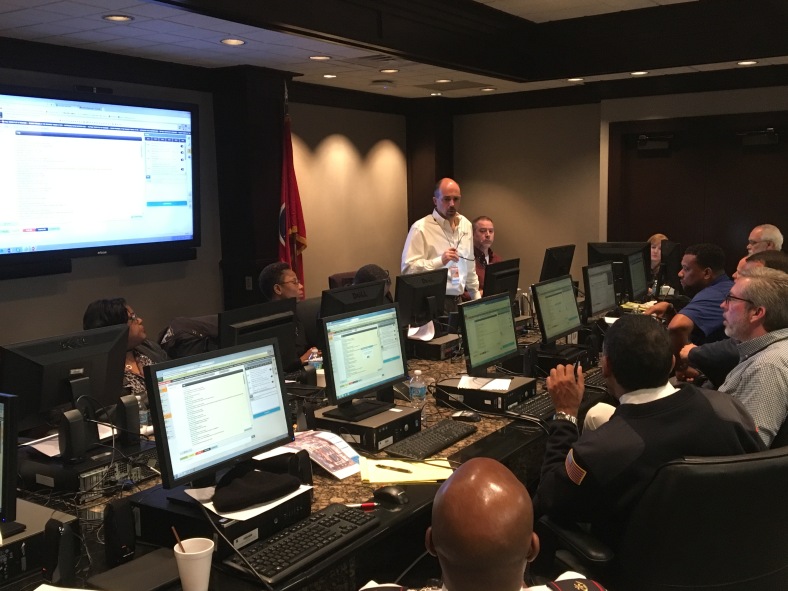
While the hub of emergency response is the incident command post, the hub of emergency coordination is the Emergency Operations Center.  While life saving tactics, directed from the ICP, are absolutely essential, a comprehensive and long-term response can’t be sustained without the activities of an EOC.  We have gone far too long in emergency management without having good national guidance on the organization and qualification of personnel in the EOC.

When you crack into the website you may be a bit overwhelmed by all the documents you find.  Don’t look to this as something that must be implemented 100% right away.  Take a deep breath and remember that most things done well in emergency management, ironically enough, are an evolution and take time.  Also remember that while this has been established as guidance, it’s not a requirement.  Implement what you can, when you can.  Focus on establishing a foundation you can build from and do what makes sense for your jurisdiction or organization.

The foundation of everything in emergency management is planning, so whatever you do decide to implement should find its way into plans, which may need to be supported by policy.  While implementing a qualification system with task books can be cumbersome, it can also solve some problems when it comes to having less than qualified personnel working in your EOC.  The position task books are a great way for individuals to see what standards they are being held to and allows them to track progress.  If you don’t feel that the use of position task books will work for your jurisdiction or you are on a slower track to implementation, it’s still worthwhile to examine the skillset documents for each position you have identified in your EOC.  These can support your own developed standards, expectations, and plans; serve as a foundation for training course development; and support exercise evaluation.

Lastly, talk about these with your committees and your peers.  It’s easy to forget about them so keep these visible.  These documents offer an abundance of solid guidance which can strongly support your operational coordination.

What are your thoughts on the EOC skillsets? Do you plan on implementing them in your system?  If so, how?  If not, why not?

Timothy Riecker, CEDP

Emergency Preparedness Solutions, LLC℠

Airport Emergency Planning

Through my career I’ve had the opportunity to work with a number of airports on preparedness efforts.  In the past couple of years, that interaction has been greatly amplified through a contract my company successfully completed involving the development of exercises for airports.  As part of this effort, we designed, conducted, and evaluated exercises at ten airports of varying sizes across the nation, from Georgia to Alaska, Massachusetts to California.  Since the primary intent of exercises is to validate plans, we of course requested and reviewed airport emergency plans (AEPs) from each location as part of our preparation for each exercise.

For those not in the know, the requirement for AEPs originates with Federal Aviation Regulation 14 CFR Part 139, which wholly establishes the standards for the certification of airports.  The requirements for AEPs are further refined in DOT/FAA Advisory Circular 150-5200-31C published in May of 2010.   The Advisory Circular is largely implementation guidance.  It’s quite comprehensive and outlines a planning structure, references emergency management doctrine and standards of practice such as NIMS and the National Response Framework, and models a planning process, which mirrors that of CPG-101.  The NFPA also provides guidance in NFPA 424: Guide for Airport/Community Emergency Planning, which reflects on all these as well.

Just like any community emergency operations plan (EOP), AEPs I’ve reviewed run the full spectrum of quality.  Some plans are thorough and comprehensive, while other plans are so focused on meeting the letter of the regulation that they fall short of meeting real needs and being implementation-ready, even though they technically meet the requirements set forth in §139.325.  Regulated industries, which airports largely are, often have a challenge when it comes to emergency planning.  We see this same challenge in radiological emergency plans as well.  The laws and regulations seem to provide so much structure that it is perceived that local variables and subjective analysis aren’t allowed.  As an example, §139.325 states:

“the plan must contain instructions for response to:

  1. Aircraft incident and accidents
  2. Bomb incidents, including designation of parking areas for the aircraft involved
  3. Structural fires
  4. Fires at fuel farms or fuel storage areas
  5. Natural disaster
  6. Hazardous materials/dangerous goods incidents
  7. Sabotage, hijack, or other unlawful interference with operations
  8. Failure of power for movement area lighting
  9. Water rescue situations (as appropriate)”

While the planning process isn’t prescribed in §139.325, nor does it specify if other hazards can be included in the AEP, the Advisory Circular (AC) does expound on this and prescribes a planning process, including a hazard analysis.  The AC states “Through the hazards analysis program, guidance has been provided to assist in the identification of those hazards and disasters specific to an airport that warrant planning attention”.  That phrasing indicates that airports should be planning for hazards beyond what is required by §139.325, yet I’ve seen many that do not.

Obviously ‘natural disaster’ covers a considerable amount of proverbial territory.  Jurisdictions undergo extensive hazard analysis and hazard mitigation planning to identify the breadth and scope of these hazards (which should include all hazards, not just natural disasters).   Many jurisdictions develop very comprehensive EOPs and annexes to address the response needs of each of their primary hazards.  I saw this as a significantly missing component in many AEPs, which treated ‘natural disasters’ as a single hazard.  Further, as many airports stick to the minimum requirement for planning, they fail to address other hazards which could impact them, ranging from dam failure, and nuclear power facility incidents, to currently hot topics such as active shooter/hostile event response (ASHER) and communicable diseases.

Some airports have thankfully recognized the need for expanding beyond the required hazards and have developed plans that better address all of their needs.  On the unfortunate side, again as a regulated industry, I’ve also seen some airports having two sets of plans… one that meets regulation and the other that they feel is more practical for implementation.  Clearly this isn’t the way to go either.  A single, consolidated plan can be developed that meets all needs.

Airports are an interesting animal.  Regardless of governance structure, they are part of the communities which surround them.  Larger airports are also communities of their own, having significant capability, sometimes more than the surrounding jurisdictions.  Airport emergency planning should acknowledge and involve their community relationships and must address all hazards, not just the ones required by Part 139.  Just as with any other type of emergency plan, they must be implementation-ready.  To do so typically requires the added development of standard operating guidelines (SOGs) and job aids, such as check lists and forms.  Plans should also be developed to address recovery issues and business continuity, not just response.  An airport, regardless of governance structure, operates like a business, with many other stakeholders dependent upon their stability and ability to address and rapidly recover from incidents.  They are also obviously transportation hubs, dealing with large volumes of people and significant dollar figures in freight and commerce.

Airport emergency managers have many of the same challenges as the emergency managers of any other community.  Staffing and funding rarely line up with requirements and other priority matters.  I encourage community emergency managers to reach out to their local airports and coordinate, as many hands make easier work for everyone.  Of course, if any airports are seeking assistance in enhancing their preparedness, please contact us as we would love to work with you!

© 2018 – Timothy Riecker, CEDP

Emergency Preparedness Solutions, LLC™


Updated NIMS and ICS Courses

Be sure to head over to https://training.fema.gov/is/ to check out the updated IS-100.c (Introduction to the Incident Command System) and IS-700.b (Introduction to the National Incident Management System).  These courses have been updated to reflect the ‘refreshed’ NIMS doctrine, which includes some information on EOC structures, among other things.  For my review of the NIMS refresh, check out this article.

©2018 – Timothy Riecker, CEDP

Emergency Preparedness Solutions, LLC ™

Emergency Management Exercises: Not for the Inexperienced

Many think exercise design is easy.  I’ve seen agencies relegate it to interns and new staff with little supervision, or even performed by seasoned emergency managers with little concept of what the Homeland Security Exercise and Evaluation Program (HSEEP) is.  Sadly, we have people completing HSEEP training and even FEMA’s Master Exercise Practitioner (MEP) program, thinking they are ready to conquer the world of preparedness exercises, but with little practical experience designing exercises under their belts.  We all need to learn sometime.

Just as any organization or jurisdiction should be eased into their exercise program, exercise designers need to be eased into designing exercises.  They should be starting small and with focused tasks, always under the mentorship of someone experienced, even if they aren’t within your own agency, to give some guidance and feedback.  While HSEEP gives a lot of great guidance, exercise design can quickly become complex.  It can be easy to lose track of tasks or have an oversight.  There are political matters, organizational needs, safety issues, and simply good exercise practices that all need to be recognized and addressed.  I’ve seen far too many exercises go off the rails due to a lack of awareness of these issues, poor exercise design, and poor exercise management.

Have partner agencies (even if not participating) been properly notified?  Do notifications need to go out to the media or public so they are not alarmed?  How about dispatch?  Every exercise, especially operations-based exercises, should be periodically evaluated for risk throughout the design process.  Identify what actions or lack thereof can cause things to go bad.  Consider politics, the media, the public, and safety of participants, observers, and exercise staff.  Do you need a weapons policy?  How will you enforce it?  Are there risks associated with traffic?  How will exercise staff communicate?  The template for the Exercise Plan (ExPlan) prompts you to address some things, but there may be additional needs.

What contingencies do you have for inclimate weather?  Maybe you need to dip into the ICS tool box and conduct an incident (exercise) safety analysis, from that developing a safety plan (you can probably get a qualified/experienced safety officer to help you with this).  Consider what operations will be conducted in the exercise, what can go wrong, how you will mitigate against them, and what resources are needed if something does go wrong.  In the event of a real-world emergency, what needs to happen?  Should you have EMS standing by?  Should you have a rapid response team in reserve for a rescue situation?  The information assembled in your risk assessment and safety plans should be provided to exercise staff prior to the exercise as part of their pre-exercise briefings.

As with exercise design, it can be a great learning experience for new staff to be part of the exercise support staff, but don’t put them in charge.  You should have experienced staff serving in the key positions of exercise director, lead controller, and lead evaluator.  If you are using a simcell, you want a strong and experienced simcell lead.  Safety matters aside, the staff of an operations-based exercise need to have great awareness of what’s going on and excellent communication up their chain of command and with the simcell to ensure that the exercise is flowing properly.  For a discussion-based exercise, your facilitators should be experienced as well.  Participants in discussion-based exercises may take a discussion in a different direction.  While this is generally not desired, sometimes it does bring great unintended results.  An experienced facilitator should know how to properly handle this to ensure that participants and stakeholder agencies are getting the most benefit.

Far too many poorly designed exercises have gotten to execution, resulting in a failure to accomplish the exercise objectives, frustrating participants, and even resulting in inter-agency political issues or injuries.  Even a well-designed exercise can be poorly conducted or facilitated, getting similar results.  If you are new to emergency management and have little experience in the design, conduct, and evaluation of exercises, there is no shame in asking for help or at least another set of eyes to look over your exercise documents.  While we want to encourage learning and growth, no one learns properly by being shoved into a situation with no guidance and so many pitfalls.  Train people up properly, giving them mentored practical experience to compliment their classroom training. If you don’t have the personnel in place, there are a number of well experienced and well qualified firms (ahem…) that provide these services.

For more information on running an exercise program, take a look at this 10-part blog post.

What tips do you have for people new to the exercise world?

© 2018 – Timothy Riecker, CEDP

Emergency Preparedness Solutions, LLC™

The ICS Liaison Officer

One brilliant thing about WordPress (the blog platform I use), is that it allows me to see some of the searches that brought people to my site.  One of those recent searches was ‘what does the Liaison Officer do in ICS?’.  The Liaison Officer has some of the greatest depth and variety in their role and is often one of the most misunderstood roles and often taken for granted.

By definition, the Liaison Officer is supposed to interface with the representatives of cooperating and assisting agencies at an incident.  While this is done, it’s often the easier part of the job.  Yes, these agencies may have their own needs and nuances, but the more challenging part is the interface with anyone who is not directly part of the chain of command.  Large, complex incidents often last longer, which means that a significant number of third parties will have interest in the operation.  Everyone wants to speak with the person in charge (the Incident Commander), but the IC needs to be focused on the management of the incident through the Command and General Staff, as well as important commitments like briefing their boss (usually an elected official), and participating in some media briefings.  There is little time available to speak with everyone who wants to speak with them.

The people that want to interface with the IC may include organizations seeking to offer their services to the effort, which could be a not for profit organization (Team Rubicon, for example) or a for-profit company (such as a local construction firm), or even a group of organized volunteers (like the Cajun navy).  They might be elected officials other than those they report to.  They could include representatives from labor unions, environmental groups, regulatory agencies, insurance companies, or property owners.  Each of these groups may have legitimate reasons to be interfacing with the incident management organization and the Liaison Officer is the one they should be working with.  The Liaison Officer may also be tasked with interfacing with the variety of operations centers which can be activated during an incident.

To be most effective, the Liaison Officer must be more than a gatekeeper.  They aren’t there just to restrict or control access to the IC.  As a member of the Command Staff they are acting as an agent of the IC, and working within the guidelines established by the IC, should be effectively handling the needs of most of these individuals and organizations on behalf of the IC.  The Liaison Officer needs to be politically astute, professional, and knowledgeable about the specifics of the incident and emergency management in general.  They should be adept at solving problems and be able to recognize when something needs to be referred to someone else or elevated to the IC.

The Liaison Officer is a position we usually don’t see assigned on smaller incidents (type 4 and 5), so most people don’t get experience in using it, interfacing with it, or being it.  The position is often necessary on type 3 incidents, but still rarely assigned as an organization or jurisdiction might not have someone available to assign or the IC thinks they can handle it themselves.  We definitely see them used in Type 1 and 2 incidents, but much of that credit goes to formal incident management teams who deploy with this position.  Liaison Officers work well in an incident command post for incidents and events, but also have a strong function in EOCs – especially local EOCs responsible for significant coordination.  All around, the Liaison Officer benefits most from a notepad, a charged cell phone, and a pocket full of business cards.

What ways have you seen a Liaison Officer used effectively?

© 2018 – Timothy Riecker, CEDP

Emergency Preparedness Solutions, LLC SM

NIMS Implementation Objectives and A Shot of Reality

Happy 2018 to all my readers!  Thanks for your patience while I took an extended holiday break.  A minor surgery and the flu had sidelined me for a bit, but I’m happy to be back.

This morning, FEMA issued NIMS Alert 01-18: National Engagement for Draft NIMS Implementation Objectives.  NIMS Implementation Objectives were last released in 2009, covering a period of FY 2009-FY2017.  With the release of the updated NIMS last year, FEMA is updating the implementation objectives and has established a national engagement period for their review.

So first, a bit of commentary on this document…

The new objectives are broken out by major content area of the updated NIMS document, including: Resource Management, Command and Coordination, and Communication and Information Management; as well as a General category to cover issues more related to management and administration of the NIMS program.  What we also see with these updated objectives are implementation indicators, which are intended to help ground each objective.  Overall, the number of objectives in this update has been cut in half from the 2009 version (28 objectives vs 14 objectives).

All in all, these objectives appear to be consistent with the current state of NIMS implementation across the nation.  They are certainly suitable for most matters in regard to the oversight of implementing NIMS and it’s various components.  The biggest sticking point for me is that this document is intended for use by states, tribal governments, and territories.  If the goal is to have a cohesive national approach to implementation, I’d like to know what the implementation objectives are for FEMA/DHS and how they compliment those included in this document.

Objectives 8 through 11 are really the crux of this document.  They are intended to examine the application of NIMS in an incident.  These objectives and their corresponding indicators (which are largely shared among these objectives) are the measure by which success will ultimately be determined.  While it’s a good start for these to exist, jurisdictions must be more open to criticism in their implementations of NIMS and ICS.  In addition, there should be an improved mechanism for assessing the application of NIMS and ICS.  While formal evaluations occur for exercises under the HSEEP model, we tend to see inconsistent application of the feedback and improvement activities to correct deficiencies.  Proper evaluations of incidents, especially at the local level, are often not performed or performed well. For those that are, the same issue of feedback and improvement often stands.

Extending this discussion into reality…

The reality is that many responders are still getting it wrong.  Last year my company conducted and evaluated dozens of exercises.  Rarely did we see consistently good performance as far as NIMS and ICS are concerned.  There are several links in this chain that have to hold firm.  Here’s how I view it:

First, the right people need to be identified for key roles.  Not everyone is suited for a job in public safety or emergency management in the broadest sense.  Organizations need to not set up individuals and their own organization for failure by putting the wrong person in a job.  If a certain job is expected to have an emergency response role, there must be certain additional qualifications and expectations that are met.  Further, if someone is expected to take on a leadership role in an ICS modeled organization during an incident, there are additional expectations.

Next, quality training is needed.  I wrote a couple years ago about how ICS Training Sucks.  It still does.  Nothing has changed.  We can’t expect people to perform if they have been poorly trained.  That training extends from the classroom into implementation, so we can’t expect someone to perform to standards immediately following a training course.  There is simply too much going on during a disaster for a newbie to process.  People need to be mentored.  Yes, there is a formal system for Qualification and Certification in ICS, but this is for proper incident management teams, something most local jurisdictions aren’t able to put together.

Related to this last point, I think we need a new brand of exercise.  One that more instructional where trainees are mentored and provided immediate and relevant feedback instead of having to wait for an AAR which likely won’t provide them with feedback at the individual level anyway.  The exercise methodology we usually see applied calls for players to do their thing: right, wrong, or otherwise; then read about it weeks later in an AAR.  There isn’t much learning that takes place.  In fact, when players are allowed to do something incorrectly and aren’t corrected on the spot, this is a form of negative reinforcement – not just for that individual, but also for others; especially with how interrelated the roles and responsibilities within an ICS organization are.

While I’m all for allowing performers to discover their own mistakes and I certainly recognize that there exist multiple ways to skin the proverbial cat (no animals were harmed in the writing of this blog), this is really done best at a higher taxonomy level.  Many people I see implementing portions of ICS simply aren’t there yet.  They don’t have the experience to help them recognize when something is wrong.

As I’ve said before, this isn’t a school yard game of kickball.  Lives are at stake.  We can do better.  We MUST do better.

As always, thoughts are certainly appreciated.

© 2018 – Timothy Riecker, CEDP

Emergency Preparedness Solutions, LLC SM


2017 National Preparedness Report – A Review

With my travel schedule, I missed the (late) release of the 2017 National Preparedness Report (NPR) in mid-October.  Foundationally, the findings of the 2017 report show little change from the 2016 report.  If you are interested in comparing, you can find my review of the 2016 NPR here.

The 2017 NPR, on the positive side, provided more data and more meaningful data than its predecessor.  It appeared to me there was more time and effort spent in analysis of this data.  If you aren’t familiar with the premise of the NPR, the report is a compilation of data obtained from State Preparedness Reports (SPRs) submitted by states, territories, and UASI-funded regions; so the NPR, fundamentally, should be a reflection of what was submitted by these jurisdictions and regions – for the better or worse of it.  The SPR asks jurisdictions to provide an honest analysis of each of the core capabilities through the POETE capability elements (Planning, Organizing, Equipping, Training, and Exercising).

From the perspective of the jurisdictions, no one wants to look bad.  Not to say that any jurisdiction has lied, but certainly agendas can sway subjective assessments.  Jurisdictions want to show that grant money is being spent effectively (with the hopes of obtaining more), but not with such terrific results that anyone would think they don’t need more.  Over the past few years the SPRs, I believe, have started to normalize and better reflect reality.  I think the authors of the NPR have also come to look at the data they receive a little more carefully and word the NPR to reflect this reality.

The 2017 NPR (which evaluates 2016 data from jurisdictions) identified five core capabilities the nation needs to sustain.  These are:

  • Environmental Response/Health and Safety
  • Intelligence and Information Sharing
  • Operational Communications
  • Operational Coordination
  • Planning

I’m reasonably comfortable with the first two, although they both deal with hazards and details that change regularly, so keeping on top of them is critical.  Its interesting that Operational Communication is rated so high, yet is so commonly seen as a top area for improvement on after-action reports of exercises, events, and incidents.  To me, the evidence doesn’t support the conclusion in regard to this core capability.  Operational Coordination and Planning both give me some significant concern.

First, in regard to Operational Coordination, I continue to have a great deal of concern in the ability of responders (in the broadest definitions) to effectively implement the Incident Command System (ICS).  While the implementation of ICS doesn’t comprise all of this core capability, it certainly is a great deal of it.  I think there is more room for improvement than the NPR would indicate.  For example, in a recent exercise I supported, the local emergency manager determined there would be a unified command with him holding ‘overall command’.  Unfortunately, these false interpretations of ICS are endemic.

I believe the Planning core capability is in a similar state inadequacy.  Preparedness lies, fundamentally, on proper planning and the assessments that support it. While I’ve pontificated at length about the inadequacy of ICS training, I’ve seen far too many plans with gaps that you could drive a truck through.  I’ve recently exercised a college emergency response plan that provided no details or guidance on critical tasks, such as evacuation of a dormitory and support of the evacuated students.  The plan did a great job of identifying who should be in the EOC, but gave no information on what they should be doing or how they should do it.  The lack of plans that can be operationalized and implemented is staggering.

The NPR identified the top core capabilities to be improved.  There are no surprises in this list:

  • Cybersecurity
  • Economic Recovery
  • Housing
  • Infrastructure Systems
  • Natural and Cultural Resources
  • Supply Chain Integrity and Security

Fortunately, I’m seeing some (but not all) of these core capabilities getting some needed attention, but clearly not enough.  These don’t have simple solutions, so they will take some time.

Page 10 of the NPR provides a graph showing the distribution of FEMA preparedness (non-disaster) grants by core capability for fiscal year 2015.  Planning (approx. $350m) and Operational Coordination (approx. $280m) lead the pack by far.  I’m curious as to what specific activities these dollars are actually being spent on, because my experience shows that it’s not working as well as is being reported.  Certainly there has been some positive direction, but I’m guessing that dollars are being spent on activities that either have negligible impact or actually have a negative impact, such as funding the development of some of the bad plans we’re seeing out there.

I’m curious as to what readers are seeing out in real life.  What capabilities concern you the most?  What capabilities do you see successes in?  Overall, I think everyone agrees that we can do better.  We can also get better and more meaningful reports.  This NPR was a step in the right direction from last year’s, but we need to continue forward progress.

© 2017 – Timothy Riecker, CEDP

Emergency Preparedness Solutions, LLC

The NIMS Refresh, aka NIMS 3.0

This morning my inbox was inundated with notices from FEMA and from colleagues about the release of the ‘refreshed’ NIMS, which has finally occurred at almost exactly 18 months after the draft of this document was released.  You can find the new document here. 

As I’m reading through the updated document, there are a few things catching my eye:

  • The term ‘center management system’ has apparently been scrapped, thankfully. First of all, there should not be a separate system for managing emergency operations centers (EOCs) and similar facilities.  I’ve seen the greatest success come from an organization model that mirrors ICS.  Second, the acronym CMS is most commonly related to the Centers for Medicare and Medicaid Services, particularly in regard to the CMS rules for healthcare facility preparedness.  (Want to know more about this?  See my article here)
  • Multi-Agency Coordination as a concept is briefly defined and referenced often without being described enough. It’s such an essential concept of incident management, yet it’s being paid very little heed. There is material on a MAC Group, which, while an implementer of multi-agency coordination at a policy level, is not the only multi-agency coordination that takes places within incident management.
  • The final version still uses the term ‘EOC Director’.  This is a term that is fundamentally incorrect when held to ICS doctrine.  Those in charge of facilities in ICS are called managers.  An EOC, even a virtual one, functions as a facility.  Similarly, the EOC analogs to the command staff, should be referred to as ‘management staff’ in an EOC, not command staff.
  • In the draft there were nearly two pages of references to federal EOC-like facilities. It was unnecessary and irrelevant to the document.  Thankfully those references and descriptions were removed.
  • One of my favorite graphics continues to be used! Figure 10 on page 48 is, to me, one of the most meaningful graphics in all of emergency management.  It pays heed to all critical elements in a response and shows the flow of requests and assistance.
  • I’m a big fan of the Essential Elements of Information (EEI) concept included in the Incident Information section of the document. This should serve as a foundation to all situation assessment and size up documents in all public safety disciplines, moving forward.
  • The appendices offer some additional information, but are largely redundant of the core document.

Overall, NIMS 3.0 is a good document to move forward with.  While there are some elements that I don’t necessarily agree with, none of them are damaging to our field of practice.  While NIMS remains our core doctrine for response, what is missing from this document that we saw heavily included in earlier versions was the concept of integrating NIMS into other aspects of emergency management.  Primarily, it is something that must be prepared for.  It simply isn’t enough to include a one-liner in your emergency plans saying that you are using NIMS.  The elements of NIMS, and not just ICS, but things like EOC management, multi-agency coordination, resource management, and joint information management, need to be fully engrained in your plans.  Plans serve as the foundation for preparedness, so what is in our plans must be trained on and exercised in a continuous cycle.  I would have liked to have seen some very apparent reference to the National Preparedness Goal in this document.  Otherwise, it appears to many that these doctrine are unrelated.

Now that the center management system is gone and they were less heavy handed with EOC management concepts, I wonder what that means for training related to EOC management.  The current FEMA curriculum on EOC management is simply horrible (thus why I’ve created EOC management courses for various jurisdictions).

What are your thoughts on the NIMS refresh?  What did they do well?  What did they miss? Was it too safe with too few changes?  Were there other changes needed to improve our coordination of incident management?

As always, thanks for reading!

© 2017 – Timothy Riecker, CEDP

Emergency Preparedness Solutions, LLC

The Inability to Apply NIMS is a Human One

With a busy month of travel and project work, it’s been a few weeks since I’ve had much opportunity to write.  While there are always a great number of topics to write about, I find myself regularly drawn to certain focus areas, such as NIMS or exercises, since these topics are regularly the emphasis of my work.

As many of my readers know, Domestic Preparedness Journal is one of my regular reads.  Each issue features a slate of excellent articles from practitioners in the field.  While I don’t always agree with all the articles in DomPrep, they are at least thought provoking and occasionally provide me with some ideas for my blog.

A quick note: Many students of emergency management, homeland security, and related fields reference this blog for research – something I greatly appreciate and am humbled by!  Be sure to search back issues of the Domestic Preparedness Journal, as well.  There is a lot of good stuff there!

I believe I’ve posted my thought in the past that emergency management is largely a sociological endeavor.  This is nothing new or revolutionary… if you care to consider this further, I suggest any of Thomas Drabek’s work.  While emergency management exists to protect and serve people, the actions are implemented by people.  I’ve also written in the past about the human factor of incident management, because that’s what truly makes or breaks our efforts.  Essentially, it’s humans that fail.  Not plans, not incident management systems, or any other excuses that can be contrived.  Human failure is our greatest enemy.

In discussing failure, it doesn’t have to be a total failure.  It can be a mistake, an oversight, or a wrong decision.  It might be intentional, given the body of knowledge we have and other factors, like ego.  Or it might be due to a lack of information; sometimes we have to make a best guess.  Often times we don’t realize until afterwards, if ever, that these even occurred or that there were better choices.  Despite advanced analytics and diligent after action reports, where we are quick to criticize, we don’t often identify what choices individuals (not just the incident commander or other leadership) had available to them.

Back to the Domestic Preparedness Journal.  Last month’s issue had an article penned by Chief Charles Bailey, titled Where Incident Management Unravels.  Chief Bailey offers a thought provoking argument against the effectiveness of NIMS in certain incidents, particularly those that are highly dynamic.  He argues, particularly, that once a situational assessment is completed and accepted early in the ICS planning process, that the process enters a largely static state since plans are developed to address that snapshot of the situation and are unable to account for situational changes during the rest of that planning process.

Fundamentally, Chief Bailey isn’t wrong.  What he mentions is exactly what we are taught and these are criticisms of ICS I’ve heard many times through the years.  Remember, Incident Command System Training Sucks!  (if you aren’t familiar with my thoughts on the sad state of ICS training, click that link and read the few articles I’ve written on the topic).

Let’s examine the situation that Chief Bailey describes.  Most incidents, especially early on, have dynamic elements.  Does this mean we can’t use ICS?  No.  In fact we still need to.  If we don’t make efforts to proactively address the incident, we will continue reacting instead of getting ahead of it.  Our tactics will be purely reactionary and we’ll never have the resources we need when we need them.  We can’t allow the incident to be in charge, we need to manage it.  To do so, we need to acknowledge that new and changing situations will occur, and plan for them.  Just because we are taught to plan in a static situation, does that mean that’s our only option?  Nope.  What we learn little to nothing about in ICS training are concepts like contingency planning.  Interestingly enough, we regularly see first responders account for this.  When an incident occurs with unknown factors, we often hear fire departments call for additional resources to be sent to staging.  Sometimes this is in anticipation of needing them, sometimes this is a contingency plan.  A ‘just in case’.  While no one likes to be stuck in staging and never deployed, it’s better to have the resources immediately available and not need them then to need them right away and have to wait.

Not only can these resources in staging be identified in our incident action plans, we can also develop these resources and even identify tactics (roughly) in our IAPs to account for dynamic situations.  It’s easy enough to identify an objective for contingency planning and have efforts dedicated to it.  Resources in staging can be pulled together into task forces and strike teams for anticipated application.  Our IAPs can pre-identify these potential applications and give the resources tactical parameters, allowing task force and strike team leaders some latitude in their initial tactical response.  While the rest of the incident organization is addressing known issues and proactively managing the incident, we have elements in reserve to tackle pop-up situations.  At best, these reserve forces are able to fully address these emergent needs, at the very least, they can sustain life safety matters until additional resources can be deployed.

Further, if any incident management organization isn’t able to change based on a dynamic situation, I severely question their credentials.  Incidents and disasters are by nature unpredictable.  We must acknowledge that any situational assessment is only, at best, mostly accurate.  For any significant incident, we can’t possibly know everything we need to know when we need to know it.  Having reserve forces and contingency plans, and being able to quickly identify emergent situations and redeploy resources is simply smart incident management.

So while Chief Bailey makes great points about some book answers to ICS applications, I argue that any failures that exist, at least in these regards, are human ones and have little to nothing to do with shortfalls in NIMS/ICS.  First, there are tools available to us to address these situations; although most people aren’t aware of them because of issues with ICS training.  Second, even if direct applications of the system weren’t in place to address certain situations, we can’t be slaves to the system.  We need to be able to think ‘beyond NIMS’ (words used by Chief Bailey, himself).  Finally, I’m not being critical at all of Chief Bailey’s points.  He closes his article identifying a need for creating ‘nimble response paradigms’; I’m just pointing out that we have that ability within the NIMS construct.  It’s our (human) ability to apply these where we often get stuck.

As always, I’m highly interested in the thoughts of readers on the topics I write about.

In closing, a quick but heartfelt thanks to all the responders and organizations who have been working tirelessly as of recent to save lives and help communities stabilize after the impacts of far too many hurricanes and the earthquake in Mexico.  Every small action you take makes a world of difference to those you are helping.  Be safe.

© 2017 – Timothy Riecker, CEDP

Emergency Preparedness Solutions, LLC (ß have you checked out our new website????)