
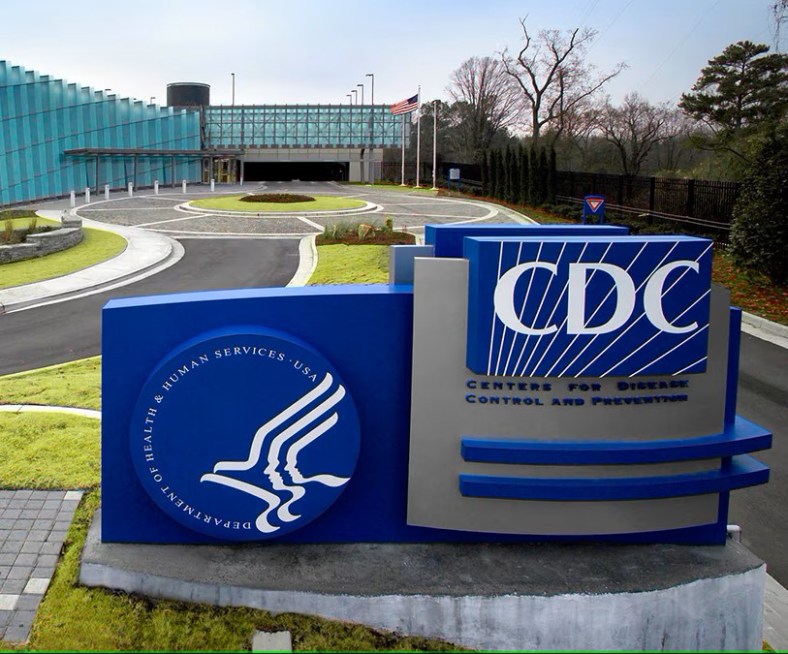
As some rumors become reality for the current fiscal year and budget memos are leaked for the coming fiscal year, one thing is clear – states, local governments, tribal governments, and territories (SLTTs) will be receiving significantly less federal grant funding for preparedness. While some programs are expected to be outright eliminated, others are being reorganized and refocused with significant budget cuts. While not all change is bad, there is a significant shift in preparedness priorities that is largely politically motivated and lacking foundations in reality. I wrote last month on the Future of the US Emergency Management System, which focuses mostly on FEMA-centric topics, but we are also seeing and expecting major cuts to public health emergency preparedness (PHEP) grant funds, the elimination of certain PHEP programs, and indirect impacts to PHEP from cuts to other public health programs. Similar cuts are also expected with the Hospital Preparedness Program (HPP). While I don’t think preparedness funds will be completely cut, the impacts will be significant until SLTTs are able to adjust their own budgets to address what priorities they can.
Grant funding, however, is not only to the direct advantage of the recipients. Compliance with grant rules has long supported national standards (note that I use this term loosely. See this article for more information). FEMA preparedness grants, PHEP grants, and HPP grants, among others, have required the adoption of the National Incident Management System (NIMS), the use of the Homeland Security Exercise and Evaluation Program (HSEEP), national focus on certain threats or hazards, and reasonable consistency in building and sustaining defined capabilities. Grants have been the proverbial carrot that encouraged compliance and participation. While some of the results have been poorly measured (see my annual commentary on the National Preparedness Reports), the benefits of others have been much more tangible. Keeping things real, compliance with many of these requirements by some recipients may have been lackluster at best. Enforcement of these requirements has been practically non-existent (despite rumors of the “NIMS Police” circulating for years), which I think is a shame. That said, I think most recipients worked to meet most requirements in good faith; perhaps partly because someone’s signature attested to it, but I think mostly because many of these requirements were viewed as best practices. As such, while the requirements may be going away if there is no carrot for compliance, I think many jurisdictions will continue implementation.
All this, however, looks at past requirements. But what of new practices that would benefit from nation-wide implementation? I fear that without practices being required as part of a grant, adoption will be minimal. We would have to count on several factors for adoption to take place.
1) Emergency managers would need to be informed of the practice and the benefits thereof. Let’s be honest, most emergency managers are not well informed of new practices and concepts. Often, they simply don’t have the time to do any more than what they are doing, but unfortunately some may not care. Agencies like FEMA have also been notoriously bad at circulating information on new programs, practices, and concepts.
2) Emergency managers would have to agree that the practice can be beneficial to them.
3) Emergency managers would need the resources (time, staff, funds, etc.) to actually implement the practice.
4) In a multi-agency environment, partner agencies are more willing to support activities if they are told it’s a grant requirement – even if it’s not their own grant requirement. They may be reluctant to commit resources to something that is simply perceived as a good idea.
There are certainly a number of challenges ahead for emergency management in the broadest of applications. What I discuss here only scratches the surface. Let’s not lose sight of the benefits of best practices and standards, even if no one is telling us we need to adhere to them. That’s a hallmark of professionalism. We need to collectively advocate for our profession and the resources necessary to perform the critical functions we have. We need to take the time to advocate and to be deliberate in our actions. We need to secure multiple funding streams from every level of government possible. We need to identify efficiencies and leverage commonalities among partner agencies. Yes, lend your voice to the national organizations, but know that it’s up to you to advocate in your municipality, county, and state – and those efforts are now more important than ever.
©2025 Tim Riecker, CEDP
 The Contrarian Emergency Manager