Effectiveness and Efficiency in Incident Management – Resource Tracking

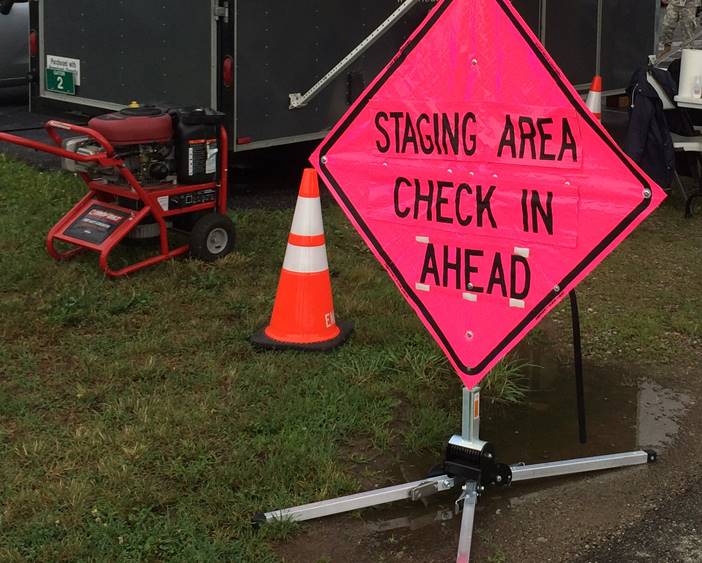
Incident Check In

Incident Check In

I recently took part in the management of an exercise in which a Type 3 incident management team (IMT) was among the players.  As part of their initial set up they immediately recognized the importance of checking in and tracking resources.  This is an activity which is often overlooked at the onset of an incident and is a royal pain to catch up on once the need is realized.  There were a few things which they could have improved upon, though, which seriously impacted their effectiveness and efficiency.

  1. They spent time checking in each vehicle as equipment. Not every vehicle needs to be tracked in an incident.  Generally, the sedan, pick up, or SUV you come in on isn’t special enough that it requires tracking.  Huge waste of time, people, and effort.  Consider the nature and capability of the equipment that is coming through your access point.  Is it a specialized resource?  Will it be applied tactically?  Will it be supporting logistical needs?  Is it rented or leased?  These are the conditions that should be considered when deciding what equipment to track.
  2. They marked equipment using bottled shoe polish. Not a bad idea, except it rained all week, and within hours of application most of the markings couldn’t be read.  Windshield markers, similar to what car dealerships use, are cost effective, waterproof, and clean off easily with mild window cleaners.
  3. Equipment that was checked in was never logged in detail. What’s the difference between E-01234 and E-01235?  We will never know as no descriptions were entered into their tracking system.
  4. As vehicles flowed in to the staging area, people will directed to check in at the command post. This is obviously excellent, except to get to the command post people had to pass by the main access to the incident site.  This meant that many people did not check in as directed.  They got distracted by the incident and associated response activity and never made it to the command post to check in.  This severely impacted the effectiveness of accountability.

Sometimes people would try to explain these things away by saying “It’s just an exercise”, but exercises are an opportunity to do things the right way, not skimp and cut corners.  While their intent was good, their process and results were quite poor.  If we are supposed to train the way we fight, as they say, this team has a ways to go to be more effective with resource accountability.  On the surface resource tracking looks easy… but it’s not.  There is a lot of complexity, variables, and attention to detail that must all work together well in order to be successful.  The Resource Unit Leader has one of the hardest jobs in the Incident Command System.

Being who I am, I’m left wondering why this all happened.  I have little choice but to blame poor planning and training.  Planning is to blame for a lack of clear procedures, guidance, and decision models.  The training which people receive tends to be just as vague.  By now, most, if not all of you are familiar with my opinions on the current ICS training.  While the referenced article does not go into the IMT/position training curricula, from what I recall of the courses I’ve taken, there are certain things taken for granted.  It’s easy to put an item on a checklist that says ‘Establish check in’.  OK… how?  Where?  When?  What?  Why?  The answer to those questions, or guidance to help answer those questions, should be provided through training.  Let’s tell people not only why check in is important, but what people and resources should be checked in, where to establish check in (what to look for and what to avoid), etc.  Once we’ve trained people on it, let’s provide job aids… not just the ICS forms, but job aids that will actually help people do their jobs.  While it may seem like minutia and unnecessary detail, keep in mind that we are training people to operate in austere and chaotic environments which they are trying to establish order over and only do these activities on rare occasion.  Those conditions signal the need for detailed training and job aids to support sustained performance and limit the degradation of the training they received.

Bottom line – let’s take a step back, fix what we have to based upon what we’ve learned, and proceed forward so we can operate more effectively and efficiently.

Thoughts and comments are always appreciated.  What have you learned or observed from incidents or exercises that needs to be addressed foundationally?

© 2015 – Timothy Riecker

Emergency Preparedness Solutions, LLC
WWW.EPSLLC.BIZ

National Planning Frameworks: National Engagement Webinars

FEMA is hosting a series of 60-minute engagement webinars to discuss the update of the National Planning Frameworks. All webinars are open to the whole community, which encompasses—individuals (including those with disabilities and others with access and functional needs), businesses and nonprofits, faith-based and community groups, schools, and all levels of government. The sessions are scheduled for:

• Monday, May 18, 3:00 PM EDT
• Wednesday, May 20, 11:00 AM EDT
• Wednesday, May 27, 12:00 PM EDT
• Thursday, May 28, 10:30 AM EDT

Because each engagement webinar will cover the same information, please choose the session most convenient for you. Advance registration is required due to space limitations. Registration is on a first come, first serve basis. To register, please visit: https://www.vjpo.org/private/ppd8/events/frameworksupdate.

If you require accommodations to participate in these events, please provide details in the Disability Related Accommodations field on the registration page or contact us at PPD8-Engagement@fema.dhs.gov.

To review the draft National Planning Frameworks, please visit http://www.fema.gov/learn-about-presidential-policy-directive-8. To provide comments, please complete the feedback form and submit to PPD8-Engagement@fema.dhs.gov. Comments made during the webinars are considered to be for discussion purposes only and may not be adjudicated formally.

The National Planning Frameworks, which are part of the National Preparedness System, set the strategy and doctrine for building, sustaining, and delivering the core capabilities identified in the National Preparedness Goal. They describe the coordinating structures and alignment of key roles and responsibilities for the whole community and are integrated to ensure interoperability across all mission areas.

This update of the National Planning Frameworks focuses on discrete, critical content revisions, and confirming edits as a result of comments received on the National Preparedness Goal. Additional changes in the current draft of the Frameworks are the result of the lessons from implementing the Frameworks and recent events, as well as the findings of the National Preparedness Report.

Questions can be directed to FEMA’s NIC at: PPD8-Engagement@fema.dhs.gov.

For more information on national preparedness efforts, visit: http://www.fema.gov/national-preparedness.

Flooding – ’tis the Season

In central New York we have experienced 50+ degree (F) weather for the first time in months.  With the warmer weather has come the melting of a fair amount of snow which accumulated through the winter.  Winter temperatures rarely reaching above freezing up here resulting in little melting of snow through the season, so it’s all occurring now. Coupled with spring rains and storms, flood watches and warnings have been issued here and in other locations around the nation.  If you haven’t already, now is the time to prepare for flooding!

Aside from the measures that homeowners, business owners, and facility managers can take (sump pumps, doorway dams, sand bags, and flood barriers), jurisdictions need to be prepared for the impacts of flooding.  If electronic gauges don’t exist in your streams and rivers, be sure to have someone periodically measure and report their depth and progression toward flood stages.  Ensure that culverts are clean and open for the flow of water, and have personnel, equipment, signage, and barriers ready to deploy to address trouble spots and close roads.

Ironically, water and wastewater systems have a significant vulnerability to flooding.  The EPA has issued Flood Resilience: A Basic Guide for Water and Wastewater Utilities that includes worksheets, videos, and flood maps to guide water and wastewater system operators through identifying their flood risk and vulnerability and mitigation options available to them.  Along with that effort, they have issued a Flooding Incident Action Checklist.

Most importantly, make sure that flood awareness is not a unilateral effort.  Involve emergency managers, elected officials, and first response organizations.  Review plans, policies, and procedures and ensure they are up to date.  Consider related actions, such as notification and warning, evacuation, and flood fighting measures.  Preemptive messaging to property owners/residents and business owners to help them be aware and prepared for flooding is also crucial; and make sure everyone knows how to receive local weather alerts so they are aware of any imminent flooding dangers.

Stay dry!

© 2015 – Timothy Riecker

Emergency Preparedness Solutions, LLC
www.epsllc.biz

Ebola Reflection Measures our Preparedness

NBC News recently posted an article citing a report published by the Presidential Commission for the Study of Bioethical Issues.  The link provided to the report in the NBC News article doesn’t seem to work, but I’ve found what I believe to be the report here.  The focus of the report is on the ethical challenges faced by the US in responding to this issue.  The report summarizes a variety of ethics related concerns and considerations in this ongoing response and paints a fairly accurate picture of our failures and what needs to be addressed – at least within the topics it discusses.

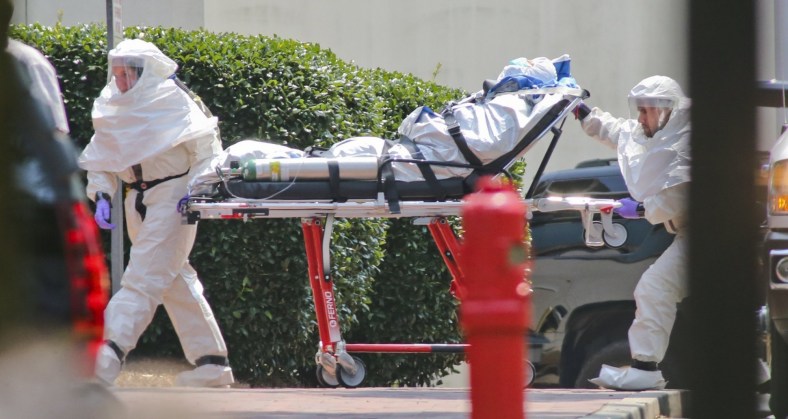
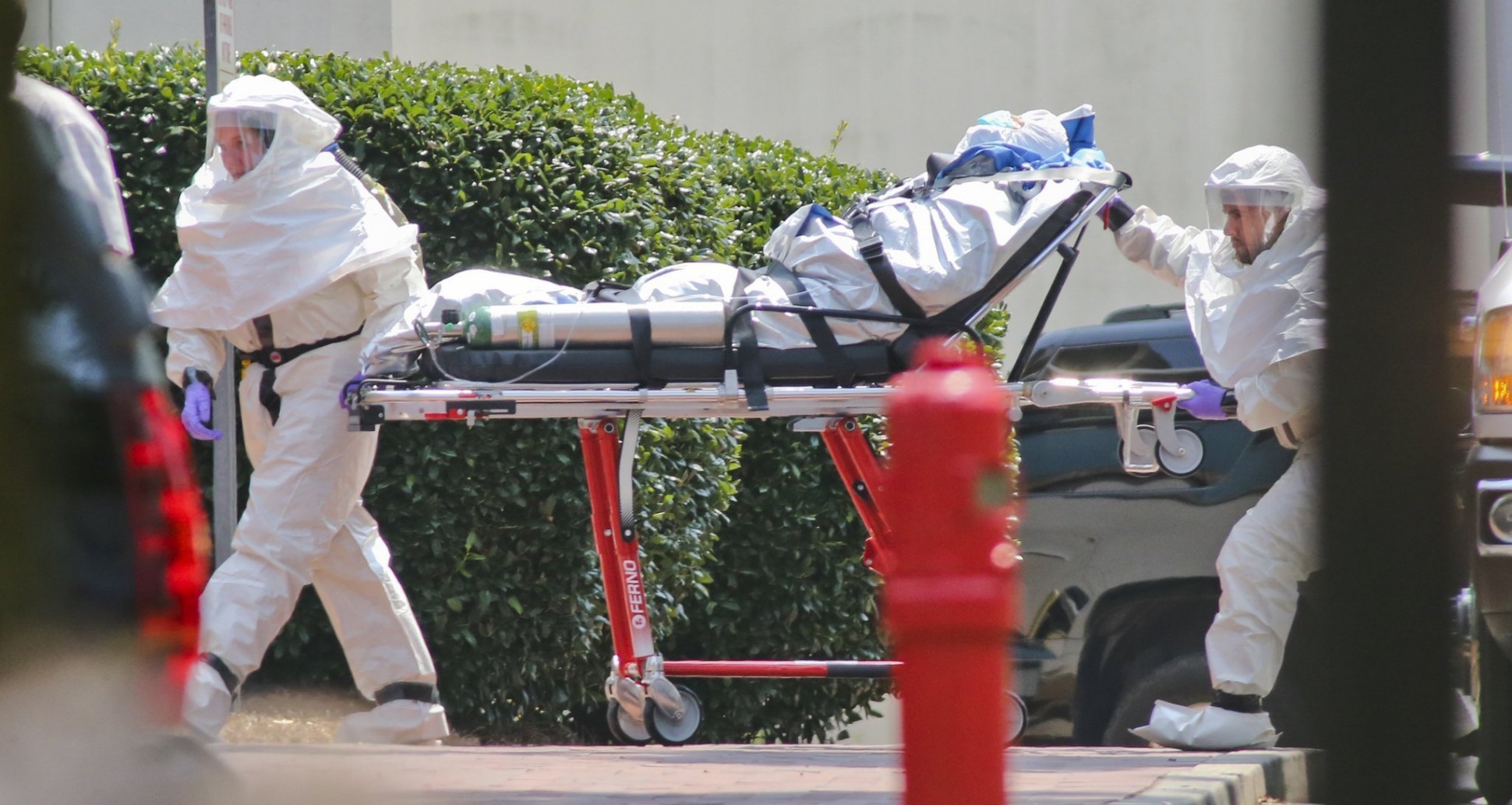
Photo credit: Forbes.com

Photo credit: Forbes.com

As you might expect from a report on bioethics, it is very public health focused.  While they do make mention of very public health centered topics such as clinical drug trials, they do cover topics which are much more broadly rooted in emergency management and homeland security, such as community and responder education, and ethics associated with quarantine.  This report, while fairly focused, opens a virtual Pandora’s box of issues related to our domestic response to Ebola.

Needless to say, our collective response to this matter was horrible.  Public health policy and guidance was a moving target for weeks; responders were ill prepared to handle potentially infected persons; and the collective of society, politicians, and public safety were largely reluctant to deal with matters of quarantine much less prepared for it.  Was this our first consideration of something like Ebola?  Of course not.  Didn’t we have preparations in place?  Kind of.

Back in the late 90s, pushed mostly by the Nunn-Lugar-Domenici act of 1996, preparedness efforts for state and local responders were funded to enhance our capabilities in dealing with WMD incidents.  Several years later, after 9/11 and the anthrax attacks, another surge of funding was pushed down to state and local governments from HHS/CDC for the purpose of bolstering public health preparedness including preparedness for WMD/weaponized biologicals and naturally occurring pandemic incidents.  These two programs alone, not including other related funding, fostered the creation of plans and organizations to support them, purchased entire stockpiles of equipment and supplies, trained tens of thousands of responders and public health workers, and encouraged exercises across the nation to test capabilities (it was actually these exercises which largely influenced the creation of what we now know as HSEEP).  A lot of good came from these programs, but when suddenly tested with the reality of implementation we seemed to fall apart.  Why?

First of all, many of these preparedness efforts occurred between 10 and nearly 20 years ago.  Many of the people initially trained in these programs have since retired from public service with their organizations losing a great deal of institutional knowledge.  While training programs have continued and still exist, there have been systemic gaps in tying this type of training to other preparedness efforts (planning, policy, equipment, etc.).  Some equipment purchased near the beginning of these programs has likely been retired as well.  Much of it still exists, but has been brought into the fold of other applications, such as HazMat – which is certainly appropriate, but yet again we see gaps, this time our ability to readily utilize equipment specifically for public health threats.

In my opinion many of the planning efforts we saw after 9/11 were misguided.  This started with the people who were doing the planning.  Many health organizations emphasized health care experience for these positions instead of EM or planning experience – which was their main function.  Certainly health care knowledge had some importance, but that could be supplemented through a good advisory committee (EM after all is a team effort).  Exacerbating poor hiring decisions was a lack of investing in the people that were hired.  Many organizations expected them to churn out pandemic influenza plans in short order, with little/no training on the planning process or integral systems that must be considered.  Further, much of the planning had been done in a vacuum – that is, it had been performed with little/no input from other stakeholders.  I had reviewed many of these plans, finding things such as inappropriate applications of ICS and wild assumptions of resource availability.  In no way were these plans realistic or applicable.

There were many exercises performed and most of them had great value.  The problem is that there were a lot of assumptions in these exercises and policy decisions made in the exercises were rarely challenged as they would be in reality.  The US Ebola response brought this all to light as decisions such as quarantine were being handled at the governor level and under significant controversy.  So in this recent response I ask why were decisions delayed and deferred to higher authorities?  Why were adequate local/regional plans not in place to address the care and handling of potentially infected persons?  Why did procedural issues take weeks to resolve?  The simple answer is that there was a lack of proper preparedness.

Back in October of last year, when Ebola was emerging in the US, I posted an article titled Preparing for Ebola – and Whatever Else May Come.  The article still has a great deal of relevancy since I’ve seen very little preparedness for future occurrences – only a harried response to the most recent incident.  There have certainly been a great deal of policies and procedures assembled for the current Ebola issue, but these have a feeling of being temporary, throwaway, or single-use documents, applied only for this instance instead of durable and lasting plans.  Many will keep them ‘on the books’, only to find that their hasty assembly wasn’t comprehensive enough for the next occurrence.  Emergency management and homeland security professionals, public health leaders, and elected and appointed officials need to take a step back and re-look at out preparedness efforts – especially in regard to public health issues.  While we should learn from what we have experienced, we also need to think comprehensively about what is needed.  Well considered policies need to be put in place, supported by our laws and responsibilities to protect the public while also considering protection of civil liberties.  Other preparedness efforts such as planning, training, and exercising need to continue to occur but must have their connections strengthened and intentional.  Exercises need to test plans and policies and challenge decision makers who are certainly making difficult decisions that may include ethics and moral issues in the consideration of caring for few while protecting the greater society.

These are not easy things to be done – which supports the need to work on them now, when we aren’t facing an imminent disaster.  While Ebola certainly wasn’t a health care crisis and there were a lot of things done right, there is always room for improvement – especially when the next biological occurrence could be a crisis.

What have you and your organization learned from the Ebola response?  What gaps have you addressed?  What do you feel still needs to be addressed?

© 2015 – Timothy Riecker

Best Practices for the New Year – Situation Reporting

Situation reports or SitReps have a great deal of importance in conveying information on an incident or event to a variety of stakeholders.  Having worked for many years as a Planning Section Chief in a State EOC and county and local EOCs and command posts on a variety of incidents and events; well structured, well written, and relevant SitReps have become a bugaboo of mine.  SitReps are intended to provide a snapshot of a common operating picture for stakeholders involved in the incident or event.  Creation of a SitRep should be viewed as a process, similar to incident action planning.

The information contained in a SitRep provides them with the information they need to know to perform their duties in support of the incident.  Keep in mind that stakeholders may not be involved in the operations or support of an incident but still need to have awareness as they may be impacted.  A series of SitReps can also contribute greatly to the historical record of the incident or event.

Looking into the New Year and toward your next incident and event, I’ve provided some things I’ve learned along the way which can bake your situation reporting more effective and meaningful.

Defining the Audience

In the first step to building a benchmark SitRep, regular readers of my blog will recognize one of my common themes – identifying needs.  Just as we do in training, we need to be aware of who are audience is what their needs are.  The primary purpose of a SitRep is to meet the information needs of your audience.

Who are the stakeholders that see your SitReps?  Are they operators, decision makers, or executives?  Generally, based on these three categories, here is the information they need:

Operators.  These are the folks who are ‘boots on ground’ getting the work done.  While they might love to see detail of what is going on throughout the incident or event, they don’t NEED this information as it can, in fact, be simply distracting to them.  Very rarely are SitReps geared toward this audience as you want them tactically focused on the tasks they are assigned to. Usually a brief incident summary satisfies their limited need to have a bigger picture of what is occurring.  Those who are managing them should be providing them with the information they need to know.

Decision makers.  Decision makers are found at many levels throughout an incident structure.  They may be task force or strike team leaders, division or group supervisors, facility managers, branch directors, section chiefs, functional managers of agencies or departments, or others functioning in similar capacities.  Decision makers have the greatest functional information need.  The information being provided to this group strongly supports their role in the incident, the planning and management of the incident, and the safety of personnel.  The information provided to them should have some degree of operational detail and should include information on hazards and safety issues as well as potential problem areas.

Executives.  This category includes chief elected officials, high level appointed officials, and organizations with ancillary involvement.  Executives are of course decision makers in their own right, but aren’t often involved at the level of detail of the decision makers discussed above.  Generally executives don’t require a great degree of operational detail, but they do like numbers and statistics.  Like the decision makers, they also need to be aware of potential pitfalls on the horizon as they need the information to make high level decisions to address the problem or be prepared to deal with the outcomes politically.  You may have to be the most aware and response of the needs of this audience as they may have different information needs during an incident.

Where the Information Comes From

We know from communications training that information we convey must be timely, relevant, and accurate – this must be the litmus test by which you judge all SitRep content.  The Planning Section should be obtaining information from all relevant stakeholders.  They need an overview of what has, is, and will be happening operationally (and the outcomes/impacts of these operations) as well as all support activities and external influences (such as weather, crowd activities, etc.).  Information from field operations should come, ideally, from individuals functioning in the field for the sole purpose of obtaining and providing information (field observers).  Often times, however, we don’t have this luxury and have to obtain information directly from field-level managers themselves.  Caution should be exercised with the information you receive from them, or anyone really, as some will alter information based upon their own agendas or bias.  Information should also be obtained from support services, usually found through your Logistics section.

In an EOC environment we will also usually obtain information from the agencies and functions represented there.  These agencies are also audiences for the SitRep so they get to see first-hand how their situational awareness contributes to a common operating picture.  You may also be obtaining a lot of raw data.  If it’s relevant, track this data and report on it, ensuring that it is meaningful to your audience.  Leverage the talents of GIS to display this information in usable and meaningful formats.  As the years have progressed, I’ve seen SitReps with less narrative and more GIS.

In obtaining information, I’ve found that a form or script can be of the greatest help.  It ensures not only consistency in the information being gathered but it also ensures that nothing is missed.  Often those reporting information will have a particular perspective which will be the focus of their reporting.  Asking additional questions encourages them to think more broadly.  Be sure to get your information sources on a firm schedule so you are not waiting on their information.  Late information from your sources will result in a late or incomplete SitRep.  Personnel may need regular reminders to compile and submit their situational information.  Also be sure to give GIS plenty of time to do their work.  Set a publication time and work backwards to establish reporting and work schedules for everyone involved.

Remember – timely, relevant, and accurate.  While a short summary of previous actions may be important to provide context, it is not necessary to provide a long historical narrative.  Be sure to report on the outcomes or effectiveness of actions.  This detail of progress is important for a situation report.  As far as accuracy, work to verify information to the greatest practical extent, especially any information that is speculative.  Inaccurate information can be career ending.

Organizing the Information

Typically you only have time to assemble one SitRep, despite having to serve multiple audiences.  Inclusion of an executive summary is then a very appropriate means of providing an area within the SitRep for those audiences which need a shorter overview.  After the executive summary you have a great deal of flexibility on the structure and formatting of the document, but keep things organized and largely consistent from report to report.  Often times SitReps are organized the way we organize the incident – have you organized functionally or geographically?  It may be a mix of the two, so organize your SitRep based upon that.  Simply find a format that makes sense.  I like to arrange information that applies to everyone first, such as a weather forecast.  You may have information such as statistical tables or GIS products which are best provided as attachments so they don’t interrupt the flow of the narrative.

Keep in mind that this is NOT a document providing operational direction – that comes from an Incident Action Plan (IAP).  Therefore, all associated operational information such as safety matters, communication plans, etc. should be included in the IAP and generally not replicated in the SitRep.  Those who need access to that operational information should be also receiving copies of the IAP.  A short synapsis of the SitRep can be provided in the IAP to add context and to provide information for operators but should not be replicated to any great extent.

Conclusion

Creating a situation report takes a lot of time and patience and is not something to be hurried, but their publication is something counted on so they must adhere to a schedule.  It is very much a ‘garbage in – garbage out’ activity, so the quality of the information coming in is extremely important.  A large incident or event may require a largely staffed Situation Unit to collect and organize information.  SitReps should always be reviewed before being finalized.  It is a professional report so attention should be paid to things like grammar and spelling.

So what have you learned from your experiences in assembling situation reports?

Need help building SitRep templates and standard operating guidelines?  Emergency Preparedness Solutions can help!  www.epsllc.biz

© 2015 – Timothy Riecker

Preparing for Ebola – and Whatever Else May Come

Unless you’ve been living under a rock lately, you should be quite aware of the headlining threat in public health and public safety – Ebola hemorrhagic fever.  Ebola has been in existence for quite a while, but the current outbreak of this deadly virus in western Africa has garnered much attention.  Thus far, beyond western Africa, infected persons have been identified in Spain and the United States.  The ease and frequency of air travel, combined with the virulence of Ebola have led to a frenzied reaction by politicians, the media, and our health care system.  While we are at a stage in the US where only a handful of infected persons have been identified, this virus is quite dangerous and could easily and rapidly spread.

While I’m not a public health expert, preparedness is universal.  Public health is at the tip of the spear for this fight and must be supported by other professions within public safety and beyond – that’s what emergency management is all about.  That said, this is proving to be quite a test for our public health partners.  The consequences of failure could be devastating.

Considering the five mission areas, we are most strongly functioning within Prevention, Protection, and Response for Ebola.  Certainly the three common Core Capabilities of Planning, Operational Coordination, and Public Information and Warning are all fully engaged across the three mission areas.  Additionally, we are seeing a great deal of work within in the Intelligence and Information Sharing; Screening, Search, and Detection; Public Health and Medical; and Situational Assessment Core Capabilities; along with some work in other capabilities to a lesser degree.  Why is it important to recognize the mission areas and Core Capabilities?  It helps to keep us focused and prompts us to examine the critical activities for each.

In which mission areas and Core Capabilities does your agency fit in?

What are you responsible for?

Are you doing it?

Do you have all the information you need to do it safely and effectively or are you waiting for public health to call and tell you what to do?  I’m betting you haven’t gotten that phone call.

In a situation like this, we are seeing a lot of activity and emphasis at the Federal level through US Health and Human Services and the Centers for Disease Control.  Their focus is on solving the problem in front of them.  While they have people engaged in getting messages out and engaging partners, they have a lot to accomplish and likely haven’t gotten to all the stakeholders.  We will hopefully see some more aggressive messaging given the circumstances that have been described at the Texas hospital where Ebola patients have been treated.  So what should you do?  Hopefully your agency is already in contact with your local health department to discuss both your role in the public safety system and the potential exposures and vulnerabilities you may have to Ebola.  If your local health department doesn’t seem to have much information, reach up to your state health department.  Don’t wait to get a call… by then it could be too late.

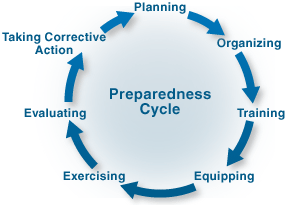
Very simply, we are looking at preparations for your agency’s role.  These preparations, although slightly different based on the agency, apply to all agencies; from first responder agencies, to local government, K-12 and higher education schools, hospitals, private sector, and not for profits.  Let’s break this down with the Preparedness Cycle:

The Preparedness Cycle - FEMA

The Preparedness Cycle – FEMA

Plans, policies, procedures – do you have them in place and up to date?  Depending on the role and function of your agency you can have several of the following – emergency operations plan, emergency procedures, infection control plan and procedures, public health plan, communicable disease or pandemic influenza plan.  You should engage with public health experts to ensure that your plans, policies, and procedures address everything known about Ebola.  You may need to create some procedures specifically addressing issues pertaining to Ebola and your agency’s role.  Do your plans, policies, and procedures link up to your agency’s critical activities for each Core Capability you are engaged in?  What agencies do you need to coordinate with to be effective?

Organizing – depending on your agency’s role, you may need to make some internal changes or designations within your organization to better streamline your activities.

Training – train everyone who has anything to do with any component of the plan in what they need to do.  This is a great opportunity to ensure that everyone is trained up in their role of the emergency operations plan.  If your agency has physical contact with the public, training in personal protective equipment (PPE), identification of signs and symptoms, and patient care are extremely important.  Given the detail of the activities and the just-in-time training, job aids will be a great help to your staff to ensure that they follow the procedures you provide for them.  Don’t get caught short… communicate to your staff in what is going on, what your agency is or may be responsible for, and what they will be called upon to do.

Equipping – your staff need the right equipment for the job.  Not only PPE, but the forms and databases used to record information, decontamination equipment, etc.  It is extremely important that staff are trained not only in how to use equipment but to prevent contamination of equipment and prevention of cross contamination.  Do you have all the equipment you need?  If not, who does?

Exercising – Conduct table top exercises to talk through policies and higher levels plans to validate and become familiar with them.  Identify shortfalls and correct them immediately.  Conduct drills to test the skills of staff for specific activities and larger exercises – functional or full scale – to test multiple functions and plans.

Evaluating – Evaluation is a constant throughout all of the preparedness cycle.  We need to evaluate every step within the preparedness cycle and make adjustments and improvements as needed.  Embrace best practices and fix shortfalls.  This leads directly to the next step…

Taking Corrective Action – Some corrective actions are quick and easy fixes while others can take a while or cost money above budget to address.  A corrective action plan (aka improvement plan) will help you keep track of what needs to be fixed, the priority it holds, who is responsible for making it happen, and a strategy to make it happen – it’s a living document.

The preparedness cycle can be applied to any hazard, be it Ebola or a flood.  With all this attention on Ebola, it’s a great opportunity to pull plans off the shelf and have discussions with internal and external stakeholders on these preparedness steps.

© 2014 – Timothy Riecker

Planning for a Mass Fatality Incident

Planning for a mass fatality incident can be almost as complex as responding to such an incident.  Mass fatalities can arise from transportation incidents, pandemics, mud slides, mass shooting, or other sudden incidents.  Thankfully mass fatality incidents do not occur often, but due to the impacts and complexity of managing such incidents every jurisdiction should have a plan in place to address them.

A mass fatality incident management plan should be an annex to a comprehensive emergency management plan.  Just as with any deliberate emergency planning effort (ref CPG 101), we start by assembling a planning team.  This planning team should represent all relevant stakeholders from across the community.  Beyond your usual public safety agencies, the team should also include the coroner or medical examiner, public health, public works, hospitals, social services agencies, the American Red Cross, funeral directors, and cemetarians.  It is also important to consider the cultural and/or spiritual requirements of how the deceased are handled so community leaders from these groups should also be included in your planning process.

Your plan should acknowledge the hazards in your community which can lead to a mass fatality incident.  These should already have been identified through your hazard analysis/THIRA.  If you have not conducted a THIRA, your planning team should discuss the impacts of such an event through a briefly outlined credible worst-case scenario then identify what capabilities are needed to address these impacts.

Assisting agencies may have some slightly different roles in the management of a mass fatality incident than they would in other incident responses.  These differences should be identified in the mass fatality incident response plan.  It should also be recognized that the causal nature of the incident is most likely to drive who will be in charge of such an incident.  Typically there are other matters which must be mitigated to save lives, protect property, and stabilize the incident which will determine who is in charge.  Because it is a mass fatality incident the coroner or medical examiner will be managing a significant portion of the incident and may also be driving policy based upon their legal responsibilities, but they may not be in command, although they may be likely to be part of a unified command.

While the coroner or medical examiner will be handling the deceased, it must absolutely be remembered that the living must also be cared for.  First and foremost are the immediate survivors, if any, of the incident who will require emergency medical care.  Depending on the nature of the incident, others may need to be treated for exposure.  Mental health care is a much more prominent issue in a mass fatality than perhaps any other incident – and the need for mental health care applies to everyone working the incident, families and friends of victims and survivors, and the community at large.

A common venue in mass fatality incidents for providing mental health assistance to families and friends of victims and survivors is a Family Assistance Center (FAC).  The Aviation Disaster Family Assistance Act of 1996 requires family assistance centers to be established for major transportation incidents (the joint responsibility of the NTSB and the American Red Cross) but these centers have been used for other mass fatality incidents as well.  In additional to crisis mental health counseling, a variety of other services can also be provided at a FAC.  A FAC should be established very quickly and it should be recognized that surviving victims may be stranded in the area and that family and friends will flock to the area – many of which may have little support structure or plans for essentials such as lodging.  A FAC is also an ideal location for authorities to obtain information from survivors about the missing or deceased which will help with future identification.  FACs are often located in hotels where large conference facilities, lodging, food, and other services can be obtained.

Another facility common to a mass fatality incident is a temporary morgue.  Temporary morgues are established either as a matter of operational convenience (rather than having to transport remains to the jurisdiction’s usual morgue site) or because the usual morgue site is too small to accommodate a larger operation.  Usually in conjunction with a temporary morgue is the need for cold storage for remains.  This is most often accomplished via refrigerated trucks/containers.  The incident morgue is obviously a secure location, with only authorized personnel being allowed access.

The amount of logistical planning required to establish and support facilities such as a family assistance center and temporary morgue lend themselves greatly to pre-planning efforts, including MOUs, site-specific standard operating procedures, mobile caches of disaster supplies, and exercises to test the standard operating procedures for setting up and running such facilities.  There are a variety of resources available to assist you with assembling your mass fatality incident response plan from LLIS, the federal Disaster Mortuary Response Team (DMoRT), state health departments, state emergency management agencies, and funeral home director’s associations.  The National Association of County and City Health Officials also has information which can assist you.

Take the time to create a mass fatality incident management plan, train personnel on the plan, and exercise it regularly.  Mass fatalities represent some of the most complex incidents I’ve ever been involved in and are very multifaceted.  As always, if your jurisdiction needs assistance in any preparedness efforts, Emergency Preparedness Solutions, LLC is here to help!

© 2014 Timothy Riecker


Don’t Just Prepare for Disasters Passed

As mentioned in an earlier post, I’ve been reading Rumsfeld’s Rules, a bit of a memoir by former Congressman, Secretary of Defense (twice over), and CEO Donald Rumsfeld.  Much of the book is highlighted by quotes which have influenced him in various stages of his life.  One of his anecdotes references the Maginot Line, a multi-layered defensive system created by the French after World War I along their border with Germany, intended to protect France from any future invasion from Germany.  The Maginot Line would have proven a rather effective defense, had Germany used similar strategies in World War II as they had in World War I.  Obviously the Nazis were quite successful in their invasion of France, quickly conquering and occupying the nation.  The difference was that the Nazis were fighting a new war, whereas France was preparing to fight the last war – which is the quote Rumsfeld references with this anecdote.

What can we learn from this in emergency management and homeland security?  It can’t possibly apply to us, can it?  Obviously we base many of our plans and preparations on disasters of the past.  We have an in-depth trove of information from sources like LLIS which allow us to learn from past disasters.  Much of our hazard analysis is based upon what occurred in the past.  We study past disasters, examining them from inception through recovery, arm-chair quarterbacking all facets of response – from command, to organization, to logistics.  From this we learn what practices to embrace and what needs to be improved upon.  Since we’re quoting, it was Benjamin Franklin who said “Experience the best teacher.”

To the contrary, we have a rather prolific saying in emergency management that no two disasters are alike.  So why all this effort to examine the past?  There is a lot to be learned from the past.  As previously mentioned, we spend a lot of time and effort examining earlier disasters so we can learn from them.  While every disaster is different, there are also many commonalities – all of which we can better prepare for.  The past also puts disasters and their magnitude in context for us.  We can’t be stuck in the past, however.  While the next disaster may have similarities to one passed, there will be differences.  It is our job and our responsibility to predict to the greatest extent of our efforts what the impacts will be of future disasters, as well as the hazards they will stem from.  Yes we must learn from the past, but we must always look to the future.

How do we look into the future?  Reconvene your planning groups and discuss this new context.  Engage members to continually reassess what is changing – in the climate, the geography and landscape, and the new or changed technological hazards in our areas.  We must look beyond our borders both literally and figuratively as I outlined in a previous post, and consider all possibilities.  Use exercises which introduce scenarios new to us instead of those based upon disasters of the past to help us contextualize this and better prepare.

My challenge to you – Take an honest look at your plans, policies, procedures, and training – are you preparing to fight the last war or the next one?

© 2014 Timothy Riecker

The POETE Analysis – Emergency Planning and Beyond

POETE stands for Planning, Organizing, Equipping, Training, and Exercising. These are the five elements that each jurisdiction should be examining their own capabilities by. By examining their capabilities through each of these elements, a jurisdiction can better define their strengths and areas for improvement.

The POETE analysis, often completed as part of a THIRA (Threat and Hazard Identification and Risk Assessment) is actually a component of the State Preparedness Report (SPR) (note that this was the definition of the acronym at the time of the original post. It is now Stakeholder Preparedness Report), which incorporates THIRA data into this annual submission. When properly conducted, a POETE analysis will examine a jurisdiction’s capability targets. These capability targets, through the THIRA process, are individually defined by each jurisdiction, based upon the capability definitions of each of the 31 Core Capabilities (Note: at the time of my original post there were 31 Core Capabilities. There are now 32). The Core Capabilities were identified in the National Preparedness Goal and are an evolution of the legacy Target Capabilities. Gone are the days when many jurisdictions struggled with the definitions of the Target Capabilities and trying to determine how they applied to jurisdictions large and small across the nation. The new Core Capabilities are divided amongst five mission areas – Prevention, Protection, Response, Recovery, and Mitigation. By referencing Core Capabilities in our preparedness efforts, we have a consistent definition of each area of practice.

When a jurisdiction’s stakeholders conduct a POETE analysis, each element is rated on a scale of 1 to 5 – a rating of 5 indicating that the jurisdiction has all the resources needed and has accomplished all activities necessary for that element within that capability area. Using the Core Capability of Fatality Management as an example the jurisdiction will identify a desired outcome and from that a capability target. CPG-201, the guidance published by DHS/FEMA for conducting a THIRA, outlines this process in detail and provides the following capability target for illustrative purposes:

“During the first 72 hours of an incident, conduct operations to recover 375 fatalities.”

The jurisdiction will examine their efforts and resources for each POETE element for this capability target. Below are thoughts on what could be considered for each element:

Planning: What is the state of their plans for mass fatality management? Do they have a plan? Is it up to date? Does it address best practices?

Organizing: Are all stakeholders on board with mass fatality preparedness efforts? Is there a member of the community yet to be engaged? Are lines of authority during a mass fatality incident clear?

Equipping: Does the jurisdiction have the equipment and supplies available to handle the needs of a mass fatality incident? Are MOUs and contracts in place?

Training: Do responders and stakeholders train regularly on the tasks associated with managing a mass fatality incident? Is training up to date? Is training conducted at the appropriate level?

Exercising: Have exercises been conducted recently to test the plans and familiarize stakeholders with plans and equipment? Has the jurisdiction conducted discussion-based and operations-based exercises? Have identified areas for improvement been addressed?

The jurisdiction’s responses to these questions and the subsequent ratings provided for each POETE element will help them identify areas for improvement which will contribute to the overall capability. From personal experience, I can tell you that the discussions that take place amongst stakeholders which reveal both the efforts applied for each element as well as the frustrations and barriers to progress for each are generally quite productive and great information sharing sessions. It is important to capture as many of the factual elements of this discussion as possible as they add context to the numerical value assigned. Having the right people participating in the effort is critical to ensuring that inputs are accurate and relevant.

Once the POETE analysis is completed, what’s next? As mentioned earlier, the POETE analysis is actually a required component of the annual State Preparedness Report, which must be submitted to FEMA/DHS by each state and territory. Ideally, the results of the POETE analysis should be translated from raw data (numbers) to a narrative, explaining the progress and accomplishments as well as future efforts and barriers; in other words, the ratings should be factually explained and these explanations should feed an actionable strategic plan. The priority rating inherent in the THIRA process will help establish relative priority for each Core Capability within the strategic plan. While this is a requirement for states and territories, a comprehensive strategic plan for any emergency management and homeland security program at any jurisdictional level is obviously beneficial and would reflect positively in an EMAP accreditation.

POETE elements should be incorporated into other emergency management activities as well. When needs are identified and defined based upon Core Capabilities, these should be outlined in the jurisdiction’s multi-year Training and Exercise Plan, which should serve as a guiding document for many preparedness activities. The focus that a POETE analysis provides for each Core Capability can help identify training objectives which can help maintain and improve capability

Consider integrating them into your evaluation of exercises. While the Homeland Security Exercise and Evaluation Program (HSEEP) doctrine makes no mention of POETE, much of HSEEP is based upon capabilities. With a POETE analysis being an integral component of measuring our progress toward a capability, I would suggest including it into exercise evaluations. POETE elements can be included in Exercise Evaluation Guides (EEGs) to capture evaluator observations and should be outlined in the After Action Report (AAR) itself for each observation – giving suggestions for improvements based upon each POETE element. Consider how you could incorporate the POETE elements into an AAR as an outline identifying areas for improvement for the EOC management activities of the Operational Coordination Core Capability. As an example:

Planning: The jurisdiction should update the EOC management plan to incorporate all critical processes. Job aids should be created to assist EOC staff in their duties.

Organizing: Lines of authority were not clear to exercise participants in the EOC. Tasks were assigned to agencies but status of tasks was not effectively monitored.

Equipping: There were not enough computers for participating agencies. EOC management software did not facilitate tracking of resources.

Training: EOC agency representatives were not all trained in the use of EOC management software, creating delays in action and missed assignments. The EOC Manager and Planning Section Chief were well versed in the Planning Process and used it well to facilitate the Planning Process.

Exercising: Isolated drills should be conducted to test notification systems on a regular basis. Discussion based exercises will assist in identifying policy issues associated with suspension of laws and their impact on EOC operations.

The POETE analysis is a process which can help us identify strengths and areas for improvement within our emergency management and homeland security programs. While the POETE analysis can be time consuming, the information gathered for each Core Capability is valuable to any preparedness effort. With such a variety of federally-driven programs and requirements extended throughout emergency management and homeland security, we can find the greatest benefit from those which have the ability to cross multiple program areas – such as the Core Capabilities – allowing us to consolidate the evaluation of these programs into one system, providing maximum benefit and minimizing efforts.

Have you conducted a POETE analysis for your jurisdiction?  Did you find it a worthwhile process?

Looking for help with a POETE analysis?  Emergency Preparedness Solutions, LLC can help!  www.epsllc.biz 
© 2014 Timothy Riecker