It heats, cooks, and charges your iPhone!
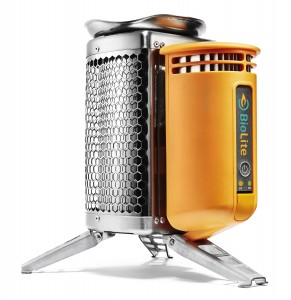
It heats, cooks, and charges your iPhone!
A multi-agency/discipline group called the National Homeland Security Consortium has released a white paper – Protecting Americans in the 21st Century: Priorities for 2012 and Beyond. The paper highlights eight areas of concern requiring a national focus.
Sidebar – The entity called the National HOMELAND SECURITY Consortium has assembled a document that is clearly meant for the EMERGENCY MANAGEMENT community (a concept much broader and far-reaching than homeland security). I really wish they would get this straightened out… and now back to your regularly scheduled blog…
The eight areas are as follows:
The Consortium has recognized and stresses in their white paper the hazard that is larger than any of these individually, and that is the potential for any of these hazards to interact or influence each other – an observation and warning that I feel is long overdue. They are also not encouraging us to lose focus on the more immediate hazards we may have at hand, but are encouraging stakeholders and relevant parties to give some attention to these emerging hazards and consider how we will prepare for, mitigate against, respond to, and recover from their impacts.
I won’t comment on each of these items now, but reserve the right to do so in the near future. I do, however, leave you with this… consider what impacts these hazards may have on you.
There are some great ideas in Jim McKay’s article – The Preparedness Message Isn’t Reaching the Public, featured in Emergency Management Magazine. Just like any good marketing campaign, we have to push with multiple strategies. Billboards and television campaigns are great but they aren’t going to hit home with everyone. We need to be more creative in our approach. Our methods will resonate differently with various people. The CDC’s zombie campaign got a lot of attention (see my blog post on it!). Why? Because they not only used something trendy, they considered their audiences. Not all audiences respond to the zombie campaign; some think it’s ridiculous – but they were able to engage a lot of people. Different people require different methods. Once you reach an audience, then you can convey a message. Preparedness is boring, let’s face it. We need creative and diverse solutions to reach and engage audiences.

The CDC’s Zombie Banner
There are four major challenges we’re facing when it comes to preparedness that I speak about in presentations. These are many of the thoughts of many folks when it comes to disasters:
1) It’s not going to happen here.
2) It’s not going to be that bad.
3) There is nothing I can do about it.
4) Government will take care of me.
These aren’t rocket science, but they can be tough nuts to crack – especially when we don’t want to be the ‘doom and gloom’ people.
Let’s look at what has worked. McKay’s article mentions coupons to Target for preparedness kits. This is an effective methodology that has worked well for years in California and other places around the country. In Central New York, where I’m from, a county health department capitalized creatively on a point of distribution exercise to get the beginnings of preparedness kits in the hands of residents. The 300 slots they had available filled very quickly. The event got great press and all positive comments from those who participated. Good or bad economy, people like free or discounted things. The lesson learned here is to get preparedness underwritten. Be it by grant funds or corporate sponsors. If Pepsi wants to put out a preparedness kit, so be it.
This morning I took some time to browse through the variety of TED talks to see if anything struck some interest with me. First of all, if you aren’t familiar with TED, they host a variety of free talks and presentations on various topics. They get some great speakers and the presentations are short… usually 10-20 minutes. Most of the topics are about something new and innovative – their tag line is ‘Ideas Worth Spreading’, and they certainly abide by that. Sometimes I watch their presentations because the subject area interests me, and other times I watch it to see some innovative or refreshing presentation skills.
The TED presentation I watched this morning is titled: Caitria and Morgan O’Neill: How to step up in the face of disaster. It’s a short, 10 minute presentation which I highly recommend. Their background is on the TED page, but in short these two sisters, both in grad school, experienced an F 3 tornado in their hometown in Massachusetts. From their explanation, it seems that there wasn’t much organization or leadership in their town relative to supporting volunteers. If you’ve been in emergency management for a while, you’ve probably experienced this. There are a wealth of volunteers who want to help in the event of a disaster, but they must be organized and supported. Often times local governments either don’t have the resources to deal with spontaneous volunteers or simply don’t want to – they may not want the trouble, the liability, or would prefer that another organization, often times someone like the American Red Cross, to deal with them.
The main trouble is that most jurisdictions don’t plan for volunteer management. A volunteer management plan is a plan that should absolutely be part of the Comprehensive Emergency Management Plan (CEMP) of any jurisdiction. Yes, not for profits often times do take on this role, especially with a localized disaster and if they have the capability to do so, but in the event of a regional disaster they simply don’t have the people to dedicate to this task – and it’s not something that’s easily done or simply managed. The bottom line is that local jurisdictions are responsible for taking care of their people, and this is one more way to make it happen.
The O’Neill sisters, learning from their home town experiences and leveraging their educations and other experiences, eventually put together a company called recovers.org. They have applied simple but effective methodologies to manage resources, including volunteers, in the event of a disaster. They have traveled across the country applying their system and seem to be quite successful in doing so. One of the things that encourages me the most about them is that they advocate community preparedness. They know that for any system to reach its potential of effectiveness, it must be integrated into preparedness efforts, not just show up after the disaster. It seems they have a product and service that can be applied to any jurisdiction and would work well with existing structures, like a VOAD, and with volunteer management and recovery planning efforts. The information on their website indicates that they are busy helping communities impacted by Hurricane Sandy. It’s great to see local efforts and innovation in emergency management! Best of luck to Caitria and Morgan O’Neill.
I’m finishing my preparations for a quick trip to California to help evaluate an earthquake exercise. All the while, I’m watching Hurricane Sandy come up the coast after creating some havoc in the Caribbean. According to the latest National Hurricane Center advisory, Sandy will make landfall in southern New Jersey, and progress inland to central Pennsylvania before turning north and heading through New York State, the track taking it through the Finger Lakes area. From there, the current advisory predicts that the storm will turn to the northeast, saturating New England. It’s going to be a very wet, rainy week as Sandy slows soon after making landfall. Of particular concern here in New York is the western portion of the state which has received a fair amount of rainfall over the last couple of days from the cold front that has progressed here from the mid west.
 Thus far, there seems to be an appropriate amount of concern over this storm. While I’ve heard some folks say that people are overly concerned, I don’t think officials are crying wolf with this. First, as I’m sure you’ve read in the media, many factors of this storm are unprecedented or rarely seen, particularly the collision with the cold front – resulting in many of the hurricane advisories including snow in their forecast – SNOW for a HURRICANE! Who would have ever thought that would happen? Second, the storm is maintaining hurricane strength right up to landfall, bringing significant winds and storm surge with it. New York City is taking actions which to my recollection are fully in compliance with their hurricane plans, such as low elevation evacuations, closing of mass transit and tunnels ahead of the storm, and other protective actions. States of emergency have been declared all along the northeast states, with the President declaring an emergency in Maryland, which will be the first to feel the full effects of the category 1 storm with sustained winds of 75 miles per hour. I expect the President will make similar declarations ahead of the storm reaching subsequent states. States along the projected impact path all have activated their emergency operations centers (EOCs), pulling together local, state, and federal agencies, as well as some not for profits such as the American Red Cross and The Salvation Army, to coordinate efforts and situational information.
I’ve received storm preparedness information from several sources already, including Ready.gov, the Small Business Administration, Time Warner Cable, and National Grid. I’m certain utility companies in other area are doing the same outreach to their customers. Locally, the Erie Canal is being closed and water levels dropped to help mitigate against flooding, which has devastated communities along the waterway in the past. Local governments are putting out preparedness public service announcements to citizens to help ensure they are prepared. You’ve heard me comment before about the complacency of much of our population when it comes to emergency preparedness. Please pay heed to what is being suggested and spread the word that preparedness for this storm is serious. Be sure to have a few days of water, food, medications, and batteries for flashlights. Keep your cell phone charged and pay attention to weather information and emergency alerts. If you are a New Yorker, now is a great time to subscribe to NY-ALERT to be certain to receive emergency information. If you are outside of New York, many states now have similar alerting systems. Even clearing away leaves and debris, which is plentiful this time of year, from storm sewers and culverts will be a big help. If you manage or own a business, be sure to pull out your emergency and continuity plans (you have these, right?) and be sure to keep your employees and other stakeholders informed of what’s going on.
I’m sure that when I return I’ll be helping with some disaster response and recovery activities in the area. The better you prepare and the smarter you are, the less responders have to risk their lives and valuable resources, so be smart, be prepared, and stay safe!

Rescuers at the L’AQUILA, Italy earthquake.
I was completely shocked to read this article at NBC News about six scientists and a government official in Italy being convicted of manslaughter and causing criminally negligent injury for their failure to predict an earthquake in 2009. The article doesn’t give a lot of background, including what their statements or warnings may or may not have been. It does mention that there were several smaller quakes in the months preceding a devastating 6.3 magnitude earthquake that killed over 300 people. It goes on to elude that the scientists (seismologists, presumably) perhaps didn’t give these smaller quakes much consideration as possible precursors to a larger earthquake.
I’m not a geologist, nor do I play one on TV, but we all know that we can’t predict earthquakes with any measure of reliability. Here in the northeast there are plenty of small quakes, which are generally no cause for alarm. Italy, however, is earthquake prone. One would think that people would have in their minds that the possibility of a sizeable earthquake is always present, especially after a series of smaller earthquakes. Unless these scientists really downplayed that possibility (which would be ludicrous in that region of the world), I just don’t see how they can be held responsible. Some disasters we can predict, others – such as earthquakes, we just can’t. This is a dangerous precedent that I truly hope doesn’t catch on. There are scientists in a variety of fields that are strong partners with emergency management. While we know that the sciences (or the human interpretation of them) are often times imperfect, we go with the best information available to drive the planning and decisions we make. Admittedly, it’s a gamble to a degree – a darn dangerous gamble – but I challenge anyone to find a better way. If we cry wolf every time the possibility of something occurs, the population will become complacent and ignore our warnings. We must strive for better science, achieve better balance, and maintain common sense.
 In May of 2011 the Centers for Disease Control (CDC) unleashed its Zombie Preparedness campaign upon the world. This campaign took off like a flesh-eating monster, encouraging preparedness throughout the nation and prompting similar campaigns in other countries. My guess is that the CDC took a creative prompt from the current pop culture zombie craze (mostly fueled by AMC’s The Walking Dead series – yep, I’m a big fan – note: season 3 starts on October 14th) as well as from the common sense, yet tongue-in-cheek group known in Zombie Squad. Zombie Squad, whose website says they have been around since 2003. ZS (as they are known) “… is an elite zombie suppression task force ready to defend your neighborhood from the shambling hordes of the walking dead.” “When the zombie removal business is slow we focus our efforts towards educating ourselves and our community about the importance of disaster preparation.”
So how does this all make sense? Actually, it fits very well. Contrary to the other monster fad currently sweeping the globe – vampires – which seems to be intent on teenage-level love stories, this zombie business is serious, really. The Walking Dead has spurred many conversations in on-line discussion boards and in my own home about people functioning and surviving when society has crumbled around them. Zombieism is also a disease, so all the concepts that go with a major disease, such as transmission prevention, isolation and quarantine, treatment, vaccination, etc. all apply.
From a preparedness angle, the zombie concept works well. On the CDC website, their director, Dr. Ali Khan explains “If you are generally well equipped to deal with a zombie apocalypse you will be prepared for a hurricane, pandemic, earthquake, or terrorist attack.” They then further encourage people to get a kit, make a plan, and be prepared. It’s great that we’re all using the same message! The Zombie Squad website also encourages the same.
Now how about from the prospective of emergency response and emergency management folks? Surely, we can’t be swayed by this pop culture silliness as well? We sure can – and I think it’s great! For many of the same reasons explained earlier, we can draw many similarities between a zombie attack and an actual incident. Sure, we take some liberties and we have a little fun with it, but why can’t we? A successful exercise is one that tests our objectives, is it not? Drawing the scenario similar to a pandemic or hazardous materials type of incident, agencies are testing objectives related to mass casualties, mass fatality management, isolation and quarantine, public messaging, incident command, crowd control, looting, disease prevention, points of distribution, etc. So many times I had heard from those who taught me ‘the art of exercises’, that the scenario really doesn’t matter, it’s all about the objectives. Sure, in the past we’ve always given consideration to the scenario being realistic so that the participants buy into it, but I think many can totally get into the zombie thing. This local exercise is using the zombie theme later this month (they are even giving prizes for things such as ‘best zombie walk’ to encourage volunteers to come for this, and yes, they are holding a ‘Thriller’ dance!), and you’ve probably seen articles on National Guard and Department of Defense units using a zombie attack as their scenario.
Bottom line, it’s fun, it’s effective, and it’s a graveyard smash!
Over the last several years, I have had the opportunity, and the pleasure, to lead and participate in some very significant exercises. For some of these larger exercises (mostly functional) we were more interested in testing objectives associated with activities which would occur 72 or 96 hours into the incident (i.e. well after the initial response phase). I’ve made the mistake of scripting (assuming) what would be accomplished in those first few operational periods in an effort to set up the players sufficiently for play starting a few days into the incident. Despite my experience, the input of others, and some dedicated writing it would be rather heavily criticized (i.e. “We would never do that!”). The end result was not only some disgruntled participants, but also skewed results. What we needed was the players to write that part of the exercise for us.
So that’s exactly what they did – or rather, they told us what to write. We accomplished this by conducting a table top exercise with the agencies who would be most heavily involved in the response for those first several operational periods. Through careful structure and injects we were able to walk away with the data we needed to create an Incident Action Plan and a detailed briefing which could be provided to the players for the functional component of the exercise. We had to allow ourselves a few weeks between the TTX and the FE to create a detailed and workable IAP (all based on the actions of the agencies at the TTX) along with the supporting information and materials they needed to help get up to speed – this document we called a ‘Ground Truth’. This methodology resulted in a far better functional exercise, allowed us to bring in first responder agencies for the table top exercise (who where actually happy getting to discuss a response beyond the first operational period), and got us a lot of bang for our buck.
The planning of these types of undertakings is a bit more complicated than just planning one exercise. First of all, you truly are planning two exercises at the same time. While obviously the functional exercise is the most complex, don’t leave planning for the TTX until the last minute as so much actually hinges on the outcome of the TTX. That said, there is still plenty of work that can be done to prepare for the fuctional exercise before the TTX occurs. Much of the MSEL can be developed, but it will need some tweaking based on the information that comes out of the TTX. Be sure to have plenty of evaluators and note takers (I know – this isn’t an official HSEEP function) on hand at the TTX to capture their discussion and actions.
I’ve led a few ‘layered’ exercises such as this and will be evaluating another at the end of this month. I’d encourage you to consider the potential value in this approach for your next exercise.
 Over the last few months I’ve been working with a county health department through my role as chair of our local VOAD (Volunteer Organizations Active in Disaster). This work has revolved around an exercise that is required of them for Points of Distribution, or PODs. PODs, if you don’t know, are designated locations where a local health department can bring in citizens for inoculations or prophylaxis in the event of an epidemic or other severe health event. PODs can also be used for distribution of commodities, such as food, water, or tarps, in the event of other disasters. There exist standards of practice for PODs – from the management system (the incident command system, or ICS), to the stations the POD is organized in. The exercises are required by way of the state and federal health preparedness grants that the local health departments receive to ensure that the plans are tested and the personnel are practiced.
Early in the planning stages for this exercise, the health department decided they would use this exercise as a way of contributing to the preparedness of the community. They had the funding available to provide basic preparedness kits for 300 families and would use the POD stations to provide information and kit materials to those who went through it. What a great idea!
The local health department could have done this on their own, but instead chose to invite several community partners to join them. These included the local chapter of the American Red Cross, local Salvation Army Corps, the county Department of Emergency Services, the new Regional Volunteer Center, the County Animal Response Team (CART), and others, including the VOAD. The partnership was hugely beneficial, leveraging the resources and talents of all participants for the exercise. The local health department was able to obtain the kit materials and handle promotional activities such as a local commercial featuring the county executive, radio ads, local news paper mentions, and posters for print and e-mail distribution. They also handled the on-line registration for the event. The assisting agencies provided their expertise and knowledge of various preparedness areas, providing speakers and print materials for the event. Our area is very culturally diverse and the assisting agencies were able to provide the print materials in a variety of languages, and some agencies provided much needed services of interpretation.
Two days before the event registration reached 300 – the cut off based on the kit materials we had available. I’m confident that, had we the materials, we could have accepted registrations upward of 400 or even 450. Clearly this was an indicator of an interested community and the need to do this again!
The event itself went very well, with even the host facility – who has a catering service – providing refreshments and snacks for both staff and attendees. The schedule was tight… with only about 20 minutes being given per group to go through the POD. Groups averaged between 15 and 20 people, and a new group was ushered in every 10 minutes (when people pre-registered for the event they chose a time slot). There were some late comers, early arrivals, and a few walks in – all of which were accommodated with a bit of coordination. We had parking attendants ensuring a good flow of traffic, sign in staff ensuring that people were getting in, and other staff to help folks all along the way through the POD.
Comments made by people as they went through, along with the brief surveys they took at the end, were all quite positive. The event had local media exposure, with the county executive and health department director being interviewed, as well as some attendees. The attendees received information on the importance of preparedness, local hazards and information, how to be alerted in the event of an emergency, information on special family needs, and, of course, the kit itself.
Many health departments conduct POD exercises by cycling volunteers through and handing out candy or breath mints – which is fine if you don’t have much funding – it still accomplishes the goal of the exercise. Using a POD to conduct flu clinics is common practice and very functional. This idea, though, was creative and provided an excellent opportunity to give something back to the community. It increased awareness of members of the community and helped them to be better prepared. Obviously we hope they will all tell their friends and family about what they learned. We know that any future events like this would be very successful. I absolutely encourage others to something like this – it’s a true best practice.
Tim Riecker

