Ebola Reflection Measures our Preparedness

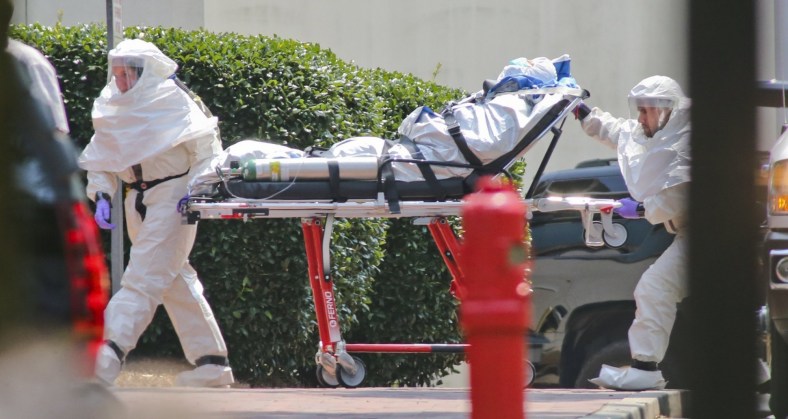
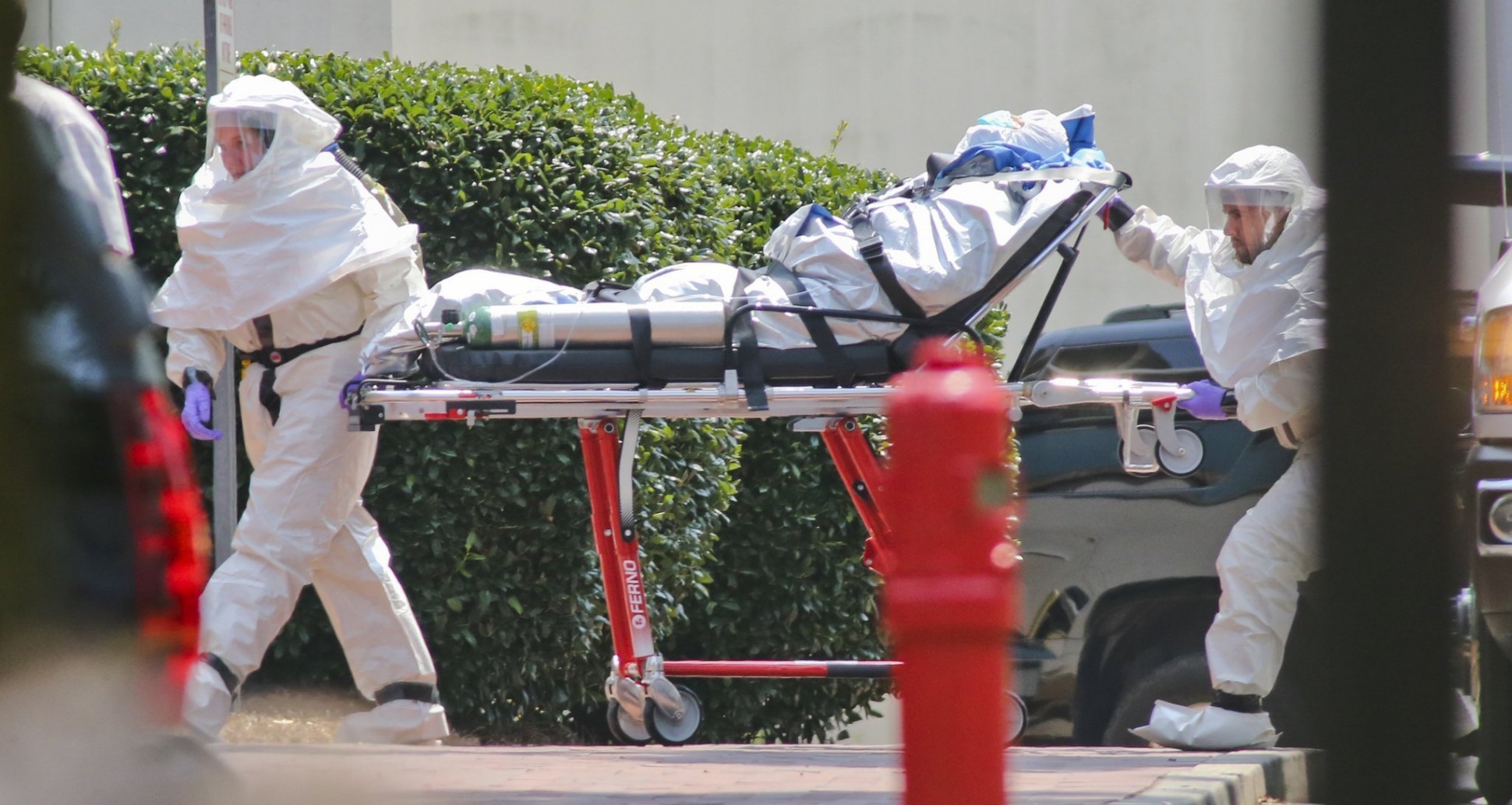
NBC News recently posted an article citing a report published by the Presidential Commission for the Study of Bioethical Issues.  The link provided to the report in the NBC News article doesn’t seem to work, but I’ve found what I believe to be the report here.  The focus of the report is on the ethical challenges faced by the US in responding to this issue.  The report summarizes a variety of ethics related concerns and considerations in this ongoing response and paints a fairly accurate picture of our failures and what needs to be addressed – at least within the topics it discusses.

Photo credit: Forbes.com

Photo credit: Forbes.com

As you might expect from a report on bioethics, it is very public health focused.  While they do make mention of very public health centered topics such as clinical drug trials, they do cover topics which are much more broadly rooted in emergency management and homeland security, such as community and responder education, and ethics associated with quarantine.  This report, while fairly focused, opens a virtual Pandora’s box of issues related to our domestic response to Ebola.

Needless to say, our collective response to this matter was horrible.  Public health policy and guidance was a moving target for weeks; responders were ill prepared to handle potentially infected persons; and the collective of society, politicians, and public safety were largely reluctant to deal with matters of quarantine much less prepared for it.  Was this our first consideration of something like Ebola?  Of course not.  Didn’t we have preparations in place?  Kind of.

Back in the late 90s, pushed mostly by the Nunn-Lugar-Domenici act of 1996, preparedness efforts for state and local responders were funded to enhance our capabilities in dealing with WMD incidents.  Several years later, after 9/11 and the anthrax attacks, another surge of funding was pushed down to state and local governments from HHS/CDC for the purpose of bolstering public health preparedness including preparedness for WMD/weaponized biologicals and naturally occurring pandemic incidents.  These two programs alone, not including other related funding, fostered the creation of plans and organizations to support them, purchased entire stockpiles of equipment and supplies, trained tens of thousands of responders and public health workers, and encouraged exercises across the nation to test capabilities (it was actually these exercises which largely influenced the creation of what we now know as HSEEP).  A lot of good came from these programs, but when suddenly tested with the reality of implementation we seemed to fall apart.  Why?

First of all, many of these preparedness efforts occurred between 10 and nearly 20 years ago.  Many of the people initially trained in these programs have since retired from public service with their organizations losing a great deal of institutional knowledge.  While training programs have continued and still exist, there have been systemic gaps in tying this type of training to other preparedness efforts (planning, policy, equipment, etc.).  Some equipment purchased near the beginning of these programs has likely been retired as well.  Much of it still exists, but has been brought into the fold of other applications, such as HazMat – which is certainly appropriate, but yet again we see gaps, this time our ability to readily utilize equipment specifically for public health threats.

In my opinion many of the planning efforts we saw after 9/11 were misguided.  This started with the people who were doing the planning.  Many health organizations emphasized health care experience for these positions instead of EM or planning experience – which was their main function.  Certainly health care knowledge had some importance, but that could be supplemented through a good advisory committee (EM after all is a team effort).  Exacerbating poor hiring decisions was a lack of investing in the people that were hired.  Many organizations expected them to churn out pandemic influenza plans in short order, with little/no training on the planning process or integral systems that must be considered.  Further, much of the planning had been done in a vacuum – that is, it had been performed with little/no input from other stakeholders.  I had reviewed many of these plans, finding things such as inappropriate applications of ICS and wild assumptions of resource availability.  In no way were these plans realistic or applicable.

There were many exercises performed and most of them had great value.  The problem is that there were a lot of assumptions in these exercises and policy decisions made in the exercises were rarely challenged as they would be in reality.  The US Ebola response brought this all to light as decisions such as quarantine were being handled at the governor level and under significant controversy.  So in this recent response I ask why were decisions delayed and deferred to higher authorities?  Why were adequate local/regional plans not in place to address the care and handling of potentially infected persons?  Why did procedural issues take weeks to resolve?  The simple answer is that there was a lack of proper preparedness.

Back in October of last year, when Ebola was emerging in the US, I posted an article titled Preparing for Ebola – and Whatever Else May Come.  The article still has a great deal of relevancy since I’ve seen very little preparedness for future occurrences – only a harried response to the most recent incident.  There have certainly been a great deal of policies and procedures assembled for the current Ebola issue, but these have a feeling of being temporary, throwaway, or single-use documents, applied only for this instance instead of durable and lasting plans.  Many will keep them ‘on the books’, only to find that their hasty assembly wasn’t comprehensive enough for the next occurrence.  Emergency management and homeland security professionals, public health leaders, and elected and appointed officials need to take a step back and re-look at out preparedness efforts – especially in regard to public health issues.  While we should learn from what we have experienced, we also need to think comprehensively about what is needed.  Well considered policies need to be put in place, supported by our laws and responsibilities to protect the public while also considering protection of civil liberties.  Other preparedness efforts such as planning, training, and exercising need to continue to occur but must have their connections strengthened and intentional.  Exercises need to test plans and policies and challenge decision makers who are certainly making difficult decisions that may include ethics and moral issues in the consideration of caring for few while protecting the greater society.

These are not easy things to be done – which supports the need to work on them now, when we aren’t facing an imminent disaster.  While Ebola certainly wasn’t a health care crisis and there were a lot of things done right, there is always room for improvement – especially when the next biological occurrence could be a crisis.

What have you and your organization learned from the Ebola response?  What gaps have you addressed?  What do you feel still needs to be addressed?

© 2015 – Timothy Riecker

Morale Issues at DHS… Still

The Washington Post recently featured an article on continued morale problems at DHS.  These problems are nothing new and largely stem around the organization being so large and unwieldy and falling in midst of the political battlefield that is homeland security and all if its related functions, such as the ongoing debate over immigration – something enforced by DHS.

In speaking through the years with friends and colleagues who work in various departments of DHS, there is a great deal of frustration with constant changes in policy and procedure, failure to backfill positions emptied by attrition, and a lack of leadership simply listening to their experienced professional staff.

Certainly given the variety of responsibilities DHS has, they need to remain fluid and responsive but they can’t do this at the expense of stability.  This loss of morale and stability will inevitably impact the effectiveness of the department and its component agencies.  So far the good employees of DHS have held steadfast, but these issues can’t continue to be ignored.  They don’t require millions of dollars in studies – they simply require good leadership and HR practices.

– TR

Do You Have an Emergency Management Committee?

Comprehensive emergency and disaster management, effectively done, cannot be done by one person alone.  The best emergency management and homeland security practices are performed by teams.  The practices of emergency management and homeland security are so ubiquitous and multifaceted that we rely on the participation and input of persons in related professions, and in fact professions generally not seen as related, to be successful.  Because of this, both government entities and corporations alike often embrace a team approach to emergency management.  Do you?

Division of Responsibility – Unity of Effort

Aside from the chief elected official or chief executive officer, no one person has the direct ability to ‘command’ the forces of a jurisdiction or corporation.  The trouble with this is that these CEOs are generally not experts in disaster management.  Effective organizations learn the necessity of delegation early on which, while the CEO is still ultimately responsible, those delegated to are functionally responsible for their respective areas.  Laws and regulations often make these delegations mandatory for both jurisdictions and corporations.  While each of these delegations has their own functional responsibilities, they still operate as part of a greater organization and must work well together achieve maximum effectiveness.

The ability of these stakeholders to work together in a unity of effort is certainly important during a disaster, but it’s not the only time they should get together to talk about disasters.  Yes, many of these individuals will see each other during (hopefully) regular staff meetings, but these meetings typically involve briefing the CEO on current or upcoming activities, discussions on hiring and budgets, or being briefed on new policy.  While these are all important discussions they usually leave little room to discuss topics on emergency management and homeland security.

EM/HS certainly warrants its own meetings and workshops to accomplish important tasks such as a periodic threat and hazard identification, plan creation and updates, exercise planning meetings, and discussions on training, grants, and preparedness investments.  This group should also be making policy recommendations to the CEO and ensuring that preparedness efforts are permeating the entire jurisdiction or organization.  Their work together in preparedness efforts will strengthen their relationships and increase their knowledge of each other’s functional responsibilities and capabilities.

Who Should Participate?

In any of the mission areas of emergency management and homeland security (Prevention, Protection, Mitigation, Response, and Recovery – or in activities related to preparedness for any of these) there are often related or even overlapping interests amongst department heads.  The emergency manager, fire, police, EMS, and public works/highway are often at the forefront; but other departments and positions such as parks and recreation, clerk, human resources, finance/treasurer, and zoning can all (and should) have some degree of input.  Larger jurisdictions may have their own health and human services departments which are also important participants.  There are similar positions within corporate organizations that have the same interactions and hold the same importance in this regard to these organizations.  Also be sure to consider external partners such as utilities, major employers, and not for profits and social groups?  Perhaps your EMS provider is a third party or your law enforcement is provided for by a Sheriff’s Department or State Police – be sure to include them as well.

This ‘whole community’ list can grow very quickly and often times not all members are needed for the group to function effectively.  The best practice in emergency management committees is to take a tiered approach – with a core group addressing most matters but with the support and augmentation of an expanded group to include other departments and organizations whose participation is called upon when needed.

Emergency management and homeland security are team efforts which require the active participation and input of all stakeholders to be effective.  Don’t just rely on your emergency manager to get the job done.  They need support from the entire organization to ensure that your jurisdiction or corporation is prepared to address the worst, save lives, and minimize losses.  Some emergency managers view such committees as ‘oversight’ or an unnecessary bureaucracy, but success lies in collaboration.

What’s your approach?

© 2015 – Timothy Riecker

Emergency Preparedness Solutions, LLC
www.epsllc.biz

Preparedness – ICS is Not Enough

Back in October I wrote a post about ICS training not being enough for EOC personnel.  You can give it a read to see my reasons, which essentially boil down to the specific role of the EOC (Emergency Operations Center) in the incident management structure and the unique processes which take place in an EOC both not being addressed in ICS (Incident Command System) training.

As I continue to work in various jurisdictions to enhance their preparedness, I am expanding my thoughts on ICS training not being enough – this time for all of preparedness.  In meeting with jurisdictions and discussing their current state of preparedness, many believe they are well prepared to respond to any incident simply because their personnel have received ICS training.  Why am I concerned by this?

Folks, in the grand scheme of things, ICS training alone does not teach you to do very much except how to function within a system.  First off, I’m a huge believer in ICS and the success it can help facilitate in incidents and events.  Not only have I seen it work, but I use it and advocate for it as a chief practice of emergency management.  I’ve been teaching ICS courses since 2001 and have led hundreds of course deliveries amongst the various levels.  That said, in seeing the faith that people are putting in ICS as their savior from disaster, I think that faith has become exaggerated and misplaced.  While ICS gives us guidance on structure, processes, and standards, it still doesn’t tell us HOW to manage the incident and its impacts – and it never well.

The structure, processes, and other standards that ICS provides – when properly applied – are greatly beneficial to our ability to manage a disaster.  Let’s not forget, though, everything else that is needed to be successful.  There is an abundance of training available for personnel to address identified needs to make them better at what they do and thus enhance the capabilities of the jurisdiction or entity.  Some of this may certainly include higher level and more functional training in ICS (i.e. position-specific and incident management team training), but we can’t forget that we must focus on our needs and developing to meet those needs.  More on identifying training needs here and here.

The best way of identifying those needs, comprehensively, is through our plans.  Planning is the cornerstone of preparedness and serves as the foundation of our response.  Planning to appropriate depth is not often performed and always needs to be enhanced (more training in the activities of planning is certainly an identified need!).  Once plans are in place, we need to train all stakeholders on the contents of those plans and of course exercise them.  The process of planning and the exercises we conduct will identify other gaps in preparedness efforts that the jurisdiction or entity should address.  These gaps are most easily analyzed through through five key elements – Planning, Organizing, Equipping, Training, and Exercising (POETE).  More on POETE analysis here.

When a plan is being written or reviewed, we need to follow the bouncing ball for each of the identified activities.  Is it enough for the plan to say that certain stakeholders will be contacted when an incident occurs?  Of course not – we need to identify WHO will contact them, HOW they will be contacted, specifically WHEN they will contact and what is the trigger event, and WHAT they will be told.  Also, what happens if someone is unreachable?  What actions are they expected to take?  Do they then need to make any notifications?  If they are doing nothing with the information, WHY are we even contacting them?  This simple task requires planning (process and decision mapping as well as a specific procedure), organizing (identifying specific personnel and alternates to do this), equipping (the equipment needed for them to make contact; including access, maintenance, operation, and redundancies), training (training and job aids in the procedures and equipment), and exercising (to ensure that all the previous elements function appropriately).

The example above is simple, but shows how far-reaching and complex a seemingly simple activity can be.  ICS training won’t address this.  While ICS practices should be penetrating the deepest aspects of our incident response organization, ICS as a concept is fairly high-level and conceptual.  While it helps structure our tactical resources, ICS itself is not a tactical application – it is simply the structure we perform in.  The processes it provides are not tactical processes, they are incident management processes, but we still need to know about the incident and what to do – ICS will not provide those answers.  ICS is a great tool, but just like a carpenter we must have a variety of tools to do the job properly.

What needs have you identified?

If you need assistance with your preparedness – planning, training, exercising, or needs assessments – reach out to Emergency Preparedness Solutions!

© 2015 – Timothy Riecker

Emergency Preparedness Solutions, LLC
www.epsllc.biz  

H7N9 Bird Flu Confirmed in Canada

In another bit of news regarding bird flu (aka avian influenza), the H7N9 strain of the virus has infected a citizen of British Columbia who recently traveled to China.  This release comes just a few days after H5N1 had been confirmed in a duck in northern Washington.  Certainly coincidence, but the discovery of the presence of both strains in North America – both for the first time – is daunting.

© 2015 – Timothy Riecker

Emergency Preparedness Solutions, LLC

www.epsllc.biz

H5N1 Confirmed in the US

In news released by the media this morning, the presence of H5N1 (aka bird flu or avian influenza) has been confirmed in the US.  While many dusted off communicable disease plans with last year’s (and continuing) Ebola threat, we need to ensure that we take into account the wildlife and agricultural implications of H5N1 along with the threat to human life.  While one positive finding certainly does not make an epidemic, the confirmed presence should be putting certain actions into place for many public safety partners, including federal and state agricultural and fish and game offices.  Hunters, farmers, and veterinarians need to be aware of signs and symptoms just as much as our health care providers.

Be on the lookout for more information from authorities on this.  Consider the implications it can have within your area of responsibility and be sure to think broadly and consider cascading impacts.

© 2015 – Timothy Riecker

Emergency Preparedness Solutions, LLC

www.epsllc.biz 

Book Review – Next-Generation Homeland Security by John Fass Morton

I’m a firm believer that professionals need to keep current on trends and major discussions in their field of practice.  Homeland security and emergency management are no different, which is why I spend a great deal of time reading – books, blogs, newsletters, etc.

A book I finished in recent months was Next-Generation Homeland Security by John Fass Morton.  The book offers a great history of the roots of emergency management and homeland security, insights into the politics involved in the evolution of the two related fields, and thoughts on how preparedness agendas of the federal government and preparedness needs of local and state governments can be better merged moving forward.

Mr. Morton provides a highly detailed history of EM/HS – the most detail I’ve ever seen published anywhere.  This history doesn’t just cover new laws and changes in agency names, but also identifies key players and influencers, missteps, and practices along the way.  His detail of EM/HS over the past two decades is even greater as he has been able to obtain information and insights from his own experiences and those of his colleagues and contemporaries.  These details include all of our current programs such as NIMS, EMAC, and others – including many of the predecessors of those programs.  If you have interests in history or politics, much of the book will be very interesting to you simply based on this content.

Much of the book’s focus is on all-hazard preparedness, so you won’t find a great deal of information on DHS member agencies and their mission areas.  The book primarily follows the evolution of emergency management and its relationship with homeland security, while also providing some insight into the roots of homeland security which well predate 9/11.  Mr. Morton’s research certainly demonstrates how cyclic these evolutions have been.

Mr. Morton offers some interesting perspectives on our current state of preparedness and offers thoughts on organizational models which can enhance the coordination between the federal government and state and local authorities through strengthening of the FEMA/DHS regional offices, particularly the regional preparedness staff.  It’s apparent that there often conflicts between the federal government and state and local governments in regard to EM/HS priorities across all mission areas.  Mr. Morton’s perspectives offer a viable solution.

As I read I marked a lot of pages in the book for future reference, particularly in the second half (about 200 pages).  If you don’t have much interest in the histories Mr. Morton provides, as they are quite detailed, the second half of the book is where there will still be great value to you as this is where more contemporary practices, policies, and organizations are detailed as well as Mr. Morton’s thoughts on the further evolutions of our practice including the Federal regional approach and other topics such as professional development.  This is an excellent book for the dedicated practitioner who is looking for not only a detailed history but also thought provoking insight, not just a regurgitation of doctrine.  I believe it would also serve as an excellent book for graduate level academics, as it not only provides a great deal of information but can certainly stimulate quite a bit of discussion.  I hope to see some of Mr. Morton’s ideas get discussed broadly for the benefit of our profession.

Best Practices for the New Year – Situation Reporting

Situation reports or SitReps have a great deal of importance in conveying information on an incident or event to a variety of stakeholders.  Having worked for many years as a Planning Section Chief in a State EOC and county and local EOCs and command posts on a variety of incidents and events; well structured, well written, and relevant SitReps have become a bugaboo of mine.  SitReps are intended to provide a snapshot of a common operating picture for stakeholders involved in the incident or event.  Creation of a SitRep should be viewed as a process, similar to incident action planning.

The information contained in a SitRep provides them with the information they need to know to perform their duties in support of the incident.  Keep in mind that stakeholders may not be involved in the operations or support of an incident but still need to have awareness as they may be impacted.  A series of SitReps can also contribute greatly to the historical record of the incident or event.

Looking into the New Year and toward your next incident and event, I’ve provided some things I’ve learned along the way which can bake your situation reporting more effective and meaningful.

Defining the Audience

In the first step to building a benchmark SitRep, regular readers of my blog will recognize one of my common themes – identifying needs.  Just as we do in training, we need to be aware of who are audience is what their needs are.  The primary purpose of a SitRep is to meet the information needs of your audience.

Who are the stakeholders that see your SitReps?  Are they operators, decision makers, or executives?  Generally, based on these three categories, here is the information they need:

Operators.  These are the folks who are ‘boots on ground’ getting the work done.  While they might love to see detail of what is going on throughout the incident or event, they don’t NEED this information as it can, in fact, be simply distracting to them.  Very rarely are SitReps geared toward this audience as you want them tactically focused on the tasks they are assigned to. Usually a brief incident summary satisfies their limited need to have a bigger picture of what is occurring.  Those who are managing them should be providing them with the information they need to know.

Decision makers.  Decision makers are found at many levels throughout an incident structure.  They may be task force or strike team leaders, division or group supervisors, facility managers, branch directors, section chiefs, functional managers of agencies or departments, or others functioning in similar capacities.  Decision makers have the greatest functional information need.  The information being provided to this group strongly supports their role in the incident, the planning and management of the incident, and the safety of personnel.  The information provided to them should have some degree of operational detail and should include information on hazards and safety issues as well as potential problem areas.

Executives.  This category includes chief elected officials, high level appointed officials, and organizations with ancillary involvement.  Executives are of course decision makers in their own right, but aren’t often involved at the level of detail of the decision makers discussed above.  Generally executives don’t require a great degree of operational detail, but they do like numbers and statistics.  Like the decision makers, they also need to be aware of potential pitfalls on the horizon as they need the information to make high level decisions to address the problem or be prepared to deal with the outcomes politically.  You may have to be the most aware and response of the needs of this audience as they may have different information needs during an incident.

Where the Information Comes From

We know from communications training that information we convey must be timely, relevant, and accurate – this must be the litmus test by which you judge all SitRep content.  The Planning Section should be obtaining information from all relevant stakeholders.  They need an overview of what has, is, and will be happening operationally (and the outcomes/impacts of these operations) as well as all support activities and external influences (such as weather, crowd activities, etc.).  Information from field operations should come, ideally, from individuals functioning in the field for the sole purpose of obtaining and providing information (field observers).  Often times, however, we don’t have this luxury and have to obtain information directly from field-level managers themselves.  Caution should be exercised with the information you receive from them, or anyone really, as some will alter information based upon their own agendas or bias.  Information should also be obtained from support services, usually found through your Logistics section.

In an EOC environment we will also usually obtain information from the agencies and functions represented there.  These agencies are also audiences for the SitRep so they get to see first-hand how their situational awareness contributes to a common operating picture.  You may also be obtaining a lot of raw data.  If it’s relevant, track this data and report on it, ensuring that it is meaningful to your audience.  Leverage the talents of GIS to display this information in usable and meaningful formats.  As the years have progressed, I’ve seen SitReps with less narrative and more GIS.

In obtaining information, I’ve found that a form or script can be of the greatest help.  It ensures not only consistency in the information being gathered but it also ensures that nothing is missed.  Often those reporting information will have a particular perspective which will be the focus of their reporting.  Asking additional questions encourages them to think more broadly.  Be sure to get your information sources on a firm schedule so you are not waiting on their information.  Late information from your sources will result in a late or incomplete SitRep.  Personnel may need regular reminders to compile and submit their situational information.  Also be sure to give GIS plenty of time to do their work.  Set a publication time and work backwards to establish reporting and work schedules for everyone involved.

Remember – timely, relevant, and accurate.  While a short summary of previous actions may be important to provide context, it is not necessary to provide a long historical narrative.  Be sure to report on the outcomes or effectiveness of actions.  This detail of progress is important for a situation report.  As far as accuracy, work to verify information to the greatest practical extent, especially any information that is speculative.  Inaccurate information can be career ending.

Organizing the Information

Typically you only have time to assemble one SitRep, despite having to serve multiple audiences.  Inclusion of an executive summary is then a very appropriate means of providing an area within the SitRep for those audiences which need a shorter overview.  After the executive summary you have a great deal of flexibility on the structure and formatting of the document, but keep things organized and largely consistent from report to report.  Often times SitReps are organized the way we organize the incident – have you organized functionally or geographically?  It may be a mix of the two, so organize your SitRep based upon that.  Simply find a format that makes sense.  I like to arrange information that applies to everyone first, such as a weather forecast.  You may have information such as statistical tables or GIS products which are best provided as attachments so they don’t interrupt the flow of the narrative.

Keep in mind that this is NOT a document providing operational direction – that comes from an Incident Action Plan (IAP).  Therefore, all associated operational information such as safety matters, communication plans, etc. should be included in the IAP and generally not replicated in the SitRep.  Those who need access to that operational information should be also receiving copies of the IAP.  A short synapsis of the SitRep can be provided in the IAP to add context and to provide information for operators but should not be replicated to any great extent.

Conclusion

Creating a situation report takes a lot of time and patience and is not something to be hurried, but their publication is something counted on so they must adhere to a schedule.  It is very much a ‘garbage in – garbage out’ activity, so the quality of the information coming in is extremely important.  A large incident or event may require a largely staffed Situation Unit to collect and organize information.  SitReps should always be reviewed before being finalized.  It is a professional report so attention should be paid to things like grammar and spelling.

So what have you learned from your experiences in assembling situation reports?

Need help building SitRep templates and standard operating guidelines?  Emergency Preparedness Solutions can help!  www.epsllc.biz

© 2015 – Timothy Riecker

Best Practices for the New Year – Resolve to be Responsible, Realistic, and Resourceful

As I work with jurisdictions and discuss their capabilities I find a broad range of perception among emergency managers about their jurisdictions’ capabilities and limitations.  Some overestimate their capability, thinking that they can handle anything and don’t need any outside assistance.  Others underestimate their capabilities, with their emergency plans defaulting to calling for help or making someone else responsible for nearly every scenario.  Fortunately some jurisdictions are spot on and have an informed and realistic perception of their capabilities.  Having the wrong awareness of what your jurisdiction can and cannot do can be dangerous.

Be Responsible

First of all, jurisdictions need to be responsible for their people.  Far too often I see an automatic assumption that someone else will handle an incident or a certain aspect of an incident, apparently abrogating the jurisdiction of all responsibility.  One of the more common occurrences of this is with sheltering where I rather often hear ‘The Red Cross will take care of that.’ with no further discussion even considered on the subject.  With no slight intended toward the Red Cross, relying on one entity to provide an absolutely critical capability is simply foolish.  If the Red Cross or any other outside entity is for some reason unable to provide these services for the jurisdiction, the jurisdiction is still left with the responsibility to provide this care for its citizens.  A jurisdiction without a plan to address this need is not being responsible for the welfare of its citizens.

The primary goal of a jurisdiction is to provide for its citizens.  Take this seriously and remember that you can’t assign this responsibility to others.

Be Realistic

Know your capabilities and your capacity.  In other words, know what you can and can’t do; and for what you can do, know how well and how long you can do it for.  Know what your limitations and dependencies are.  If your jurisdiction’s ability to provide advanced life support (ALS) care is dependent upon the only paramedic you have as a member of your ambulance service, you have very little capacity and quite a bit of vulnerability.

A good start to having a realistic view of your jurisdiction’s capabilities is conducting and regularly updating a comprehensive threat and hazard identification and risk assessment (THIRA).  THIRA is an in depth assessment which combines a traditional hazard analysis with a reference to DHS’ 31 Core Capabilities in the context of the threats specific to a jurisdiction.  I strongly suggest that a jurisdiction conducting a THIRA extend this assessment into an analysis of five key elements (Planning, Organizing, Equipping, Training, and Exercising – POETE) for each of their capabilities.  Go here for my post on the POETE analysis which explains the benefits and the process a little more.

A good THIRA helps jurisdictions identify not only their hazards but also the potential worst-case scenario impacts of these hazards.  It then provides an opportunity for the stakeholders of the jurisdiction to take an honest look at their capabilities and their ability to leverage these capabilities against those impacts.  Being honest in this assessment will help jurisdictions see what can hurt them most and identify the gaps and limitations they have in their capabilities.

Bottom line – be realistic in what you can do, how well, and how long you can do it.

Be Resourceful

The ability to endure the impacts of a disaster and, at a minimum, address the critical objectives of life safety, incident stabilization, and property conservation can require a jurisdiction to be creative and resourceful.  This is a key aspect of resiliency.  While assistance may still be needed from outside sources, a jurisdiction’s ability to survive and provide lifeline services for its citizens in the interim is extremely important.  Being resourceful can help a jurisdiction shore up its capabilities in times of need.  Key to being resourceful are good contacts and connections within the whole community.  Religious groups and social organizations, private companies, and even individual citizens can all provide services which can aid a jurisdiction in shoring up capabilities – at least in the short term.  Incorporate these as options within your emergency plans.  While these entities may have issues and commitments of their own during a disaster, they may also be able to help.

Use all available resources to get the job done and to sustain for as long as you can.  It can absolutely be the difference between life and death.

Best Practices for the New Year – Standards in Emergency Management Programs

Going into the New Year I’m endeavoring to write a few posts on best practices in emergency management.  The New Year is a great opportunity for us to take a broad look at our emergency management programs to identify needs and develop and implement some strategies to improve.  Instead of looking back in a rather cliché “year in review”, let’s look ahead toward improvement!

I also wanted to express appreciation to all of my blog readers.  Some of you find me directly through my blog’s home at WordPress, some through LinkedIn or Twitter (@triecker or @epsllc), and some through my company’s website – Emergency Preparedness Solutions, LLC.  If you like my blog please share it with others.  Comments are always welcome.

On to our topic… Standards in Emergency Management Programs

All emergency management programs – government, private sector, and not-for-profit – should strive for their programs to meet accepted industry standards.  The two most significant standards in the United States are the National Fire Protection Association (NFPA) 1600: Standard on Disaster/Emergency Management and Business Continuity Programs and the Emergency Management Accreditation Program (EMAP).  The two standards are very similar in content and in fact complimentary, with the most significant difference being that EMAP offers an actual accreditation process.  Both programs offer copies of their standards free of charge, which is reflective of the spirit of sharing and improvement that exists in emergency management.

The NFPA offers the most recent previous version of their standard as a free download from their website.  The NFPA 1600 standard is quite detailed and can be initially overwhelming but really should be referenced piecemeal.  The free EMAP standards are published in a bit less detail, but they provide a very detailed assessment tool for those who initiate the formal accreditation process.  Because neither standard references specific laws or FEMA documents, they are also great references for governments, private sector, and not-for-profits outside the US.

How should you review the standards? 

They both essentially serve as checklists for what is programmatically needed for successful emergency management programs.  They are both organized by functions, such as planning, training, exercises, and logistics allowing a program to see what activities within each area are needed.  Neither standard will tell you how to meet any particular section of their standard, as they don’t want to be seen as favoring any particular published processes or products and want to encourage innovation and resourcefulness.  This also lends itself well to either/both standards being applicable and achievable by large and small organizations alike.

Examining your own emergency management program through the lens of either of these standards provides a great opportunity to see where you stand.  Examine your functions piece by piece, function by function.  Check off what areas you feel meet the standards and highlight those which you feel do not.  Use these areas as a point of reference for improvements.  Conduct a bit of a needs assessment in these areas to identify exactly what needs to be done to improve and meet the standard then create an improvement plan to make it happen.

Having helped organizations with both NFPA 1600 compliance as well as EMAP accreditation, I’ll attest that much of it simply comes down to paperwork and good systems management.  Many of the standards can be addressed through creating and applying polices and solid practices and procedures.  Organized and thorough record keeping is very important for these matters.

What if you don’t have a specific emergency management function or certain activities are conducted by someone else?

Of course you probably should have a specific emergency management function within your community, company, or organization; but many do not.  Needs are often met in these circumstances through an amalgamation of functions found throughout the rest of the jurisdiction, company, or organization.  Hopefully you at least have an emergency management committee (or one which can serve this purpose such as a safety committee) which has representation from these various entities.  Such a committee is an ideal group to review these standards.  An emergency management program isn’t necessarily a specific agency or office; it’s really the entire system.  These standards should be examined through the entire jurisdiction, company, or organization as responsibilities and functions may be spread around.

What advantages do these standards offer for emergency management programs?

There is certainly a piece of mind knowing that your program meets these standards which are based upon industry best practices, even more so if you took advantage of EMAP’s accreditation.  These standards also provide documented justification for grants, budget allocations, resources, and activities which will contribute to a thriving emergency management program.  Overall, however, you will find that your program will be more professional and more responsive to the emergency and disaster needs of your constituency – be it a community, company, or organization.

Meeting these standards is an investment, but mostly of time and effort.  Sure, there are ways you can meet certain standards better by purchasing some cutting edge software or hiring six more people, but these standards are not intended to serve only the most fortunate and affluent emergency management programs.  A program run by a part time emergency manager with minimal funding can still successfully meet these standards.

Maintaining compliance with these standards is important and is an ongoing effort – it’s quite easy to fall off the carnival ride, especially when distracted by our daily routines and changing priorities.  Set a schedule to conduct an annual review of the standards, incorporate your compliance efforts into strategic plans, and regularly refer back to the standards to keep them fresh in your head.

Of course help is available!  Emergency Preparedness Solutions can help your jurisdiction, company, or not-for-profit conduct a Standards Assessment to determine what standards are met, what standards need to be met, and develop a strategic plan to meet these standards.  Through our full range of preparedness services we can also help you meet these standards and develop a maintenance plan for your program.

If you have questions please contact me at tim@epsllc.biz.

Have a wonderful, safe, and productive New Year!

@ 2014 – Timothy Riecker