Power Restoration Post-Disaster: How Long is Too Long?

Homeland Security Today ran an article reprinted from an AP article titled Power Outage Time After Sandy Not Extraordinary.  The article outlines an AP analysis of outage times from other hurricanes and storms and compares these to the duration of outages experienced by customers as a result of Hurricane Sandy.  To be honest, I’m not sure that the science behind this study is totally sound (it appears they compared only the duration of outages) as there are many factors involved in such a comparison to make it meaningful (such as type and age of infrastructure, damage to infrastructure, strength of hurricane, etc.).  That said, their apples to oranges comparison does lead to some legitimate statements.

I’m certainly not intending to diminish the issues associated with prolonged power outages.  For many it is an inconvenience (and we are extremely over reliant on electrical energy), but it does impact the health and well-being of a good portion of our population – especially in temperature extremes.  Through my experience in emergency management, however, it seems that many people are quite vocal about even the shortest of power outages.  These complaints quickly become political.  I even recall several years ago being pressured by a governor to ensure that power was restored prior to the Superbowl.  Yes, these things are important – practically and politically – but we also need to be realistic and understanding of the situation.

That situation comes down to the battle being fought by the utility companies.  Energy utilities are regulated, meaning that they are constantly bombarded by politicians and special interest groups.  Part of this regulation requires them to have disaster plans in place to address emergency outages and restoration.  With the experience of working 19 federally declared disasters, I’ve seen utility companies in action time and again – and to be completely honest, they impress the hell out of me.  They mobilize massive fleets of not only their own people, vehicles, and equipment but also those of other utility companies from far and wide as part of an elaborate and often used mutual aid system.  These crews need to be supervised, fed, housed, and supplied.  The logistics of power restoration is a massive undertaking – especially after a regional event such as Hurricane Sandy, where companies up the coast and throughout the northeast are all competing for the same resources – especially utility poles.

Utilities conduct restoration efforts in priority, first addressing urgent needs, such as hospitals and nursing homes, while also trying to effect repairs of their energy superstructure, such as primary distribution lines and substations.  After that, they need to literally examine every line in their system – with priority given to those that feed larger populations.  This takes time.  Consider that they are initially fighting lingering weather conditions and may be held back by additional foul weather such as heavy rains and high winds which can hinder their efforts and even set them back with additional damages.  After a storm, they are also working on clearing debris so they can safely access their infrastructure.  Combined, this is a lot of time, effort, and resources – all of which costs a lot of money.

There is no benefit to a utility company dragging their feet on a restoration effort.  Given the expenses and the negative press, they want to finish it as quickly as they possibly can.  Can they do it better?  Of course – there is always room for improvement.  The article says that “…Sandy caused 8.5 million power outages across 21 states, the highest outage total ever.”

The utility restoration effort found an unlikely ally – New Jersey Governor Chris Christie – who applauded their work.  A lesson other governors should probably learn.  Let’s work with them and support their efforts instead of being so quick to criticize.

Electric Grid Vulnerabilities

Government Security News (GSN) just published an article (http://www.gsnmagazine.com/node/27833?c=infrastructure_protection) about the recent declassification of documents identifying that our electric grid is still vulnerable to terrorist attacks.  Really?  I’m not sure there needed to be a classified document in the first place.  The vulnerability of our grid should be pretty obvious.

The report was focused on the vulnerabilities to terrorist attacks – but thankfully did at least acknowledge that impacts can be caused by natural disasters (by the way, the lights are still out on Long Island).  Terrorist vulnerabilities absolutely do exist, though.  Our energy infrastructure is very open, physically and virtually.  Generally, power generation facilities have decent security – particularly nuclear power plants.  Security does drop notably with other facilities, especially hydro-generation plants, which should have the same measure of security as nuclear power plants as most of them are associated with a dam, which, if breached not only knocks out power generation but also is bound to impact a population catastrophically.

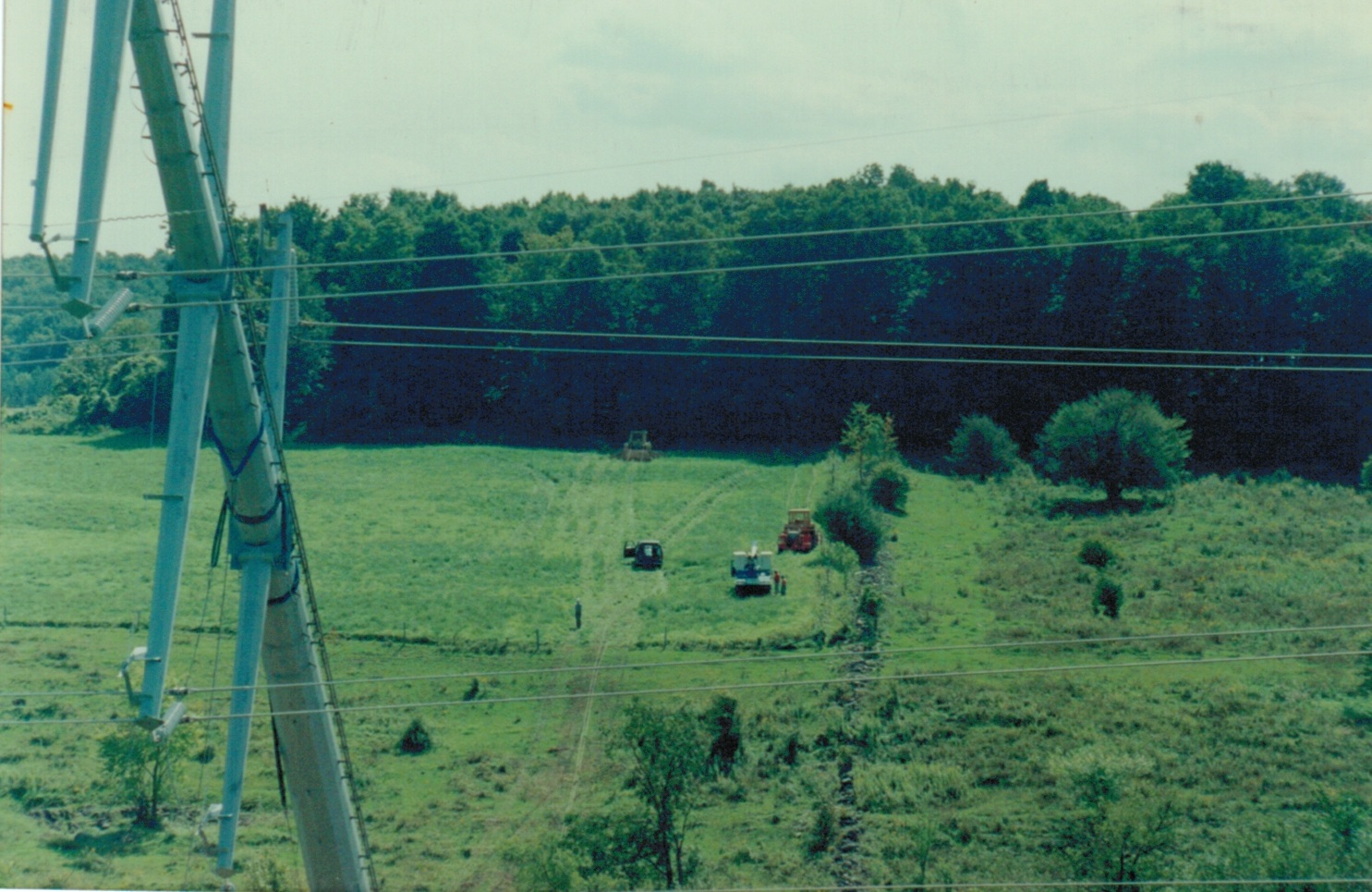
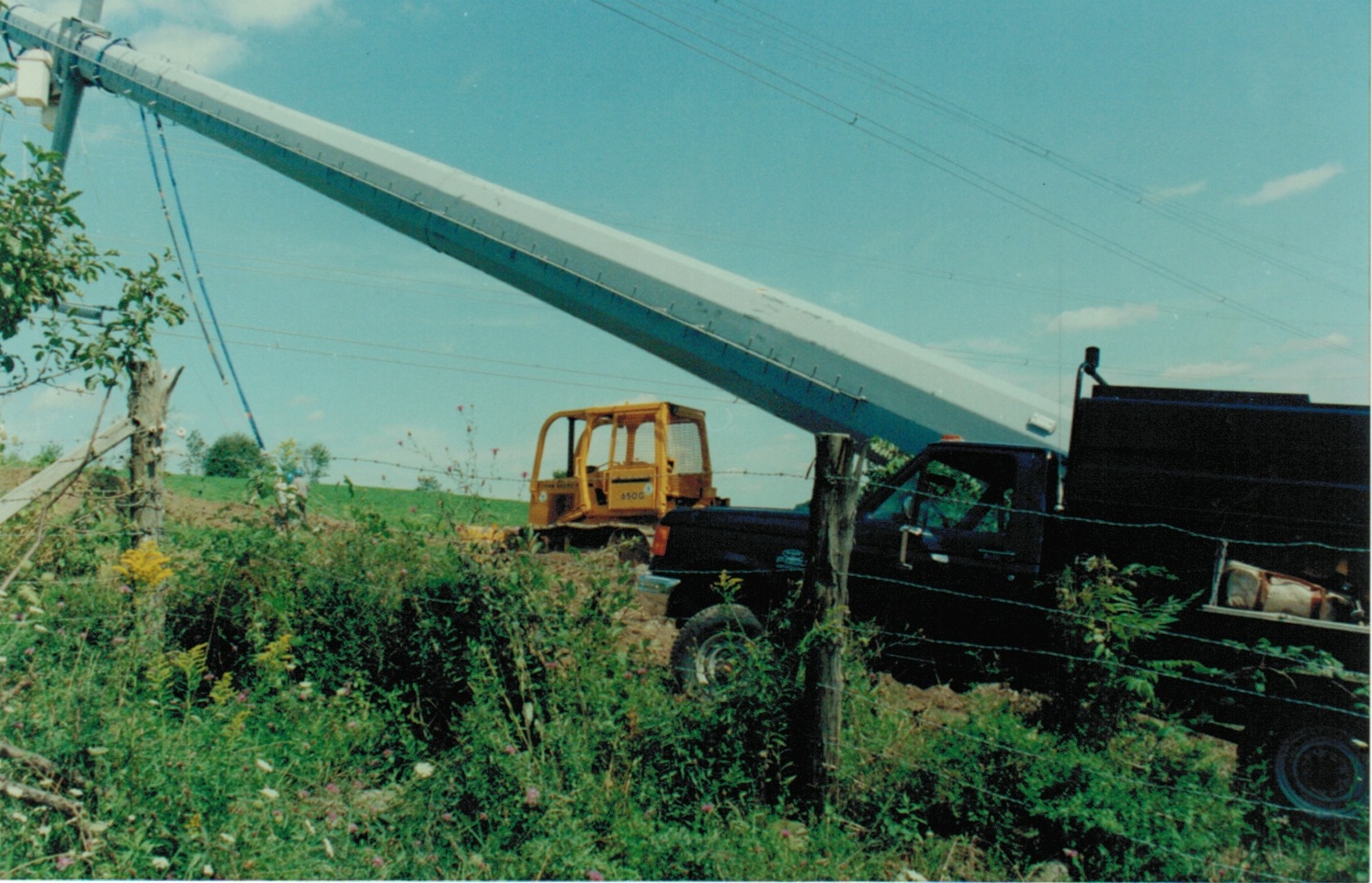
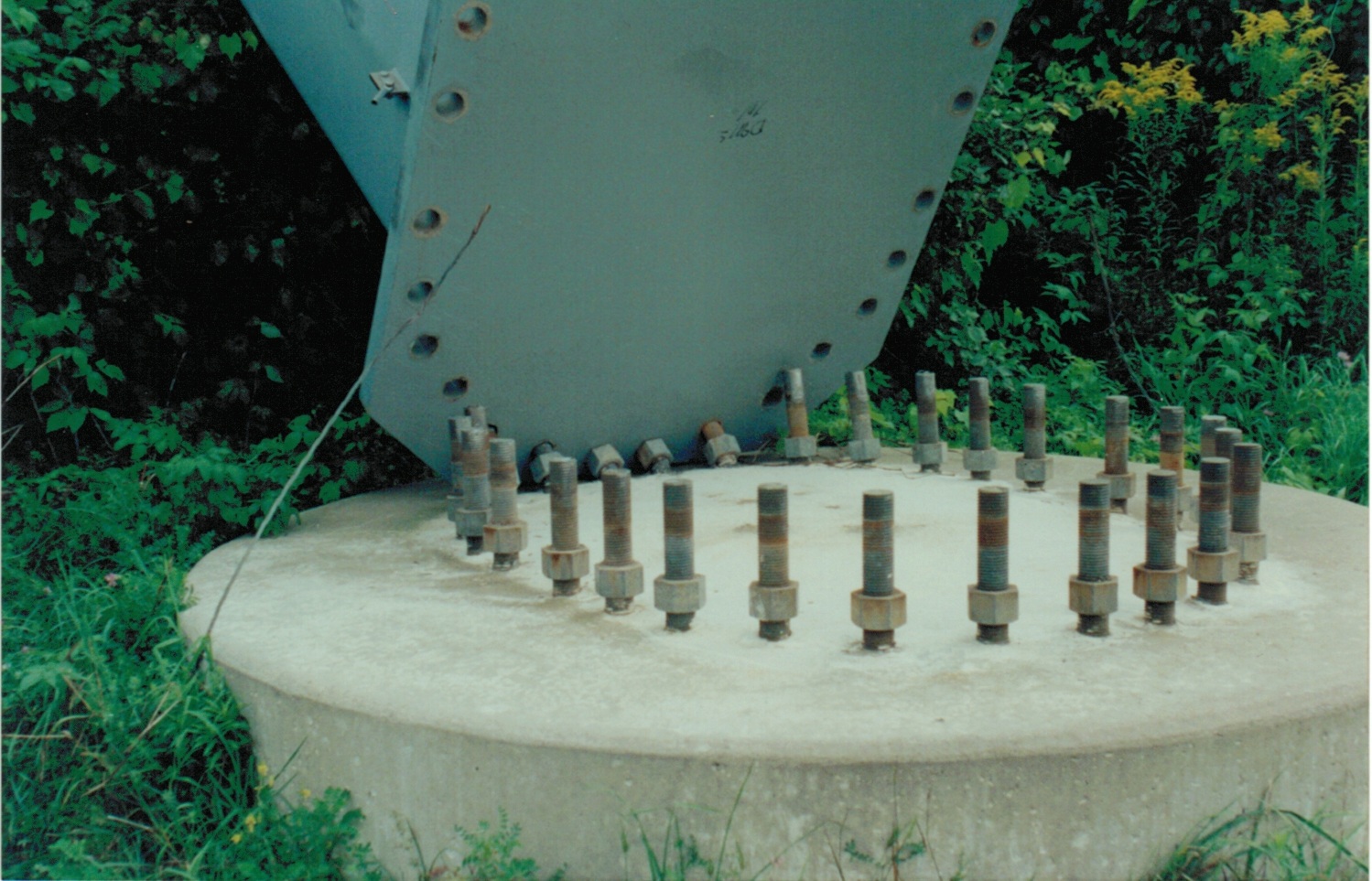
Most energy sub-stations are not staffed, and while there is passive security in place, such as fencing, these can obviously be overcome easily.  Utility lines stretch across our nation above and below ground – generally accessible with little trouble to people with malicious intent.  Remember that acts interrupting our grid may not necessarily come from Al-Qaeda, but can come from disgruntled locals as well.  Take a look at the pictures below.  These were actually taken by my father who worked for a utility company in New York State.  Shortly after these high power transmission lines were put up over 25 years ago, a local, in protest over these lines going through their land, actually unbolted the tower from the base.  They never caught the person who did it – but this is a federal crime – and taken very seriously by prosecutors and law enforcement, including security personnel of the utility companies.  This same transmission line passes through my property and my family and I have made several calls through the years to the security office of the utility company when we see people loitering around and taking pictures or notes on these towers.


In consideration of cyber attacks – guess what – they happen EVERY DAY!  Most, fortunately, are pretty weak and stopped well short of their goal.  Some do have some measure of success, penetrating fire walls and other defenses.  Some come from individuals domestically, but many are known to come from the likes of China, North Korea, and Iran – all of which ‘officially’ deny sponsoring such acts of terrorism.  Practically everything is controlled by a computer, and practically every computer is networked and accessible from the outside world by people who know how to do so.  Energy plants can be shut down, overloaded, or have safety protocols circumvented.  Scary stuff.

So what’s the result of all this?  Much more than the inconvenience of a short-term power outage, I can assure you of that.  Our energy grid is the most critical of our infrastructure.  Without it nothing works.  We’ve only scratched the surface of examples from the areas that were hit by Hurricane Sandy and still don’t yet have power.  It impacts our other critical infrastructures such as communications, hospitals, the economy, and others.  It breaks beyond discomfort and inconvenience when it endangers lives during periods of temperature extremes.  All in all we have an aging infrastructure in our nation, but not only do we need to work on replacing and improving it, we need to protect it.

Looking Ahead – Hazards of Concern in the US

A multi-agency/discipline group called the National Homeland Security Consortium has released a white paper – Protecting Americans in the 21st Century: Priorities for 2012 and Beyond.  The paper highlights eight areas of concern requiring a national focus.

Sidebar – The entity called the National HOMELAND SECURITY Consortium has assembled a document that is clearly meant for the EMERGENCY MANAGEMENT community (a concept much broader and far-reaching than homeland security).  I really wish they would get this straightened out… and now back to your regularly scheduled blog…

The eight areas are as follows:

  • Cyber Hazards
  • Climate Change
  • Demands on Global Resources
  • Changing Demographics
  • Emerging Technologies
  • Violent Extremist Ideologies
  • WMD Proliferation
  • Mega-Hazards and Catastrophic Cascading Consequences

The Consortium has recognized and stresses in their white paper the hazard that is larger than any of these individually, and that is the potential for any of these hazards to interact or influence each other – an observation and warning that I feel is long overdue.  They are also not encouraging us to lose focus on the more immediate hazards we may have at hand, but are encouraging stakeholders and relevant parties to give some attention to these emerging hazards and consider how we will prepare for, mitigate against, respond to, and recover from their impacts.

I won’t comment on each of these items now, but reserve the right to do so in the near future.  I do, however, leave you with this… consider what impacts these hazards may have on you.

Marketing the Preparedness Message

There are some great ideas in Jim McKay’s article – The Preparedness Message Isn’t Reaching the Public, featured in Emergency Management Magazine.  Just like any good marketing campaign, we have to push with multiple strategies.  Billboards and television campaigns are great but they aren’t going to hit home with everyone.  We need to be more creative in our approach.  Our methods will resonate differently with various people.  The CDC’s zombie campaign got a lot of attention (see my blog post on it!).  Why?  Because they not only used something trendy, they considered their audiences.  Not all audiences respond to the zombie campaign; some think it’s ridiculous – but they were able to engage a lot of people.  Different people require different methods.  Once you reach an audience, then you can convey a message.  Preparedness is boring, let’s face it.  We need creative and diverse solutions to reach and engage audiences.

The CDC’s Zombie Banner


There are four major challenges we’re facing when it comes to preparedness that I speak about in presentations.  These are many of the thoughts of many folks when it comes to disasters:

1) It’s not going to happen here.

2) It’s not going to be that bad.

3) There is nothing I can do about it.

4) Government will take care of me.

These aren’t rocket science, but they can be tough nuts to crack – especially when we don’t want to be the ‘doom and gloom’ people.

Let’s look at what has worked.  McKay’s article mentions coupons to Target for preparedness kits.  This is an effective methodology that has worked well for years in California and other places around the country.  In Central New York, where I’m from, a county health department capitalized creatively on a point of distribution exercise to get the beginnings of preparedness kits in the hands of residents.  The 300 slots they had available filled very quickly.  The event got great press and all positive comments from those who participated.  Good or bad economy, people like free or discounted things.  The lesson learned here is to get preparedness underwritten.  Be it by grant funds or corporate sponsors.  If Pepsi wants to put out a preparedness kit, so be it.

Protecting NYC

This NBC News article brings about some great discussion and ideas on what can be done to protect areas like New York City from storm surge.  If you link to the article, be sure to watch the video.

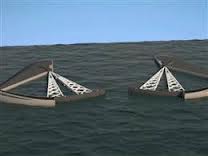
Gates of a fictional seawall protecting NYC

First, I’ll put out there that I don’t completely agree with all the statements made in the article or the video.  I’m not completely sold on global climate change, but the fact of the matter is that near or below sea level areas on the coast, especially those with high populations, need better protection.  I also don’t agree with the scientist in the video that states there would have been no damage in NYC had these sea walls been in place… hurricane force winds and torrential rains cause plenty of damage all on their own.

The concept of these sea walls amazes me.  I’m certainly familiar with the smaller cousins of these structures, breakwaters, such as the one in my college town of Oswego, NY.  These sea walls, however, particularly the more high-tech versions such as the one illustrated for use around New York City in the video, appear to be extremely versatile and suitable for long-term use.  Just like we protect our infrastructure from acts of terrorism, we need to protect our infrastructure, and our people, from natural disasters.  If this project sees the light of day, it may very well be one of the largest hazard mitigation projects ever created.

Business Civic Leadership Center and Emergency Management

This morning I received my semi-regular e-mail update from the Lessons Learned Information Sharing (LLIS) folks at the US Department of Homeland Security.  If you are in the EM/HS field and are not on LLIS, I strongly encourage you to do so.  It’s a great community of practice, facilitating the sharing of lessons learned and best practices in the field.  One document that was listed in the e-mail was The Role of Business in Disaster Response.  This document outlines case studies and best practices of businesses supporting all aspects of emergency management nationally and locally.  It was published by the Business Civic Leadership Center of the US Chamber of Commerce.  Admittedly, I was not aware of this office within the US Chamber, nor was I aware of their Disaster Program, which offers some great resources to businesses. 

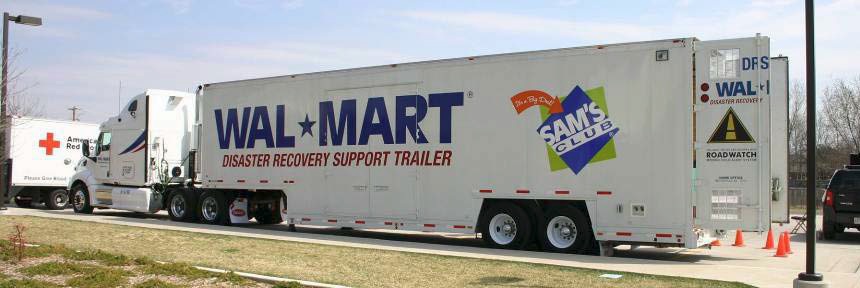
I’ve blogged in the past about the importance of public-private partnerships in emergency management and the incredible positive impacts it can have.  Wal-mart, in particular, has gotten a lot of good press about their emergency business operations, and more recently since Hurricane Sandy I’ve seen some media attention given to other companies such as Home Depot, highlighting their emergency operations centers and their relief efforts.  In a presentation I saw from Wal-Mart a while back, the company highlighted three priorities in regards to emergency management: 1) take care of its people, 2) take care of its operations, 3) take care of its communities.  Just these three priorities say a lot about the company.  They realize their people are their most important assets.  Next, they strive to ensure business continuity.  Lastly, with their business operations now being able to support it, they take care of the communities they have a presence in.  What a great business model!

The integration of the private sector into emergency management needs to be at all levels.  The National Operations Center (NOC), run by the US Department of Homeland Security, includes private sector representatives.  How can this be improved?  At the state level, many states either include private sector representatives in the State Emergency Operations Center or have a separate but connected Business Operations Center, solely focused on the coordination of private sector efforts.  Both of these options help expedite private sector resources to emergency management efforts – especially when used as an extension of the EOC’s supply unit.  There is also a recognized expertise between private sector and public sector emergency managers.

County and local emergency management programs can also benefit.  Where national and international companies are usually found at the NOC and state EOCs, the local management of these chains can work with county and local EOCs.  Also, don’t discount the value of small businesses in the area.  They, too, have a wealth of knowledge and access to resources.  Every community should form a disaster business alliance of some sort, or welcome private sector involvement with local VOADs.  You can work with local chambers of commerce to make this happen.  I’ve established a great relationship between my company, Emergency Preparedness Solutions, with my local chamber of commerce and have been providing information to members on emergency preparedness and business continuity through meetings and articles, as well as a presentation that I’ll be doing in a few months.

Never think that emergency management is too big of a concept for your local community.  It’s not just something done by FEMA or by the state.  In a disaster we need to help our neighbors and our communities.  The biggest impact is always locally.  Establish those relationships now and make a difference!

Veterans in Disaster Response

I’m really not a TED Talk junkie.  Honest.  But today, while surfing through my usual web sites, I hit the TED blog.  I came across a great short (5 minute) presentation on Team Rubicon by their founder, Jake Wood.  The concept of Mr. Wood’s presentation is the story of why he founded Team Rubicon.  Team Rubicon is a disaster relief organization that uses veterans.  It’s not a new idea, really – Reservists, National Guard members, and retired veterans have been an important part of emergency response going back to the days of Civil Defense.  It makes perfect sense, really.  These folks are trained in essential skills and they function well in an organized structure.  They have critical thinking skills and have worked in austere environments.  In emergency management and emergency response we have learned so much from the military – our organizational structure, the Incident Command System, is based on military principles.  We work with military components on a regular basis, and many state emergency management offices are still even components of their state’s National Guard offices – another throwback to the days of Civil Defense.

Veterans have an important value to us, yet we don’t do enough for them.  They have risked their lives for our freedoms and so many return home jobless and feeling lost.  I certainly can’t imagine what it’s like to live in Iraq or Afghanistan for such a long period of time seeing horrible things and wondering if the people walking by you, those who you are trying to provide a better life for, have a bomb strapped to their bodies.  How can anyone be expected to return to a ‘normal’ life after that?  We need to do a better job of reintegration, that’s very obvious.  The sheer number of homeless veterans and veteran suicides is staggering – and it’s shameful that we allow it to happen.

Team Rubicon provides a focus, a purpose, and an environment that veterans are comfortable functioning within – and even better yet they aren’t  carry a rifle.  They are saving lives!

A different approach against terrorism

I was watching another TED talk yesterday by Jason McCue titled Terrorism is a failed brand.  McCue is an attorney by trade, who has found a rather distinctive niche litigating against terrorists.  Certainly a noble job and not at all one I would want to try.  I hope he has a great home security system and a solid kidnap and ransom insurance policy.

This Ted talk is one of the longer, 20 minute presentations, but well worth the time.  McCue outlines ways to defeat terrorism by taking away their power to influence.  By doing so, they won’t be supported financially or ideologically and will have trouble recruiting.  He is a rather compelling speaker with a great approach to his ideas.  Throughout his talk he provides a few case studies where such approaches have led to success and even draws a parallel between terrorism and commercial branding – proposing that a strong marketing campaign against terrorism be implemented.  I think he makes a great argument for it overall.  I do, however, have some difficulties accepting this as an approach for all forms of terrorism.  It seems his approach would work well against IRA-style terrorism, where the collateral damage is directly impacting the ones that the cause purports to defend and support.  In fact, the greatest part of McCue’s experience lends itself to IRA litigation.  On the other hand, there is al-Qaeda, who I don’t think would be affected as much by this type of tactic.  We might be able to strike against some of their financial backing and perhaps some of their recruitment, but I don’t see where we will strike much sympathy within the ranks of al-Qaeda from the death, destruction, and dismemberment caused by their suicide bombers and other attacks – which is a tactic McCue identified as a success against the IRA.

While McCue doesn’t identify his tactics as the only solution, I would certainly say that it would not be, especially against al-Qaeda type entities.  I believe strongly that military actions against their leaders and training camps must certainly continue, as should political and legal pressures against their supporters – be they nations or sponsor terrorism or investors funding these acts, as well as counter terrorism and intelligence operations.  It is only with a multi-pronged approach that we will win against terrorism.  Note, however, that I say ‘win’, not ‘defeat’.  I don’t think terrorists, whatever ilk they may be of, will ever be truly defeated.  We can’t stop people from having opinions, nor would we want to.  The problem is when those opinions go to an extreme of causing harm upon others to coerce a population.

Grassroots Recovery with a National Impact

This morning I took some time to browse through the variety of TED talks to see if anything struck some interest with me.  First of all, if you aren’t familiar with TED, they host a variety of free talks and presentations on various topics.  They get some great speakers and the presentations are short… usually 10-20 minutes.  Most of the topics are about something new and innovative – their tag line is ‘Ideas Worth Spreading’, and they certainly abide by that.  Sometimes I watch their presentations because the subject area interests me, and other times I watch it to see some innovative or refreshing presentation skills.

The TED presentation I watched this morning is titled: Caitria and Morgan O’Neill: How to step up in the face of disaster.  It’s a short, 10 minute presentation which I highly recommend.  Their background is on the TED page, but in short these two sisters, both in grad school, experienced an F 3 tornado in their hometown in Massachusetts.  From their explanation, it seems that there wasn’t much organization or leadership in their town relative to supporting volunteers.  If you’ve been in emergency management for a while, you’ve probably experienced this.  There are a wealth of volunteers who want to help in the event of a disaster, but they must be organized and supported.  Often times local governments either don’t have the resources to deal with spontaneous volunteers or simply don’t want to – they may not want the trouble, the liability, or would prefer that another organization, often times someone like the American Red Cross, to deal with them.

The main trouble is that most jurisdictions don’t plan for volunteer management.  A volunteer management plan is a plan that should absolutely be part of the Comprehensive Emergency Management Plan (CEMP) of any jurisdiction.  Yes, not for profits often times do take on this role, especially with a localized disaster and if they have the capability to do so, but in the event of a regional disaster they simply don’t have the people to dedicate to this task – and it’s not something that’s easily done or simply managed.  The bottom line is that local jurisdictions are responsible for taking care of their people, and this is one more way to make it happen.

The O’Neill sisters, learning from their home town experiences and leveraging their educations and other experiences, eventually put together a company called recovers.org.  They have applied simple but effective methodologies to manage resources, including volunteers, in the event of a disaster.  They have traveled across the country applying their system and seem to be quite successful in doing so.  One of the things that encourages me the most about them is that they advocate community preparedness.  They know that for any system to reach its potential of effectiveness, it must be integrated into preparedness efforts, not just show up after the disaster.  It seems they have a product and service that can be applied to any jurisdiction and would work well with existing structures, like a VOAD, and with volunteer management and recovery planning efforts.  The information on their website indicates that they are busy helping communities impacted by Hurricane Sandy.  It’s great to see local efforts and innovation in emergency management!  Best of luck to Caitria and Morgan O’Neill.