Course Review: MGT-342 Strategic Overview of Disaster Management for Water and Wastewater Utilities

I took the opportunity yesterday to attend the aforementioned class held at the New York State Preparedness Training Center in Oriskany, New York.  This half day (0800-1200) course was well attended by water and wastewater personnel from around central New York, a couple of emergency management types, and even a representative from a local brewery (no samples, sadly).  This DHS approved course is designed and instructed by personnel from the Texas A&M Engineering Extension Service (TEEX) National Emergency Response and Rescue Training Center (NERRTC).

IMG_1263

Through my career in emergency management I have regularly worked, albeit tangentially, with water and wastewater professionals, which are generally regarded as a niche of public works.  In many small towns across the nation, water and wastewater systems are among the only critical infrastructure these small towns have.  In larger municipalities, water and wastewater systems are extensive and necessary for not only their residents, but for business and industry as well.  We often see impacts to water and wastewater systems from disasters ranging from earthquakes, to utility outages, floods, and other disasters, including criminal acts.  I’m always interested in an opportunity to learn more and this course was convenient in location and schedule.

This course is a condensed half-day version of a two-day course also taught by TEEX.  When instructors reviewed the morning’s agenda, I was skeptical, and rightfully so.  The participant manual, like most products developed by TEEX, is excellently done, with an abundance of reference material.  Even if the material was to be just reviewed, I knew that addressing most, if not all of it, would be a significant task for the instructors.  The lead instructor was very knowledgeable and experienced in the subject matter and very well spoken.  While he had a lot of value to provide to participants, he may have provided a bit too much relative to getting through the three units of the course as intended.

The course units are largely broken into three main topic areas: Threats, Preparedness, and Response; all obviously relative to water and wastewater systems.  The first unit, Threats, was covered thoroughly, taking nearly the full class time.  The information provided was excellent and realistic in scope.  Examples of actual impacts to water and wastewater systems around the world from a variety of threats and hazards were used to drive the point home about the vulnerability of these systems.  I was dismayed, though, that the second unit, Preparedness, was not covered at all.  Fortunately, there is a great amount of materials in the participant guide for after class reference.

The third unit, Response, also contains a great deal of information, especially for those who are not used to complex and multi-agency responses.  Unfortunately, we only had time to review a case study which was in the unit.  While the case study (the Charleston, WV spill from January 2014) was excellent and certainly time well spent, it would have been great to dig into the other response related materials in the course.  Again, at least we have these for post-course review.

This content of this course is quite valuable, relevant, and up to date.  It was expertly instructed, discounting some time management issues.  I do think, though, that the instructional design in more to blame, as the quantity of content contained in the course is simply too much to be adequately covered in a half day.  It certainly had me wanting to take the two day course, and definitely from the same instructor.  I provided similar comments on the course evaluation sheet, and I hope they do make some necessary changes to this class to maximize the amount of information provided.  Would I still recommend this course – yes, but just know going into it (at least in its present form) that you may not experience delivery of all the material.  If the quality of material and instruction is any indication of what to expect in the two day course, though, I would absolutely recommend it.

If you have any questions on the course, or experiences of your own, I’d love to hear them.

  • TR

So Your AAR Says Bad Things… Now What?

There it is.  Your recently delivered after action report (AAR).  Uncomfortably sitting across the room from you.  You eye it like Tom Hanks looking at Wilson for the first time.

Wilson

Wilson!!!

You know what’s in it.  It says bad things.  Things you don’t like.  Things your boss really doesn’t like.  But what will you do?

First, let’s assume that, despite you being unhappy with the areas for improvement identified in the AAR, they are fair representations.  What will you do with the dreaded information now that you have it?  Your AAR may have come with a corrective action plan (CAP), but this is only guidance that still needs to be reviewed and acted upon.

First, each identified area for improvement should be prioritized.  After all, if everything is important, then nothing is important.  Even if the areas for improvement and/or corrective actions are already identified in the AAR (particularly if done by a third party or if the AAR is representative of a multi-agency exercise) you should review this prioritization with your own organization’s stakeholders.  This means pulling together a committee (sorry for cursing!) comprised of key areas within your organization.  This may even mean people from areas that may not have participated, such as information technology, as I’m betting there was something in the exercise about computer systems, programs, internet connection, data access, data continuity, etc.  Don’t forget the finance people, either… some fixes aren’t cheap!

Once everyone has had an opportunity to review the AAR, each identified area for improvement should prioritized, at least to the degrees of high, medium, and low; with a secondary filtering of short-term vs long-term projects.  While some may be relatively quick fixes, others can take months, if not years, to accomplish.  Activities should also be identified that are dependent upon others which may need to be completed first (i.e. a procedure needs to be written before it can be trained on).

That’s probably enough for one meeting.  But the people you gathered aren’t cut loose yet… in fact they are pretty much locked in, so you need to be sure that the people you bring together for this corrective action group have the knowledge, ability, and authority to commit resources within their respective areas of responsibility.  Now that activities have been prioritized, it’s time to assign them… this is why involvement of your boss (if you aren’t the boss) is so important.

Some individuals within your organization will be able to act on their own to make the corrective actions that are needed – while others will need to work together to make these happen.  Consider that there may be more activities than just those identified in the AAR.  For example, the AAR may identify a need for a resource management plan.  That’s good, but we all know you can’t just build a plan and expect it to be ready for action.

For those who are regular readers of my blog, you know I’m a big fan of the POETE elements.  (More on POETE here).  What is POETE?  POETE is an acronym that stands for:

  • Planning
  • Organizing
  • Equipping
  • Training
  • Exercising

What is the value of POETE and what does it all mean?  POETE is a great reminder of the key activities we need to do to enhance our preparedness.  Given that, when we look at an identified need for improvement, we need to consider how to properly address it.  So start at the top:

  • What plans, policies, and procedures are needed to implement and support this corrective action?
  • What organizational impact will occur? Do we need to change our organization in any way?  Do we need to form any special teams or committees to best implement this corrective action?
  • What equipment or systems are needed to support the corrective action?
  • What do people need to be trained in to support the corrective action? Do we need to train them in the plan, about a new policy or procedure?  Do they need training on organizational changes?  How about training in the use of equipment or systems?
  • Lastly, once you’ve made a corrective action, it’s a good idea to test it. Exercises are the best way to accomplish this.

There are obviously other considerations depending on the specific corrective actions and the circumstances of your organization.  Funding is often times one of the most significant.  If you need to obtain funding to make corrective actions, the AAR is one of the best documented investment justifications you can get.

From a project management perspective, the committee should regularly reconvene as a matter of checking in to see how the corrective actions are going.  On a continuing basis, the progress of corrections should be tracked (spreadsheets are great for this), along with who has been tasked with addressing it, timelines for completion, related finances, progress notes, etc.  Otherwise, in our otherwise busy days, these things get lost in the shuffle.

From a program management perspective, this is a process that should be engrained culturally into your organization.  Ideally, one person should be responsible in your organization for coordinating and tracking this corrective action process.  As additional exercises are conducted and actual incidents and events occur, corrective actions from these will be brought into the mix.  It is all too often that organizations complain of seeing the same remarks on every AAR or from experiencing the same issues for every response.  BREAK THE CYCLE!  Establishing a corrective action program for your organization will go a long way toward making these chronic issues go away.

By the way, the same concept can be applied to multi-organizational/agency efforts at any level – local, county, state, federal, regional, etc.  Since we respond jointly, there are great benefits to joint preparedness efforts.  We will likely find that even that we have our own house in order, working with someone else is a very different experience and will require a whole new list of corrective actions as we identify areas for improvement.  This process works great with multi-agency committees.

The bottom line – the biggest reason why we exercise is to test our capabilities.  When we test them, we find faults.  Those faults need to be corrected.  Capitalize on the investment you made in your exercise effort to address those identified deficiencies and improve your capabilities.

What ideas do you have for addressing corrective actions?

Need help with preparedness activities?  Be Proactive and Be Prepared™ – Reach out to Emergency Preparedness Solutions!  We’re always happy to help.

Thanks for reading!

© 2015 – Timothy Riecker

Emergency Preparedness Solutions, LLC

Preparing to Use the Incident Command System

For a bit of context, if you haven’t already read them, please take a look at these other ICS related articles I’ve posted:

Incident Command System Training Sucks

ICS Training Sucks… So Let’s Fix It

Preparedness – ICS is Not Enough

The crusade to improve ICS training and implementation continues…

We invest a lot of time and effort into training people in the use of the Incident Command System (ICS).  However, as a broad statement, the training we provide is massively inadequate.  We don’t actually train people to do anything – we simply tell them about ICS through an increasingly repetitive and complex series of courses.  At the risk of being repetitive myself, I refer you to the articles linked above for many of my foundational thoughts on the current state of ICS training.

The ICS core training curriculum aside, we – as both individuals and organizations – need to be better prepared to actually use ICS.  The thought that people are able to use ICS the minute they walk out of an ICS course is totally and completely false.  By ‘use ICS’, I don’t mean to simply function within an organizational chain of command that uses ICS, I’m referring to being a driving force within the system itself.  ICS isn’t something that happens automatically, it requires deliberate and constant actions.  This typically involves functioning at the Command or General Staff levels, but also within many of the subordinate positions which are absolutely critical to managing a complex incident and driving the system.

So how do we prepare to use ICS?  I often refer to the preparedness capability elements of POETE (Planning, Organizing, Equipping, Training, and Exercising) when I’m talking about preparedness activities.  These same concepts apply here.  We need to remember that planning is the foundation of all preparedness efforts.  If it’s not documented, then why are we doing it?  So we have to have plans, polies, and procedures which call for the implementation of ICS and direct us in the nuances of how we will manage an incident.  I’m sure everyone’s plan has taken a page from the NIMS Doctrine and includes language about the requirement to use NIMS and ICS.  That’s all well and good, but like many things in our plans, we don’t reinforce these things enough.

I’m not talking about simply giving NIMS and ICS lip service.  I’m talking about procedure level integration of these concepts.  This begins with good planning, which means plans that are implementation-ready.  Would you consider your plans implementation-ready?  Do they describe how to use the ICS structure and concepts to actually implement the plan?  Maybe yes, maybe no.   If not, your team has some plan updating to do.

Your organization must be ready to respond using ICS.  That means that everyone is familiar with their assigned roles and responsibilities.  Often ICS training falls short of this.  This article: Training EOC Personnel – ICS is Not Enough, details many of the reasons why, at least for an EOC environment.  Many of the points made in the article, however, can be reasonably applied to other environments and organizations.  While ICS provides us with overall concepts, the application of those concepts will differ for various organizations and locations.  Every location, county, region, and state have different protocols which must be integrated into incident management practices.  (Refer back to planning).  Our organizations, both those that are static as well as those which are ad-hoc (assembled for the response to a particular incident or event) need to be ready to act.  This means familiarity not only with ICS or our specific applications of it, but also with our plans.  How often do ICS courses actually talk about the implementation of emergency plans?  Rarely.  Yet that’s what we are actually doing.  Do you have people assigned to ICS roles?  Are they ready to take on the responsibilities within these roles?  Do you have backups to these positions?  I’m not necessarily talking about a formal incident management team (IMT), although that may be suitable and appropriate.  Absent an IMT, the responders within a jurisdiction or organization should have a reasonable expectation of the role/roles they will play.  This helps them and your organization to be better prepared.

The implementation of ICS generally doesn’t take much equipping, but there are some basics.  Responders love radios and we use them often.  How about people who aren’t traditional responders, but may be called on to function with your ICS organization?  Do they know how to use a radio?  Do you have a standing communication plan to help you implement their use?  How do you track incident resources?  I didn’t just ask about fire service resources – I mean all resources.  Do you have a system for this?  T-Cards are great, but take training and practice to use them – plus they require that all responders know their responsibilities for accountability.  The same goes with a computer-based solution.  For whatever equipment or systems you plan on using, you must ensure that they are planned through and that people are very familiar with how to use them.

Training… I think I’ve talked about the need for better ICS training quite a bit, so I’m not going to continue with that point here.  What I will mention is a need for refresher training and jurisdiction-specific training on incident management.  This isn’t necessarily ICS focused, but it is ICS based.  For many years now, FEMA has believed that by including three slides on NIMS in every training program that they are helping with NIMS compliance.  Nothing could be further from the truth.  You have to actually talk about how these concepts are key to implementing plans.  Responders need to be familiar with the emergency management system they are working within.  Train people to the plans and procedures.  Let them know who is in charge of what and when, who the decision makers are, and any other training needs identified in the earlier POETE activities.  Prepare them to implement ICS!

Lastly, exercises.  Incident management should be something that is practiced and tested in almost every exercise.  Applying these concepts is not something we do on a regular basis, therefore knowledge and skills erode over time.  Certainly we have to be familiar with the system, not just at an awareness level but at a functional and operational level.  Regardless of the state of the current curriculum, that involves practice.  Exercises don’t have to be elaborate, remember that they can range from discussion-based to operations-based.  Table top exercises are great to talk things through, drills are good for focused activities, and even full-scale exercises can be small and contained.  So long as the exercise is designed, conducted, and evaluated well, that’s what counts.  Don’t forget that evaluation piece.  The feedback to the entire system (plans, organization, equipment and systems, and training) is extremely important to continued improvement.

This is public safety, not a pick-up kick ball game.  We can do better.

Thanks for listening… what are your thoughts?

Does your organization or jurisdiction need help preparing to implement ICS?  Emergency Preparedness Solutions can help!

© 2015 – Timothy Riecker

Emergency Preparedness Solutions, LLC

Gauging Return on Investment in Preparedness: Training

This is my fourth article in a series examining how organizations can gauge their return on investment for various emergency management and homeland security preparedness projects.  These were inspired by an original article I wrote called Measuring Return on Investment in Emergency Management and Homeland Security: Improving State Preparedness Reports.  The POETE model (Planning, Organizing, Equipping, Training, Exercising) helps us to identify all activities related to preparedness.  Thus far, we have covered:

Planning

Organizing

Equipping

If you haven’t already reviewed these articles, check them out for additional context and information.  Within each, I outline the general activities within the preparedness element, and identify the potential costs and benefits of these activities to the organization.  While some costs and benefits are direct (meaning we can readily identify them in terms of currency), most are not, and require some measure of analysis.

We put a lot of money (and faith) into training as a central preparedness activity.  And why shouldn’t we?  Training, by definition, is a transfer of learning.  We have a lot of information to communicate to our staff and other stakeholders, with the goal of that information collectively becoming a body of knowledge, and a vision of these people applying what they have learned to future circumstances.

In emergency management and homeland security we train quite a bit, with some training being required by organizational, local, state, national, international, or federal standards; while other training will help develop and advance staff.  We include HR-required training; soft skills like communication, leadership, decision making, and the like; as well as technical skills such as emergency planning, exercise design, and incident management.  Emergency management and homeland security are broad fields of practice, which intersect public safety, public health, and other essential government and social functions.  Most emergency management and homeland security practitioners have roots in one or more of these fields and typically continue receiving training relative to those as well.

Training comes from a variety of sources including our home organizations, local and county governments, state government, private and not for profit entities, and the federal government.  Particularly for training that is sponsored by a government entity, most training is ‘free’.  In the US, federal training entities, such as FEMA’s Emergency Management Institute, also reimburse travel expenses and provide lodging for all levels of government employees.  On the surface, the cost of most emergency management and homeland security training is fairly low.

Of course depending on perspective, the cost of training can vary.  As a former state training officer who managed all emergency management related training delivered across my state, I could identify our agency’s cost of training.  This would include our staff admin time for course prep and record keeping, the cost of duplicating participant manuals, any costs associated with the hosting facility (although we usually utilized no cost facilities), the cost of paying our instructors for their time and travel, and, if applicable, any lodging and/or meal costs for participants who may have traveled a distance.  These costs, however, are only part of the picture.

What about the cost to the organization that is sending people to be trained?  Directly, this is salary time in which little to no work is actually being accomplished for the organization.  The organization may also be footing the bill for travel costs for their participants.  Depending on who is sponsoring the training, there may be a fee for the course.  Indirectly, what is the cost of that employee being away?  Who is doing their work?  This often depends on the organization and the position the individual holds in that organization.  Firefighters, police officers, health care professionals, and others may be covering shifts that will still need to be filled, especially if policies or union contracts require certain staffing levels.  Sometimes this backfilling isn’t as simple as changing schedules, as most employees are already scheduled at full time status.  Therefore, someone may need to be paid overtime to fill this position for the duration of the training.  Perhaps the learner themselves is being paid overtime to tend to priority tasks outside of training hours.  Maybe others can simply absorb some extra tasks while this person is gone, or the learner will be swamped for some period of time once they return from training.  Each of these mechanisms, all dealing with productivity, has a cost associated to it.

Training can get expensive, which is why it’s often one of the first activities cut when an organization’s budget gets tight.  We try to minimize the cost of training through a variety of practices such as shorter training days, online training, and local training.  These, however, have various impacts on the organization’s ability to obtain the training as well as the overall effectiveness of the training.  Sometimes we simply defer the training, but the organization may have little choice, particularly with mandated training.

So what benefits can training provide?  As mentioned, I have quite a bit of background as a trainer and training manager.  I’d love to tell you that training has the greatest of all benefits, but that would be a complete lie. Just like any other preparedness activity, it has to be properly applied.  Training won’t fix everything.  I’ve written a lot of pieces on training in my blog… just search for ‘training’ and you will find plenty of articles about how training should/shouldn’t be applied.  With that caveat, training can have great benefit.  Not only can it make people more effective and efficient in their jobs and related tasks, it can also help defer liability from the organization.  Training also has benefits which more directly apply to the learner vs the organization, such as providing background for advancement and/or promotion (which can be internal or external to the organization).  There are many practices in emergency management and homeland security for which training aids in health and safety, not only of the staff member who took the training, but also of others.  In training, the impacts can go pretty far… you just have to follow the bouncing ball.  As an example: Jane gets trained in how to write emergency plans.  The emergency plans she writes will help the organization respond more effectively in the event of a disaster.  When the organization responds more effectively, lives and property are protected.  While this is a great ideal outcome, it makes for some difficulty in determining the benefits in terms of currency.

Often, the most direct benefits from training are rooted in compliance and proficiency.  Organizations have a variety of compliance matters they have to meet.  These obligations may be HR driven, required by an executive, a higher level of government, an accreditation body, or a funding source.  Safety matters are also usually linked with a compliance matter.  I often try to associate training activities to these requirements.  Sometimes we can directly link a financial benefit to these compliance matters, while other times compliance is simply factually stated.  Second is proficiency.  People need to stay current in essential skills.  This might require regularly recurring training for staff, well as training for new staff.  Staff need to be proficient in new procedures, software, and equipment operation.  Certain staff may need to be trained to more advanced levels.  Gauging the benefit in financial terms for proficiency is generally more difficult, although the need for the training is apparent.  The benefit simply needs to be extrapolated.  For instance, if the training is in a new process, what is the time and/or quality difference between the old process and the new?

As mentioned earlier, it is often times not easy to determine the financial return on investment for many of our activities.  We need to dig deep and identify quantifiable metrics which can be examined before and after we apply our preparedness activity.  We must assign reasonable currency figures to those metrics to help us and other decision makers better understand our investment and the benefits it will potentially bring.

Soon I’ll be wrapping up this series with the last key preparedness activity – exercises.  As always I’m happy to hear your thoughts on how we can better identify the returns on our investments in preparedness activities.  As a resource, I’d encourage you to search Training Magazine (trainingmag.com), which often has articles on analyzing the return on investment in training.

© 2015 – Timothy Riecker

Emergency Preparedness Solutions, LLC
Gauging Return on Investment in Preparedness: Equipping

I’ve written previous posts on our preparedness investments and how we can gauge our return on those investments.  Following the POETE model (planning, organizing, equipping, training, and exercises), I’ve so far covered some considerations for Planning and Organizing.  This piece will focus on identifying our return on investment for Equipping.  Equipment can be anything from a new fire engine, to a generator, a UAV/drone, a radiological detection device, or incident management software.

Equipping is generally a preparedness activity in which we can more easily identify what our actual investment is.  Unlike Planning, which requires varying amounts of time from a number of people, or Organizational efforts which sometimes have rather esoteric costs, when we purchase or maintain equipment, we usually have a receipt in hand.

Functioning in the bureaucracies we do, however, we tend to add complexities.  We form committees to find the best equipment we can, we leverage our own staff time to keep it maintained, and we often have other associated costs, which reflect back on the other POETE elements… at least we should.  In addition to the cost of the equipment itself, let’s look at what the associated costs could be.

Every significant equipment purchase, first of all, should stem from an identified need.  Maybe it’s a critical element of a process, it’s called for in a plan, or the need was identified in an after action report.  Perhaps you are upgrading or expanding application of a certain piece of equipment?  Regardless, your organization must invest some time to ensure the equipment will meet your needs and how it will impact your operations.  This activity, generally referred to as Assessment, if often rolled into the Planning element.  Once we do obtain the equipment, we also need to plan.  We need to ensure the use of the equipment is accounted for in our plans.  Perhaps it’s as simple as adding it to a resource inventory, or as complex as creating processes or procedures that address its use.

Organizationally, you may need to task an individual or even assemble a team which will be responsible for the care and operation of the equipment.  This, logically, leads to Training.  People need to be properly trained in not only the use of the standard use of the equipment, but also the circumstances which it will be used as well as any processes or procedures for use which are unique to your organization.  Consider what degree of proficiency these individuals may need in the operation of the equipment.  Is it just basic operation, or is there a need for something more advanced?  Will recurring training be needed to maintain proficiency or to train additional people in the future?  Will anyone be trained in higher level maintenance of the equipment?

Exercising the equipment, its effectiveness, and the ability of your resources to use the equipment is essential.  Lastly, we often don’t consider the costs of maintaining and storing the equipment.  It may need replacement parts or regular servicing, which even done in-house, has an associated cost.  It may have certain storage requirements to ensure the safety and readiness of the equipment.

Now that we’ve outlined potential costs or investments, how do we know those investments have made a difference for your organization?  To determine this, we must first look at the original need.  What actually defined the need for the equipment?  Was it to replace something older and less reliable?  Was it to enhance response time?  Was it because of safety?  Did the need identify inefficiencies in previous practices and systems?  Did the new equipment meet that need?

To dig further, what was the value of that need?  To identify this, we should look at the metrics associated with that need.  If the new equipment replaced something aging, we can look at the maintenance costs and down time over a certain period of time for the older equipment.  If it was to shorten response time to get a certain capability on-scene, we should be able to identify the time metrics as well as the difference that equipment makes once it is on scene (eg. a fire department which previously had to call mutual aid to get jaws of life on scene, vs purchasing a set of jaws and having them on scene much faster).  We can associate a dollar-value cost to many of these metrics.

Was there any additional value which the equipment brought your organization?  Perhaps the added capability decreased your insurance rates or made you eligible for a particular industry certification?  Are there any indirect cost savings because of the new equipment?  Does the new equipment somehow aid in generating income?

There are many considerations when it comes to any of our investments to ensure that they are sound, responsible, and reasonable.  Often we need to identify the value of an investment before it is made, but we should certainly keep track of that value after the investment as well.

Need help with planning?  Gap analysis?  Resource inventories?  Maybe with the training or exercising associated with new equipment or other preparedness needs? Contact EPS!

© 2015 – Timothy Riecker

Emergency Preparedness Solutions, LLC 

The Need for More Scenario-Based Learning

Think back through all the courses you’ve taken.  It’s a lot – I know.  What ones stand out the most?  I’m willing to be they are the ones that were the most engaging.  Not only did you enjoy them, but you learned a lot from them and still remember quite a bit of it.

It’s no secret that training adults can be challenging.  Training professionals in emergency services is certainly no different.  The challenges are even greater as the number of required training courses continually increase, requiring more and more ass-in-chair time every year for responders and other professions.  A great deal of training programs we see out there still seem to be holding out for the sake of traditional delivery styles, much to the detriment of our learners.  Why?  Designing traditional lecture-based learning is easy to do!  Figure out what people need to learn, develop content, slap together some PowerPoint, and voila!  Hell, even I’m guilty.

The fact of the matter is that we all know this is wrong.  Yes, it’s easy to do on our end, but the value and impact of the learning is pretty low.  People don’t want to be lectured to for hours on end.  We know that learning is most effective when we mix things up and when we increase interaction.  One of the best ways of engaging learners effectively is through scenario-based learning.

Now I’m not just talking about using a scenario at the end of the course to see if people can apply what they’ve learned over the past two days.  Yes, scenarios can be used as a test of sorts, but they are most effective for actual learning.  So when should you use scenarios?  Why not start the course with one?  It immediately gets people thinking, which is a good thing especially with an 8 am start time to the course.   If you use a lot of scenarios in a course, can they all be related?  Sure.  Maybe.  Maybe not.  It all depends on what the purpose of the scenario is.  In training responders, threading a common scenario through a course is usually helpful.  Scenarios can get complicated when we need to establish a common understanding of what is going on, where it is, what resources are available, etc.  As such, it helps to use the same foundational scenario throughout the course (or at least regularly revisit it), and continue to introduce new problems or a different focus based upon the path of the training.  Using a common foundational scenario saves time so you don’t have to start anew introducing all new information each time and it keeps learners comfortable.  That said, it may occasionally be valuable to change things up a bit.

Do you need to use HSEEP to develop course scenarios?  No.  While these aren’t exercises in the strictest sense, we can benefit considerably from many of the principles and concepts of HSEEP.  Develop what you need to give learners the information they need to participate and the information you and/or other instructors need to properly facilitate and evaluate.

Adult learners like to be challenged.  Lecturing them for hours on end will only challenge their ability to not fall asleep – which may only be accomplished by their challenge for a new high score on the new app they just put on their phone.  The best way to challenge adult learners is to give them problems to solve.  A well written scenario will help introduce these problems in a framework which is both familiar and challenging to them.  Depending on how the scenario is provided, such as a compelling background story or use of video, learners will establish an emotional connection to the scenario which prompts a visceral desire to solve these problems.  Even one scenario is powerful and can prompt a lot of interaction.  It can prompt individual responses to questions, group discussions, and group collaborations.

Finally, don’t forget to evaluate both your learners and the scenario itself.  At the conclusion of each scenario conduct a hotwash and feedback session with learners to discuss what they accomplished and possible areas for improvement.  Also be sure to gain feedback from them and other instructors on how well the scenario worked and what can be improved upon.

Just like any other aspect of instructional design, the integration of scenarios can be time consuming but it’s an investment that will pay off.  To capitalize on the value of your scenarios, make sure the activities and expected outcomes of each scenario are associated with the learning objectives of the course and engage learners to the proper degree (i.e. the proper level of Bloom’s Taxonomy).  Yes, scenarios also take a fair amount of class time to execute.  That time needs to be well accounted for in your instructional design and course planning.  However, if properly designed, learners can learn just as much content if not more through interactive scenarios as compared to lecture-based training.

What types of scenarios have you integrated into courses?  How did learners respond to them?  How can we do a better job of integrating more scenario-based learning into our courses?

Need help designing scenario-based learning?  Let EPS help!

© 2015 – Timothy Riecker

Emergency Preparedness Solutions, LLC
WWW.EPSLLC.BIZ

Effectiveness and Efficiency in Incident Management – Resource Tracking

Incident Check In

Incident Check In

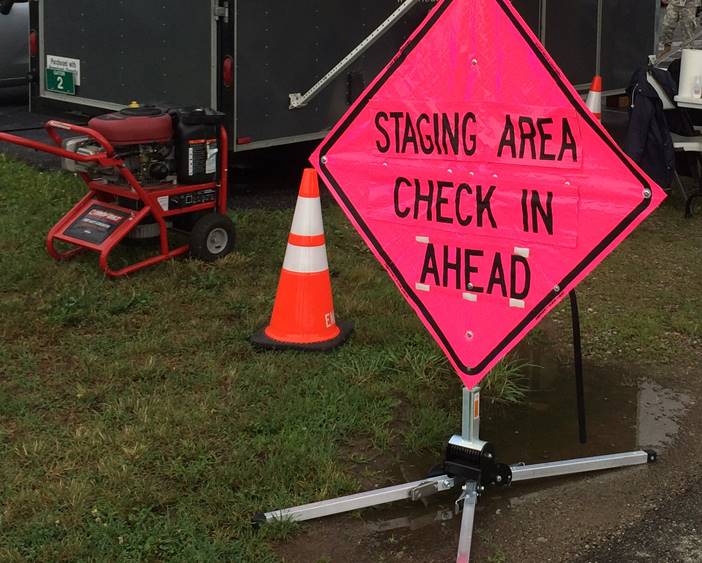
I recently took part in the management of an exercise in which a Type 3 incident management team (IMT) was among the players.  As part of their initial set up they immediately recognized the importance of checking in and tracking resources.  This is an activity which is often overlooked at the onset of an incident and is a royal pain to catch up on once the need is realized.  There were a few things which they could have improved upon, though, which seriously impacted their effectiveness and efficiency.

  1. They spent time checking in each vehicle as equipment. Not every vehicle needs to be tracked in an incident.  Generally, the sedan, pick up, or SUV you come in on isn’t special enough that it requires tracking.  Huge waste of time, people, and effort.  Consider the nature and capability of the equipment that is coming through your access point.  Is it a specialized resource?  Will it be applied tactically?  Will it be supporting logistical needs?  Is it rented or leased?  These are the conditions that should be considered when deciding what equipment to track.
  2. They marked equipment using bottled shoe polish. Not a bad idea, except it rained all week, and within hours of application most of the markings couldn’t be read.  Windshield markers, similar to what car dealerships use, are cost effective, waterproof, and clean off easily with mild window cleaners.
  3. Equipment that was checked in was never logged in detail. What’s the difference between E-01234 and E-01235?  We will never know as no descriptions were entered into their tracking system.
  4. As vehicles flowed in to the staging area, people will directed to check in at the command post. This is obviously excellent, except to get to the command post people had to pass by the main access to the incident site.  This meant that many people did not check in as directed.  They got distracted by the incident and associated response activity and never made it to the command post to check in.  This severely impacted the effectiveness of accountability.

Sometimes people would try to explain these things away by saying “It’s just an exercise”, but exercises are an opportunity to do things the right way, not skimp and cut corners.  While their intent was good, their process and results were quite poor.  If we are supposed to train the way we fight, as they say, this team has a ways to go to be more effective with resource accountability.  On the surface resource tracking looks easy… but it’s not.  There is a lot of complexity, variables, and attention to detail that must all work together well in order to be successful.  The Resource Unit Leader has one of the hardest jobs in the Incident Command System.

Being who I am, I’m left wondering why this all happened.  I have little choice but to blame poor planning and training.  Planning is to blame for a lack of clear procedures, guidance, and decision models.  The training which people receive tends to be just as vague.  By now, most, if not all of you are familiar with my opinions on the current ICS training.  While the referenced article does not go into the IMT/position training curricula, from what I recall of the courses I’ve taken, there are certain things taken for granted.  It’s easy to put an item on a checklist that says ‘Establish check in’.  OK… how?  Where?  When?  What?  Why?  The answer to those questions, or guidance to help answer those questions, should be provided through training.  Let’s tell people not only why check in is important, but what people and resources should be checked in, where to establish check in (what to look for and what to avoid), etc.  Once we’ve trained people on it, let’s provide job aids… not just the ICS forms, but job aids that will actually help people do their jobs.  While it may seem like minutia and unnecessary detail, keep in mind that we are training people to operate in austere and chaotic environments which they are trying to establish order over and only do these activities on rare occasion.  Those conditions signal the need for detailed training and job aids to support sustained performance and limit the degradation of the training they received.

Bottom line – let’s take a step back, fix what we have to based upon what we’ve learned, and proceed forward so we can operate more effectively and efficiently.

Thoughts and comments are always appreciated.  What have you learned or observed from incidents or exercises that needs to be addressed foundationally?

© 2015 – Timothy Riecker

Emergency Preparedness Solutions, LLC
WWW.EPSLLC.BIZ

Course Review: AWR-147 Rail Car Incident Response

This past weekend I had the opportunity to attend AWR-147 Rail Car Incident Response conducted by the Rural Domestic Preparedness Consortium (RDPC) and Findlay University.  This is a one day awareness level course that focused on response to incidents involving freight rail cars and hazardous materials.

AWR-147 Participant Manual

AWR-147 Participant Manual

All in all this was a good course which I recommend to anyone who has the opportunity to attend it.  For those not familiar with the RDPC you can find their website at https://www.ruraltraining.org/.  Although only an awareness level course, it is suitable for any responder or emergency manager who has a jurisdiction with freight rail lines.  It’s also quite suitable as additional training for HazMat teams, as the information provided relative to the identification of the different types of rail cars and potential hazards associated with them is excellent.

The course construction follows the usual DHS format, including a pre and post test, plenty of student materials, and a mix of instruction, videos, and participant interaction and discussion.  Given the variety of rail cars which can be encountered and rail incidents do dissect, there are plenty of visuals and case studies to drive the program.

I would have liked to have seen the inclusion of a unit to discuss current topics, particularly Bakken crude and even a bit on HazMat associated with passenger train incidents.  Also, while the course focused on response, there was little mention of community preparedness measures which can/should be taken.  Of course I had a small ulcer form with one of the final units which was on NIMS/ICS.  I see little value in rehashing the primary components of NIMS and showing an ICS org chart, particularly when there is little/no discussion on the nuances of applicability relative to a rail incident.  It was all rather gratuitous.

There were some great activities which reinforced use of the DOT Emergency Response Guidebook as well as other sources of information which can be referenced during a rail response, including a worksheet which could easily be used as a job aid for real life application.  Along with the participant manual, all students received a copy of the current DOT Guidebook as well as the Association of American Railroads Field Guide to Tank Cars, which is a handy reference to help you identify the specific type of tank car you are dealing with and where key infrastructure on each (brakes, vents, valves, etc.) can be located.

This was the first course I had taken from the RDPC, although I have been aware of their course selection for quite some time and have referred others to their great array of courses.  Don’t let the term ‘rural’ fool you – the material they teach is relevant to rural, suburban, and urban responders alike.  I had taken CSX’s rail response course several years ago and this course blows it away.  Overall well done and highly recommended.

© 2015 – Timothy Riecker

Emergency Preparedness Solutions, LLC

WWW.EPSLLC.BIZ

Incident Command System Training Sucks

There it is.  I said it.  Before you unleash the hounds, hear me out.

A bit of background:

As another grad course at American Military University was coming to a close last month I was racking my brain over the theme of my term paper.  In one of our final assignments I was dissecting NIMS – and that’s where it struck me.  ICS training is all wrong.  Now that my paper is all wrapped up and submitted, I wanted to get some discussion on my blog.  So, since I don’t want to bore everyone with the paper itself, what follows is a much less academic and more conversational version of my term paper.

For those of you who read my blog, you will be familiar with a few fairly recent posts that involve ICS:  The Human Aspect of ICS and Overcoming Transitional Incidents, Preparedness – ICS is Not EnoughTraining EOC Personnel – ICS is not Enough, and finally The Need for Practical Incident Command Training.  In that last one I feel I was headed in the right direction but not yet on the right road.

Before we go any further, here is my disclaimer.  I am a big believer in ICS.  If you take a look at the aforementioned posts, you’ll see that.  It’s a system that has been in use for a long time and has a proven track record of working well when properly applied.  Along with that, I’ve been an ICS practitioner, instructor, and instructor trainer – since before NIMS, in fact.  I’ve also been in positions influencing NIMS-related policy at both the state and national level.  So I have a fair amount of familiarity with the system, how it is used, and how it is taught.

Defining the need:

A great many after action reports (AARs) reflect on Operational Coordination (the current core capability which most heavily features ICS), On-Scene Incident Management (the previous iteration under the target capabilities), and just ICS in general.  These AARs often go on to recommend that responders need more ICS training.  How can they say that, though?  Following NIMS compliance requirements, darn near everyone who has been required to take ICS training has done so over the past 10 years.  So how could we be so off base?

The reality is summed up in this simple statement from John Morton: “With respect to using ICS from NIMS… training incorporated in the NIMS doctrine largely does not provide any actual skills training or development.”  If you aren’t yet familiar with John Morton’s work, I suggest you take a look here: Book Review – Next-Generation Homeland Security.  Brilliant guy.

Looking at the substance of Mr. Morton’s quote, it’s true that the foundational ICS courses (ICS-100 through ICS-400) don’t provide any skills training.  However, there is a significant expectation that taking these courses is somehow a magic bullet.

Much of my paper focuses on the ICS-300 and ICS-400 courses.  The ICS-100 and ICS-200 courses are probably not far off from where they actually need to be.  There exists, however, a higher expectation from people to have learned something from the ICS-300 and ICS-400 courses which can be readily applied in the field.  One of the foundations for my paper was an analysis of the course objectives from the current ICS-300 and ICS-400 courses through the lens of Bloom’s Taxonomy.  Bloom’s is a learning hierarchy which helps identify the depth of instruction and thus learning.  The revised version of Bloom’s is a scale of six levels, ranging from ‘Remembering’ to ‘Creating’, with remembering being pretty basic and creating being quite advanced.  The expectation of ICS training, obtained from a few sources as well as our perception, is that it falls somewhere in the middle under the taxonomy level of ‘Applying’.   The reality is that most of the objectives from these two courses fall short of that expectation.

How is it possible that we have been expecting more from people when we haven’t been giving them the proper training to do so?  In essence, all we have been training people in is theory.  Sorry, but theory doesn’t save lives, application does.  Why does the fire chief of even the small city (population ~62k) closest to me care what an incident complex or branch-level planning is?  It’s not something he can use.  He and his officers require proficiency in the system for not only the day to day type 4 and 5 incidents they deal with (which they generally have), but also enough for the type 3 incidents which occasionally occur from storms, hazmat incidents, and the like.

Yes, we do have position-specific courses for those who are members of incident management teams (IMTs).  Those courses presumably identify at a higher taxonomy level (I haven’t had a chance to do an analysis on them).  IMTs are great assets, but let’s have another brief shot of reality … not every jurisdiction is suited for an IMT.  Identifying potential members, getting them trained and experienced, and maintaining their skills is an investment that most jurisdictions simply aren’t willing or able to make.  The result is a huge gap between those who have only the core ICS training, which we have already identified does not meet the real need, and an IMT from a larger jurisdiction or region.  Jurisdictions need to be able to function for at least two days, if not longer, on their own.  Most incidents will be resolved at that point or ready for transition to an IMT.  If appropriate, the IMT can then apply things like branch-level planning.  That is the level of application expected from IMTs.

What can we do about it:

So what is needed?  Here are my rough ideas.  First off, at a micro level, we need a full rewrite of the ICS-300 and 400 courses.  Let’s make them more meaningful and focus on application.  Pull out all the theory and structure them around practical learning practices.  Second, we need refresher training.  Let’s stop the argument about that.  Knowledge and skills deteriorate over time, we all know that.  So let’s go with annual refresher training.  Not a day of being lectured, to, either.  Something more involved which reflects the identified need for applicable learning.  Third, continued reinforcement through exercises.  If you don’t use it you lose it.  The last ten years or so have seen a strong emphasis on exercises which we should certainly continue.  Lastly, all of this culminates at the macro level as a restructuring of the whole training program.  Why is that needed?  Well, aside from the current one being ineffective, we need to logically identify what training is needed for certain audiences based upon their roles and responsibilities and support it through accessible training programs.

In regard to restructuring the whole training program, I would suggest adoption of the Awareness, Management and Planning, and Performance course structure (AWR, MGT, PER).  ICS-100 is certainly awareness.  Awareness level training is appropriate for most responders and staff of assisting and supporting agencies who don’t have any leadership or decision-making roles and don’t need to have a high degree of interaction with larger system.  ICS-200 has some operational application for first line supervisors, so it’s probably a suitable introductory MGT course.  The ICS-300 should continue with a focus on the planning process but obviously needs to be bolstered with more application-level content and instruction.  With that, the target here is probably higher level management and planning.  The ICS-400, still needing a rewrite, is best left for those functioning at higher levels of incident management, such as EOC management and IMTs.  It will probably serve as a good foundational performance level course.  Now, just don’t leave it at that.  Let’s pull other courses in line to support this.  Many of those courses already exist, particularly those that have a strong ICS relationship, like the FEMA EOC and ICS/EOC courses (which are also in desperate need of rewrites to focus on application), the TEEX Enhanced Incident Management course (which is excellent), and others.  Let’s build a real, viable program for incident management as we have for other technical areas.  Without incident management we remain in chaos and the impacts of other activities are greatly minimized.  Let’s give it the respect it deserves.

Now that I’ve put all that out there, I’m absolutely prepared for your thoughts, ideas, and feedback.  I’m also hoping that someone forwards this on to Doc Lumpkins at the NIC.  Doc – let’s talk!  I might have an idea or two…

Unleash the hounds!

© 2015 – Timothy Riecker

Emergency Preparedness Solutions, LLC

WWW.EPSLLC.BIZ

The Human Aspect of ICS and Overcoming Transitional Incidents

Most often when we consider the Incident Command System (ICS), we think of boxes in an organization chart, forms to be completed, and specific processes to be followed.  True, these are, in essence, aspects of ICS, but they alone will not pave the way to success.  What we must remember is that ICS is conducted by people.

Typically the most difficult aspect of a complex incident is the transition from what we normally do and how we normally respond to elevating our response to a more appropriate level given the scope of the incident.  The groundwork for this transition lies in our initial response, which many experienced responders know can set the tone for the entire operation.  This initial response is based largely on the decisions we make with the information we have.  While there are policies, plans, procedures, play books, checklists, and myriad training that help to inform us, it all comes down to the human factor.  People make decisions based upon the stimuli they are presented with and their own experiences.

Chief Cynthia Renaud in her paper The Missing Piece of NIMS: Teaching Incident Commanders How to Function in the Edge of Chaos discusses approaches to initial response as an oft forgotten aspect of how we teach ICS.  While we know that responders conduct initial responses all the time, there is a significant difference in scope between a routine incident and a complex incident.  This difference in scope requires a different and more open mindset.  While our size up actions may generally be the same, we need to think bigger and this kind of thinking is difficult to train.

The implementation of the ‘bigger’ (i.e. beyond what is routinely used) aspects of ICS is also a challenging mindset for responders.  These aspects of ICS, such as the initial delegation of other organizational aspects and the need for a written Incident Action Plan, do not come easily when they are not practiced.  The fact of the matter is that the implementation of ICS requires a conscious, deliberate decision accompanied by people with knowledge and skilled intent to guide its expansion suitable to the incident at hand.  It also requires a bigger picture mindset recognizing the need to expand the management of the response proportionate to the complexity of the incident and the resources required to address it.  When is it needed?  How do we do it?

One problem is that most of the people we count on to manage these initial responses are trained to manage tactics, not large incidents.  They excel at managing a handful of resources in a rapid deployment and resolving an incident quickly.  This is exactly what they are needed for and they do it well.  Chief Renaud indicates a need to train these first level supervisors to recognize complex incidents for what they are and give them the tools (and authority) to implement broader measures, including an expanded implementation of ICS.

I’m a firm believer in ICS, but I know that people have to drive it.  It’s not something we can put on autopilot and expect it to bring us to our destination.  It has to be consciously and deliberately implemented.  When people criticize ICS, I often find that their criticism is due to false expectations and inappropriate implementation.  With that, I firmly believe we need to do a better job at training to address these issues and help responders better understand the system and demystify its use.

How do we make our training better for the average (non Incident Management Team) responder?  How do we help bridge this gap between the routine and the complex?

© 2015 – Timothy Riecker

Emergency Preparedness Solutions, LLC

www.epsllc.biz