IPSA Mass Casualty Symposium

On the road again!

I’m very happy to announce that, together with my friend and colleague Jon Stewart from Dewberry, I will be presenting at the International Public Safety Association’s (IPSA) Mass Casualty Symposium being held on May 2-3 in Mesa, Arizona.

I’ve been a member of IPSA since last year and my company, Emergency Preparedness Solutions, LLC is proud to be a sponsor of this year’s Mass Casualty Symposium. IPSA is a non-profit corporation supporting the entire public safety community, providing opportunities for public safety to cross train and network across all disciplines. It’s a fairly new organization that is growing wonderfully and providing a lot of great information through collaboration. You can get more information on IPSA here, including how to become a member.

The MCI Symposium is bringing together a full range of public safety professionals, including first responders, emergency management, 911, and more; from the US and Canada to discuss topics related to mass casualty incidents. Presentation topics will include active shooter, incident communications, mental health, preparedness, response, and recovery. Jon and I will be presenting on the Nexus of Mass Casualty Incidents and Mass Fatality Incidents, which can often exist in the same incident.

We’d love to see you in Mesa in May! You can find information on the Symposium here, including registration information.

– Tim Riecker

Vulnerable Populations Behind Walls

There is finally meaningful and productive discussion and actions in emergency management circles about vulnerable and under-served populations. It’s a step in the right direction, though still has a long way to go, with many concerns yet found in regulation and bias which must be identified, assessed, and changed. There are, however, other vulnerable populations which are rarely spoken of – those behind walls. These are persons incarcerated in prisons and jails, those receiving mental health treatments at in-patient facilities, and those with physical and cognitive disabilities in group residential settings. Hospitals and nursing homes also have vulnerable populations in this regard, and while concerns still exist and progress must yet be made, these facilities seem largely to have made more progress than others when it comes to disaster preparedness for their facilities and those in their care.

Populations behind walls are often forgotten during disasters, either because it is assumed they are someone else’s responsibility, or because the facility itself seems to be overlooked as a part of the community. People also tend to have biases toward the populations of these facilities – especially jails and prisons; though plenty of bias also exists against those receiving mental health treatment and those with physical and cognitive disability. We also likely have subconscious impressions of the facilities themselves, especially larger jails and prisons, being physically formidable and resilient, therefore having less vulnerability to certain disasters. While that may be true for some hazards, it’s certainly not true for all. Rarely do we find these facilities identified in emergency operations plans, much less addressing the potential needs of their residents during disasters. These facilities, and their residents, are still part of your community.

Specific to prisons, the GAO recently cited the Federal Bureau of Prisons for lack of consistent data in this regard, and the National Institute of Prisons posted a paper published in December 2013 by Northeastern University which states that “prisons are not prepared to respond to and recover from disasters.” and that prisoners “seem to be a forgotten subset of our population when it comes to emergency management.” In fact, according to the Northeastern University paper, while the Federal Bureau of Prisons provides guidance and tools to support emergency management, they have few requirements.

Certainly, there are challenges associated with all these facilities, particularly in regard to emergency management; and I don’t envy the responsibility the owners and operators (sometimes government, sometimes private or non-profit) have for ensuring the wellbeing of residents. Facilities are generally more concerned with security and routine safety risks than disasters. Residents of all these facilities are, even if temporarily, wards of these facilities, with the owners and operators of these facilities being legally responsible for their protection and wellbeing.

One of the bigger concerns for any of these facilities is movement of residents. Relocating a number of residents within the same facility can be a significant enough challenge, but this pales in comparison to evacuating the entire population. That said, no one ever properly labeled emergency management as being ‘easy’. Movement of residents is only one of many concerns, however, as the residents have the same needs as any other people in our communities during a disaster. Staff must also be protected, and in times of disaster continuity of operations can also be a significant concern for these facilities if staff are not able to get to work.

What to do? Certainly, appropriate regulators and those having legal authority over these types of facilities need to reaffirm any existing requirements and move to create (and enforce) requirements where gaps exist. This would be the top-down approach. While I think we’d like to see owners and operators assume the responsibility themselves, that’s much less likely to happen due to costs. I think there is also an opportunity for emergency management to influence this. We should see state emergency management officials, especially State Directors, working with their governors and appropriate state agencies to influence change. Local emergency managers, likewise, should be reinforcing these needs to State Directors and elected officials, while also working with the facilities themselves to open communications and begin partnerships. Emergency management revolves around partnerships and addressing issues should always begin with a conversation.

When a gap is left untended, the consequences are not only borne by those directly responsible, but also by communities. If a facility is impacted by a disaster, the consequences may fall to the community to address. These types of facilities MUST undergo regular assessments, mitigate hazards, and appropriately prepare for all hazards. The communities they are in MUST be part of the process, likewise the facilities should also participate in these efforts with their communities. The sharing of information is critical for these efforts to be successful.

How is your relationship with these types of facilities in your community?

© 2022 Timothy Riecker, CEDP

Emergency Preparedness Solutions, LLC®

Mutual Aid Preparedness

Mutual aid is a great resource. We get help from our neighbors, or even those beyond our neighbors, providing additional numbers, capabilities, or support to aid our response to incidents and disasters. Mutual aid is mentioned in practically every emergency operations plan I’ve read, yet it’s clearly taken for granted. Most jurisdictions simply don’t have a plan for mutual aid, and most that do have a rather poor plan.

The fire service is by far the most frequent user of mutual aid. Most fire service mutual aid is for short-duration incidents, meaning that they’ve only scratched the surface in mutual aid management issues. Most fire departments don’t have their own mutual aid plans in place, instead relying on a county-based or regional plan. These also vary rather wildly in content and quality. It’s largely fine to use and be part of a county or regional plan, so long as SOMEONE is responsible for implementing the plan and all participants are familiar with it. Given issues of liability, there should also be a mutual aid agreement to which members are signatories consenting to the terms and conditions of the agreement as implemented by the plan.

The best mutual aid practitioners I’ve had experience with are utility companies, especially electric utilities. Be it hurricanes, winter storms, wildfires, or other hazards, most electric utility infrastructure is highly vulnerable to physical disruption. Even if not involved in managing or responding to an incident, we’ve all seen out-of-state utilities responding to our own areas for a major disruption, or utility trucks on the highway headed elsewhere toward a disruption. Utilities have highly detailed plans, often of their own as well as being part of regional consortiums. Those regional consortiums are then part of national-level mobilization plans. While the response details of the incident will change based on each deployment, the managers of every deployment know what to expect in terms of business operations. More strictly in the emergency management world, only the Emergency Management Assistance Compact (EMAC), used for inter-state mutual aid, is as thorough and well-used on such a large scale.

The foundation of mutual aid, regardless of duration or resources shared, is a written agreement. This is something that emergency managers and first responders have been beaten over the head with for years, yet so few actually have written agreements in place. There is no downside to having written agreements. While they may be combined into a single document, agreements and plans really should be different documents, as they have entirely different purposes. Agreements are attestations to the terms and conditions, but plans describe the means and methods. The provisions in a plan, however, may be the basis for the agreement. FEMA provides the NIMS Guideline for Mutual Aid that identifies all the necessary elements of a mutual aid agreement (and plan). The development of a mutual aid plan, just like any other emergency operations plan, should utilize FEMA’s CPG 101: Developing and Maintaining Emergency Operations Plans to guide development. Yes, many FEMA preparedness documents are actually complimentary!

So what about mutual aid planning is so important? Consider that you are having a really big pot-luck party, with hundreds of people invited. Everyone wants details of course: when should they arrive, where should they go, where should they park, how long will the party run? What food should they bring? Is there storage for cold food? How about frozen food? Are there food allergies? Is there alcohol? Are kids welcome? Will there be activities? Can I show up late? Can I show up early? What if I have to leave early? What’s the best way to get there? Are there any hotels in the area? Can I set up a tent or a camper? Can I bring my dogs? What if the weather is bad? You get the point. While most of these questions aren’t the types of questions you will get in a mutual aid operation, some actually are likely, and there will be even more! These kinds of questions are fine and manageable when it’s a few people, but when there are hundreds, it feels like asking for help is an entirely different incident to manage – that’s because it is! Of course, good planning, training, and exercises can help address a lot of this.

Mutual aid plans should address receiving AND sending mutual aid. There are dozens if not hundreds of bad stories coming from incidents like 9/11, Hurricane Katrina, and other benchmark incidents that involve poor mutual aid management – on the part of the receivers as well as those providing resources. Every agency should have policies and procedures in place about responding to mutual aid requests. There were numerous departments on 9/11 that were left non-operational because personnel responded to NYC, Shanksville, or the Pentagon, taking so many resources with them that it crippled their home department’s ability to respond. I wrote about deployment issues back in 2021.

Who will be responsible for receiving dozens or hundreds of resources if you ask for them? I’m not just talking about appointing a Staging Area Manager (something else we do VERY poorly in public safety), but is your organization prepared to receive, support, and manage all these resources? If you expect the operation to be longer than several hours, you may need to consider lodging. How about food and water? Supplies? Specialized equipment? Will you be ready to assign them, or will they languish in a Staging Area for hours? If these aren’t volunteers, who is paying them? How will reimbursement for expenses work?

What if something breaks? What if someone gets hurt? These are important questions not only from the perspective of actions to be taken, but also liability. How will you handle HR types of issues (substance abuse, harassment, etc.) involving mutual aid personnel? Are you prepared to provide these resources with critical incident stress debriefings?

How will mutual aid resources be accounted for and credentialed? What authorities, if any, will mutual aid resources have? What documentation will they be responsible for? How will you communicate with them? Do you have the essential ability to integrate them into your operations?

The bottom line is that if you invite someone to your party, you are responsible for them. It’s a matter of operational necessity, legal liability, professionalism, and respect.

What best practices have you seen when it comes to preparedness for and management of mutual aid resources?

© 2022 Tim Riecker, CEDP

Emergency Preparedness Solutions, LLC®

2021: Another Horrible National Preparedness Report

FEMA’s Christmas present to us in 2021, as with the past several years, was the National Preparedness Report. Before I dive in, a few of reminders. 1) You can find my reviews of the reports of prior years here. 2) To get copies of the reports of prior years, FEMA archives these in the unrestricted side of the Homeland Security Digital Library. 3) Each report is derived from data from the year prior, so this December 2021 report actually covers the calendar year of 2020.

The 2021 report covers risks and capabilities, as have the reports of past years. It also covers ‘Management Opportunities’ which “the Federal Government, SLTTs (state, local, territories, and tribes), and the private sector could use to build capability and address capacity gaps.” It offers a slightly different perspective than the prior year’s ‘Critical Considerations for Emergency Management’, but fundamentally offers the same type of constructive commentary.

Keeping in mind that through much of 2020, the US, as with nations across the globe, was managing the COVID 19 Coronavirus pandemic. An observation from this report is that the word ‘COVID’ comes up 222 times in the document. That is a LOT of focus on one particular hazard. While I’ll grant that it impacted everyone, had a number of cascading impacts, and there are some statements made in the document about other hazards and concurrent incidents, I fear that when nearly every paragraph mentions COVID, we seem to lose a sense of all-hazard emergency management in the document and thus in the state of the nation’s preparedness. What I do appreciate, as with FEMA’s new Strategic Plan and other recent documents, there is acknowledgement and discussion around inequities in disaster relief. This is an important topic which needs to continue getting exposure. Related to this they also reference the National Risk Index that was released in 2020, which includes indices of social vulnerability. This is a valuable tool for all emergency managers.

The information on Risk included in the 2021 report is much more comprehensive and informative than that in the 2020 report, though they once again miss an opportunity to provide metrics and displays of infographics. While words are valuable, well-designed infographics tell an even better story. Most numbers given in this section of the report were buried in seemingly endless paragraphs of text, and there certainly were no deep analytics provided. It’s simply poor story telling and buries much of the value of this section.

While the mention of climate change had been forbidden in the past few reports, I would have expected the 2021 report to have some significant inclusion on the matter. Instead, it’s highlighted in two pages covering ‘Emerging Risks’ with very little information given. Climate change isn’t emerging, folks, it’s here.

Capabilities are a significant focus of the Threat and Hazard Identification and Risk Assessment (THIRA) and Stakeholder Preparedness Review (SPR) completed by states, Urban Area Security Initiative (UASI) funded regions, and others. As part of the THIRA/SPR process, stakeholders traditionally identify their own preparedness goals (capability targets) for each of the 32 Core Capabilities outlined in the National Preparedness Goal. For the 2021 report, FEMA limited the capability targets to a given set focused on pandemic-related capabilities. As mentioned earlier, while the pandemic is certainly a principal concern, and many of the capability targets can be leveraged toward other hazards, I think this was a failure of the all-hazards approach. Further, with this focus, the 2021 report fails to provide most of the metrics provided in reports of the past, identifying, in aggregate, where stakeholders assessed their own standing in each Core Capability. This is the most significant gauge of preparedness, and they provide so little information on it in this report that I feel the report fails at its primary goal.

I’ve mentioned in the past that the metrics provided in previous reports are superficial at best and provide little by way of analysis. Unfortunately, the metrics provided in the 2021 report are even more lacking, and what there is only provides a snapshot of 2020 instead of any trend analysis.

What is included in this section of the document that I appreciated were some infographics compiling information on some of the capability targets that FEMA pre-determined. Unfortunately, they didn’t even provide these infographics for all of the limited set of capability targets, and the information provided is still fairly weak. Again, this severely limits the value of this being a national report on preparedness.

The last major component of the document is Management Opportunities. This section similarly provides seemingly endless paragraphs of text, but does approach these management opportunities like a strategic plan, setting goals, objectives, and (some) possible metrics for each opportunity. These offer valuable approaches, which coincidentally dovetail well into the goals of FEMA’s new strategic plan and will hopefully provide some solid value to emergency management programs at all levels. I think this section is really the most valuable component of the entire report. Unfortunately, it’s the shortest. The opportunities identified in the report are:

  • Developing a Preparedness Investment Strategy
  • Addressing Steady-State Inequities, Vulnerabilities, and a Dynamic Risk Landscape
  • Strengthen Processes Within and Better Connect Areas of the National Preparedness System

Overall, while there are some pockets of good content, this is another disappointing report. FEMA still isn’t telling us much about the state of preparedness across the nation; and in fact this report tells us even less than prior reports, which I didn’t think was possible. They attempt to tell stories through some focused discussion on a few capability targets, which has some value, but are providing little to no information on the big picture; not the current state of preparedness and certainly not any analysis of trends. Even the section on Management Opportunities isn’t consistent in identifying metrics for each opportunity.

What remains a mystery to me is that it takes a full year to develop this report. The metrics I allude to throughout my commentary are largely easy to obtain and analyze, as much of this information comes to FEMA in quantifiable data; also making trend analysis a rather easy chore. Last year’s report, while still severely lacking, was formatted much better than this year’s, which lacked a vision for story telling and communication of data.

Simply put, emergency managers and other recipients of this report (Congress?) should not accept this type of reporting. Despite coming in at 94 pages, it tells us so little and in my mind does not meet the spirit of the requirement for a National Preparedness Report (this is defined in Presidential Policy Directive 8). States, UASIs, and others who complete and submit THIRAs and SPRs should be livid that their efforts, while certainly (hopefully) valuable to them, are being poorly aggregated, studied, analyzed, and reported as part of the National Preparedness Report. In fact I feel that the 2021 report is telling a story that FEMA wants to tell, supported by select data and case studies; rather than actually reporting on the state of preparedness across the nation, as informed by federal, state, local, territorial, tribal, private sector, and non-profit stakeholders.  

As always, the thoughts of my readers are more than welcome.

Happy New Year to everyone!

© 2022 Tim Riecker, CEDP

Emergency Preparedness Solutions, LLC®

FEMA’s New Strategic Plan

FEMA recently released their 2022-2026 Strategic Plan. The goals of the new strategic plan hit two themes that have been getting a lot of worthwhile attention lately, along with a third theme that needs to remain evergreen. In the document, each of these goals are broken down into objectives for implementation. The goals are:

  1. Instill Equity as a Foundation of Emergency Management
  2. Lead Whole of Community in Climate Resilience
  3. Promote and Sustain a Ready FEMA and Prepared Nation

Equity in emergency management has been a hot topic lately as more and more is unveiled about how poorly emergency management programs as a whole have been meeting the needs of several underserved populations. While much of this has been seen in disaster recovery efforts, there is distinct evidence of not adequately supporting these populations and communities in all phases and mission areas. In this goal, FEMA commits to applying attention, resources, and assessment of programs and policies to eliminate disparities. Included in the implementation objectives is the need for a diverse workforce, as representation of the communities we serve will help us serve them better.

I was pleased to see FEMA’s second strategic goal addressing climate resilience. Obviously, this is a notable return to science after the previous administration’s directive to federal agencies to fundamentally ignore climate change. I’m also happy to see that this goal addresses ‘resilience’. It’s an important acknowledgement that we can’t stop or prevent climate change. While efforts to reduce it should continue across every sector, in emergency management our focus must be on adapting and mitigating. The implementation objectives rightfully include efforts to increase climate literacy among emergency managers, and further promoting climate resilience efforts primarily through hazard mitigation activities.

The last goal is much broader, encapsulating the mission of FEMA and emergency managers as a whole. The narrative of the goal reinforces continued advancement of the profession and mentions training several times. The metrics for the first implementation objective of this goal make mention of ‘new baseline standards for emergency managers.’ The narrative of the objective states “The growth of the emergency management community necessitates a clear definition of the competencies required to become a qualified emergency manager. Like other professions, emergency management must standardize its career paths.” This is a pretty powerful statement, and hopefully an initiative that sees action. I firmly believe FEMA should be leading an effort, in partnership with others, to identify a standard set of emergency management qualifications. This supports a documented standard (which should be independent of a membership-driven organization), and can help focus training, education, and professional development efforts. I’m very excited about what this can bring for our profession.

Another component of the third goal worth mentioning is an effort to develop ‘a framework that continually assesses FEMA’s readiness and provides a systematic approach for prioritizing resources and mitigating risks to critical functions during large or long duration events.’ This is a worthwhile initiative, but with abundant complexity. It’s difficult to assess anything internal to FEMA without considering the capabilities and capacities of other federal agencies as well state and local governments (which the strategic plan seems to acknowledge), along with the landscape of threats and hazards. FEMA has tried to measure much of this through the years with the THIRA, State Preparedness Reports, and National Preparedness Reports. The National Preparedness Reports (of which the 2021 report should be released soon) have largely upheld a tradition of mediocrity in data, analysis, and reporting. For FEMA to develop any type of ‘Readiness Indicator’, which I think is a great idea, they first need to address how they are measuring preparedness and gaps, which has been a woefully inadequate effort to date.

Overall, I think this Strategic Plan, if implemented, will help further FEMA’s mission as well as emergency management as a whole. I’m excited about the direction and changes this promotes across the entire profession, supporting traditionally underserved populations, science, and the profession.

What are your thoughts?

© 2021 Tim Riecker, CEDP

Emergency Preparedness Solutions, LLC®

State of Emergency and Emergency Orders

In times of disaster, many jurisdictions will declare a state of emergency, often without fully realizing the potential of what that emergency declaration can do. Many jurisdictions might also NOT declare a state of emergency, similarly because they don’t realize the potential of what it can do. In the US, state laws provide for certain powers of governors and local officials, which include the ability to declare a state of emergency (or similar language). State laws typically provide for a formal procedure for the declaration, which generally include certain notifications to other government officials and the public. Issuing a state of emergency can be one of the most important things that elected officials can do to support response and recovery efforts. While declaring a state of emergency is itself important, it’s really what you do with it that counts.

Most state officials are fairly well versed in emergency declarations, but many local officials really don’t know what an emergency declaration is or does, much less how to actually issue one. Because of the differences in state laws, this is really on state emergency management agencies to promote to their local governments. Many do a good job of it, including it in training and orientation materials for new local emergency management officials, as well as guidance for local elected officials. While I strongly feel that emergency managers should be advising elected officials on state of emergency declarations, many jurisdictions obviously don’t have their own emergency manager. I’ve also seen many emergency managers simply not communicate the information with their local elected officials until they feel it’s necessary. Obviously this isn’t the way to go. Elected officials with this authority should be well aware of it, how it’s done, when it should be done, and how it’s done well ahead of any disaster – even if the EM wants to (and should) be advising when the time comes.

So what can the declaration of a state of emergency get you? First of all, it makes an important statement that there is a serious situation probable or at hand. Most state laws seem to allow for the situation to be from an incident or event, and arising from a natural hazard, technological hazard, or human action. The declaration provides a notice to the public, surrounding jurisdictions, and the state that there is a danger to the public and/or property. I’ve seen disaster declarations for a specific property, a neighborhood or other geographic area, or for entire jurisdictions; any of which can be valid depending on the situation at hand. Unfortunately, this is where I see a lot of emergency declarations stop. They simply aren’t utilized any further than this.

Some states require local emergency declarations to support a request for state assistance, while others do not require one to be in place. While state laws have some differences, one of the most significant doors that an emergency declaration opens is the ability for emergency issuance or suspension of local laws. These can, again depending upon specific state laws, allow for things such as:

  • Establishing a curfew and/or limiting traffic or access to and within certain areas
  • Order prolonged evacuation of buildings and areas
  • Closing places of amusement or assembly
  • Limiting or suspending the sale, use, or transportation of alcoholic beverages, firearms, explosives, or other hazardous materials
  • Establishing emergency shelters or other facilities
  • Suspension of local laws, ordinances, or regulations (in whole or in part) which may prevent, hinder, or delay disaster response or recovery actions.

Over the past nearly two years, we’ve seen emergency orders issued regarding limiting density in certain locations, the requirement of masks, requirement of vaccinations, etc. Unfortunately, the political divisiveness of the pandemic has caused emergency declarations and emergency orders to become political, with many state legislatures pushing to make changes to state laws to restrict the ability of governors and local elected officials in this regard. While checks and balances are important, we need to be very careful in how we may inadvertently hinder a response and life safety actions. These matters must be carefully reviewed with multiple perspectives and scenarios studied.

Declaring a state of emergency should be a consideration in your emergency plan. It’s an important tool for incident management, and just like most tools in higher level incident management, we don’t do it with enough frequency to remember how to do it. Ensure that emergency operations plans include information on declarations, including a job aid for issuing a state of emergency and associated emergency orders. As with all aspects of our plans, it should also be exercised. It’s a great item to include for discussion in a tabletop exercise and to go through the motions of in a functional exercise.

It’s also important to note that state laws may allow for various entities to declare a state of emergency. For example, in New York State, a county Sheriff can declare a ‘special emergency’. Doing so provides the Sheriff with specific authorities to support the management of an emergency. While I always appreciate having several avenues available to tackle a problem, I’m regularly concerned with duplication of effort, or, even worse, conflicting information. It certainly could occur that the emergency orders of a Sheriff’s declaration of a ‘special emergency’, the orders of a county executive, and those of local governments could conflict or not be consistent. This is why relationships and ongoing coordination are important.

What best practices have you seen for issuing a state of emergency and emergency orders?

© 2021 Tim Riecker, CEDP

Emergency Preparedness Solutions, LLC®

Diversity and Inclusion in Emergency Management

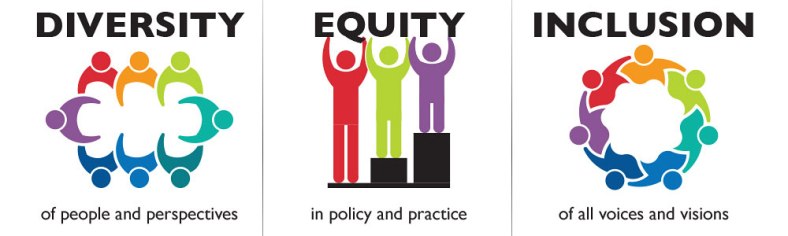
There have been a number of efforts to further the expansion of diversity and inclusion in Emergency Management recently. A great step forward has recently been made by the Virginia Department of Emergency Management (VDEM), by organizing their own internal Office of Diversity, Equity, and Inclusion (ODEI) within the agency. Their press release states it is the first of its kind across the nation dedicated to reducing barriers to assistance and equality in disaster relief and emergency management. They will provide subject matter expertise, strategic leadership, and technical assistance to VDEM and other Emergency Management partners.

Diversity and inclusion are equally important internally to Emergency Management as they are externally. It starts with deliberate intent from leadership and inclusion in the strategic plans of the organization, with personnel across the organization made familiar with goals, specific approaches, and given examples of what to do and how to do it. Whether you establish a specific unit within your Emergency Management organization or not, the effort must permeate the entirety of the Emergency Management practice, regardless of those efforts originating with the Emergency Management agency or elsewhere. Consider your own internal matters, such as hiring, partner agencies and organizations, and your own personnel practices and relationships. Large agencies should ensure that their staff reflect the demographics of the communities they serve. It’s not just a matter of race and gender, but ethnic and cultural background, languages, disability, and other factors.

We need to examine how we deliver programs. When I took over a state training and exercise program, I had the realization that many of the training locations we used across the state were not accessible. The most basic but significant barrier being that facilities were either up flights of stairs or down flights of stairs, with no elevators. While we didn’t have any complaints, it was still wrong; not to mention in violation of the federal funding used for training which required adherence to the Americans with Disabilities Act (ADA). I sought the advice of an organization that advocates for persons with disabilities and developed ADA-consistent standards for the selection of our training facilities. Those not meeting those standards were immediately discontinued.

Community outreach efforts, which may also crosscut to other lines of effort such as training, hazard mitigation, and disaster recovery; need to be inclusive. We must always consider our audiences and how they will be reached and communicated with. There is no single solution, therefore multiple solutions should be made available. We need to not only consider languages and accommodations for hearing impairments, but also the inherent distrust that some cultures, particularly refugees, may have of government. We need to address technological barriers as well – not everyone is on Twitter, much less following your account. Even the simple ability to relate is important. While it’s important to dress professionally (I’m seeing some EM agencies wearing tee shirts… which I think is far too casual), a suit and tie is often too intimidating, too ‘government’, and too impersonal when working with community members.

Our planning efforts must identify, acknowledge, and address the diverse audiences and communities we have, the barriers they may have relative to the plan, and how we will work toward supporting those communities. Hazard mitigation and disaster recovery efforts are where some of our biggest gaps are when it comes to diversity and inclusion. Our existing policies and procedures are great, and applicable to a large percentage of the situations and people who need help, but they also unintentionally (I’m being optimistic) leave some people behind. We need to ensure concerted efforts to assess and meet the needs of traditionally underserved populations, which not only includes vulnerable and small rural communities, but urban communities as well. We also need to consider a customer service perspective in these efforts; remembering that while WE know the rules, policies, and procedures, the people impacted often do not. Persons impacted are confused, overwhelmed, and traumatized. This requires special care, deliberate outreach, and helping them through the bureaucracy we seem to thrive in. In regard to hazard mitigation, the long-established standard of community participation is important to ensuring that we are not only meeting needs we may not fully be aware of, but also not creating unintended consequences by any of our approaches to addressing known problems. Reflecting back on our community outreach efforts, we all know that most requirements for advertising public meetings do NOT reach across the entire community. We need to make better efforts.

Diversity and inclusion should somehow be on the agenda of most meetings. We should always consider who we are aren’t including or not reaching and how we can do better, regardless of the activity. Do we need to do something different internally? Is there an external partner that can support our efforts? Are we unintentionally creating barriers? If someone is not able to go through the process as we have prescribed it, is there an alternate means of doing so? We also need to recognize where law and regulation create barriers, and work with elected officials to advocate for meaningful changes.

Emergency Management has always been about engaging different stakeholders through our coordination activities. Diversity and inclusion then seem an easy bridge to cross, yet far too many Emergency Management agencies and efforts continue to be dominated by able-bodied white men. It’s (mostly) not a knock on that demographic (of which I am a part), but we need to recognize the benefits of the different perspectives offered by others, as well as the need to better serve those who have consistently been underserved by our efforts, through error or omission. We have long espoused ‘whole community’ in our efforts, yet we often aren’t practicing what we preach.

I think the VDEM ODEI may serve as a model for other states and larger local Emergency Management offices. I hope to see them spreading lessons learned, speaking at conferences, and being embraced by FEMA as a new standard of practice in Emergency Management. For those Emergency Management organizations that are perhaps too small to include a new organizational component for this, they can still incorporate the concepts into what they do, along with establishing partnerships with organizations that can support these efforts. We can and must do better!

What other efforts toward diversity and inclusion does Emergency Management need to engage in?

© 2021 Timothy Riecker, CEDP

Emergency Preparedness Solutions, LLC®

Climate Change Exercise Resource Guide

Aside from the significant challenge of educating climate change deniers, climate change provides us with challenges of adaptation and resilience now and into the future. To meet this challenge, we need to meld various aspects of emergency management, science, engineering, theory, and some educated guesses to our applications. We are further challenged with certain preparedness activities which have always been difficult for us because of the less tangible and more dynamic nature of what we are dealing with. I wrote a few years ago on the difficulties we have in designing exercises for long-term recovery. That difficulty, along with the fact that recovery isn’t deemed as sexy as response, are why we rarely have exercises in set in the recovery phase of disaster. But how about exercises in the mitigation mission area?

Exercises focused on the mitigation mission area are also not commonplace, yet the application absolutely makes sense. Yes, we have science, engineering models, and historical data that help support hazard mitigation planning and other related tasks, but in emergency management we don’t seem to take the time to actually talk through some of the scenarios we may be faced with. Exercises help us not only to validate plans, but also help us to identify viable approaches for our plans.

Most people know climate change as an ethereal concept, something they hear about with increasing frequency, but don’t really understand what could happen in their own communities. They also likely view climate change as something too big for them to deal with. Climate change is no longer a theory of what may happen hundreds of years from now, rather it’s happening right now and we will see those impacts increase exponentially even within our own lifetimes. We need to make these discussions as commonplace as any other hazard (and actually WITH other hazards since climate change tends to exacerbate the frequency and impact of other hazards), and exercises offer an ideal structure for those discussions, helping to maintain focus and document outcomes in a consistent fashion.

To help support these efforts, FEMA has released the Long-Term Community Resilience Exercise Guide, along with a packet of reference documents from exercises around the nation which give some ideas on how this can be applied. These are available on the Homeland Security Exercise and Evaluation Program (HSEEP) website and are another important tool available to us. From the HSEEP website, the Guide is intended to provide:

  • A dictionary with common terms to ensure a shared understanding of climate-related terminology and principles before an exercise
  • Tools and template for planning and conducting climate-focused exercises
  • Resources including funding opportunities, risk assessments, and training programs

Now that the federal government is again allowed to use the term ‘climate change’, I’m hopeful we will see more resources made available. I also appreciate that FEMA is asking users to submit their best practices for using this new guide; which they will hopefully use to continue improvements and share with others.

© 2021 Timothy Riecker, CEDP

Emergency Preparedness Solutions, LLC®

Soft Skills Are Hard to Find

Across emergency management, dependent upon specific jobs, we certainly need to apply a lot of technical skillsets. So often, though, soft skills are dismissed, which is quite ironic given that soft skills are really the foundation of what emergency managers need given our emphasis on communication, collaboration, and coordination.

If you aren’t familiar with the term, soft skills are things that are generally applicable to various types of work. These include things like communication, writing, leadership, teamwork, problem solving, organizing, time management, and others. These are skills generally expected of any working professional. They can be honed, but often require some innate ability. Soft skills are different from hard skills, which are those that tend to be more technical and industry specific. These are also generally something acquired more through learning and less dependent upon innate ability.

FEMA’s Professional Development Series (PDS) used to be a cornerstone of emergency management training. Many state emergency management training programs had an emphasis on these courses and the content they provided. The PDS offered soft skills courses, such as Effective Communication, Decision Making and Problem Solving, and Leadership alongside training on topics more so focused on emergency management topics. These courses did a lot to support the professionalism of emergency managers and their abilities to do their jobs in a reasonably comprehensive nature. About 15 years ago FEMA’s Emergency Management Institute made the decision to offer these courses as part of their Independent Study program, a choice that made the content more widely available while also arguably decreasing the effectiveness of the training by removing the dynamics of a live instructor and the learning gained from group activities. While states still had the option to continue delivering classroom versions of these courses, demand severely dropped as people opted to take the courses online.

While the PDS is still available, it’s in a diminished popularity. FEMA’s EMI now offers the National Emergency Management Basic Academy, which provides a great series of courses, and to their credit, they do include some soft skills topics within the courses, especially the Foundations of Emergency Management course. That said, we still need more. Soft skills aren’t a one-off, they need to be built and honed. While FEMA’s EMI isn’t the only provider of soft skills training, they are the go-to provider for most emergency managers.

Having recently had the opportunity to review the participant manual for the new Advanced Planning Practitioner course, I was very happy to see the thought put into providing content on soft skills particularly as they relate to the hard skills involved in emergency planning. Emergency planning at its essence is absolutely a hard skill, with specific technical aspects, but there are several soft skills that are complimentary to the process of emergency planning, without which the planning effort will be less than effective. Consider that so much of emergency planning is consensus building, coordination, meeting management, research, and writing. Communication, facilitation, and public speaking are central to much of this.

I think a lot of people have a tendency to roll their eyes at soft skills, thinking that their abilities are already at peak performance or claiming that they are good because they took a course 15 years ago. As professionals in emergency management, we need to regularly spend time honing our skills. Yes, there are plenty of technical things for us to be trained in and practice such as plan writing, exercises, ICS, etc., but soft skills make us better at doing those things. Both in government service and as a consultant, I see far too many people lacking in soft skills. There may be some highly technical jobs where soft skills have less importance, but soft skills in emergency management are just as important, if not more important, than some technical skills, especially when you consider that one of the greatest values we contribute is our ability to bring people to the table, facilitate discussions, and gain consensus on important decisions before, during, and after disaster. How all that is applied may very well be technical, but we can’t get there without good soft skills.

What do you think are the most valuable soft skills?

© 2021 Tim Riecker, CEDP

Emergency Preparedness Solutions, LLC®