Are you Ready for Hurricane Season 2014?

Today begins National Hurricane Preparedness Week, ushering in hurricane season which starts a week from today on June 1st.  In the last 10 years we have seen some absolutely devastating hurricanes, including Hurricane Katrina in 2005 and Hurricane Sandy in 2012.  These storms are powerful, taking lives, destroying homes and infrastructure, and changing the landscape.  We were reminded that these storms can bring strong winds and flooding rainfall not only to coastal areas but well inland where governments and residents may not be as prepared as they should.

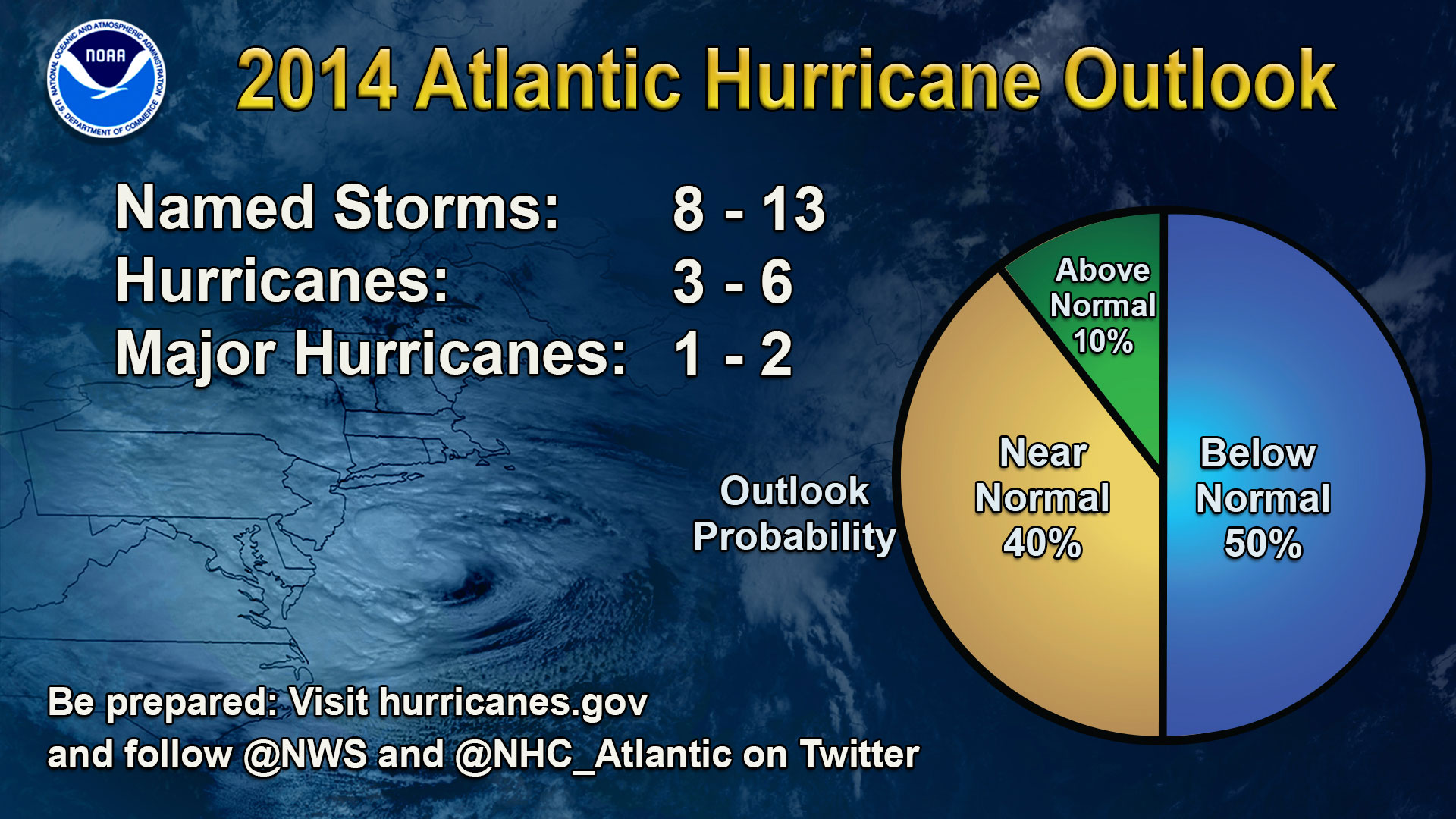
The graphic below is the National Hurricane Center’s prediction for the year.  While there is plenty of science behind this, it’s an imperfect science.  It’s one thing to predict tomorrow’s weather, it’s something else entirely to predict Atlantic storms two months from now.  Like most things in emergency management, it’s a guide – so don’t let it lull you into false confidence.  Be sure to prepare!

2014 Atlantic Hurricane Forecast

2014 Atlantic Hurricane Forecast

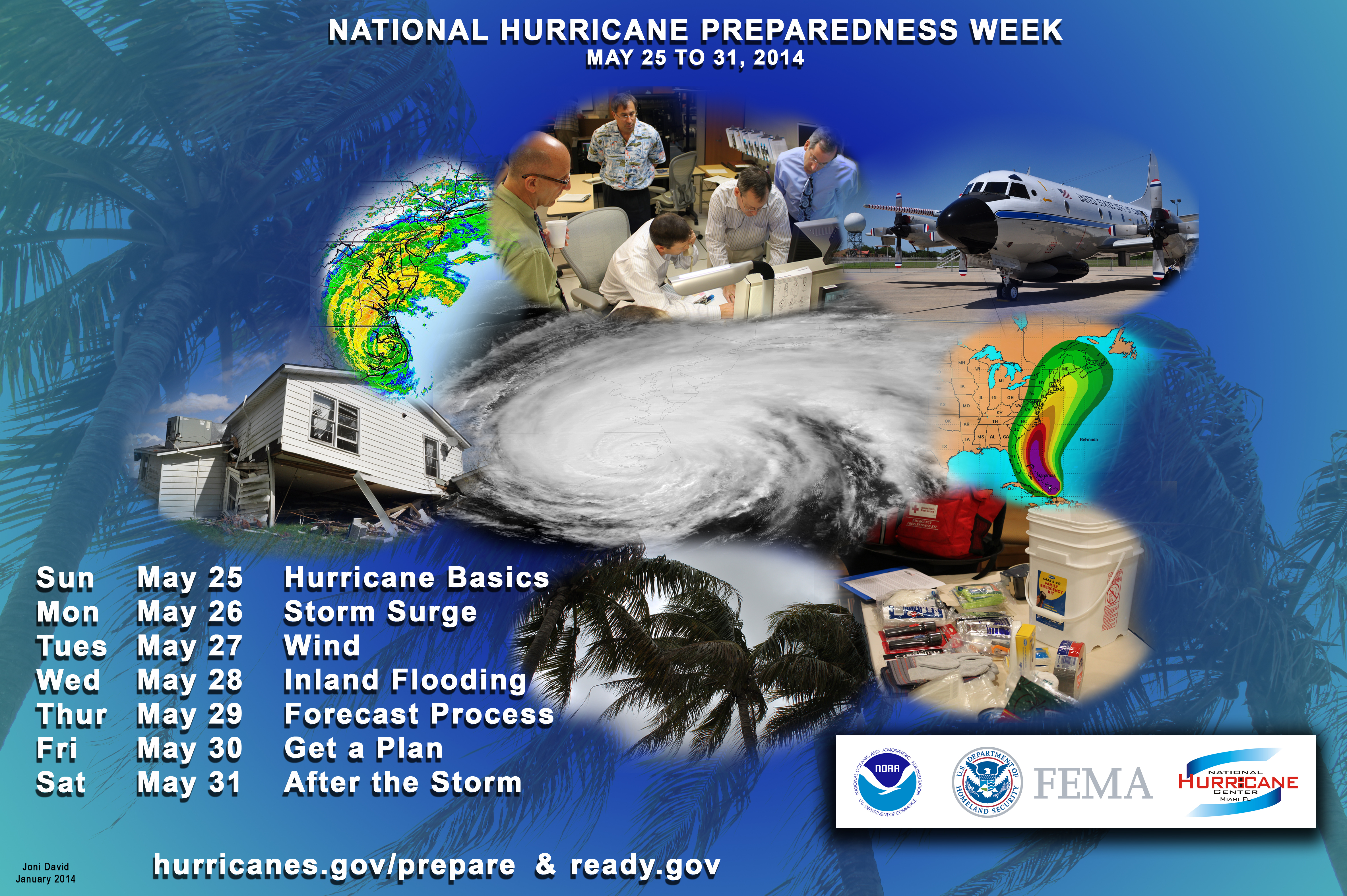
What do you need to know to prepare?  The graphic below has a list of seminars conducted by the National Hurricane Center which are accessible via YouTube.  The first one starts today!  Go to this website for more information and the links to the YouTube videos.

Hurricane Preparedness Courses

Hurricane Preparedness Courses

Be smart this year and make sure you and your family are prepared and safe.  Government and business emergency managers – be sure to give your hurricane plans and associated annexes one more look this week to make sure they are current and ready to activate.  Also, there is no time like the present to make improvements.  Just because we’re entering hurricane season doesn’t mean you can’t update plans now.  Don’t wait until hurricane season is over!  Be sure to distribute copies of the plans to key stakeholders and to run a seminar to remind people of the general content of the plan and what is expected of them in the implementation of the plan.  Pay special attention to trigger points, decision points, and succession.  Be sure to verify the availability of key resources; test generators and IT fail overs.

If you are looking for some assistance in reviewing your plans, training staff, or exercising plans please contact Emergency Preparedness Solutions, LLC at consultants@epsllc.biz.  We’re happy to assist you!

Are you ready???

Managing an Exercise Program – Part 10: Evalutation and Improvement Planning

New HSEEP graphic

New HSEEP graphic

For the previous parts in my series Managing an Exercise Program, please see below:

Managing an Exercise Program – Part 1

Managing an Exercise Program – Part 2: Develop a Preparedness Strategy

Managing an Exercise Program – Part 3: Identify Program Resources and Funding

Managing an Exercise Program – Part 4: Conduct an Annual Training & Exercise Planning Workshop.

Managing an Exercise Program – Part 5: Securing Project Funding

Managing an Exercise Program – Part 6: Conducting Exercise Planning Conferences

Managing an Exercise Program – Part 7: Develop Exercise Documentation

Managing an Exercise Program – Part 8: Preparing Support, Personnel, & Logistical Requirements

Managing an Exercise Program – Part 9: Conducting an Exercise


While conducting an exercise is often the most exciting part of the exercise cycle, evaluation and improvement planning lead us to the real reasons why we conduct exercises – to test plans, policies, and procedures.  Evaluation doesn’t just happen.  It must be a deliberate, planned activity within the design and conduct of an exercise.  There are key activities through the design and development of an exercise which link directly to evaluation – starting with the identification of core capabilities to be tested and exercise objectives to be accomplished.  These core capabilities and objectives should lead us directly back to specific plans, policies, and procedures which will be exercised and can help us determine the evaluation methodology and approach.  As we further develop our exercise, be it discussion based or operations based, the decisions we make influence evaluation and the resources needed for it.

When exercise planning begins, we identify staff to fill key roles – including exercise director, simcell manager, lead controller, and lead evaluator.  The lead evaluator doesn’t necessarily have to be involved in all aspects of exercise design, but they need to be informed of key points and should be reviewing draft materials (i.e. the explan or sitman) to become familiar with the details of the exercise and to help them assemble their portion of the control and evaluation plan.  The lead evaluator should ideally be present at exercise planning meetings to become even more familiar with the details, the people, and the facility(s) of exercise play.

Staffing evaluation has a number of options.  Often times evaluators will be selected based on matching their individual areas of expertise with the functional areas of the exercise (i.e. fire, EMS, public health, EOC management, shelter operations, etc.).  You may have a need for more than one evaluator per functional area, particularly if that function is a major component of the exercise and there is a lot to observe.  Remember that if there are multiple exercise venues, they each need to have evaluators assigned who can observe all critical areas.  The bottom line is that evaluation should respect the amount of time, effort, and resources invested in the design and conduct of the exercise.  If the exercise isn’t fairly and accurately evaluated, it’s simply disrespectful to all that effort and those involved.  These concepts apply to both discussion based and operations based exercises.  Members of the exercise planning team should be considered as possible evaluators.

Exercise Evaluation Guides (EEGs) give evaluators guidance in their activity.  The HSEEP website provides a multitude of EEG templates which you should absolutely modify for your own use.  EEGs are provided for each core capability.  Just like planning templates (see my rant about the use of planning templates here), these are guides for you to reach success, but can not and should not be used without modification and customization to ensure that they meet your own specific needs.  EEGs are crafted hand in hand with exercise design to ensure that all bench marks and expected actions are accounted for.  The rating guide on the last page of each EEG is particularly handy to ensure consistency.  You may want to consider including a ‘recommendations’ section for each observation as well, which provides an opportunity for you gain insight from your own subject matter experts on how to address a particular area for improvement.  This will help when it comes to the After Action Report.  I also encourage evaluators to use and ICS form 200 (a blank sheet of paper!) to take some freeform notes.  EEGs, no matter how well designed, simply won’t capture everything.  Personally, when I evaluate, I’ll refer to the EEGs, but make most of my notes on a blank sheet(s) of paper or a steno pad.  I like to mark specific observations, times and timelines, and even inject numbers if I happen to catch them.  After the exercise, I then transcribe my notes into the EEG in the appropriate format.

Training of evaluators is important.  You may have some evaluators which are new and some that are experienced.  Everyone should go through a controller/evaluator briefing prior to the exercise.  Those with little experience might require some extra training, which isn’t a bad thing.  Be sure that both your C/E plan and the briefing identify clearly what you expect from evaluators, how they should conduct themselves, the measure of allowable interaction with players, how they should take notes, and when you expect those notes to be turned in.  The HSEEP website, referenced prior, also has templates for C/E briefings, C/E plans, etc.  You’ve likely heard the saying ‘garbage in – garbage out’… well, exercise evaluation is exactly like that.  If you don’t invest in good training and job aids (EEGs) for your evaluators, you will not get good evaluations!  The Lead Evaluator also needs to lead!  They should check in periodically with each evaluator throughout the exercise to see how things are going and give a quick look at their notes and/or EEGs.  Good feedback will help your evaluators provide better observations.

Finally, at the end of exercise play, I expect evaluators to help with the hotwash.  Sometimes hotwashes are conducted as a single session with all players.  In such sessions, the exercise director or lead evaluator should facilitate and evaluators should take notes.  If the hotwash is tiered, where each functional area will identify their top strengths and areas for improvement; each functional area is facilitated by its evaluator who should also take notes.  This may be followed by a plenary session if possible.  Be sure to have your hotwash strategy planned and identified in the C/E plan!

The After Action Report (AAR) should ideally be written by one or two people based on the EEGs and notes of evaluators.  It may be possible for some observations to be combined, helping to make the document both more concise and easier to read.  Templates are provided on the HSEEP website for AARs and Improvement Plans.  Improvement plans are nothing more than a matrix identifying who will be responsible for what improvement actions, who will assist, what the major benchmarks are to improvement, and when it should be accomplished.  As with the rest of the AAR, these should be drafted and provided prior to the AAR meeting for comment – of which there is usually a great deal.  Once all this is finalized, don’t let this be the last of it!  The implementation of improvements is where organizations often fail!  Rarely do organizations follow through on improvements, resulting in similar observations being noted in exercises and incidents for years after.  The AAR/IP must be championed by someone at an executive level, and coordinated on an ongoing basis by someone who is responsible for tracking progress, coordinating solutions to problems, and reporting progress back to the executive.  For most organizations and jurisdictions, I would suggest a quarterly meeting to review improvement planning progress.  After a few exercises, you may find yourself addressing improvements of several exercises in one meeting.  Accomplishments should be noted, with the opportunity to test the ‘fixes’ in future exercises.  All this feeds back into the strategy planning phase of exercise program management – which is where we started in this series.

This is the end of my ‘Managing an Exercise Program’ series.  I appreciate all those who have read and provided feedback.  Please continue to do so, and best of luck on your next exercise!

I’d be remiss if I didn’t mention that my company – Emergency Preparedness Solutions, LLC – can help you with exercise program planning and management; training and exercise plans; and the design, conduct, and evaluation of exercises; as well as training in HSEEP, exercise design, and exercise evaluation.  Give us a call or email and we’ll be happy to discuss what we can do to help your organization’s preparedness.

EPS logo with tag line - Be proactive, be prepared.

EPS logo with tag line – Be proactive, be prepared.


Apocalypse Inquiry

I must share a brief story which I found to be rather humorous.

Just a few minutes ago I received a phone call from a local news station.  The caller, a reporter, asked for me by name and verified that I was a partner of Emergency Preparedness Solutions, LLC – my consulting firm.  She then asked if I had received any calls recently from anyone asking what they should do for the apocalypse – since, apparently, it is coming on December 21st.  I laughed and said ‘no’.  Despite doing a handful of presentations recently for businesses and not for profits I’ve not gotten any serious inquiries about apocalyptic preparedness – nor do I expect to, unless this post happens to spur some.

While we can’t predict the future, I expect that this coming Friday will be just like any other day on our temperamental planet.  My advice to everyone is to be prepared all the time!  Be informed, make a plan, build a kit, and get involved.

Happy Apocalypse!

Business Civic Leadership Center and Emergency Management

This morning I received my semi-regular e-mail update from the Lessons Learned Information Sharing (LLIS) folks at the US Department of Homeland Security.  If you are in the EM/HS field and are not on LLIS, I strongly encourage you to do so.  It’s a great community of practice, facilitating the sharing of lessons learned and best practices in the field.  One document that was listed in the e-mail was The Role of Business in Disaster Response.  This document outlines case studies and best practices of businesses supporting all aspects of emergency management nationally and locally.  It was published by the Business Civic Leadership Center of the US Chamber of Commerce.  Admittedly, I was not aware of this office within the US Chamber, nor was I aware of their Disaster Program, which offers some great resources to businesses. 

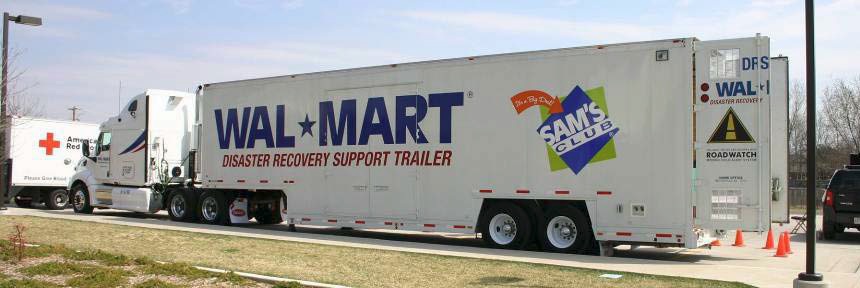
I’ve blogged in the past about the importance of public-private partnerships in emergency management and the incredible positive impacts it can have.  Wal-mart, in particular, has gotten a lot of good press about their emergency business operations, and more recently since Hurricane Sandy I’ve seen some media attention given to other companies such as Home Depot, highlighting their emergency operations centers and their relief efforts.  In a presentation I saw from Wal-Mart a while back, the company highlighted three priorities in regards to emergency management: 1) take care of its people, 2) take care of its operations, 3) take care of its communities.  Just these three priorities say a lot about the company.  They realize their people are their most important assets.  Next, they strive to ensure business continuity.  Lastly, with their business operations now being able to support it, they take care of the communities they have a presence in.  What a great business model!

The integration of the private sector into emergency management needs to be at all levels.  The National Operations Center (NOC), run by the US Department of Homeland Security, includes private sector representatives.  How can this be improved?  At the state level, many states either include private sector representatives in the State Emergency Operations Center or have a separate but connected Business Operations Center, solely focused on the coordination of private sector efforts.  Both of these options help expedite private sector resources to emergency management efforts – especially when used as an extension of the EOC’s supply unit.  There is also a recognized expertise between private sector and public sector emergency managers.

County and local emergency management programs can also benefit.  Where national and international companies are usually found at the NOC and state EOCs, the local management of these chains can work with county and local EOCs.  Also, don’t discount the value of small businesses in the area.  They, too, have a wealth of knowledge and access to resources.  Every community should form a disaster business alliance of some sort, or welcome private sector involvement with local VOADs.  You can work with local chambers of commerce to make this happen.  I’ve established a great relationship between my company, Emergency Preparedness Solutions, with my local chamber of commerce and have been providing information to members on emergency preparedness and business continuity through meetings and articles, as well as a presentation that I’ll be doing in a few months.

Never think that emergency management is too big of a concept for your local community.  It’s not just something done by FEMA or by the state.  In a disaster we need to help our neighbors and our communities.  The biggest impact is always locally.  Establish those relationships now and make a difference!

Hurricane Sandy – Be Prepared and Stay Safe!

I’m finishing my preparations for a quick trip to California to help evaluate an earthquake exercise.  All the while, I’m watching Hurricane Sandy come up the coast after creating some havoc in the Caribbean.  According to the latest National Hurricane Center advisory, Sandy will make landfall in southern New Jersey, and progress inland to central Pennsylvania before turning north and heading through New York State, the track taking it through the Finger Lakes area.  From there, the current advisory predicts that the storm will turn to the northeast, saturating New England.  It’s going to be a very wet, rainy week as Sandy slows soon after making landfall.  Of particular concern here in New York is the western portion of the state which has received a fair amount of rainfall over the last couple of days from the cold front that has progressed here from the mid west.


Thus far, there seems to be an appropriate amount of concern over this storm.  While I’ve heard some folks say that people are overly concerned, I don’t think officials are crying wolf with this.  First, as I’m sure you’ve read in the media, many factors of this storm are unprecedented or rarely seen, particularly the collision with the cold front – resulting in many of the hurricane advisories including snow in their forecast – SNOW for a HURRICANE!  Who would have ever thought that would happen?  Second, the storm is maintaining hurricane strength right up to landfall, bringing significant winds and storm surge with it.  New York City is taking actions which to my recollection are fully in compliance with their hurricane plans, such as low elevation evacuations, closing of mass transit and tunnels ahead of the storm, and other protective actions.  States of emergency have been declared all along the northeast states, with the President declaring an emergency in Maryland, which will be the first to feel the full effects of the category 1 storm with sustained winds of 75 miles per hour.  I expect the President will make similar declarations ahead of the storm reaching subsequent states.  States along the projected impact path all have activated their emergency operations centers (EOCs), pulling together local, state, and federal agencies, as well as some not for profits such as the American Red Cross and The Salvation Army, to coordinate efforts and situational information.

I’ve received storm preparedness information from several sources already, including Ready.gov, the Small Business Administration, Time Warner Cable, and National Grid.  I’m certain utility companies in other area are doing the same outreach to their customers.  Locally, the Erie Canal is being closed and water levels dropped to help mitigate against flooding, which has devastated communities along the waterway in the past.  Local governments are putting out preparedness public service announcements to citizens to help ensure they are prepared.  You’ve heard me comment before about the complacency of much of our population when it comes to emergency preparedness.  Please pay heed to what is being suggested and spread the word that preparedness for this storm is serious.  Be sure to have a few days of water, food, medications, and batteries for flashlights.  Keep your cell phone charged and pay attention to weather information and emergency alerts.  If you are a New Yorker, now is a great time to subscribe to NY-ALERT to be certain to receive emergency information.  If you are outside of New York, many states now have similar alerting systems.  Even clearing away leaves and debris, which is plentiful this time of year, from storm sewers and culverts will be a big help.  If you manage or own a business, be sure to pull out your emergency and continuity plans (you have these, right?) and be sure to keep your employees and other stakeholders informed of what’s going on.

I’m sure that when I return I’ll be helping with some disaster response and recovery activities in the area.  The better you prepare and the smarter you are, the less responders have to risk their lives and valuable resources, so be smart, be prepared, and stay safe!

Speed Networking

Last week our local chamber of commerce, of which my company – Emergency Preparedness Solutions – is a member held an event called speed networking.  Admittedly, prior to the announcements for said event, I had never heard of it.  Of course we’ve all heard of speed dating – and have even seen it on TV and in movies (i.e. Hitch) – where men typically circulate through an orderly room of women, having only a few minutes to ask questions about each other and perhaps make a love connection.  Speed networking is quite similar.

Representatives of various businesses and organizations were arranged opposite each other within a room (sadly, not the swanky, stylish room you witnessed the speed dating occurring in Hitch), having only two minutes to give their elevator speech and another two to listen to the pitch of the person across from them.  You both exchange business cards and any other materials you might have (I had a flyer highlighting our business continuity services).  At the ring of the bell everyone on one side of the table moved down a seat.

It was a pretty neat opportunity.  Two minutes isn’t long, and depending on the level of interaction, sometimes wasn’t long enough.  It was a very fast paced, near exhausting, activity.  In the end, I met with about twenty businesses and organizations.  With some there was clearly interest, with others – not so much.  But that’s how things go in the business world.  I was a bit disappointed that I didn’t get to meet with the other business representatives who were the ‘movers’, as I was.  I’m not sure how they would make that work… likely some complex algorithm of some sort which is well beyond my understanding.  Still, it was an engaging opportunity to meet with these businesses and pitch my services.

I’ve been to quite a few business networking events, all of which seem to be a bit awkward as people tend to gravitate to those they know.  You hate to break into a conversation at the risk of being rude or appearing overly pushy.  Once in a while you’ll get introduced to someone, which is the best opening, but that’s a fairly rare occurence.  The structure of the speed networking forces you to engage with someone new, and you are both there for the same purpose – what a great idea!  There was even someone attending who I have met with several times before to discuss partnering up and making mutual referrals.  Since we already knew what the other did, we took the opportunity to discuss what our next steps would be, which included a meet and greet with their top clients – score!

If you ever have an opportunity to take part in one of these events, I strongly encourage you to do so.  It’s a great deal for small businesses, especially new ones.  They are fun, engaging, and the best bang for your buck in terms of meeting people.  FYI – the chamber charged $10 for the event, which included lunch.  How can you go wrong?

Red Cross ReadyRating Program

I recently sat through a webinar on the Red Cross ReadyRating Program.  Admittedly, I’ve perused their site before, and even recommended their services – which I certainly understood – but I never realized how in-depth their program goes.  The webinar was hosted by Agility Recovery, who regularly puts on brief and informative programs of good quality. 

The ReadyRating program is a web-based service, absolutely free of charge, that provides businesses, organizations, and schools with a free disaster readiness assessment tool.  The tool seems to be useful to entities large and small, even allowing larger businesses or organizations with multiple locations to conduct an assessment for each location folded in under the same account.  The user answers questions and the tool quantifies the entity’s measure of preparedness and provides customized reports showing various data in a variety of formats (charts, report card, etc).  ReadyRating apparently even grades the amount of community participation the entity has relative to preparedness efforts (see my previous post re: Public-Private Partnerships).  The tool also enables creation of a customized emergency response plan – something I’m a little cautious of (generally speaking, I’m not in favor of ‘fill in the blank’ planning) – but I’ve not actually used the tool, so I can’t speak from direct experience on it.

ReadyRating refers to their users as ‘members’ – and they have a fairly impressive membership, both in numbers (2,689 businesses and organizations, 570 schools) as well as in names (they list the likes of Anheuser Busch, Grainger, Monsanto, and others).  Feedback from members is very favorable, and the tool provides for the ability to do re-assessments and showing progress to the user – that’s great encouragement to them!  They even show comparisons with other members (anonymously) (comparisons are provided nationally, state-wide, number of employees, and by industry).

ReadyRating is quite an impressive tool – and it’s free!  I have it listed on the links page of my company’s website – Emergency Preparedness Solutions, LLC along with other resources.  Check it out!

Every Business Should Have a Plan to Stay in Business

Over the last few weeks I’ve had the pleasure of making a number of presentations to and connections with businesses and organizations over the topic of Business Continuity.  I’m thrilled that people are thinking about this and that my interactions brought about some great discussions.

Businesses can and do fail in the aftermath of a disaster!

Let’s look at some numbers:

  • Over 25% of businesses do not reopen following a major disaster (Institute for Business and Home Safety)
  • 70% of small firms that experience a major data loss go out of business within a year (Price Waterhouse Coopers)
  • 80% of companies that do not recover from a disaster within one month are likely to go out of business (Bernstein Crisis Management)
  • Of those businesses that experience a disaster and have no emergency plan, 43 percent never re-open; of those that do reopen, only 29 percent are still operating two years later (The Hartford Financial Services Group)

The Institute for Business and Home Safety says that each year disasters such as floods, hurricanes, tornadoes, and wildfires force thousands of businesses to close.  But even more common events, such as building fires, cause the same result.  So what can you do?

  • Ensure that your building meets local code and safety standards, including electric, plumbing, chemical storage, and fire safety (don’t forget the smoke and carbon monoxide detectors and fire extinguishers!).
  • Check your insurance plan to ensure that you are getting the best coverage possible.
  • Back up computer data and files regularly to an offsite location.
  • Create a disaster plan for your business to address life safety issues.
    • Create a business continuity plan to address how you will stay in business after a disaster.

There are a number of resources for business preparedness available at the following:

TR