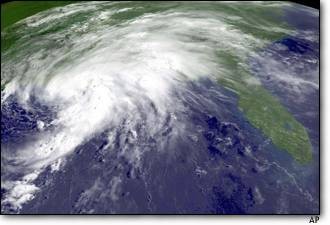
How to Categorize a Hurricane?

There has been a lot of discussion lately on rethinking how we categorize hurricanes.  At present, we use the Saffir-Simpson Hurricane Wind Scale, which provides a category (numbered 1-5) based on the hurricane’s present sustained wind speed.  While this scale has served as the standard for several decades, it is based only upon one impact of hurricanes – wind.  As such, the Saffir-Simpson scale is not a good universal predictor of potential hurricane impacts.

To better consider how we can categorize hurricanes, we should understand those impacts.

  • Wind is an ever-present threat from hurricanes. The highest reaches of these winds can be utterly devastating, practically leveling an area of built infrastructure and foliage. Wind speeds can be measured throughout the entire life of the hurricane, and wind speeds can be predicted with reasonable accuracy.  While tornadoes are generally expected with hurricanes, their intensity is difficult to predict.
  • Storm Surge is the greatest threat to coastal areas from a hurricane. Storm surge is defined as the rising of the sea as a result of atmospheric pressure changes and wind associated with a storm.  Essentially, the winds of the hurricane push water up on to land creating sudden inundation.  The height and degree of inundation of storm surge is dependent upon several factors including wind speed, tide, natural and built barriers, and distance inland.
  • Rain, like wind, is a sustained threat from hurricanes, potentially causing flooding well inland. The geographic size of hurricanes tends to result in saturation from rain across a wide area, making the management of runoff incredibly difficult.  In coastal areas, rain will obviously contribute to the flooding conditions caused by storm surge.

In recognition of the hazards, there have been proposals for categorizing hurricanes based upon hazards other than wind.  While I’m no meteorologist, I can certain identify that these will provide even less valuable data than wind alone.  While it’s true that storm surge is often the most impactful hazard of hurricanes, the extent of potential damage from storm surge varies so wildly based upon a variety of factors, there are few general statements that can be made about it to establish any kind of categorization.  Further, how will the storm threat be categorized to those too far inland to be impacted by storm surge?  Rating a hurricane based upon rain is even less of a full picture than those who argue against wind.

The Saffir-Simpson scale begins to approach the problem by also defining the types of damage that can be caused by hurricanes of different intensities.  These defined impacts, however, are limited to wind damages.  Certainly the ideal model provides categories which define expected levels of damage from wind, rain, and storm surge combined.  Such models may be more informative to the public, elected officials, first responders, and emergency managers.  There are efforts under way to examine some potential new models.  Be alert to what gets proposed and be sure to provide feedback.

Have I missed anything here?  Are there any other considerations for how we should be categorizing hurricanes?

Timothy Riecker, CEDP

Emergency Preparedness Solutions, LLC℠


Airport Emergency Planning

Through my career I’ve had the opportunity to work with a number of airports on preparedness efforts.  In the past couple of years, that interaction has been greatly amplified through a contract my company successfully completed involving the development of exercises for airports.  As part of this effort, we designed, conducted, and evaluated exercises at ten airports of varying sizes across the nation, from Georgia to Alaska, Massachusetts to California.  Since the primary intent of exercises is to validate plans, we of course requested and reviewed airport emergency plans (AEPs) from each location as part of our preparation for each exercise.

For those not in the know, the requirement for AEPs originates with Federal Aviation Regulation 14 CFR Part 139, which wholly establishes the standards for the certification of airports.  The requirements for AEPs are further refined in DOT/FAA Advisory Circular 150-5200-31C published in May of 2010.   The Advisory Circular is largely implementation guidance.  It’s quite comprehensive and outlines a planning structure, references emergency management doctrine and standards of practice such as NIMS and the National Response Framework, and models a planning process, which mirrors that of CPG-101.  The NFPA also provides guidance in NFPA 424: Guide for Airport/Community Emergency Planning, which reflects on all these as well.

Just like any community emergency operations plan (EOP), AEPs I’ve reviewed run the full spectrum of quality.  Some plans are thorough and comprehensive, while other plans are so focused on meeting the letter of the regulation that they fall short of meeting real needs and being implementation-ready, even though they technically meet the requirements set forth in §139.325.  Regulated industries, which airports largely are, often have a challenge when it comes to emergency planning.  We see this same challenge in radiological emergency plans as well.  The laws and regulations seem to provide so much structure that it is perceived that local variables and subjective analysis aren’t allowed.  As an example, §139.325 states:

“the plan must contain instructions for response to:

  1. Aircraft incident and accidents
  2. Bomb incidents, including designation of parking areas for the aircraft involved
  3. Structural fires
  4. Fires at fuel farms or fuel storage areas
  5. Natural disaster
  6. Hazardous materials/dangerous goods incidents
  7. Sabotage, hijack, or other unlawful interference with operations
  8. Failure of power for movement area lighting
  9. Water rescue situations (as appropriate)”

While the planning process isn’t prescribed in §139.325, nor does it specify if other hazards can be included in the AEP, the Advisory Circular (AC) does expound on this and prescribes a planning process, including a hazard analysis.  The AC states “Through the hazards analysis program, guidance has been provided to assist in the identification of those hazards and disasters specific to an airport that warrant planning attention”.  That phrasing indicates that airports should be planning for hazards beyond what is required by §139.325, yet I’ve seen many that do not.

Obviously ‘natural disaster’ covers a considerable amount of proverbial territory.  Jurisdictions undergo extensive hazard analysis and hazard mitigation planning to identify the breadth and scope of these hazards (which should include all hazards, not just natural disasters).   Many jurisdictions develop very comprehensive EOPs and annexes to address the response needs of each of their primary hazards.  I saw this as a significantly missing component in many AEPs, which treated ‘natural disasters’ as a single hazard.  Further, as many airports stick to the minimum requirement for planning, they fail to address other hazards which could impact them, ranging from dam failure, and nuclear power facility incidents, to currently hot topics such as active shooter/hostile event response (ASHER) and communicable diseases.

Some airports have thankfully recognized the need for expanding beyond the required hazards and have developed plans that better address all of their needs.  On the unfortunate side, again as a regulated industry, I’ve also seen some airports having two sets of plans… one that meets regulation and the other that they feel is more practical for implementation.  Clearly this isn’t the way to go either.  A single, consolidated plan can be developed that meets all needs.

Airports are an interesting animal.  Regardless of governance structure, they are part of the communities which surround them.  Larger airports are also communities of their own, having significant capability, sometimes more than the surrounding jurisdictions.  Airport emergency planning should acknowledge and involve their community relationships and must address all hazards, not just the ones required by Part 139.  Just as with any other type of emergency plan, they must be implementation-ready.  To do so typically requires the added development of standard operating guidelines (SOGs) and job aids, such as check lists and forms.  Plans should also be developed to address recovery issues and business continuity, not just response.  An airport, regardless of governance structure, operates like a business, with many other stakeholders dependent upon their stability and ability to address and rapidly recover from incidents.  They are also obviously transportation hubs, dealing with large volumes of people and significant dollar figures in freight and commerce.

Airport emergency managers have many of the same challenges as the emergency managers of any other community.  Staffing and funding rarely line up with requirements and other priority matters.  I encourage community emergency managers to reach out to their local airports and coordinate, as many hands make easier work for everyone.  Of course, if any airports are seeking assistance in enhancing their preparedness, please contact us as we would love to work with you!

© 2018 – Timothy Riecker, CEDP

Emergency Preparedness Solutions, LLC™


An Updated Comprehensive Preparedness Guide 201 (THIRA/SPR)

In late May, FEMA/DHS released an updated version of Comprehensive Preparedness Guide (CPG) 201.  For those not familiar, CPG 201 is designed to guide communities and organizations through the process of the Threat and Hazard Identification and Risk Assessment (THIRA).  This is the third edition of a document that was originally released in April 2012.  This third edition integrates the Stakeholder Preparedness Review (SPR) into the process.  Note that ‘SPR’ has commonly been an acronym for State Preparedness Report, which is also associated with the THIRA.  The goal of the Stakeholder Preparedness Review appears to be fundamentally similar to that of the State Preparedness Report which some of you may be familiar with.

Picture1

First of all, a few noted changes in the THIRA portion of CPG 201.  First, FEMA now recommends that communities complete the THIRA every three years instead of annually.  Given the complexity and depth of a properly executed THIRA, this makes much more sense and I fully applaud this change.  Over the past several years many jurisdictions have watered down the process because it was so time consuming, with many THIRAs completed being more of an update to the previous year’s than really being a new independent assessment.  While it’s always good to reflect on the progress relative to the previous year, it’s human nature to get stuck in the box created by your reference material, so I think the annual assessment also stagnated progress in many areas.

The other big change to the THIRA process is elimination of the fourth step (Apply Results).  Along with some other streamlining of activities within the THIRA process, the application of results has been extended into the SPR process.  The goal of the SPR is to assess the community’s capability levels based on the capability targets identified in the THIRA.  Despite the THIRA being changed to a three-year cycle, CPG 201 states that the SPR should be conducted annually.  Since capabilities are more prone to change (often through deliberate activities of communities) this absolutely makes sense. The SPR process centers on three main activities, all informed by the THIRA:

  1. Assess Capabilities
  2. Identify and Address Gaps
  3. Describe Impacts and Funding Sources

The assessment of capabilities is intended to be a legacy function, with the first assessment establishing a baseline, which is then continually reflected on in subsequent years.  The capability assessment contributes to needs identification for a community, which is then further analyzed for the impacts of that change in capability and the identification of funding sources to sustain or improve capabilities, as needed.

An aspect of this new document which I’m excited about is that the POETE analysis is finally firmly established in doctrine.  If you aren’t familiar with the POETE analysis, you can find a few articles I’ve written on it here.  POETE is reflected on several times in the SPR process.

So who should be doing this?   The document references all the usual suspects: state, local, tribal, territorial, and UASI jurisdictions.  I think it’s great that everyone is being encouraged to do this, but we also need to identify who must do it.  Traditionally, the state preparedness report was required of states, territories, and UASIs as the initial recipients of Homeland Security Grant Program (HSGP) sub-grants.  In 2018, recipients of Tribal Homeland Security Grant Program funds will be required to complete this as well.  While other jurisdictions seem to be encouraged to use the processes of CPG 201, they aren’t being empowered to do so.

Here lies my biggest criticism…  as stated earlier, the THIRA and SPR processes are quite in-depth and the guidance provided in CPG 201 is supported by an assessment tool designed by FEMA for these purposes.  The CPG 201 website unfortunately does not include the tool, nor does CPG 201 itself even make direct reference to it.  There are vague indirect references, seeming to indicate what kind of data can be used in certain steps, but never actually stating that a tool is available.  The tool, called the Universal Reporting Tool, provides structure to the great deal of information being collected and analyzed through these processes.  Refined over the past several years as the THIRA/SPR process has evolved, the Universal Reporting Tool is a great way to complete this.  As part of the State Preparedness Report, the completed tool was submitted to the FEMA regional office who would provide feedback and submit it to HQ to contribute to the National Preparedness Report.  But what of the jurisdictions who are not required to do this and wish to do this of their own accord?  It doesn’t seem to be discouraged, as jurisdictions can request a copy from FEMA-SPR@fema.dhs.gov, but it seems that as a best practice, as well as a companion to CPG 201, the tool should be directly available on the FEMA website.  That said, if the THIRA/SPR is being conducted by a jurisdiction not required to do so, the tool would then not be required – although it would help.

Overall, I’m very happy with this evolution of CPG 201.  It’s clear that FEMA is paying attention to feedback received on the process to streamline it as best they can, while maximizing the utility of the data derived from the analysis.  A completed THIRA/SPR is an excellent foundation for planning and grant funding requests, and can inform training needs assessments and exercise program management (it should be used as a direct reference to development of a Training and Exercise Plan).

For those interested, EPS’ personnel have experience conducting the THIRA/SPR process in past years for a variety of jurisdictions and would be happy to assist yours with this updated process.  Head to the link below for more information!

© 2018 – Timothy Riecker, CEDP

Emergency Preparedness Solutions, LLC ™
Responder Depression, PTSD, and Suicide

This week the world lost two celebrities to suicide. These losses are absolutely tragic, and even if you didn’t know them personally, it raises awareness of mental health matters. In the last few days the world also lost many people to suicide that so many of us don’t know, but they were a son, daughter, father, mother, brother, sister, aunt, uncle, cousin, friend, spouse, lover… Some of those were also responders, dispatchers, doctors, nurses, or others that deal with tragedy every day and make our communities safer. They may have been a coworker or colleague. A brother or sister on the line.

Despite a lot of efforts to change perspectives, depression, PTSD, and suicide are still labels that are associated with shame and weakness. There is nothing shameful or weak about them. They are a reality of life. If you haven’t been effected by them directly, you know someone who has.

When you work in public safety, you deal with some pretty bad shit. Not just once, but over and over. You see people at their worst. Your see death and devastation. You see hopeless and desperate people. Broken people. Sadness and anger. We see more than most people do. On top of that, we deal with our own personal issues. Maybe a divorce, illness of a family member, or death of a pet. Finances might be tight.

How do we deal with it? We build walls. We make it impersonal. We stay professional and work in the moment, focusing on what needs to be done. But what do you think about after the call? Or the next day? Or even years after? Sometimes it doesn’t hit you right away. Sometimes it’s something completely different that triggers memories and emotions. What then? Maybe we shrug it off, or maybe we shut down for a while and have a bad day. But that bad day turns into another and another. Soon you may not be able to remember happiness.

What should we be doing? Talk to people. Maybe a coworker, a friend, or a mental health professional. If you are in a paid service, you may have an employee assistance program. Fuck the stigma, the shame, and the macho bullshit. This is as serious as cancer or a heart condition. You can’t ignore it and expect it to go away.

Maybe it’s not you, but a friend or coworker. You notice changes. Irritability. A lack of focus. Dramatic loss or gain of weight. Alcohol and drug abuse. Talk to them. Find a professional to talk to them. Yeah, it’s a tough call to make, but it could save their life.

Depression, PTSD, and suicide suck. We can’t ignore their impact on society and on public safety professionals. We need to work harder to end the stigma and ensure better access to services so people can get the help they need and stop suicides.

©️ 2018 – Timothy Riecker, CEDP

A New NFPA Standard for Active Shooter/Hostile Event Response

The National Fire Protection Association (NFPA) has recently published a new standard for Active Shooter/Hostile Event Response (ASHER) programs.  NFPA 3000 is consistent with other standards we’ve seen published by the organization.  They don’t dictate means or methods, leaving those as local decisions and open for changes as we learn and evolve from incidents and exercises.  What they do provide, however, is a valuable roadmap to help ensure that communities address specific considerations within their programs.  It’s important to recognize that, similar to NFPA 1600: Standard on Disaster/Emergency Management and Business Continuity/Continuity of Operations Programs, you aren’t getting a pre-made plan, rather you are getting guidance on developing a comprehensive program.  With that, NFPA 3000 provides information on conducting a community risk assessment, developing a plan, coordinating with the whole community, managing resources and the incident, preparing facilities, training, and competencies for first responders.

NFPA standards are developed by outstanding technical committees with representation from a variety of disciplines and agencies across the nation.  In the development of their standards, they try to consider all perspectives as they create a foundation of best practices.  While the NFPA’s original focus was fire protection, they have evolved into a great resource for all of public safety.

I urge everyone to take a look at this new standard and examine how you can integrate this guidance into your program.  The standard is available to view for free from the NFPA website, but is otherwise only available by purchase.  Also available on their website is a fact sheet and information on training for the new standard.

© 2018 – Timothy Riecker, CEDP

Emergency Preparedness Solutions, LLC

Use of Pre-Developed Exercises – Proceed with Caution

I was recently asked by a client about my thoughts on pre-developed or ‘canned’ exercises.  As it turns out, I have a lot of feelings about them, most of them negative.  Pre-developed exercises, if properly understood and applied, can be a huge help, but the big problem is that we’re dealing with human nature, and some people are just damn lazy.  Garbage in, garbage out.

We need to keep in mind that exercises, fundamentally, are developed to validate plans.  Not my plans.  Your own plans.  While standards of practice mean that most plans have a high degree of commonality (i.e. a HazMat response plan for a jurisdiction in California will be largely the same as one for a jurisdiction in New York State), it’s often the deviations from the standards and the local applications that need to be tested most.  So it doesn’t do well for anyone to replicate an exercise that doesn’t test your own plans.  Similarly, the foundation of exercise design is objectives.  While the pre-developed exercise may have a theme that coincides with what you want to test, sheltering, for example, there are a lot of different aspects of sheltering.  The pre-developed exercise might not focus on what you need to exercise.  With all this, anyone who wants a quality exercise from something pre-developed is going to have to do a lot of re-development, which might be more frustrating than starting from scratch.

HSEEP1

If you want a quality exercise, you really can’t short cut the process.  Not only might HSEEP be required for whatever grant funding you are using for the exercise, but it’s a best practice – and for good reason.  So often people want to cut corners.  If you do, the final product will look like you’ve cut corners.  It might lack proper context, good reference documents, or meaningful evaluation.   The exercise planning meetings have defined purpose, and the documents help capture that process and communicate the intent to specific audiences.

On the other hand, there are proper ways to use materials from a previously developed exercise to benefit your own exercise.  The development of good questions in discussion-based exercises and injects for operations-based exercises can be a challenge.  Reviewing other exercises, especially when there might be some similarity or overlap in objectives, can be a huge help, so long as they are properly contextualized and relate back to objectives for your exercise.  This isn’t a copy and paste, though… as it all should still be applied within the exercise design process.

There are some exercises out there that might seem like exceptions to what I’ve written above.  The first that comes to mind are FEMA’s Virtual Table Top Exercises (VTTX).  The VTTX is a great program, conducted monthly, focusing on different themes and hazards.  FEMA’s Emergency Management Institute (EMI) assembles a package of materials that go to each community registered for the event, allowing a measure of local customization.  While jurisdictions may use this material differently, it is at least an opportunity to discuss relevant topics and hopefully capture some ideas for future implementation.

Similarly, my company, Emergency Preparedness Solutions, recently completed a contract with the Transportation Research Board for a project in which we developed a number of ‘generic’ exercises for airports.  These functional exercises, facilitated through a web-based tool, can be easily customized to meet the needs of most airports across the nation and are written with objectives focused on the fundamentals of EOC management within the timeline of an incident.  While specific plans aren’t directly referenced in the exercises, airport personnel are able to examine the structure of response in their EOC and can reflect on their own plans, policies, and procedures.  Similar to FEMA’s VTTX series, they aren’t a replacement for a custom-developed exercise, but they can help examine some fundamentals and start some important discussions.  I’m not able to get into much more detail on this project, as the final report has yet to be published, but look forward to future posts about it.

All in all, I tend to caution against using pre-developed exercises.  I simply think that most people don’t use them with the right intent and perspective, which can severely limit, or even skew, outcomes.  That said, there exists potential for pre-developed exercises to be properly applied, so proceed with caution and with your wits about you.  Understanding that time, money, and other resources can be scarce, emergency management has always done well with ‘borrowing best practices’.  While there is sometimes nothing wrong with that, short cutting the process will often short cut the benefits.  Do it right.  Use of a custom-developed exercise is going to maximize benefit to your community or organization.

© 2018 – Timothy Riecker, CEDP

EPS New logo

Public Health Preparedness as Part of Emergency Management

I’ve written in the past on the need for emergency managers, in the broadest definition, to become more familiar with public health preparedness.  As emergency management continues to integrate, by necessity, into and with other professions, this understanding is imperative.  We need to stop considering EMS as our only public health interface.  Public health incidents, of which this nation has yet to be truly and severely struck by in decades, require more than public health capabilities to be successfully managed – so we can’t just write off such an incident as being someone else’s responsibility.  We’ve also seen non-public health-oriented disasters take on a heavy public health role as concerns for communicable diseases, biological agents, or chemical agents become suspect.  If you are an emergency manager and you aren’t meeting regularly with public health preparedness officials for your jurisdiction, you are doing it wrong.

Aside from meeting with public health preparedness staff, you should also be reading up on the topic and gaining familiarity with their priorities, requirements, and capabilities.  (don’t skip either of those links… seriously.  They each contain more info on public health preparedness).  One of the best resources available is TRACIE.  TRACIE is a resource provided by the US Department of Health and Human Services (HHS) Assistant Secretary for Preparedness and Response (ASPR).  TRACIE stands for the Technical Resources, Assistance Center, and Information Exchange.  I’ve been digging around in ASPR TRACIE for the past several years and also receive their monthly newsletter.  I get a lot of newsletters from different sources… some daily, some weekly, some monthly.  I’ve recently unsubscribed to a bunch which seem to have information that has diminished in value, doesn’t seem to be timely, or are poorly written.  TRACIE is one of those that stays.  It has tremendous value, even if you aren’t directly involved in public health preparedness and response.  The information and resources provided here come from public health preparedness experts – these are emergency managers.

Recently, ASPR did a webinar on Healthcare Response to a No-Notice Incident, highlighting the Las Vegas shootings. Check it out.

But public health speaks a different language!  True.  So do cops, firefighters, and highway departments.  So what’s your point?  While public health certainly does have certain terminology that covers their areas of responsibility, such as epidemiology, med-surge, and others, that doesn’t mean their language is totally different.  In fact, most of the terminology is the same.  They still use the incident command system (ICS) and homeland security exercise and evaluation program (HSEEP), and can talk the talk of emergency management – they are just applying it to their areas of responsibility.  Are there some things they might not know about your job?  Sure.  Just like there are things you don’t know about theirs.  Take the time to learn, and make yourself a better emergency manager.

What have you learned from public health preparedness?  How do you interface with them?

© 2018 – Timothy Riecker, CEDP

EPS New logo

Guidance for Operational Security and Access

Operational security can be a big issue, especially on prolonged incidents.  An incident occurs.  Evacuations have to take place.  A scene has to be secured.  Issues like safety and evidence preservation are priorities.  Inevitably someone says they ‘need access’.  Who are they?  Do they really need access?   Are they an evacuee?  A responder?  Media?  A government official?  A critical infrastructure operator?  When is it OK to allow someone access and under what circumstances?

While NIMS has been advocating for credentialing as an effort to identify responders and their qualifications, along with ensuring that they have appropriate identification to grant them access to an incident scene and to utilize them to the best ability, there is still a lot of work to do, and little has been done beyond first responders.  I’ve been on incidents where the perimeter was not well established and anyone could stroll in to an incident site or a command post.  I’ve been on incidents where the flash of a badge or ID was good enough to get through, even though the person at the perimeter didn’t actually examine it, much less verify it.  I’ve also been on incidents where no entry was allowed with a badge, official ID, and a marked car – even though entry was necessary and appropriate. Thankfully, I’ve also been on some incidents where identification is examined, and the access request is matched to a list or radioed in for verification.  This is how it should work.

While credentialing and access control are two separate topics, they do have a degree of overlap.  Like so many aspects in incident management, little ground has been gained on more complex matters such as these because there is little to no need for them on the smaller (type 4 and 5) incidents.  Type three (intermediary) incidents generally use an ad-hoc, mismanaged, band-aid approach to these issues (or completely ignore them), while larger (type 1 and 2) incidents eventually establish systems to address them once a need (or usually a problem) is recognized.  While every incident is unique and will require an-incident specific plan to address access control and re-entry, we can map out the primary concerns, responsibilities, and resources in a pre-incident plan – just like we do with so many of our other operational needs in an Emergency Operations Plan (EOP).  Also, like most of what we do in the development of an EOP, access control and re-entry is a community-wide issue.  It’s not just about first responders.

Here’s an example of why this is important.  A number of years ago I ran a tabletop exercise for the chief information officer (CIO) agency of a state government.  The primary purpose was to address matters of operational continuity.  I used the scenario of a heavy snow storm which directly or indirectly disabled their systems.  We talked about things like notification and warning, remote systems access (the state didn’t have a remote work policy at the time), redundant infrastructure, and gaining physical access to servers and other essential systems.  Without gaining physical access, some of their systems would shut down, meaning that many state agencies would have limited information technology access.  Closed roads and perimeter controls, established with the best of intentions, can keep critical infrastructure operators from accessing their systems.  The CIO employees carried nothing but a state agency identification, which local police wouldn’t give a damn about.  Absent a couple hours of navigating state politics to get a state police escort, these personnel would have been stuck and unable to access their critical systems.  Based upon this, one of the recommendations was to establish an access control agreement with all relevant agencies where their infrastructure was located.

Consider this similar situation with someone else.  Perhaps the manager of a local grocer after a flood.  They should be able to get access to their property as soon as possible to assess the damage and get the ball rolling on restoration.  Delays in that grocer getting back in business can delay the community getting back on their feet and add to your work load as you need to continue distributing commodities.

There are a lot of ‘ifs’ and ‘buts’ and other considerations when it comes to access control, though.  There aren’t easy answers.  That’s why a pre-plan is necessary.  Like many things we do in emergency management and homeland security, there is guidance available.  The Crisis Event Response and Recovery Access (CERRA) Framework was recently published by DHS.  It provides a lot of information on this matter.  I strongly suggest you check it out and start bringing the right people to the table to start developing your own plan.

© 2018 – Timothy Riecker, CEDP

Emergency Preparedness Solutions, LLC

Active Shooter Drills with Students – Good Idea or Bad?

While school shootings, unfortunately, are nothing new, we are seeing them occur with greater frequency.  Without getting into my thoughts on firearms, I will say that preparedness, prevention, and mitigation for mass shooting incidents in schools and other soft targets of opportunity, are multi-faceted.  Shooters are just as much of a persistent threat as hurricanes, tornadoes, or flooding; amplified by the will of the shooter(s) to do harm and their ability to reason through paths of deterrence.  While a number of measures can and should continue to be implemented to prevent and protect soft targets, just as we do with natural hazards, we must continue to prepare for an attack that slips past or through our preventative measures.

Readers will know that I’m a huge advocate of exercises in the emergency management/public safety/homeland security space.  While the primary purpose of exercises is to validate plans, policies, and procedures; we also use them to practice and reinforce activities.  Certainly every school, college, shopping mall, office building, and other mass gathering space should hold active shooter drills.  Many of these facilities already conduct regular fire evacuation drills, and shooter drills should also be added to the mix.

Where to start?  First of all, you need a plan.  ALL EXERCISES START WITH A PLAN.  The sheer number of exercises I’ve seen conducted with no plan or a knowingly poor plan in place is staggering.  If people don’t know what to do or how to do it, the value of the exercise is greatly diminished.  If you are a responsible party for any of these spaces, reach out to your local law enforcement and emergency management office for assistance in developing an active shooter protection plan.  If you are a regulated facility, such as a school or hospital, the state offices that provide your oversight are also a resource.  You can find some planning guidance here and here.   While your focus with this activity is an active shooter protection plan, recognize that you will also need to re-visit the public information component of your emergency operations plan (you have one, right?) and your business continuity plan, as I guarantee you will need to reference these in the event of a shooting incident.  A final note on planning… don’t do it in a vacuum!  It should be a collaborative effort with all relevant stakeholders.

As for exercises, consider what you want to accomplish and who needs to be involved.  In a mall, it’s not wise to include shoppers in exercises since they are a transient audience and forcing their involvement will very likely be some bad PR and impact stores financially.  That said, you need to anticipate that mall shoppers won’t know what to do or how to react to a shooter, therefore mall staff need to be very forceful and persistent in how they deal with patrons in such an incident.  Therefore, involving mall staff along with law enforcement and other stakeholders in an off-hours exercise is a great idea.

Schools, however, are a different situation, as their populations are static for an extended period of time.  While school faculty and staff should exercise with law enforcement, there are different thoughts on how and when to involve kids in these exercises.  There are some that advocate their involvement, while there are some who are adamantly opposed.  I reflect back on fire evacuation drills, which occur with regularity in schools. These drills reinforce procedure and behavior with students.  They know they need to line up and proceed calmly and well behaved along a designated path to exit the building, proceeding to a meeting spot where teachers maintain order and accountability.  These are behaviors that stick with many into adulthood if they find themselves in a fire evacuation (drill or otherwise) – so it’s also a learning experience.  The same holds for tornado and earthquake drills, which are held regularly in many areas around the country.  Fundamentally, for a shooter situation, we also need to reinforce procedure and behavior with students.  They need to know what to do in lockdown, lockout, and evacuation.

The prospect of a shooter is a horrible thing for anyone to deal with, much less a child.  I’ve spoken to parents who, themselves, are horrified about the prospect of speaking to their children about a shooter in their school.  In every occasion, I’ve said this: You damn well better talk to them about it.  This is a discussion with perhaps greater importance than talks about strangers, drugs, alcohol, or sex; and it needs to begin with children from kindergarten on up.  Schools need to teach students what to do when the alert occurs for an active shooter – typically this involves getting them safely out of view from someone who might be in the hallway while teachers lock or barricade the door and turn off lights.  Students need to understand the gravity of the situation and remain still and quiet.  Evacuation will generally only occur under someone’s direction.  There will be loud noises and it’s likely the police won’t speak kindly as they are clearing rooms, looking for a shooter and potential devices.  To be certain, it’s scary for adults and I wish our children didn’t have to endure such a thing, but practicing and reinforcing procedures and behavior will save lives.  I’ll offer this article, that discusses some of the potential psychological impacts of shooter drills on kids.  These impacts are a reality we also need to deal with, but I think the benefits of the drills far outweigh the costs.

Mass shootings, like most aspects of public safety, underscore the need for us to do better not only in public safety response, but also as a society.  The answers aren’t easy and there is no magic pill that will provide a solution to it all.  It requires a multifaceted approach on the part of multiple stakeholders, sadly even those as young as four years old, to prepare, prevent, and protect.

© 2018 – Timothy M. Riecker, CEDP

Emergency Preparedness Solutions, LLC