Gauging Return on Investment in Preparedness: Planning

Inspired a bit by my previous post Measuring Return on Investment in Emergency Management and Homeland Security: Improving State Preparedness Reports, I’ve decided upon writing a series of posts picking apart our primary activities in emergency management and homeland security preparedness to identify ways to gauge our Return on Investment (ROI).  To encapsulate our primary activities, I’m using the five POETE capability elements:

  • Planning
  • Organizing
  • Equipping
  • Training
  • Exercises

Most preparedness activities within emergency management and homeland security fall within one or more of the POETE capability elements.  The capability element of Planning is the foundational activity on which all preparedness is built and will be the topic of this post.  Here’s what I’m covering:

  • What is Return on Investment?
  • What planning efforts are involved in preparedness?
  • What organizational investments are involved in Planning?
  • Does the planning effort comply with applicable standards?
  • Can the plan be implemented?
  • What will exercises tell you?
  • Is there a need to maintain plans?

Return on Investment, or ROI, is a business term used to identify the profitability of certain investments or actions.  While preparedness is certainly done to protect against losses, for public and private sector alike, we generally don’t see preparedness activities as generating revenue.  However, when most entities INVEST time, money, and other resources into preparedness activities, they often want a reasonable assurance that their investment has paid off.  How do we gauge ROI for planning efforts?

First off, what planning efforts might we see in public or private organizations?  Obviously emergency and disaster plans are the big ones.  These plans are designed to identify key processes, such as alert and notification, response organization and incident management, and others which are intended to save lives and protect property.  These plans are likely to have annexes and appendices which address uniqueness of certain hazards, response circumstances, and support activities.  Continuity plans – usually business continuity or government continuity – identify how the organization will survive as an entity in the face of disaster.  Planning activities also involve the creation, review, and maintenance of policies and procedures.  We also create plans for hazard mitigation, long term recovery, specific events, and other needs.

What investments are involved in planning activities?  Organizations can and should allocate staff time and physical space and infrastructure to planning efforts.  The dedication of staff (full or part time) and/or consultants is often required, especially when planning efforts are viewed as a continual process and a critical part of preparedness.  The organization itself must make a commitment to the planning effort.  This commitment isn’t just in concept, but also practical involvement of staff throughout the organization, access to information, and even an involvement of third parties.

Certainly a first step in assessing return on investment of planning is to evaluate compliance with applicable rules, regulations, and guidelines.  These requirements can be hard (legally binding) or soft (general guidance) and can differ from industry to industry, nation to nation, and state to state.  Here in the US, FEMA provides guidance on emergency planning through Comprehensive Preparedness Guide (CPG) 101.  Some states may have requirements for emergency planning, such as New York State’s Executive Law Article 2-bNFPA 1600: The Standard on Disaster/Emergency Management and Business Continuity Programs is often referenced by public and private entities alike, while the International Standards Organization (ISO), has many industry-specific requirements for emergency planning.  If grant funding is being used for the planning effort, the grant may also have specific requirements.  Regardless of what the requirements are, planning efforts, plans, and associated documents should be audited to ensure that requirements are met.

Compliance, however, isn’t necessarily indicative of a good planning effort.  I’ve seen many plans which may meet requirements but the content itself was severely lacking.  Far too often planners get caught up in the world of checking boxes and fail to consider implementation.  If a plan cannot be implemented, it is useless to the organization.  Many plans exist now that meet applicable requirements but are still yet vacant of any meaningful direction or guidance in the event of an emergency.  These types of ‘plans’ are really better seen as policy documents.  A plan should identify what will be done, when, how, and by who.  If your ‘plan’ simply contains a statement on the requirement to use NIMS/ICS, but doesn’t provide detail on who will be in charge of what, when, and how; it is a policy document, not a plan.  Plans and their associated documents (i.e. procedures, guidelines, and job aids) need to chase down the lifespan of each critical step, especially early in a response.  They must identify who is responsible to make key decisions, who will be notified (how and by who), and who will take what actions.  A logical review of planning documents by the planning committee or perhaps even a third party is another good means of assessing your return on investment.

Does the plan work?  This is, perhaps, the ultimate factor in determining return on investment.  Usually our best means for identifying if a plan works is to exercise it.  Exercises provide a controlled and focused environment for testing plans or components of plans.  They will also help us in identifying if the plan can truly be implemented.  I’ve written a lot on exercises: articles can be found here.  (I also anticipate writing about assessing ROI for exercises as part of this series).  Generally, an incremental exercise program is usually recommended, beginning with discussion-based exercises – such as table tops and workshops – and progressing to operations-based (hands on) exercises.  A well written and honestly evaluated exercise will go a long way toward identifying the return on investment of your planning efforts.

Are we there yet?  Nope.  Planning, like all other preparedness efforts, requires maintenance.  If you create a plan then walk away, even if it’s a good plan, your plan’s value will diminish over time – and we’re talking months, not decades.  Think about how often something changes in your organization.  Staffing.  Equipment.  Technology.  Procedures.  Insurance policies.  All of these things, and more, influence your plans in some way.  Over time these changes not only occur, but also compound and move the present reality of your organization further from the assumptions of your planning efforts.  This is why plans must be maintained and updated on a regular basis.

Is there some mathematical formula for identifying the return on investment of preparedness efforts?  Given all the factors involved and their fluidity, I don’t think so.  It’s not cut and dry like a traditional business investment.  As you can see, though, there are a number of steps we can take to assess the utility of our investment.  I’ve seen organizations pay a lot for bad plans, and others pay much less for great plans.  Not only do organizations need to ensure that their planners know what they are doing, but the organization itself needs to have a commitment to success.  Without it, the planning effort is doomed to fail.

As always, feedback is appreciated.  What are your thoughts on assessing the return on investment of planning efforts?  What do you think is a good measure?

Does your organization need a new plan or need to update a plan?  Do you need help with the planning process or evaluating your organization’s preparedness?  How about exercises?  Emergency Preparedness Solutions can help!  Email to consultants@epsllc.biz or visit www.epsllc.biz.

© 2015 – Timothy Riecker

Emergency Preparedness Solutions, LLC

WWW.EPSLLC.BIZ

Community-driven Preparedness

As many of you know, September is National Preparedness Month.  The website offers a number of resources, mostly for governments, to engage citizens and community groups in preparedness.  Higher level engagement of citizens is extremely important to better enable to them to care for themselves for a period of time so they are less dependent upon government and emergency services in the event of a disaster, freeing up these services to address matters of high impact and high importance.

National Preparedness Month is a great opportunity to get information out to everyone!  Consider every facet of your community.

  • Schools and day cares
  • colleges and universities
  • nursing homes, assisted living facilities, retirement homes
  • business and industry
  • community organizations, service organizations, labor unions
  • religious organizations
  • government offices
  • travel and tourism offices and entertainment venues

What will you do to get the word out?  I’d suggest a multi-pronged approach… static information on your website is a good central point to direct people to.  Pamphlets and handouts are great to get information into people’s hands, especially at gatherings.  Social media is a great outreach tool that should be used often.  (and if you think you are OK just having a Facebook account, you really need to take a social media class!).  With organized groups, invest time to meet with them and present to them.

One of my biggest tips is to actually give people something to do, give them a mission.  Don’t just direct them to preparedness information and count on them to do something with it.  Busy people (and even non-busy ones) aren’t wired that way.  ENGAGE them!  Don’t just speak at them.  Challenge them to be prepared and give them benchmarks.  Tell them how important it is for them to be prepared, not just for themselves, but for their families, their neighbors, and their communities.

Target your message to the specific groups you are speaking to.  A senior citizens organization should be getting a vastly different message than the Chamber of Commerce.  Organizations at all levels can be encouraged to join a VOAD (if you don’t have one – form one!) or other coalition to provide services before and after disasters.  There is no longer any mission for the community that is just for one organization any more.  The demands are too high for that.  Sheltering can’t be handled by the Red Cross alone and the local humane society or ASPCA can’t handle all pets in a disaster on their own.  I’m betting even your health department could use a hand with points of distribution.

Businesses can help, too.  Along with becoming a community partner, they also need to be prepared.  The SBA, through Agility Recovery, is offering a number of webinars this month which can be found here.

Yes, all this campaigning takes some serious time and effort.  Engage others to help you, establish a strategy and a message, and get out there.  Community preparedness pays dividends.

As with most things I write about, Emergency Preparedness Solutions can help you with community messaging and engagement – any time of year!  Info below.

© 2015 – Timothy Riecker

Emergency Preparedness Solutions, LLC

WWW.EPSLLC.BIZ 

A book of worst-case scenarios

I came across this article yesterday about US Rep Michael McCaul from Texas (who happens to chair the House Homeland Security committee) penning a book titled “Failures of Imagination: The Deadliest Threats to Our Homeland — and How to Thwart Them”.  The book, set to be published in January, will apparently outline a variety of terrorist attack scenarios against the US and how they can be stopped.

I’ve written in the past about the necessity to consider credible worst-case scenarios (natural and human-caused) which can impact your jurisdiction or organization.  Following the model outlined by Comprehensive Preparedness Guide (CPG) 201 for the Threat and Hazard Identification and Risk Assessment (THIRA) process, it’s not just enough to say you are vulnerable to flood or wild fire.  To identify what your specific vulnerabilities are (location, duration, severity), it is necessary to flesh these out into scenarios.  Identification of these vulnerabilities will then help identify impacts, such as those to infrastructure, resources, and populations.  Plans should then be based upon these impacts.

I’m doubtful that Rep McCaul’s book will provide any foundation for planning (although I don’t think it’s intended to), however the scenarios contained may be eye opening to EMHS professionals and even citizens.  Regular readers of this blog know I feel that we are on borrowed time regarding terrorist attacks.  Yes we have experienced some on US soil (and the UK, Canada, Australia, France, India, and many other nations), and they have been devastating, but we have to know that with organizations such as ISIS thriving on our planet, more will come.  Mumbai-type scenarios, with multiple coordinated simultaneous attacks can be crippling and certainly demonstrate what a credible worst-case scenario could look like.

I’m interested to see what Rep McCaul’s book contains.  I’ll be sure to publish a review once it comes out and I’ve had an opportunity to read it.

© 2015 – Timothy Riecker

Emergency Preparedness Solutions, LLC

WWW.EPSLLC.BIZ 

Crowdsourced Weather

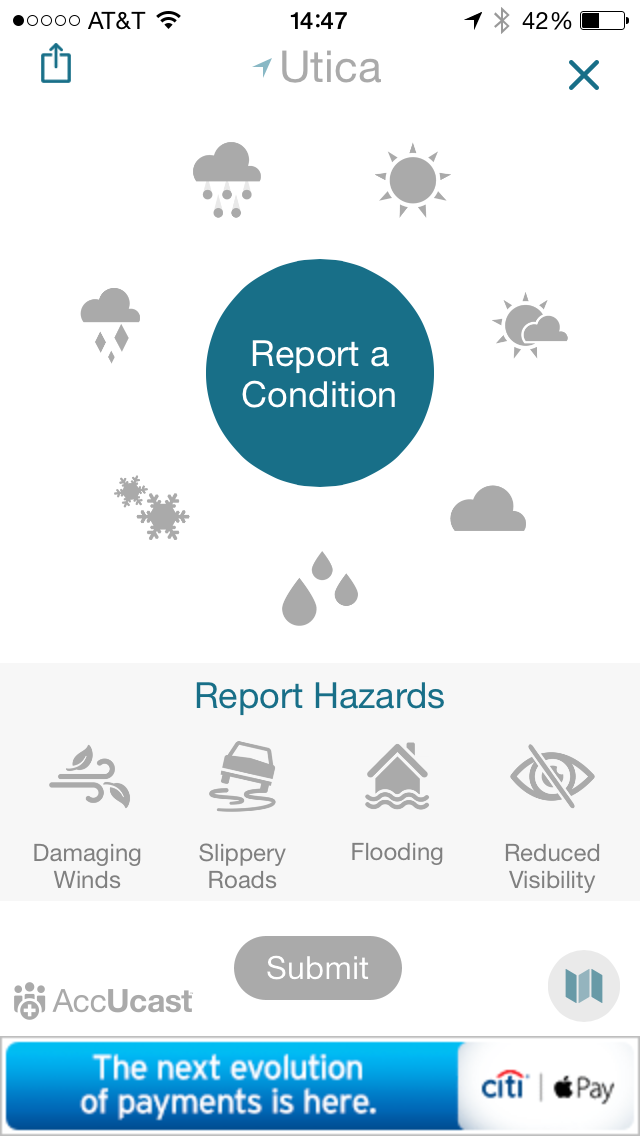
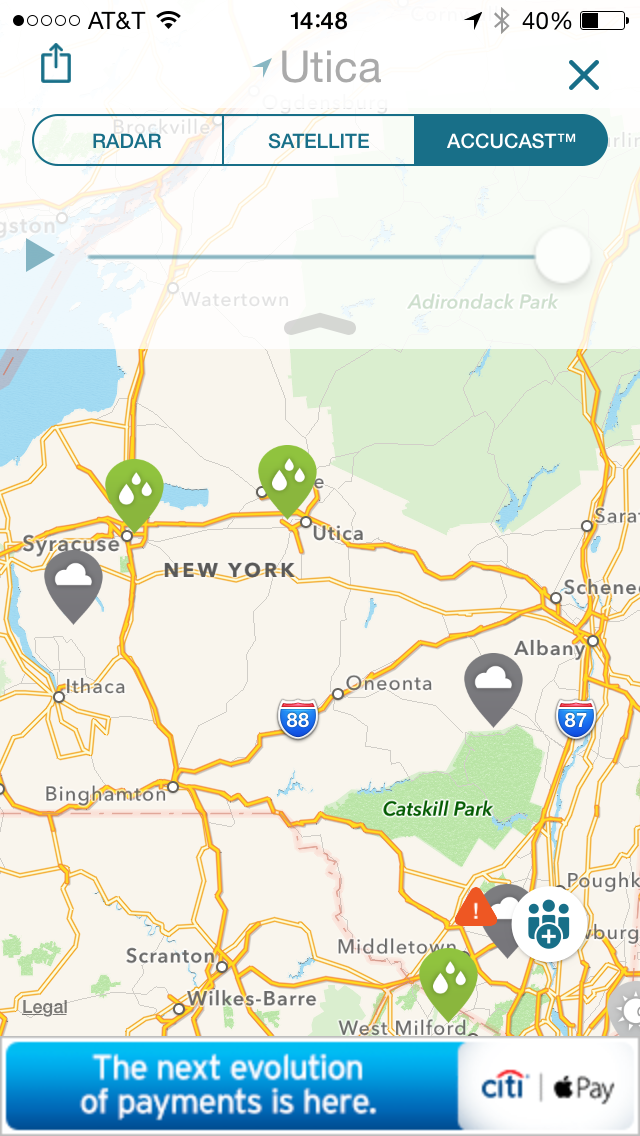
Now this is cool… Back in July, AccuWeather’s iOS app incorporated a crowdsourcing feature called AccuCast which allows users to report weather and weather related hazards where they are.  This data is then available as an option in the weather map displays accessible in the app.

Screen images included below.  More information available from http://www.accuweather.com/en/press/50601069.

AccuWeather AccuCast Screen Shots

AccuWeather AccuCast Screen Shots

AccuWeather2

TR

Firearms in Emergency Kits?

Cannon Beach, Oregon, a community in the Cascadia subduction zone, has an interesting program in which they store the preparedness kits of residents for them.  A link to the city’s program is here: http://ci.cannon-beach.or.us/community/cachecontainer.html.  In summary, the city provides the opportunity for residents (for a small fee) to store containers (provided by the city) of emergency supplies within city-owned cache locations.  They offer 5 gallon pails (with lids), 30 gallon drums, and 55 gallon drums.  These kits are stored securely in shipping containers at the predesignated locations.

I’m a bit ambivalent about the concept.  While it certainly encourages and enables people and families to have kits that perhaps otherwise wouldn’t, it does remove these kits from their possession.  Not having the kits in your possession limits the ability to add to/maintain the kit and certainly makes them ineffective during a shelter in place scenario.  I, for one, would rather have my kit readily available to me and all family members without having to address:

1) potentially unsafe travel,

2) the ability to access the container (will someone be there to let me in?),

3) a potential state of unrest in the vicinity of the container,

4) will the container still be there (we’ve seen these things easily moved by mother nature).

Note that the informational material on their website does encourage people to also have go-bags for a combination approach, which is a good idea.

Now that I’ve warmed you up with some background – off to the main topic…  I was first alerted to Cannon Beach’s concept via a news article about someone storing a firearm in their kit.  http://www.opb.org/news/article/should-your-emergency-preparedness-kit-include-a-firearm/.  The article states that an individual kept a firearm in their kit, which was stored by the city in a storage container which was broken into and stolen.  Firearms, by the way, are not permitted per the city’s guidance.  But should firearms (Cannon Beach’s program aside) be included in emergency kits?

Up front, I’d never recommend that firearms be kept in an emergency kit simply based upon liability.  That said, it’s an individual decision but could be a good idea.  Certainly anyone who chooses to do so should ensure that it is done legally and safely.  One must also consider why they want to have a firearm in their kit.  Is it for personal protection or for hunting?  Or both?  In the case of the article I referenced, it was a handgun, which could really only be used effectively for personal protection.

While we see very limited violence and looting during disasters, it certainly could be possible.  I would never suggest that someone not have the ability to protect themselves or their family.  I would suggest, however, that anything in your kit should have as many purposes as possible.  A handgun is less than ideal for hunting.  However, including a firearm for hunting (rifle or shotgun) will likely exceeded the physical space of your kit, so this needs to be considered.

I would also suggest that, again just like anything else in your kit, you be proficient in using it. Among the few who keep and maintain preparedness kits, many buy things and just stick them in there.  They never read the instructions or become familiar with their use.  Consider a water purifier for example.  Any brand that I’m familiar with needs to be submerged and backwashed prior to use to remove smaller particulates from the carbon filter.  If someone is keeping something as dangerous as a firearm, they had better be proficient in its use!

The bottom line is that we are not likely to see a scenario out of The Walking Dead.  While we have seen some devastating incidents, such as Hurricane Katrina, which had limited the effectiveness of law enforcement for a time, this is not the norm within disasters.  Some may be considering an extreme, perhaps apocalyptic, scenario, and wanting to protect themselves, which is fine.  Just be smart about it.

What are your thoughts on firearms in emergency kits?  How about the municipal storage of kits like Cannon Beach’s program?

Lots of food for thought…

© 2015 – Timothy Riecker

Emergency Preparedness Solutions, LLC

WWW.EPSLLC.BIZ

Most Disasters are NOT Extraordinary Occurrences – OR Crowdsourcing Volunteers

I listen to A LOT of podcasts.  While some are focused on emergency management and homeland security, most are pop culture related and have nothing at all to do with EM/HS.  At least not directly.

Listening to a recent podcast, it struck me how often the hosts mention disaster-related occurrences.  During this podcast there were several mentions of disaster related issues including the Louisiana theater shooting (which was breaking news while they were recording) and the Tom Selleck legal drama in California over stolen water (which ultimately relates back to their drought issues).  The same podcasters (one of which is in New England, the other in the National Capital Region) often comment through the year on weather-related incidents which impact them and others including winter storms, flooding, and warmer weather storm damages.

The point is that most disasters are not extraordinary occurrences.  Routine incidents aside, some measure of disaster occurs fairy regularly, certainly around the world and even just within any of our nations.  Turn on the news tonight and see for yourself.  So WHY, I ask, is there such a mentality with the general public (and maybe even with us public safety types) about disasters being out of the ordinary occurrences?  Sure they don’t happen within our own jurisdiction every day, but they happen somewhere EVERY DAY.  I’m not saying we have to be paranoid about it, but I see the COMPLACENCY getting WORSE.  We discuss preparedness often, and the aspect of getting the public better engaged in preparedness almost as much, yet we have yet to see real, meaningful success in this.

We’ve recently seen a bit of a paradigm shift in how we deal with climate change (insert groaning sound here).  For many years we tried to prevent it, as if we could.  The reality is that part of it is influenced by the actions of humanity and part of it by the natural cycle of our planet.  There are things we simply shouldn’t be doing and we still need to work on those, but we have also come to grips with the inevitability of the impacts.  We have realized that they will happen no matter what we do and we have decided that we need to ADAPT in order to survive.

Adaptation is an important realization for us (I’m now speaking in generality – not just climate change issues).  If there are things that we pound our heads against the wall over in futility, such as public engagement, maybe we are doing it all wrong?  I’m not saying that we stop trying to engage the public.  There are certainly successes we have seen, but I don’t think we are seeing the return on investment we should be.

Let’s look at society today.  People seem to have less time ability interest in volunteering or committing to efforts ahead of time.  We have to understand and acknowledge that first and foremost.  Have we turned into soulless uncaring creatures?  No, of course not.  We have just seen a shift in culture.  Trying to fight this culture is foolish.  Instead, we need to adapt.  How do we adapt?

Social media is the greatest embodiment of our need for instantaneous information and feedback.  It doesn’t take much preparation (download some apps, create accounts, find friends).  The vast majority of the information that rolls across the screen is crap, but every once in a while there is a worthwhile nugget that will garner some responses.  Sometimes (usually disasters or a new statement by Donald Trump) information that comes across garners a great deal of attention and people want to take action.  Do they know how to take meaningful action?  Often not.  But they will follow along with the good ideas of others.  (aka leaders).

Let’s broaden this concept within public engagement.  What this essentially comes down to is managing spontaneous volunteers – a concept we have seen much need for in EM for years.  I think we need to emphasize this more than ever.  We also need to update the way we think about it.  These spontaneous volunteers will not only show up at town hall, the fire house, local diner, or house of worship; they will show up online via Twitter and Facebook.  They will be locals, they will be from out of state, across the country, or across the planet.   ALL of them can be engaged.  Let’s crowdsource volunteers in emergency management.  We just need to identify how to engage them.  Identify gaps and figure out how these good natured people can fill those gaps with little no upfront investment of time or effort on their part.  Build plans that address spontaneous volunteer engagement – both in the physical aspect as well as virtual.  Train to these plans and test these plans.  Let’s stop struggling against old ways of thinking.  Improvise, adapt, and overcome.

As always, I’d love to hear your thoughts on this.

I do want to take a moment to thank my followers and readers – something I don’t do enough of.  Your support and comments are greatly appreciated.  Also, if you like my blog, spread the word.  Please feel free to forward/repost/retweet to friends, family, colleagues, and complete strangers.

©2015 – Timothy Riecker

EMERGENCY PREPAREDNESS SOLUTIONS, LLC

WWW.EPSLLC.BIZ

We need to talk MORE about Emergency Management

My company is currently finishing a contract which involved almost two dozen site visits to local government entities (cities and towns) to meet with local officials (emergency management, police, fire, EMS, schools, elected officials, public works/highway, etc.) to discuss certain emergency management and homeland security needs they may have.  The topics we needed to address were set in conjunction with our client and the meeting times were capped at 4 hours.  Based on the discussion generated by those we met with, discussions took anywhere between an hour and a half to all four hours.  At the end of most of these meetings, many people who we met with thanked us for bringing them the opportunity to discuss emergency management with such depth.

At first I was a bit puzzled about this gratitude… the meeting was intended for us to gather information from them, so it was us who thanked them for their time and input.  Why would they thank us?  They could talk about this stuff any time they wanted to, right?  In theory, yes.  In practice, NO.

Looking back at the project in retrospect we saw the value in the opportunity we provided these local stakeholders.  Absent a recent disaster or a specific issue of concern, it’s a rare occasion that local leadership takes the time to convene and discuss emergency management and homeland security matters.  We, rather serendipitously, provided them with an opportunity to do talk about many facets of EM/HS, to share thoughts and ideas, and to identify needs.

In many local government meetings (town/village/city council, selectboard, etc.) the topic of emergency management (or anything related to it) is generally not on the agenda.  Some may have a formal briefing by department heads, which would include the fire department or police department (if they have one), but these are usually fairly general statements.  Because of the depth of discussion that can take place, I don’t even think that these monthly governance meetings are the right venue for most discussion.  I would suggest that jurisdictions have a separate meeting, at least quarterly, to discuss emergency management in depth, with all department heads, elected officials, and others present and participating.  Preparedness should be discussed across the spectrum of all mission areas.

Many of the jurisdictions we met with had seen tropical storm impacts within the last few years – and that was the last time, for many of them, that the impacts and lessons learned were discussed.  What of their corrective actions?  Aside from a few largely individual efforts, little progress had been made.  Stakeholders self identified this gap, some commenting directly about the necessity to meet more often.  Many brought up gaps that were identified after the tropical storm, or even more recently, which were never addressed.

Along with the success of our intended project, we hope that at least some of those jurisdictions were able to get energized and organized to revisit some of those past concerns and move forward to make some progress with preparedness and mitigation efforts.

What do you do in your jurisdiction to prompt more discussion about EM/HS?

© 2015 – Timothy Riecker

Emergency Preparedness Solutions, LLC

WWW.EPSLLC.BIZ

Incorporating Social Media Into Your Exercises

Incorporating Social Media Into Your Exercises, a post within the idisaster.wordpress.com blog.

This blog was first brought to my attention through the most recent DHS Capacity Building Webinar Series episode called Innovating with Disaster Drills and Exercises (also available on iTunes, which is how I usually listen to them).  The blog’s primary writer, Kim Stephens, is very well spoken and well versed in using social media in emergency management (#smem).  Claire Rubin, who I’ve referenced several times before, also guest posts on the idisaster blog.  I’ve spent some time looking through the blog and find it to be well written and very informative – they certainly gained a new follower!

Be sure to check out both idisaster.wordpress.com and the DHS Capacity Building Webinar Series.

– TR

FEMA Releases a Consolidated Online Training Course Catalog for First Responder Training

This is a great resource I discovered last week that has just been officially announced this week. It is comprehensive and easy to use. Check it out and see what’s out there! – TR 

(Official release follows)

FEMA released a consolidated online training catalog for the First Responder Training System, including courses available through the Emergency Management Institute (EMI), the Center for Domestic Preparedness (CDP), the National Domestic Preparedness Consortium (NDPC) and the Continuing Training Grant (CTG) program. The site was developed in response to customer requests and is known as the “National Training & Education Online Course Catalog.” It allows users to search for all FEMA preparedness training initiatives in one location.  

The main entry page of the combined catalog briefly describes each training organization—EMI, CDP, and the National Training and Education Division—while providing a list of training courses in each catalog, along with links for scheduling and individual websites for each training organization. First responders can access the consolidated course catalog by clicking directly at www.firstrespondertraining.gov/NTE

The catalog itself is searchable and can be viewed in full or by the individual NTE training entities. Users are able to filter by organization and/or training provider, delivery type, discipline, core capability and mission area at www.firstrespondertraining.gov/ntecatalog.

Course catalog feedback can be sent to firstrespondertraining@fema.dhs.gov.