PPD-8 Revisions and National Engagement Period

A NIMS Alert has just been released announcing the opening of the national engagement (comment) period on revisions to PPD-8 (National Preparedness Goal).  Most notably, these revisions include updated definitions for 10 Core Capabilities and the creation of one new Core Capability – Fire Management and Suppression.

These last few years I have found that FEMA has been more responsive than ever to stakeholder feedback and this is another great opportunity to ensure that their guidance and doctrine continues to be relevant and meaningful to those of us who use it.

A link to the PPD-8 revision site and national engagement period is here: http://www.fema.gov/media-library/assets/documents/103912.

TR

The Human Aspect of ICS and Overcoming Transitional Incidents

Most often when we consider the Incident Command System (ICS), we think of boxes in an organization chart, forms to be completed, and specific processes to be followed.  True, these are, in essence, aspects of ICS, but they alone will not pave the way to success.  What we must remember is that ICS is conducted by people.

Typically the most difficult aspect of a complex incident is the transition from what we normally do and how we normally respond to elevating our response to a more appropriate level given the scope of the incident.  The groundwork for this transition lies in our initial response, which many experienced responders know can set the tone for the entire operation.  This initial response is based largely on the decisions we make with the information we have.  While there are policies, plans, procedures, play books, checklists, and myriad training that help to inform us, it all comes down to the human factor.  People make decisions based upon the stimuli they are presented with and their own experiences.

Chief Cynthia Renaud in her paper The Missing Piece of NIMS: Teaching Incident Commanders How to Function in the Edge of Chaos discusses approaches to initial response as an oft forgotten aspect of how we teach ICS.  While we know that responders conduct initial responses all the time, there is a significant difference in scope between a routine incident and a complex incident.  This difference in scope requires a different and more open mindset.  While our size up actions may generally be the same, we need to think bigger and this kind of thinking is difficult to train.

The implementation of the ‘bigger’ (i.e. beyond what is routinely used) aspects of ICS is also a challenging mindset for responders.  These aspects of ICS, such as the initial delegation of other organizational aspects and the need for a written Incident Action Plan, do not come easily when they are not practiced.  The fact of the matter is that the implementation of ICS requires a conscious, deliberate decision accompanied by people with knowledge and skilled intent to guide its expansion suitable to the incident at hand.  It also requires a bigger picture mindset recognizing the need to expand the management of the response proportionate to the complexity of the incident and the resources required to address it.  When is it needed?  How do we do it?

One problem is that most of the people we count on to manage these initial responses are trained to manage tactics, not large incidents.  They excel at managing a handful of resources in a rapid deployment and resolving an incident quickly.  This is exactly what they are needed for and they do it well.  Chief Renaud indicates a need to train these first level supervisors to recognize complex incidents for what they are and give them the tools (and authority) to implement broader measures, including an expanded implementation of ICS.

I’m a firm believer in ICS, but I know that people have to drive it.  It’s not something we can put on autopilot and expect it to bring us to our destination.  It has to be consciously and deliberately implemented.  When people criticize ICS, I often find that their criticism is due to false expectations and inappropriate implementation.  With that, I firmly believe we need to do a better job at training to address these issues and help responders better understand the system and demystify its use.

How do we make our training better for the average (non Incident Management Team) responder?  How do we help bridge this gap between the routine and the complex?

© 2015 – Timothy Riecker

Emergency Preparedness Solutions, LLC

www.epsllc.biz 

Emergency Managers Need to be More Like Engineers and Less Like Shopkeepers

I was inspired by this short (~1 minute) video from TrainingJournal.com.  In the presenter’s brief but pointed message, he describes many trainers as being akin to shopkeepers, providing organizations often times with rote solutions just as a shopkeeper will pull a product off their shelves. He goes on to say that this these solutions are usually effective, but only for a limited duration.  He offers, instead, that trainers need to be more like engineers, examining every facet of a problem and constructing lasting solutions.  As an experienced trainer and proponent of a detailed root cause analysis, I couldn’t agree more, but as I readied myself to write a post about the implications of this on training, my mind carried this metaphor to many of our practices in emergency management.

Consider how often we quickly dismiss identified gaps with an assumed solution.  Write a plan, conduct a training, install a bigger culvert.  Those are usually our solutions to an identified problem.  Are they wrong?  No – we’re correct more often than not.  Are these lasting solutions?  Rarely!  How often does the problem rear its head again within a relatively short span of time?  How do we address the re-occurrence?  As shop keepers we simply pull another solution off the shelf.  Can we do better?

The things we do in emergency management are often based upon best and current practices.  We address problems through the prevalent way of dealing with such things industry-wide.  Emergency management has a great community of practice.  I’ve mentioned in several previous blog posts the spirit of sharing we have and the benefits we see come of that.  It doesn’t seem often, though, that we engage in an industry-wide groupthink to solve various problems.  We use and adapt ideas of individuals and small groups, we see a steady and determined progression of the practices within our progression, but we rarely see ‘game changing’ ideas that revolutionize how prevent, prepare for, respond to, or recover from disasters.  Why is this?

Perhaps we need a greater collective voice locally, where practitioners are dealing with the problems directly?  Our methods of practice in emergency management are generally driven by the federal government (THIRA, NIMS, HSEEP, etc.).  I’m not saying any of these are bad – in fact they are excellent standards that we need to continue to refine and apply, but it’s generally not the federal government that is dealing directly with the constant flow of issues being dealt with at a state, and even more so, a local level.  We need to follow that metaphor of being engineers to apply more permanent solutions to these problems.  We need to create, innovate, and problem solve. Or do we?

Necessity, as they say, is the mother of invention.  We often miss the necessity of improving because we have current, functional solutions – we have things that work.  So why fix it if it’s not broken?  I say we can do better.  The realization of the need for lasting solutions is the necessity we need.  If the solutions we have on the shelf don’t work for us 100%, let’s figure out a better way.

I don’t know what or how, but I’m sure that as a community we can identify needs and prioritize what must be addressed.  Given the right people, time, and maybe a bit of money, we can be innovative and effect some lasting change.

I’d love to hear what others think on this topic.

© 2015 – Timothy Riecker

Emergency Preparedness Solutions, LLC

www.epsllc.biz

The Need for Practical Incident Command Training

I’ve written a couple of articles in past few months (See: Preparedness – ICS is Not Enough; and Training EOC Personnel – ICS is Not Enough) where I’ve been a little rough on the Incident Command System (ICS), or rather the trust that people put in it as a magic pill to cure all their incident management ills.  As it turns out, there is no apologia; rather I’m going to continue challenging the status quo, this time as it relates to how ICS training is conducted.

The driving force behind this is the realization of a gap that exists in ICS training and the ability of learners to apply what they have learned to a reasonable degree within an emergency response environment.  The foundational ICS courses (ICS 100 – 400) provide learners with a progressive understanding of the concepts, terms, organizational elements, and primary processes within ICS, but provide little opportunity to practically apply what they have learned.  Progressive instructional design methods through course revisions have added more hands-on activities within these courses to enhance learning, but these courses still fall short of providing the kind of practical exercising needed for learners to have any degree of confidence or proficiency.  That said, these courses accomplish exactly what they are intended to.  They are not designed to provide much practical application.

To the other side of the ICS training spectrum is training for Incident Management Teams (IMTs), which provides intensive and in depth training, mostly focused on the individual positions within an incident command organization, and the key activities and responsibilities of those positions.  IMT training also includes capstone courses in which IMTs complete a combination of didactic and hands-on instruction in a team environment.  Much of this training is coordinated by FEMA and the US Fire Administration through the NIMS ICS All-Hazards Position Specific Training Program with their focus primarily on building capability at the Type III (extended operations) level, with training at the higher (Type II and I) levels available through appropriately intensive efforts.  While some training is available for Type IV and V IMTs, this is often not taken advantage of because rural areas may not be able to assemble enough personnel for a functional team.  The training is also still fairly intensive, even at this level, and requires a number of courses, each with a team of instructors.  This comes at a high cost of time and dollars.  The need for local personnel to function within an incident command structure at the local level still exists, but goes largely unaddressed with performance level training being focused on IMTs.

Certainly exercises can provide an opportunity for individuals to work together as an ad-hoc team to resolve an incident.  While exercises provide for great practice, instructive feedback usually doesn’t occur at all, with usually only a few out of context comments coming until well after the experience by way of an After Action Report.  Structured learning environments which provide a series of simulations where individuals can practice what they have learned are ideal, particularly when immediate hotwashes are provided after each scenario, allowing learners to grow and apply what they have learned in the next scenario.

Of the learning opportunities that current exist, the Enhanced All-Hazards Incident Management/Unified Command course (MGT 314) from TEEX comes closest to this type of experience.  I have direct experience taking this course at the TEEX location several years ago and found it to be a great experience.  Because of the technology used to facilitate the course it is only offered as a resident program at TEEX and seats fill quickly.  While this is a great program, we need more like it and an ability to reach down to small local governments where there is an urgent need for this type of practical training.

Several years ago colleagues and I developed a course called the ‘IAP Workshop’, which is a daylong scenario-driven training where students practice working the ICS planning process and ultimately developing an IAP.  Through the day of training, participants go through this process several times in a crawl-walk-run progression with feedback provided by facilitators.  Participants are required to have completed the ICS 300 course as a prerequisite.  This course has proven successful, despite naysayers and traditionalists who default to the ICS curriculum fulfilling all ICS training needs.  That said, there is more to ICS and ICS application than the planning process.

Practical training in any subject, particularly the Incident Command System, builds confidence and improved application of knowledge and skills.  Since most incidents are best managed locally, we need to invest in better training to enhance local capabilities.  The foundational ICS courses are just that – foundational.  IMT training may simply not be the best solution to meet this need.  Let’s talk about the ICS training gap and find some solutions.

What ICS training gaps have you identified?  Have you discovered or designed any solutions?

© 2015 – Timothy Riecker

Emergency Preparedness Solutions, LLC

www.epsllc.biz

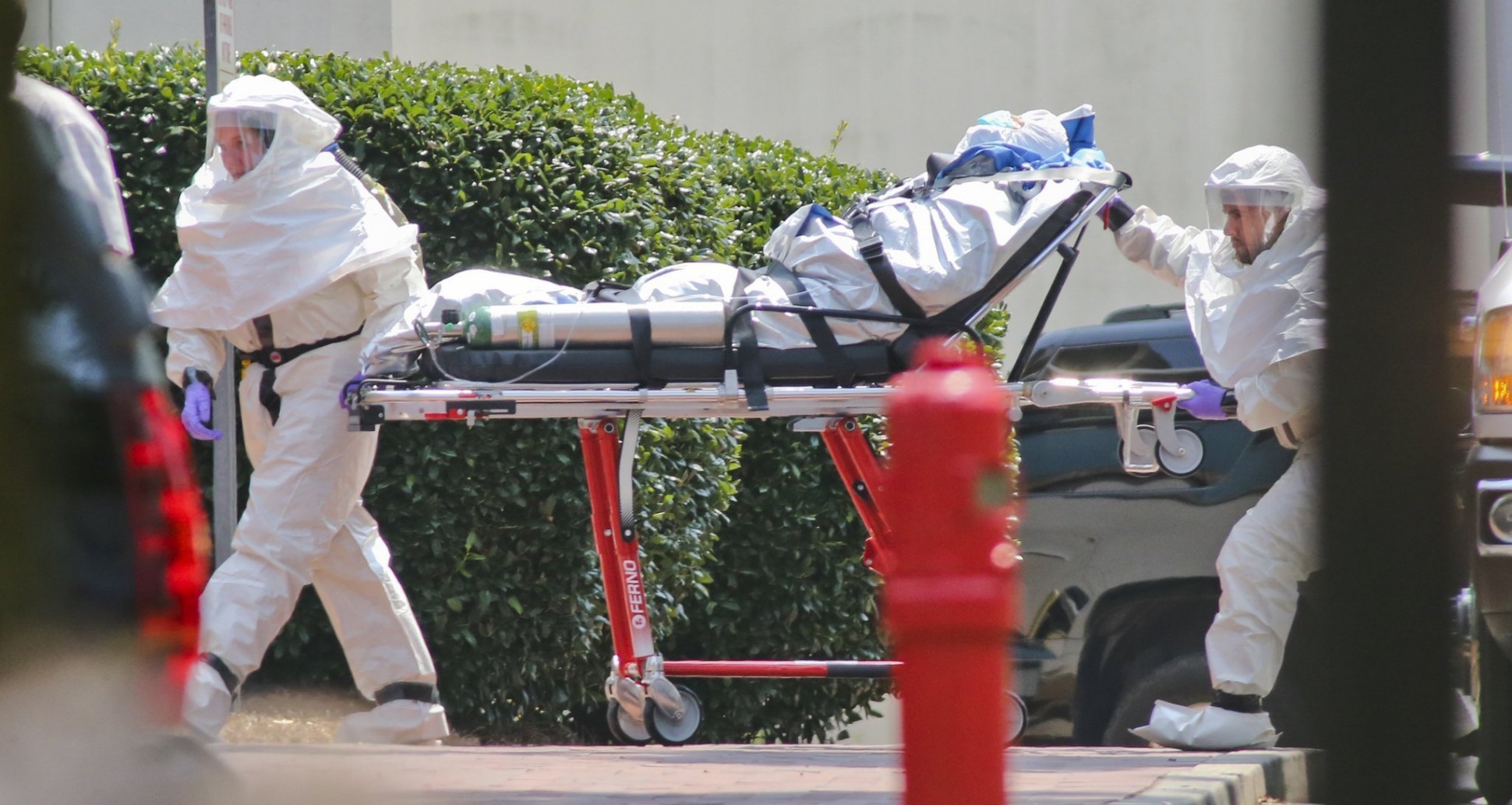
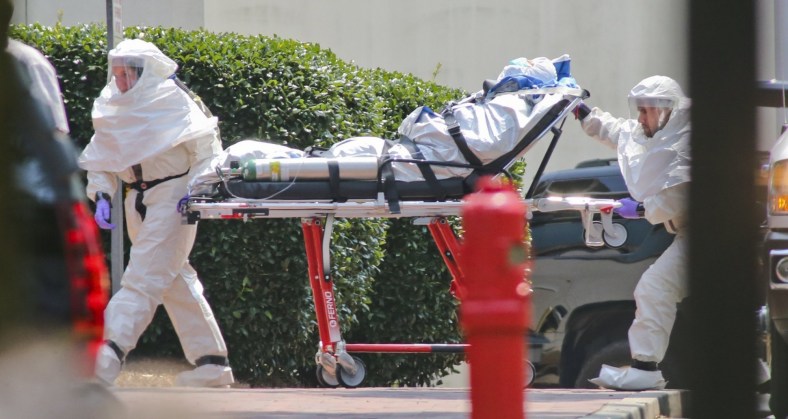
Ebola Reflection Measures our Preparedness

NBC News recently posted an article citing a report published by the Presidential Commission for the Study of Bioethical Issues.  The link provided to the report in the NBC News article doesn’t seem to work, but I’ve found what I believe to be the report here.  The focus of the report is on the ethical challenges faced by the US in responding to this issue.  The report summarizes a variety of ethics related concerns and considerations in this ongoing response and paints a fairly accurate picture of our failures and what needs to be addressed – at least within the topics it discusses.
Photo credit: Forbes.com

Photo credit: Forbes.com

As you might expect from a report on bioethics, it is very public health focused.  While they do make mention of very public health centered topics such as clinical drug trials, they do cover topics which are much more broadly rooted in emergency management and homeland security, such as community and responder education, and ethics associated with quarantine.  This report, while fairly focused, opens a virtual Pandora’s box of issues related to our domestic response to Ebola.

Needless to say, our collective response to this matter was horrible.  Public health policy and guidance was a moving target for weeks; responders were ill prepared to handle potentially infected persons; and the collective of society, politicians, and public safety were largely reluctant to deal with matters of quarantine much less prepared for it.  Was this our first consideration of something like Ebola?  Of course not.  Didn’t we have preparations in place?  Kind of.

Back in the late 90s, pushed mostly by the Nunn-Lugar-Domenici act of 1996, preparedness efforts for state and local responders were funded to enhance our capabilities in dealing with WMD incidents.  Several years later, after 9/11 and the anthrax attacks, another surge of funding was pushed down to state and local governments from HHS/CDC for the purpose of bolstering public health preparedness including preparedness for WMD/weaponized biologicals and naturally occurring pandemic incidents.  These two programs alone, not including other related funding, fostered the creation of plans and organizations to support them, purchased entire stockpiles of equipment and supplies, trained tens of thousands of responders and public health workers, and encouraged exercises across the nation to test capabilities (it was actually these exercises which largely influenced the creation of what we now know as HSEEP).  A lot of good came from these programs, but when suddenly tested with the reality of implementation we seemed to fall apart.  Why?

First of all, many of these preparedness efforts occurred between 10 and nearly 20 years ago.  Many of the people initially trained in these programs have since retired from public service with their organizations losing a great deal of institutional knowledge.  While training programs have continued and still exist, there have been systemic gaps in tying this type of training to other preparedness efforts (planning, policy, equipment, etc.).  Some equipment purchased near the beginning of these programs has likely been retired as well.  Much of it still exists, but has been brought into the fold of other applications, such as HazMat – which is certainly appropriate, but yet again we see gaps, this time our ability to readily utilize equipment specifically for public health threats.

In my opinion many of the planning efforts we saw after 9/11 were misguided.  This started with the people who were doing the planning.  Many health organizations emphasized health care experience for these positions instead of EM or planning experience – which was their main function.  Certainly health care knowledge had some importance, but that could be supplemented through a good advisory committee (EM after all is a team effort).  Exacerbating poor hiring decisions was a lack of investing in the people that were hired.  Many organizations expected them to churn out pandemic influenza plans in short order, with little/no training on the planning process or integral systems that must be considered.  Further, much of the planning had been done in a vacuum – that is, it had been performed with little/no input from other stakeholders.  I had reviewed many of these plans, finding things such as inappropriate applications of ICS and wild assumptions of resource availability.  In no way were these plans realistic or applicable.

There were many exercises performed and most of them had great value.  The problem is that there were a lot of assumptions in these exercises and policy decisions made in the exercises were rarely challenged as they would be in reality.  The US Ebola response brought this all to light as decisions such as quarantine were being handled at the governor level and under significant controversy.  So in this recent response I ask why were decisions delayed and deferred to higher authorities?  Why were adequate local/regional plans not in place to address the care and handling of potentially infected persons?  Why did procedural issues take weeks to resolve?  The simple answer is that there was a lack of proper preparedness.

Back in October of last year, when Ebola was emerging in the US, I posted an article titled Preparing for Ebola – and Whatever Else May Come.  The article still has a great deal of relevancy since I’ve seen very little preparedness for future occurrences – only a harried response to the most recent incident.  There have certainly been a great deal of policies and procedures assembled for the current Ebola issue, but these have a feeling of being temporary, throwaway, or single-use documents, applied only for this instance instead of durable and lasting plans.  Many will keep them ‘on the books’, only to find that their hasty assembly wasn’t comprehensive enough for the next occurrence.  Emergency management and homeland security professionals, public health leaders, and elected and appointed officials need to take a step back and re-look at out preparedness efforts – especially in regard to public health issues.  While we should learn from what we have experienced, we also need to think comprehensively about what is needed.  Well considered policies need to be put in place, supported by our laws and responsibilities to protect the public while also considering protection of civil liberties.  Other preparedness efforts such as planning, training, and exercising need to continue to occur but must have their connections strengthened and intentional.  Exercises need to test plans and policies and challenge decision makers who are certainly making difficult decisions that may include ethics and moral issues in the consideration of caring for few while protecting the greater society.

These are not easy things to be done – which supports the need to work on them now, when we aren’t facing an imminent disaster.  While Ebola certainly wasn’t a health care crisis and there were a lot of things done right, there is always room for improvement – especially when the next biological occurrence could be a crisis.

What have you and your organization learned from the Ebola response?  What gaps have you addressed?  What do you feel still needs to be addressed?

© 2015 – Timothy Riecker
Morale Issues at DHS… Still

The Washington Post recently featured an article on continued morale problems at DHS.  These problems are nothing new and largely stem around the organization being so large and unwieldy and falling in midst of the political battlefield that is homeland security and all if its related functions, such as the ongoing debate over immigration – something enforced by DHS.

In speaking through the years with friends and colleagues who work in various departments of DHS, there is a great deal of frustration with constant changes in policy and procedure, failure to backfill positions emptied by attrition, and a lack of leadership simply listening to their experienced professional staff.

Certainly given the variety of responsibilities DHS has, they need to remain fluid and responsive but they can’t do this at the expense of stability.  This loss of morale and stability will inevitably impact the effectiveness of the department and its component agencies.  So far the good employees of DHS have held steadfast, but these issues can’t continue to be ignored.  They don’t require millions of dollars in studies – they simply require good leadership and HR practices.

– TR

Do You Have an Emergency Management Committee?

Comprehensive emergency and disaster management, effectively done, cannot be done by one person alone.  The best emergency management and homeland security practices are performed by teams.  The practices of emergency management and homeland security are so ubiquitous and multifaceted that we rely on the participation and input of persons in related professions, and in fact professions generally not seen as related, to be successful.  Because of this, both government entities and corporations alike often embrace a team approach to emergency management.  Do you?

Division of Responsibility – Unity of Effort

Aside from the chief elected official or chief executive officer, no one person has the direct ability to ‘command’ the forces of a jurisdiction or corporation.  The trouble with this is that these CEOs are generally not experts in disaster management.  Effective organizations learn the necessity of delegation early on which, while the CEO is still ultimately responsible, those delegated to are functionally responsible for their respective areas.  Laws and regulations often make these delegations mandatory for both jurisdictions and corporations.  While each of these delegations has their own functional responsibilities, they still operate as part of a greater organization and must work well together achieve maximum effectiveness.

The ability of these stakeholders to work together in a unity of effort is certainly important during a disaster, but it’s not the only time they should get together to talk about disasters.  Yes, many of these individuals will see each other during (hopefully) regular staff meetings, but these meetings typically involve briefing the CEO on current or upcoming activities, discussions on hiring and budgets, or being briefed on new policy.  While these are all important discussions they usually leave little room to discuss topics on emergency management and homeland security.

EM/HS certainly warrants its own meetings and workshops to accomplish important tasks such as a periodic threat and hazard identification, plan creation and updates, exercise planning meetings, and discussions on training, grants, and preparedness investments.  This group should also be making policy recommendations to the CEO and ensuring that preparedness efforts are permeating the entire jurisdiction or organization.  Their work together in preparedness efforts will strengthen their relationships and increase their knowledge of each other’s functional responsibilities and capabilities.

Who Should Participate?

In any of the mission areas of emergency management and homeland security (Prevention, Protection, Mitigation, Response, and Recovery – or in activities related to preparedness for any of these) there are often related or even overlapping interests amongst department heads.  The emergency manager, fire, police, EMS, and public works/highway are often at the forefront; but other departments and positions such as parks and recreation, clerk, human resources, finance/treasurer, and zoning can all (and should) have some degree of input.  Larger jurisdictions may have their own health and human services departments which are also important participants.  There are similar positions within corporate organizations that have the same interactions and hold the same importance in this regard to these organizations.  Also be sure to consider external partners such as utilities, major employers, and not for profits and social groups?  Perhaps your EMS provider is a third party or your law enforcement is provided for by a Sheriff’s Department or State Police – be sure to include them as well.

This ‘whole community’ list can grow very quickly and often times not all members are needed for the group to function effectively.  The best practice in emergency management committees is to take a tiered approach – with a core group addressing most matters but with the support and augmentation of an expanded group to include other departments and organizations whose participation is called upon when needed.

Emergency management and homeland security are team efforts which require the active participation and input of all stakeholders to be effective.  Don’t just rely on your emergency manager to get the job done.  They need support from the entire organization to ensure that your jurisdiction or corporation is prepared to address the worst, save lives, and minimize losses.  Some emergency managers view such committees as ‘oversight’ or an unnecessary bureaucracy, but success lies in collaboration.

What’s your approach?

© 2015 – Timothy Riecker

Emergency Preparedness Solutions, LLC

www.epsllc.biz

Preparedness – ICS is Not Enough

Back in October I wrote a post about ICS training not being enough for EOC personnel.  You can give it a read to see my reasons, which essentially boil down to the specific role of the EOC (Emergency Operations Center) in the incident management structure and the unique processes which take place in an EOC both not being addressed in ICS (Incident Command System) training.

As I continue to work in various jurisdictions to enhance their preparedness, I am expanding my thoughts on ICS training not being enough – this time for all of preparedness.  In meeting with jurisdictions and discussing their current state of preparedness, many believe they are well prepared to respond to any incident simply because their personnel have received ICS training.  Why am I concerned by this?

Folks, in the grand scheme of things, ICS training alone does not teach you to do very much except how to function within a system.  First off, I’m a huge believer in ICS and the success it can help facilitate in incidents and events.  Not only have I seen it work, but I use it and advocate for it as a chief practice of emergency management.  I’ve been teaching ICS courses since 2001 and have led hundreds of course deliveries amongst the various levels.  That said, in seeing the faith that people are putting in ICS as their savior from disaster, I think that faith has become exaggerated and misplaced.  While ICS gives us guidance on structure, processes, and standards, it still doesn’t tell us HOW to manage the incident and its impacts – and it never well.

The structure, processes, and other standards that ICS provides – when properly applied – are greatly beneficial to our ability to manage a disaster.  Let’s not forget, though, everything else that is needed to be successful.  There is an abundance of training available for personnel to address identified needs to make them better at what they do and thus enhance the capabilities of the jurisdiction or entity.  Some of this may certainly include higher level and more functional training in ICS (i.e. position-specific and incident management team training), but we can’t forget that we must focus on our needs and developing to meet those needs.  More on identifying training needs here and here.

The best way of identifying those needs, comprehensively, is through our plans.  Planning is the cornerstone of preparedness and serves as the foundation of our response.  Planning to appropriate depth is not often performed and always needs to be enhanced (more training in the activities of planning is certainly an identified need!).  Once plans are in place, we need to train all stakeholders on the contents of those plans and of course exercise them.  The process of planning and the exercises we conduct will identify other gaps in preparedness efforts that the jurisdiction or entity should address.  These gaps are most easily analyzed through through five key elements – Planning, Organizing, Equipping, Training, and Exercising (POETE).  More on POETE analysis here.

When a plan is being written or reviewed, we need to follow the bouncing ball for each of the identified activities.  Is it enough for the plan to say that certain stakeholders will be contacted when an incident occurs?  Of course not – we need to identify WHO will contact them, HOW they will be contacted, specifically WHEN they will contact and what is the trigger event, and WHAT they will be told.  Also, what happens if someone is unreachable?  What actions are they expected to take?  Do they then need to make any notifications?  If they are doing nothing with the information, WHY are we even contacting them?  This simple task requires planning (process and decision mapping as well as a specific procedure), organizing (identifying specific personnel and alternates to do this), equipping (the equipment needed for them to make contact; including access, maintenance, operation, and redundancies), training (training and job aids in the procedures and equipment), and exercising (to ensure that all the previous elements function appropriately).

The example above is simple, but shows how far-reaching and complex a seemingly simple activity can be.  ICS training won’t address this.  While ICS practices should be penetrating the deepest aspects of our incident response organization, ICS as a concept is fairly high-level and conceptual.  While it helps structure our tactical resources, ICS itself is not a tactical application – it is simply the structure we perform in.  The processes it provides are not tactical processes, they are incident management processes, but we still need to know about the incident and what to do – ICS will not provide those answers.  ICS is a great tool, but just like a carpenter we must have a variety of tools to do the job properly.

What needs have you identified?

If you need assistance with your preparedness – planning, training, exercising, or needs assessments – reach out to Emergency Preparedness Solutions!

© 2015 – Timothy Riecker

Emergency Preparedness Solutions, LLC

www.epsllc.biz  

H7N9 Bird Flu Confirmed in Canada

In another bit of news regarding bird flu (aka avian influenza), the H7N9 strain of the virus has infected a citizen of British Columbia who recently traveled to China.  This release comes just a few days after H5N1 had been confirmed in a duck in northern Washington.  Certainly coincidence, but the discovery of the presence of both strains in North America – both for the first time – is daunting.

© 2015 – Timothy Riecker

Emergency Preparedness Solutions, LLC

www.epsllc.biz

H5N1 Confirmed in the US

In news released by the media this morning, the presence of H5N1 (aka bird flu or avian influenza) has been confirmed in the US.  While many dusted off communicable disease plans with last year’s (and continuing) Ebola threat, we need to ensure that we take into account the wildlife and agricultural implications of H5N1 along with the threat to human life.  While one positive finding certainly does not make an epidemic, the confirmed presence should be putting certain actions into place for many public safety partners, including federal and state agricultural and fish and game offices.  Hunters, farmers, and veterinarians need to be aware of signs and symptoms just as much as our health care providers.

Be on the lookout for more information from authorities on this.  Consider the implications it can have within your area of responsibility and be sure to think broadly and consider cascading impacts.

© 2015 – Timothy Riecker

Emergency Preparedness Solutions, LLC

www.epsllc.biz