Course Review: AWR-147 Rail Car Incident Response

This past weekend I had the opportunity to attend AWR-147 Rail Car Incident Response conducted by the Rural Domestic Preparedness Consortium (RDPC) and Findlay University.  This is a one day awareness level course that focused on response to incidents involving freight rail cars and hazardous materials.
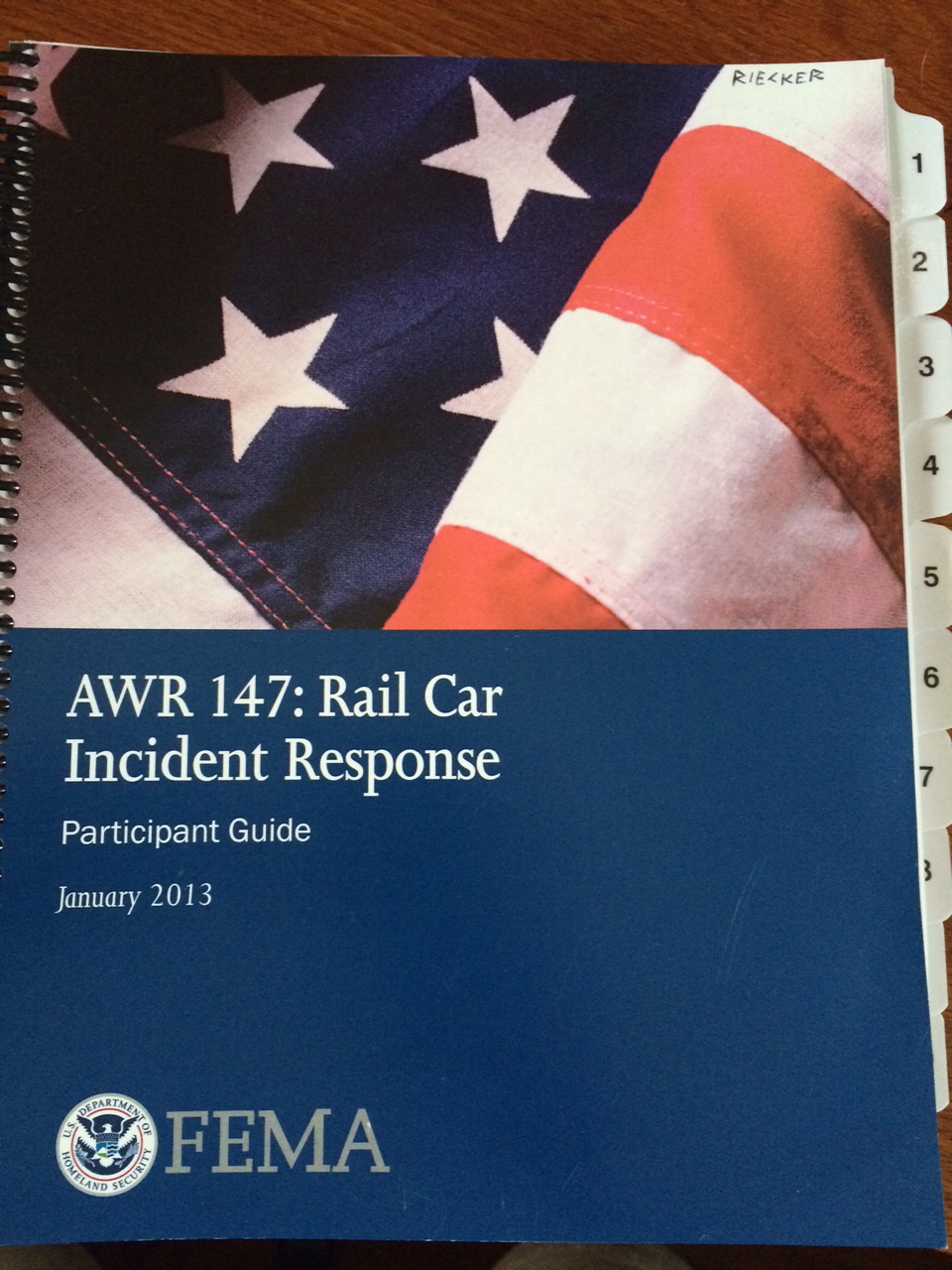
AWR-147 Participant Manual

AWR-147 Participant Manual

All in all this was a good course which I recommend to anyone who has the opportunity to attend it.  For those not familiar with the RDPC you can find their website at https://www.ruraltraining.org/.  Although only an awareness level course, it is suitable for any responder or emergency manager who has a jurisdiction with freight rail lines.  It’s also quite suitable as additional training for HazMat teams, as the information provided relative to the identification of the different types of rail cars and potential hazards associated with them is excellent.

The course construction follows the usual DHS format, including a pre and post test, plenty of student materials, and a mix of instruction, videos, and participant interaction and discussion.  Given the variety of rail cars which can be encountered and rail incidents do dissect, there are plenty of visuals and case studies to drive the program.

I would have liked to have seen the inclusion of a unit to discuss current topics, particularly Bakken crude and even a bit on HazMat associated with passenger train incidents.  Also, while the course focused on response, there was little mention of community preparedness measures which can/should be taken.  Of course I had a small ulcer form with one of the final units which was on NIMS/ICS.  I see little value in rehashing the primary components of NIMS and showing an ICS org chart, particularly when there is little/no discussion on the nuances of applicability relative to a rail incident.  It was all rather gratuitous.

There were some great activities which reinforced use of the DOT Emergency Response Guidebook as well as other sources of information which can be referenced during a rail response, including a worksheet which could easily be used as a job aid for real life application.  Along with the participant manual, all students received a copy of the current DOT Guidebook as well as the Association of American Railroads Field Guide to Tank Cars, which is a handy reference to help you identify the specific type of tank car you are dealing with and where key infrastructure on each (brakes, vents, valves, etc.) can be located.

This was the first course I had taken from the RDPC, although I have been aware of their course selection for quite some time and have referred others to their great array of courses.  Don’t let the term ‘rural’ fool you – the material they teach is relevant to rural, suburban, and urban responders alike.  I had taken CSX’s rail response course several years ago and this course blows it away.  Overall well done and highly recommended.

© 2015 – Timothy Riecker

Emergency Preparedness Solutions, LLC
WWW.EPSLLC.BIZ

Alan Weiss’ Weekly Morning Memo

From Dr. Weiss’ weekly e-mail to members…

This week’s focus point: The Boston tragedy demonstrated more than anything the basic goodness in people. Strangers helped others without hesitation. The requests of the authorities were accepted without whining or demands for exceptions. The capacity that we all possess to support, assist, and help others is extraordinary. Sometimes it takes trauma to highlight it, but the potential is there every day. It may be appropriate this week to think about donating time or money to a charity, coaching someone who needs help, or even giving someone a break trying to turn across traffic. We shouldn’t need catastrophe to bring out our true character.

Some great words to consider.

To my readers – sorry for my absence these last few weeks – I’ve been (and continue to be) on a disaster deployment. More to come!

States Rushing to Limit the Use of Drones by Law Enforcement

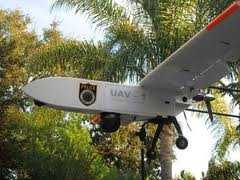
Tim RieckerInspired by this Washington Times article.  I must say I don’t understand why people are protesting the use of drones (aka unmanned aerial vehicles or UAVs) domestically.  Yes, they fly; and they have cameras with telephoto lenses.  Their use, however, from a law enforcement perspective is largely no different from that of helicopters or small fixed-wing aircraft – except at a much lower cost and no danger of physical harm to individuals, such as pilots or crew, which occur far too often – mostly with helicopters.  I think portions of the public have greatly overreacted to what they have seen of the military versions of these drones by way of mass media.  They certainly do have great capability in that theater, but use domestically is vastly different – especially being that they aren’t armed with hellfire missiles and the like.  Now with politicians weighing in, the over-reaction continues, and at a detriment to public safety.

I truly hope that a compromise can be found with people realizing that the use of drones, within all current standards of surveillance, warrants, etc., is not a threat to their privacy.  It is, in fact, a demonstration of smart government, leveraging technology to enhance capabilities at a lower cost and increased safety.  In aerial surveillance, drones can be used for nearly anything a helicopter or small fixed-wing aircraft could be used for; including rapid deployment after a shooting or robbery to look for a subject, or to find an Alzheimer’s patient gone missing.  These are noble and proper efforts that I hope won’t be impeded by knee jerk reactions based upon misinformation.

What are your thoughts?  Am I missing something here?

Tale of An Emergency Manager in Afghanistan

I want to share this story of Mike Cook, the Emergency Manager for the City of Edmonton who spent a year in Afghanistan helping them to improve their fire service and disaster response.  He tells a wonderful, but also sad story of the state of things there.  My congratulations and appreciation to Mike, and those like him, who are committed to helping not only their own communities, but those a world away.

Managing an Exercise Program – Part 3: Identifying Program Resources and Funding

This post is part of a 10-part series on Managing an Exercise Program. In this series I provide some of my own lessons learned in the program and project management aspects of managing, designing, conducting, and evaluating Homeland Security Exercise and Evaluation Program (HSEEP) exercises. Your feedback is appreciated!

Managing an Exercise Program – Part 1

Managing an Exercise Program – Part 2: Develop a Preparedness Strategy

Managing an Exercise Program – Part 3: Identify Program Resources and Funding

Managing an Exercise Program – Part 4: Conduct an Annual Training & Exercise Planning Workshop.

Managing an Exercise Program – Part 5: Securing Project Funding

Managing an Exercise Program – Part 6: Conducting Exercise Planning Conferences

Managing an Exercise Program – Part 7: Develop Exercise Documentation

Managing an Exercise Program – Part 8: Preparing Support, Personnel, & Logistical Requirements

Managing an Exercise Program – Part 9: Conducting an Exercise

Managing an Exercise Program – Part 10: Evaluation and Improvement Planning


Exercises can be very resource intensive, have no doubt about that.  Generally speaking, the more you invest in them, though, the more you get out of them.  Certainly discussion-based exercises are usually not as expensive as operations-based exercises.  For all exercise types, however, the largest costs are in the design (staff or consultant time, as well as meeting time), and conduct (again, staff or consultant time, plus the time of the participants).  What resources do you need for your exercise program as a whole?  How do you get them?

First of all, let’s discuss human resources.  In Managing an Exercise Program – Part 1, I discussed the importance of having an exercise program manager and what some of the qualifications should be for that person.  A program manager is probably the most important human resource you could have for exercises, but certainly this person can’t do it alone.  A good exercise program is able to leverage the experience, support, and ideas of others – both within and outside.  The exercise program manager needs to be a great networker, able to draw people from various agencies into a mutually beneficial partnership.  Some of these agencies will come and go, but some will be strong, permanent partners.  Each partner agency, including your own, should be contributing to the efforts of the group – not only with ideas, but with people to serve as controllers, evaluators, planning team members, etc., physical resources suitable for whatever types of exercises you conduct, and perhaps even funding.

In March of 2008, I founded and co-chaired the New York State Exercise Coordination Committee, composed of several state agencies, departments, authorities, and the Red Cross.  Meeting regularly and communicating often, we were able to pool our resources not only for each individual exercise, but for exercise program management as a whole throughout New York State.  We formulated consistent policies and practices, allocated Homeland Security funds state-wide for exercises and corrective actions, and developed and delivered exercise-related workshops and training courses.  We became the core group for the Training & Exercise Planning Workshop (more on this in the next part) and applied for and coordinated funding requests to FEMA for the Regional Exercise Support Program (RESP), which provided contractor resources to state and local exercise initiatives.  We were not only able to help each other, but we were able to benefit the state as a whole.  This model can be applied to other states; county and local governments; and consortia of public, private, and not for profit groups.

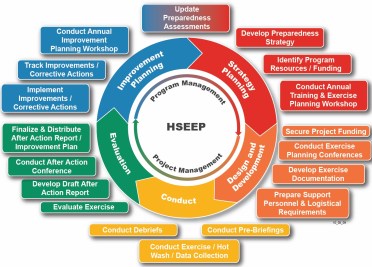
Keep in mind that the HSEEP cycle is just that, a cycle.  You will constantly be revisiting each of these steps – sometimes out-of-order – including determining needs and sourcing of resources.

HSEEP Cycle

HSEEP Cycle

What resources do you think you will need to manage your program?

Be on the lookout for Managing an Exercise Program – Part 4: Conducting an Annual Training & Exercise Planning Workshop.

Kudos to Cleveland

As I was typing away at the State Preparedness Report for a client late into the night last night, I would check new blog posts while the FEMA web tool would save and load new pages (the PREPCAST portal was gruelingly slow as the deadline for every state is December 31st).  Every couple of hours, a new post would go up in the WordPress Emergency Preparedness category from the Cleveland, Ohio Public Safety Department as they updated readers on the weather, road conditions, snow removal, parking, and safety matters.  Essentially, they would provide a mini situation report for the public and include whatever information residents needed to know.

This is certainly a best practice and excellent utilization of a blog to provide up to date information.  Great job Cleveland!

How does your jurisdiction disseminate emergency information?

Gunman Ambushed Firefighters in NYS

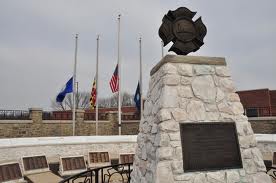
National Fallen Firefighter Memorial, National Fire Academy, Emmitsburg, MD

National Fallen Firefighter Memorial, National Fire Academy, Emmitsburg, MD

I’ve been following a news story today about a gunman who ambushed, shot, and killed two volunteer firefighters in Western New York this morning.  Two other firefighters were wounded in the incident as well.

This is an absolutely horrible occurrence, and provides another example of how first responders around the world risk their lives each and every day.  When the whistle blows at the fire station, those who respond expect to be responding to help someone who is sick or injured, to put out a fire, or to manage a motor vehicle accident.  They don’t expect to be shot at.  Sadly, on occasion, it does happen.  I’ve even had a shotgun aimed at me once when responding to a medical call as a firefighter/EMT – by the abuser in a domestic abuse situation.  These things aren’t supposed to happen to the good guys.

As the sun sets on the day of the eve of Christmas, my thoughts and my heart go out to the victims and the loved ones of those victims, not just of this incident, but of all incidents this year.  We’ve seen several horrific shootings and other acts of violence as well as devastation from mother nature.   Please keep these families in your thoughts and be sure to thank a veteran or a first responder for keeping us safe.

FirstNet and Molasses

I’ve found something slower than molasses – and that’s the implementation of FirstNet: The result of the 9/11 Commission’s recommendations from 2004 (again, that’s 2004 – which was eight years ago.  Eight.) part of which outlines the necessity for a more substantial radio spectrum for public safety purposes.  Before I rant any further, I do want to mention that this particular post was brought on by an article in this month’s Emergency Management Magazine called FirstNet’s Challenges, in the print edition or First Net: Answers to Key Questions in the online version.

Eight years… the span of time it takes to obtain a bachelor’s degree, a master’s degree, and a doctoral degree.

An eight year old child demonstrates the ability to solve problems independently and can count to 1,000.

I’m severely doubting that most of our elected officials have a great deal of education or an ability to solve problems independently, much less as a group.

The difficulties that public safety has with communication networks are as old as the communication devices themselves.  First off, it shouldn’t have required the 9/11 Commission to raise this issue – it should have been addressed well before.  A committed, secure, interoperable, and durable information network for first responders is an absolute necessity.  The hopes of first responders everywhere was that, along with most of the Commission’s recommendations, this matter would be addressed with all haste.  We couldn’t be more wrong.  It took them eight years to pass legislation just to allow the creation of the entity to work on ideas on how to address this!  That legislation, by the way, was included in the Middle Class Tax Relief and Job Creation Action of 2012 – which largely deals with taxes, unemployment, and Medicare.  The creation of FirstNet is in no way directly related to any of these topics.

But wait – there’s more!  The Emergency Management Magazine article goes on to outline what needs to be accomplished next, including the formation of a board (done), development of policy, procedures, bylaws, and a charter.  Further, they must name a public safety advisory committee (isn’t public safety the primary purpose of this group to being with?  If so, why do we need an advisory committee?  Shouldn’t that be the primary focus of the board?), hire staff, and establish a budget (the enacting legislation provided $7 billion dollars as ‘seed money’… estimates for creating a nationwide network are as high as $40 billion – which does not include maintenance of the network and recurring costs.

I will grant that there are certainly challenges with this – financial, technological, and political.  There have been attempts at this (ref: a miserable failure of an attempt in New York State several years back which cost the tax payers millions of dollars).  But, gosh… perhaps we would be a bit further ahead had we not waited EIGHT YEARS to pass this enabling legislation in the first place!

Is my frustration apparent?